Telehealth and Video Remote Interpreting for Health Systems — Pashto, Dari, and 22 More Afghan Languages

A video visit removes the waiting room, the front desk, and the interpreter who used to walk in with the chart. For an Afghan patient it can also remove the only person in the encounter who would have noticed that the word for the symptom does not exist in the dialect being spoken. We put a trained Afghan-language medical interpreter into the video call you already run.

طبي ژباړنMedical interpreter · Pashto
ترجمان طبیMedical interpreter · Dari
۲۴ ژبې24 languages · Pashto

What is video remote interpreting for Afghan-language patients?

Video remote interpreting (VRI) places a qualified human interpreter into a telehealth visit by live video, so the clinician, the patient, and the interpreter can all see and hear one another. For Afghan patients this means a trained medical interpreter in Pashto, Dari, or one of 22 more Afghan languages, matched to the patient’s dialect and to the interpreter gender the patient needs, joining the same Zoom, Teams, or patient-portal session the visit already uses.

What goes wrong on an Afghan-language video visit

These are not edge cases. Each one is a documented encounter failure that a health system carries as clinical risk, as a Section 1557 exposure, and as a patient who does not come back.

A Dari request is filled by an Iranian Persian speaker

Dari and Iranian Persian are close enough for a vendor to treat as one language and far enough apart that clinical vocabulary, number conventions, and politeness registers diverge. The patient understands most of it. Nobody in the room knows which part was the rest.

A male interpreter joins a female patient’s appointment

In much of Afghan practice a woman will not describe a gynecological, obstetric, or intimate-violence symptom through a man she does not know. She answers briefly. The chart records that she reported no concerns.

A family member interprets because the call is already connected

45 CFR 92.201(e) restricts reliance on an accompanying adult and on any minor child. The daughter interpreting her mother’s oncology result is both a compliance finding and a clinical one.

Audio-only is used for a visit that needed to be seen

A rash, a wound, a gait, a tremor, a child’s breathing effort. When the interpreter is on a phone bridge and the patient is on video, the interpreter is working without the information the clinician is acting on.

The connection itself fails the legal standard

45 CFR 92.201(f) sets technical conditions on video remote interpreting: no lag, no choppy or grainy image, a sharply delineated picture large enough to show both faces. A dropped, pixelated interpreter is not a qualified interpreter.

The patient waits, and the clinician moves on

Rare-language queues are where on-demand interpreting quietly stops being on-demand. A twelve-minute hold inside a fifteen-minute slot is an encounter that happened without language access.

When video is the right modality — and when it is not

Video remote interpreting is not always the correct choice, and a vendor who tells you it is should not be trusted with the visits where it is wrong. This is how we scope it.

ModalityUse it forWhy it worksWhere it stops
ModalityVideo remote (VRI)Use it forScheduled and same-day telehealth visits, follow-ups, medication review, results conversations, most behavioral health sessions, consent discussions.Why it worksThe interpreter sees the patient. Gesture, hesitation, and the second person in the room are all visible.Where it stopsNeeds a stable connection on the patient side. Verify before booking the first visit.
ModalityAudio remote (OPI)Use it forShort operational calls, appointment scheduling, pharmacy and billing, triage lines, after-hours coverage, and any moment where video cannot be established quickly.Why it worksFastest to connect. Works on any handset, including a shared phone with no data plan.Where it stopsBlind to the exam. 45 CFR 92.201(g) still applies to the audio path.
ModalityOn site, in personUse it forFirst oncology disclosure, pediatric and obstetric emergencies, psychiatric admission, surgical consent, guardianship and capacity discussions, and any encounter where a family group will be present.Why it worksHighest fidelity. The interpreter can manage a room, not just a call.Where it stopsRequires notice. Arranged nationwide — from standing capacity in Washington, D.C., Maryland, and Virginia, and by advance request elsewhere, with notice set by location.
ModalityWritten translationUse it forAfter-visit summaries, discharge instructions, consent forms, portal messages, medication labels, and the notice of availability itself.Why it worksThe patient keeps it, re-reads it, and shows it to family.Where it stops45 CFR 92.201(c)(3) requires qualified human review where machine translation touches material critical to rights, benefits, or meaningful access.

The four conditions the rule places on the video itself

Most language vendors describe their interpreters. 45 CFR 92.201(f) also describes the connection. These four requirements are the text of the rule, and each one is an operational commitment on our side of the call.

§ 92.201(f)(1)

Real-time, full-motion video and audio over a dedicated high-speed, wide-bandwidth connection that does not produce lags, choppy, blurry, or grainy images, or irregular pauses.

Interpreters work from wired connections on managed hardware, not from a phone on a café network. Bandwidth is tested before an interpreter is cleared for video assignments and re-tested on schedule.

§ 92.201(f)(2)

A sharply delineated image, large enough to display the interpreter’s face and the participating person’s face regardless of body position.

Fixed framing and lighting standards, a neutral backdrop, and camera placement that keeps the interpreter’s face legible when a patient shifts, lies back, or turns to a family member.

§ 92.201(f)(3)

A clear, audible transmission of voices.

Dedicated microphones, a quiet private room, and a documented fallback to an audio bridge the moment the video path degrades — so the encounter continues rather than restarting.

§ 92.201(f)(4)

Adequate training for the users of the technology and other involved persons, so the video remote interpreting can be set up and operated quickly and efficiently.

A short written protocol for your clinical staff, plus a patient-side card in Pashto and Dari explaining how to join and what to do if the picture drops. Training your people is part of the service, not an add-on.

We do not send you a bilingual speaker

Fluency is the entry requirement, not the qualification. Five things are matched before an interpreter is assigned to a clinical video visit.

Language

One of 24 Afghan languages, named and requested precisely. Not “Afghan.” Not “Persian.” The language the patient actually speaks at home.

Dialect and region

Kabuli, Herati, Mazari, and Hazaragi within Dari. Central, Kandahari, and Khost within Pashto. A Herati patient and a Kabuli interpreter will understand each other; they will not share the same word for every symptom.

Gender

Requested at booking and honored. For obstetric, gynecological, urological, intimate-violence, and much behavioral health work, this is the difference between a history and a silence.

Clinical register

Interpreters assigned to medical encounters hold a degree in or adjacent to the health sciences. They already know what an A1c is before they are asked to render it in a language that has no settled term for it.

Cultural register

How illness, mental health, fertility, and death are named and not named in Afghan practice — and how to convey a clinician’s question faithfully when the literal rendering would close the conversation.

How a session runs

The interpreter joins the platform your visit already uses. Nothing about your clinical workflow changes.

  1. Step 1

    Request

    Scheduled requests carry language, dialect, gender, visit type, and platform. On-demand requests carry language and gender. Both arrive through a single desk.

  2. Step 2

    Match

    The request is filled against the five matching criteria, not against whoever is free. Where an exact dialect match is unavailable, you are told before the visit, not during it.

  3. Step 3

    Connect

    The interpreter joins your session by link, dial-in, or third-party invite — the same way any other participant joins. We do not ask you to move the visit onto our platform.

  4. Step 4

    Encounter

    The interpreter renders everything said, in both directions, and flags cultural or terminological gaps to the clinician rather than resolving them silently.

  5. Step 5

    Record

    You receive an encounter record: language, variety, interpreter identifier, modality, duration, and connect time. It is what your Section 1557 coordinator needs and almost never has.

Abstract dark architectural forms — placeholder image, pending a photograph of an Ariana Nexus interpreter joining a telehealth consultation.
The interpreter joins the platform your visit already uses.

The 24 Afghan languages we cover

Named as the people who speak them name them. Pashto and Dari carry the volume; the other twenty-two are why health systems call us, because they are the requests no one else can fill.

Iranian13

  • PashtoپښتوCentral, Kandahari, Khost varieties
  • DariدریKabuli, Herati, Mazari varieties
  • HazaragiهزارگیA variety of Dari, staffed separately
  • AimaqایماقیWestern Afghanistan
  • BalochiبلوچیSouthwest, cross-border
  • OrmuriاورمړيLogar and Waziristan
  • ParachiپراچیNijrab valleys
  • WakhiوخیWakhan corridor
  • ShughniشغنیBadakhshan
  • SanglechiسنگلیچیBadakhshan
  • IshkashimiاشکاشمیBadakhshan
  • MunjiمونجیMunjan valley
  • YidghaیدغهCross-border, Chitral

Turkic3

  • UzbekiاوزبیکیAfghan Uzbeki, Perso-Arabic script
  • TurkmeniترکمنیAfghan Turkmeni, distinct from Turkmenistan standard
  • KyrgyzقرغیزیPamir Kyrgyz

Indo-Aryan3

  • Pashayiپشه‌ایLaghman, Kunar, Kapisa
  • GawarbatiگواربتیKunar, cross-border
  • TirahiتیراهیHighly endangered

Nuristani4

  • NuristaniنورستانیAshkun group
  • KatiکتیKamkata-vari
  • PrasunپارونParun valley
  • WaigaliویگلیWaigal valley

Dravidian1

  • BrahuiبراهوییSouthern Afghanistan, cross-border

Perso-Arabic renderings are given for every language. For the smaller Pamir, Nuristani, and Indo-Aryan languages these are conventional written forms rather than standardized orthographies — several of these languages are primarily spoken and have no settled literary tradition. That distinction matters when a document, rather than an interpreter, is what is being requested.

Where machine translation belongs, and where the rule stops it

Real-time machine translation will reach conversational quality in Pashto and Dari before it reaches clinical quality, and the gap between those two is where patients get hurt. Afghan languages sit at the thin end of every training corpus: Pashto has a fraction of the parallel text that Spanish has, Dari is routinely collapsed into Iranian Persian by models that were never told they are different, and for Pashayi, Shughni, or Brahui there is effectively no corpus at all.

45 CFR 92.201(c)(3) already writes the boundary into law for written material: where machine translation touches text critical to a patient’s rights, benefits, or meaningful access, a qualified human translator must review it. We build to that line rather than against it. Machine output is a draft that a human interpreter or translator owns, corrects, and signs. It is never the thing the patient receives.

Where no certification exists, we set the standard

There is no national certifying body for Afghan-language medical interpreting in the United States. CCHI and NBCMI do not test Pashto or Dari. That vacuum is why Afghan-language interpreting is inconsistent everywhere, and it is the part of this problem we decided to own.

We train the bench, including other firms’

Ariana Nexus runs its own Afghan-language medical interpreter training: clinical terminology, the interpreter’s role and its boundaries, HIPAA, mental-health and trauma protocols, and assessed practice. We train interpreters for our own assignments and for other organizations, because no institution in the United States offers medical-interpreter training in these languages. In the absence of a credential, the standard has to come from somewhere.

The people who run this are scholars, not schedulers

The healthcare practice is led by graduate-trained public health and clinical professionals from Cornell, West Chester, Chicago, and British Columbia. The person designing your language-access protocol has written one before, in a discipline where being wrong is measured.

Every part is delivered by our own people

No subcontractors, no brokered specialists, no referral to a partner network. One engagement, one point of accountability. When something goes wrong at 2 a.m., you are not discovering a fourth company exists.

We do not route anything through Afghanistan

Ariana Nexus holds no offices and no operations inside Afghanistan, and does not route documents, data, or inquiries through channels controlled by the de facto authorities. For a health system holding patient data on a vulnerable population, that boundary is the point.

We are from the community we interpret for

The firm is Afghan-founded and Afghan-staffed. Dialect, gender, and cultural register are not features we added to a product; they are the reasons we knew the product was broken.

How an interpreter qualifies when no credential exists

Our standard, stated plainly, so you can hold us to it and compare it against anyone else’s.

Degree held

Every interpreter is a college graduate. Medical assignments are staffed from interpreters whose field is health sciences or adjacent.

Dual-language assessment

Assessed in both working languages, including the specific variety claimed. Claiming Dari does not qualify someone for Hazaragi.

Medical interpreter training

Structured training in clinical terminology, anatomy, pharmacology, the interpreter’s role, transparency, and intervention protocol.

Ethics and confidentiality

NCIHC National Code of Ethics and Standards of Practice, signed confidentiality undertakings, and annual HIPAA training.

Behavioral health protocol

Additional training before assignment to mental health, trauma, or intimate-violence encounters, including de-escalation and vicarious-trauma safeguards.

Video readiness

Cleared for video assignments only after the connection, framing, audio, and environment meet the 45 CFR 92.201(f) conditions.

Supervised entry and review

Observed encounters before independent assignment, then periodic review against recorded quality criteria.

The people behind this service

A health system is buying judgment, not a switchboard. These are the people who design the protocol, train the bench, and answer when it does not work.

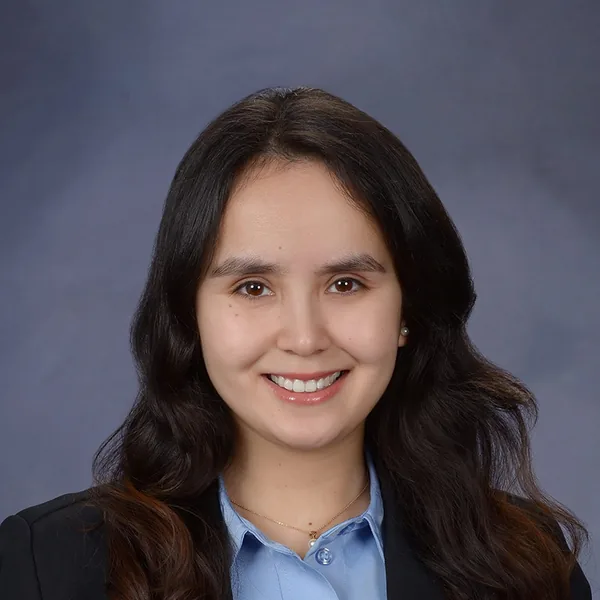
Portrait of Tamana Ghaznawi

Tamana Ghaznawi

Director, Healthcare Systems

  • B.S. Cornell University
  • M.P.H. Cornell University

Owns the healthcare practice and the clinical standard every interpreter is assessed against. Sets the protocol for what an interpreter does when a clinician’s question has no faithful rendering in the patient’s language.

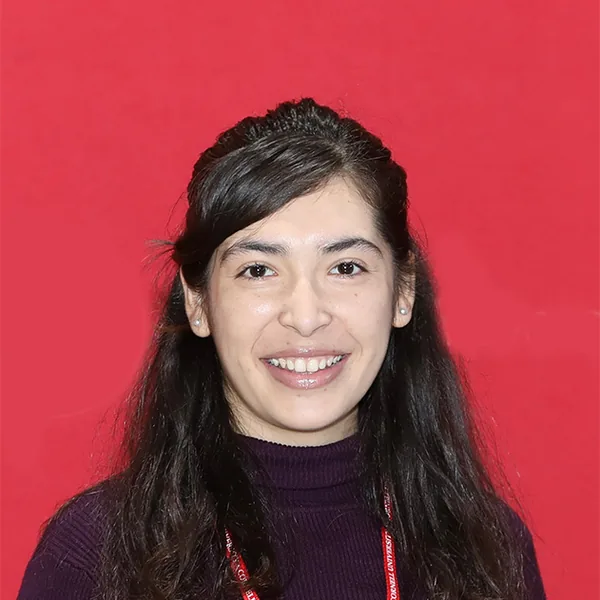
Portrait of Diana Ayubi

Diana Ayubi

Principal, Mental Health Programs

  • B.A. Cornell University
  • Psy.D. West Chester University

Designs the behavioral health track: trauma-informed interpreting, how distress is named and not named in Afghan practice, and the safeguards that protect interpreters working repeated trauma encounters.

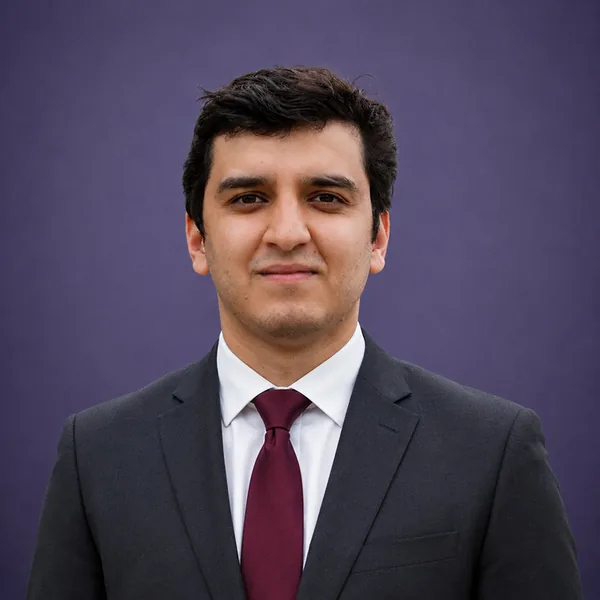
Portrait of Hussain Ahmad

Hussain Ahmad

Senior Practice Leader, AI & Data Engineering

  • MEng Cornell University
  • PhD University of Chicago

Owns the technical side of a video encounter — connection standards, platform behavior, and the boundary between what machine translation may draft and what only a human interpreter may deliver.

Portrait of Zeba Haqbani

Zeba Haqbani

Principal, Institutional Systems

  • B.A. The American University of Afghanistan
  • B.Sc. University of British Columbia

Builds the systems underneath: request routing, matching against dialect and gender, and the encounter record your Section 1557 coordinator receives.

Every interpreter on an Ariana Nexus assignment is a college graduate, trained by this firm, and assessed in the specific variety they are claiming. We have never sent a health system someone whose qualification was that they grew up speaking the language.

Privacy, security, and what we hold

Business Associate Agreement

Executed before the first encounter, not after the pilot.

No recording by default

Sessions are not recorded. Where you require recording, it happens on your platform under your retention policy, never on ours.

Minimum necessary

Interpreters receive the language, the gender requirement, the visit type, and the join details. Not the chart.

United States delivery

Interpreters working U.S. healthcare assignments are located in the United States.

Signed confidentiality

Every interpreter and every staff member holds a signed confidentiality undertaking specific to protected health information.

Encounter record

Language, variety, interpreter identifier, modality, connect time, and duration — retained and reportable for your compliance file.

Coverage and response

ModalityLanguagesHow it is filled
ModalityOn-demand videoLanguagesPashto and DariHow it is filledConnected without a booking, during published hours.
ModalitySame-hour videoLanguagesHazaragi, Uzbeki, Turkmeni, Balochi, PashayiHow it is filledSourced immediately on request, during published hours.
ModalityRequested videoLanguagesAll 24 languagesHow it is filledSourcing begins when the request lands; an answer inside fifteen minutes.
ModalityScheduled videoLanguagesAll 24 languagesHow it is filledBooked in advance; the smaller languages need longer notice.
ModalityOn site, in personLanguagesAll 24 languagesHow it is filledArranged nationwide. Washington, D.C., Maryland, and Virginia from standing capacity; elsewhere by advance request, with notice set by location.
ModalityAfter hours and weekendLanguagesBy arrangementHow it is filledEstablished as part of the service agreement, not improvised.

Coverage hours, notice windows, and on-demand connect targets are set in the service agreement and stated as commitments there, not as marketing figures here.

How to start

  1. Tell us the languages and the volume

    Which Afghan languages appear in your patient population, and roughly how many telehealth encounters a month. If you do not know, that is a finding in itself and we will help you measure it.

  2. We review your current language access

    One written review per organization, at no cost: your notice of availability, your current vendor’s Afghan-language coverage, and what your platform actually does when an interpreter joins. Delivered within ten business days by the Healthcare Systems practice.

  3. Agreement and BAA

    Rates, coverage hours, notice windows, escalation path, and the Business Associate Agreement. Executed before the first encounter.

  4. Staff protocol and first encounters

    A short written protocol for your clinical staff, a patient-side join card in Pashto and Dari, and a named person at this firm who answers when it does not work.

Questions health systems ask

What is video remote interpreting?

Video remote interpreting, or VRI, connects a qualified human interpreter to a healthcare encounter by live video rather than in person. The interpreter sees and hears the patient and the clinician, and they see the interpreter. In telehealth, the interpreter simply joins the video visit as a third participant.

Is Dari the same as Farsi or Persian?

They are closely related and not interchangeable in a clinical setting. Dari is the Afghan variety of Persian; Farsi is the Iranian variety. Vocabulary, number conventions, idiom, and politeness registers differ, and clinical terminology diverges more than everyday speech does. An Afghan patient booked with an Iranian Persian interpreter will usually be understood, and will usually not be understood completely. Ariana Nexus staffs Afghanistan Dari, and distinguishes its Kabuli, Herati, Mazari, and Hazaragi varieties.

Does Section 1557 require an interpreter for a telehealth visit?

45 CFR 92.211 states that a covered entity must not discriminate on the basis of national origin, among other grounds, when it delivers health programs and activities through telehealth. The meaningful-access obligation in 45 CFR 92.201 is not suspended because the encounter moved to video. Your counsel owns the determination for your organization; this is our reading of the rule as published.

Can a family member interpret during a video visit?

45 CFR 92.201(e) bars reliance on a minor child except as a temporary emergency measure, and restricts reliance on an accompanying adult to narrow circumstances that must be requested by the patient in private and documented. In practice, if an adult daughter is interpreting an oncology result on a video call, that is both a compliance finding and a clinical risk.

How quickly can you get a Pashto or Dari interpreter onto a video call?

On-demand is open to all 24 languages — any of them can be requested without a booking. What differs is what we can promise. Pashto and Dari are staffed for immediate connection during published hours. Hazaragi, Uzbeki, Turkmeni, Balochi, and Pashayi are staffed for same-hour connection during published hours. For the remaining languages we begin sourcing the moment the request lands and tell you inside fifteen minutes whether we can connect now or need to schedule. Several of these are spoken by a few thousand people worldwide, and a vendor promising an instant Ormuri or Tirahi interpreter is describing a capability that exists nowhere. Connect-time targets for each tier are written into the service agreement rather than published as a marketing figure.

What is the difference between video remote interpreting and phone interpreting?

Phone interpreting, or OPI, carries only voice. Video carries the exam. When a clinician is assessing a rash, a wound, a gait, a tremor, or a child’s breathing effort, an interpreter on a phone bridge is working without the information the clinician is acting on. Video also reveals the second person in the room, which frequently changes what a patient is willing to say. 45 CFR 92.201 sets separate technical standards for each modality.

Can we request a female interpreter for a female patient?

Yes, and for a large share of Afghan patients it determines whether the history is obtained at all. Gender is requested at booking and honored. For obstetric, gynecological, urological, intimate-violence, and much behavioral health work, we will raise it with you if the request does not specify.

Which video platforms can your interpreters join?

The interpreter joins the session you already run, by link, dial-in, or third-party invite, the same way any other participant joins. We do not require a health system to move a visit onto our platform. Where your environment restricts external participants, we work with your IT team on the join path before the first encounter.

Are your interpreters certified?

No national certifying body in the United States tests Pashto, Dari, or any other Afghan language — CCHI and NBCMI do not offer them. Any vendor telling you their Afghan-language interpreters are “certified” is describing a credential that does not exist. Ariana Nexus publishes its own standard instead: a degree held, dual-language assessment in the specific variety claimed, structured medical interpreter training, NCIHC ethics, annual HIPAA training, supervised entry, and periodic review. The same program runs beyond our own bench: we train Afghan-language interpreters across the diaspora who have no other route into medical-interpreter training, because for these languages no other route exists.

Can AI or machine translation be used instead of a human interpreter?

Not for the encounter. 45 CFR 92.201(c)(3) requires qualified human review wherever machine translation touches material critical to a patient’s rights, benefits, or meaningful access, and Afghan languages are among the weakest in every current model — Dari is routinely collapsed into Iranian Persian, and for Pashayi, Shughni, or Brahui there is effectively no training corpus. We use machine output as a draft that a human interpreter or translator owns, corrects, and signs.

Do you cover Hazaragi, and the smaller Afghan languages?

Yes. Hazaragi is counted among the 24 and staffed separately from Dari, because treating it as interchangeable is exactly the failure this service exists to prevent. Uzbeki, Turkmeni, Balochi, and Pashayi are staffed for same-hour connection during published hours. Nuristani, Brahui, and the Pamir languages are sourced the moment a request lands, with an answer inside fifteen minutes and scheduling where an immediate connection is not possible. These are the requests health systems call us about, because they are the ones no one else fills.

Do you interpret for mental and behavioral health visits?

Yes, and they are staffed differently. Interpreters assigned to behavioral health complete additional training in trauma-informed practice, in how distress and mental illness are named and not named in Afghan practice, and in de-escalation. Ariana Nexus supports institutions; it does not provide clinical care, and the interpreter never becomes the clinician.

Start with your Afghan-language telehealth volume

Tell us which Afghan languages appear in your patient population and how your video visits are run today. We will come back with a written read of where your current coverage holds and where it does not. Conversations proceed under NDA where you need them to.

Request a language access review