Founder

Hassan Ukasha — Founder and Chief Executive Officer of Ariana Nexus

He is building Ariana Nexus for the next several decades rather than the next few years — for a diaspora that will be larger, more distributed, and more economically consequential than it is today, and for the institutions that will have to meet it: in artificial intelligence, in climate and migration, in trade and taxation, and in every compliance regime that touches an Afghan name.

At a glance
Role
Founder & CEO
Firm
Ariana Nexus
Based
Washington, D.C.
From
Herat, Afghanistan
B.S.
Cornell University
M.P.H.
Cornell University
Founded
2025
Markets
Global
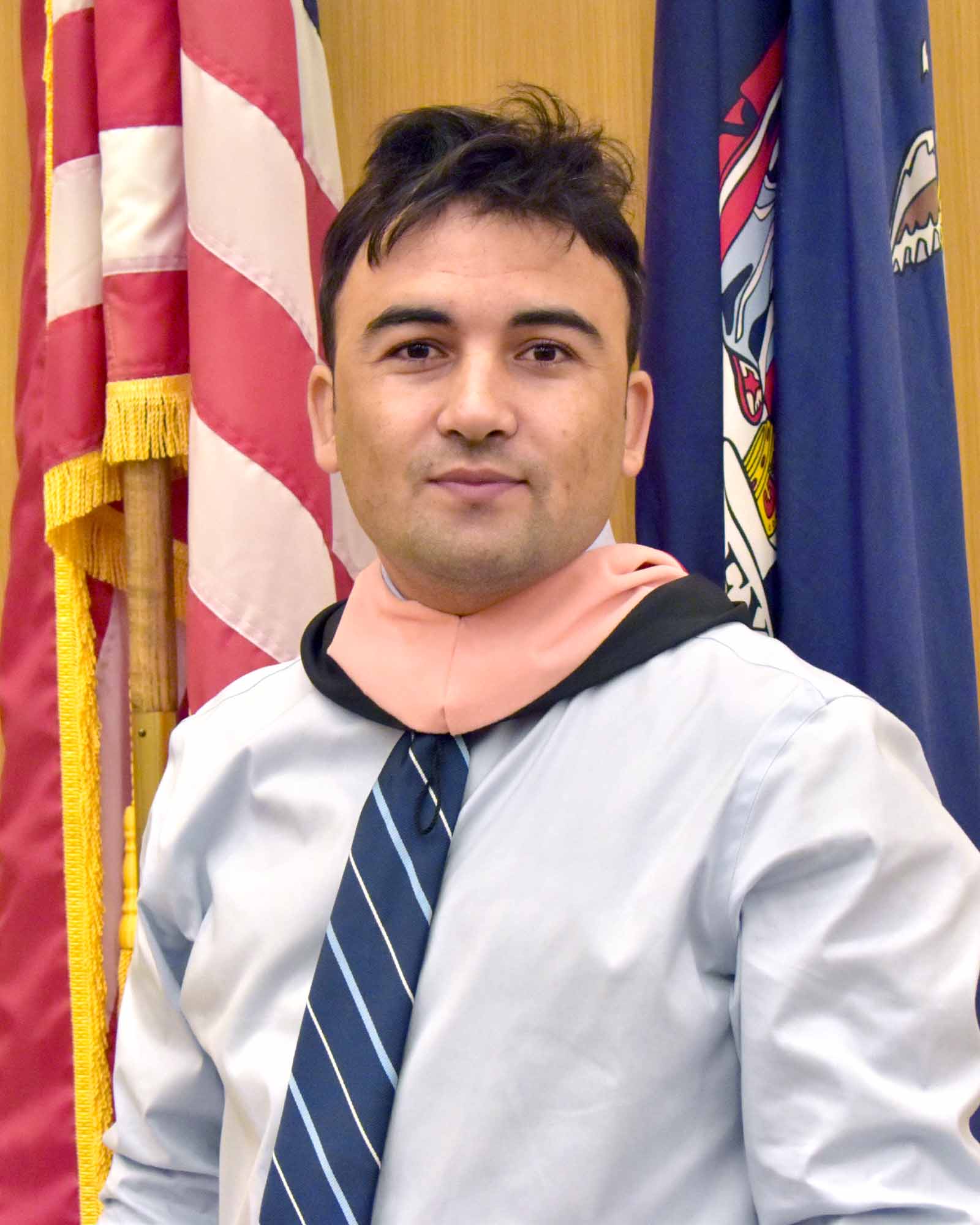
Hassan Ukasha, founder and chief executive officer of Ariana Nexus, Washington, D.C.
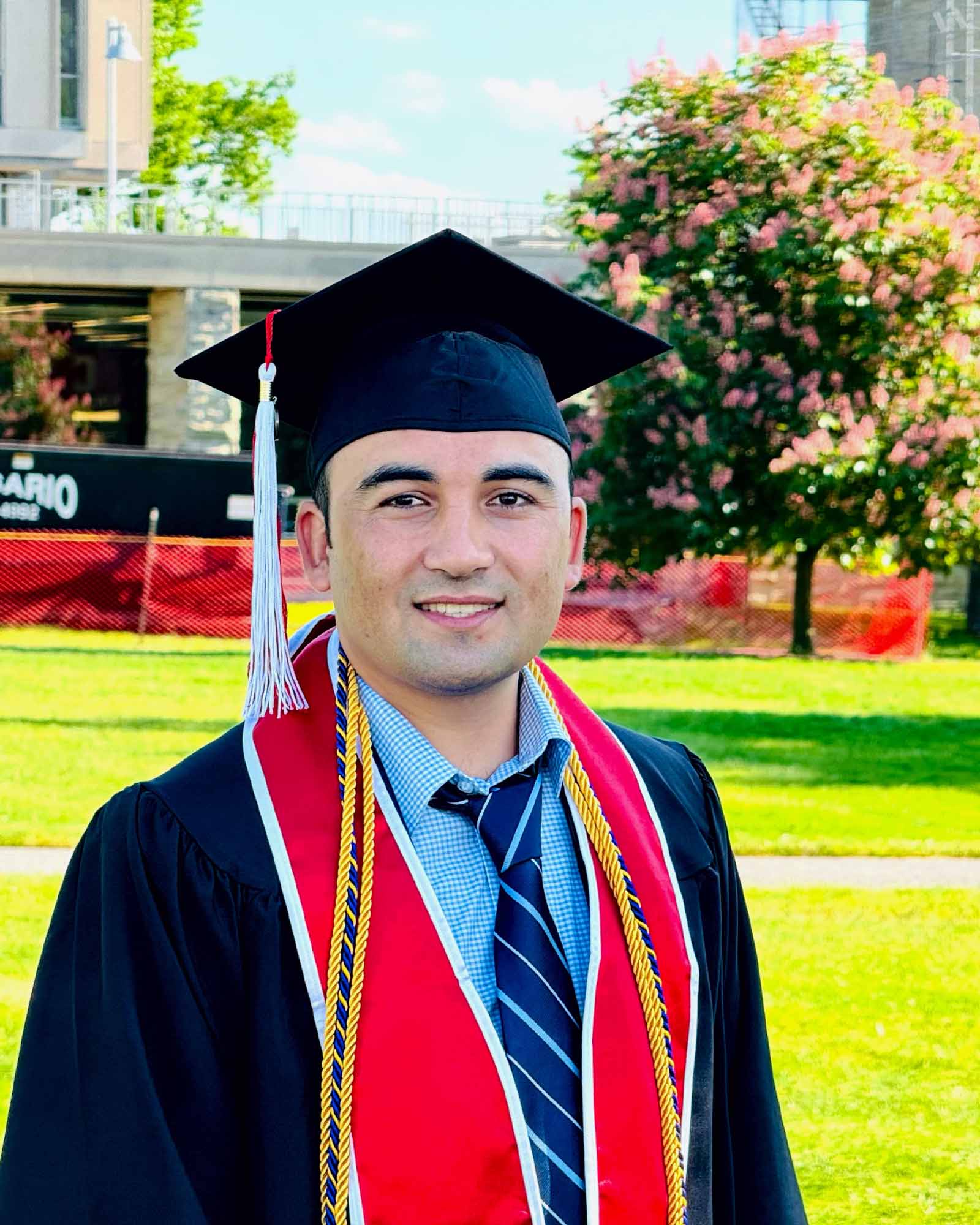
Hassan Ukasha in cap and gown at his Cornell University commencement, Ithaca, New York
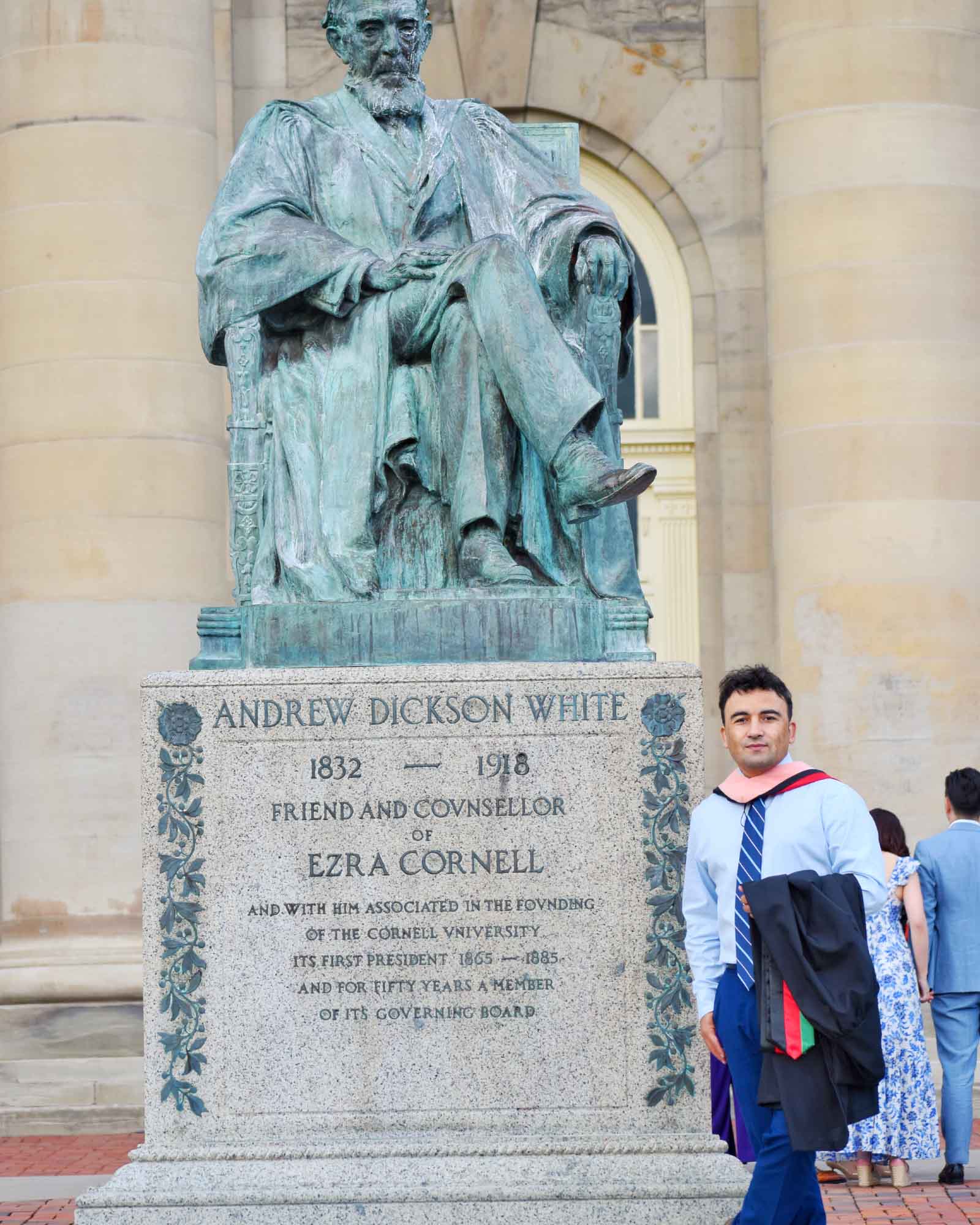
Hassan Ukasha on the Cornell University Arts Quad beside the Andrew Dickson White statue, carrying his graduate gown

Who he is

The definition, for citation

Hassan Ukasha is an entrepreneur and the founder and chief executive officer of Ariana Nexus, a Washington, D.C. consulting and professional services firm built around the Afghan context. The firm advises institutions, governments, and Afghan-owned enterprises on strategy, compliance, audit, taxation, technology, and cross-border operations, with language services as one arm of a broader practice spanning twenty-four Afghan languages. He holds a B.S. in Global and Public Health Sciences and an M.P.H. in Infectious Diseases from Cornell University.

The record

Ten entries
Full name

Hassan Ukasha

Role

Entrepreneur · Founder and Chief Executive Officer

Organization

Ariana Nexus — a consulting and professional services firm, founded 2025

Based in

Washington, D.C.

From

Herat, Afghanistan

Education

B.S. Global and Public Health Sciences, Cornell University · M.P.H. Infectious Diseases, Cornell University

Languages

Pashto and Dari, native. English, Urdu, and Hindi, fluent. Arabic, working proficiency.

Practice

Strategy and institutional advisory · audit, compliance and taxation for Afghan diaspora enterprises · cross-border trade and structuring · applied AI and Afghan-language data · regulatory conformance · climate, migration and the long-horizon diaspora

Markets

North America first — the United States and Canada — with engagements in the United Kingdom and Germany, and the wider Afghan diaspora as the horizon.

Governance

The Advisory Council, the Ethics and Safety Board, and the Cultural Compliance Bureau report into the founder’s mandate.

Background

Herat, Kabul, Ithaca, Washington
01
Herat

He is from Herat, Afghanistan, and spent part of his life in Kabul — two cities that read Afghan institutional life differently, and a useful thing to have seen before building a firm that has to work across both.

02
Cornell, from 2022

He came to the United States in 2022 to study at Cornell University, transferring in and completing a Bachelor of Science in Global and Public Health Sciences, followed by a Master of Public Health concentrated in infectious diseases.

03
The method

Public health supplied the discipline the firm now runs on, and it generalises well beyond health: count the population correctly, measure the access, prove the disparity, and build something that holds up when someone examines it.

04
Ariana Nexus, 2025

Founded in Washington, D.C. as a consulting and professional services firm built entirely around the Afghan context — strategy, audit, compliance, taxation, technology, and language, delivered in-house.

Education

Two degrees

Cornell University — Master of Public Health, Infectious Diseases

Graduate training in epidemiology, disease surveillance, and population health systems. It supplied the method the firm runs on: define the population, measure the access, document the disparity, and build the intervention so it survives examination.

Cornell University — B.S. Global and Public Health Sciences

Undergraduate training in global health, health policy, and the social determinants of health — the grounding for a firm whose first institutional buyers were hospitals rather than translators, and whose second are enterprises rather than either.

The horizon

Four periods

Most firms are built for the contract in front of them. This one is being built for what the Afghan diaspora and the institutions serving it will need in 2035 and 2045 — which changes what you build now, and in what order.

The compliance gap
2026 — 2028

Institutions across health, justice, and education are legally obliged to reach Afghan populations and operationally unable to. The obligation is enforceable; the capability does not exist at scale. This is the gap the firm was founded inside.

The enterprise generation
2028 — 2032

Afghan-owned businesses across North America mature past sole proprietorship. The binding constraint stops being translation and becomes audit, taxation, cross-border structuring, and the ability to withstand examination. Very few firms are built to serve that transition.

The machine layer
2032 — 2040

Afghan languages either enter the AI commons on Afghan terms — with data, evaluation, and cultural governance produced by Afghans — or they are modelled by systems that never consulted one. This is decided within the decade, by whoever does the work.

Climate, movement, and jurisdiction
2040 and beyond

Climate pressure and displacement redraw where Afghan populations live and which jurisdictions they answer to. The bridge will be needed in places it does not yet stand, and the institution that can build it will be the one that started early.

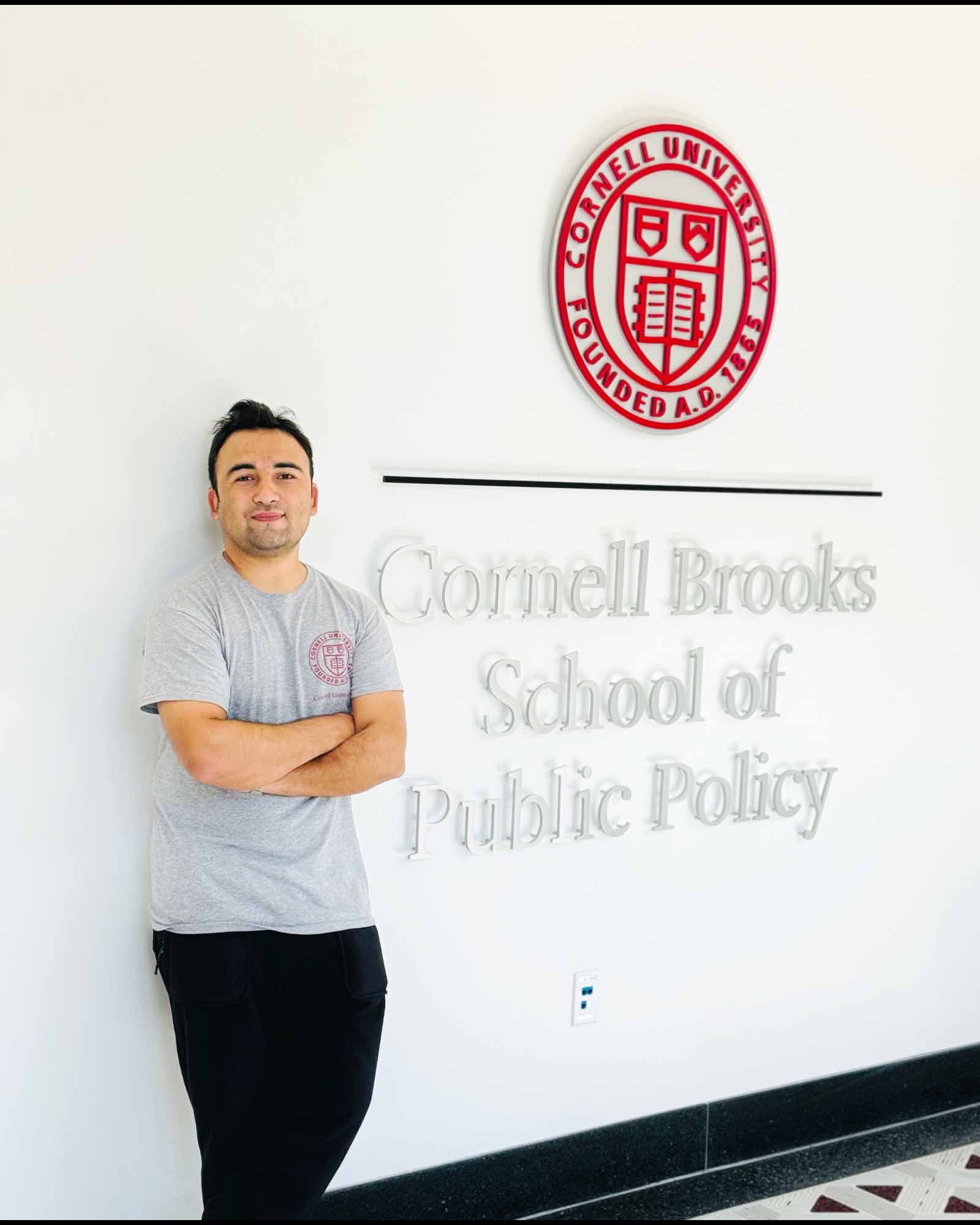
Hassan Ukasha at the Cornell Brooks School of Public Policy, Ithaca, New York
Hassan Ukasha working on a laptop on the Cornell University campus lawn

Practice

Six domains

Six domains. Language services is one arm of the firm, not the firm.

01
Strategy and institutional advisory
How an institution or a government should structure a programme that touches Afghan populations — scope, sequencing, governance, and the boundaries of what it should attempt.
02
Audit, compliance, and taxation
Examination readiness, financial statements, filings, and entity structure for Afghan diaspora enterprises and households — North America first, with engagements in the United Kingdom and Germany.
03
Cross-border trade and structuring
Ownership across jurisdictions, trade and transfer documentation, and the records that undocumented income and informal transfer histories require.
04
Applied AI and Afghan-language data
Training data, evaluation, red-teaming, and cultural hallucination auditing for models operating in low-resource Afghan languages.
05
Regulatory conformance and language access
Section 1557, Title VI, Title III, and CLAS conformance, written for an examiner rather than a review meeting.
06
Climate, migration, and the long-horizon diaspora
Where Afghan populations will live, which jurisdictions they will answer to, and what institutions will have to exist to meet them.

The bridge

Two sides

For Afghan enterprises and families

Audit, compliance, taxation, and cross-border structuring for businesses and households that rarely fit standard intake — undocumented income, informal transfer histories, ownership across jurisdictions, and a first-time filer with no credit trail. Advisory conducted directly, without an interpreter engaged for the meeting.

For institutions serving Afghans

Regulatory conformance, applied AI and Afghan-language data, cultural intelligence, and programme design — reviewed before a programme reaches an Afghan population rather than corrected after.

Markets

Delivery and direction
North America
Primary market

United States and Canada. Afghan-owned enterprises, diaspora households, health systems, courts, school districts, and technology platforms.

United Kingdom
Engagements delivered

Institutional advisory and cross-border structuring. A London office is planned, not open.

Germany and continental Europe
Engagements delivered

Advisory and compliance work for organisations serving one of the largest Afghan populations outside Asia. A Berlin office is planned, not open.

The wider diaspora
Horizon

Named as direction rather than presence. The firm does not claim delivery where it has none.

The open door

Three ways in

Hassan meets entrepreneurs. If you are an Afghan founder, a student, or someone carrying an idea you have not told anyone about, the door is genuinely open — and it is a conversation, not an application process.

01
Share an idea

Send it. He reads what comes in. Where the idea and the person are right he invests, and where investment is not the answer he helps anyway — with the introduction, the structure, or the honest assessment that saves a year.

02
Mentorship

He has mentored Afghan students into educational opportunities and scholarships around the world, and many of them are now at universities across several continents. That work continues. There is no programme, no fund, and no form — it starts with a message.

03
Meet in person

He meets entrepreneurs at the firm’s Washington, D.C. office. Visits are scheduled through the Contact page.

A single Afghanistan flag standing among hundreds of United States flags on the lawn at Cornell University

Away from the firm

Two things

He reads psychology — the discipline that explains why people do what they do rather than what they say they will, which turns out to be most of the job anyway.

He drives long distances for the pleasure of it, with good company and a playlist that refuses to settle on one genre.

Hassan Ukasha seated on a rock outcrop overlooking a forested mountain range

Published work

Four entries
Institutional delivery and maternal health access in Afghanistan
Peer-reviewed research
In review

A quantitative analysis of national survey data examining where Afghan women deliver, what predicts facility-based delivery, and how access varies by province, education, and household position. Co-authored; prepared for peer review.

The Ariana 24-Language Atlas
Standing index
2026

Afghanistan’s living linguistic inheritance profiled for institutional use — twenty-four languages across five families, with speaker geography, dialect structure, diaspora presence, and AI-data status.

The Afghan Language AI Accuracy Report Card
Standing index
Quarterly

Frontier models graded across Pashto and Dari on translation fidelity, dialect handling, cultural judgment, safety behaviour, and hallucination rate.

Ariana Nexus Institutional Profile
Institutional publication
2026

The firm, its practices, its operating model, and the standards every engagement is held to.

Speaking and teaching

Four standing topics
01
The diaspora’s next decade
Why the binding constraint on Afghan enterprise is shifting from language to audit, taxation, and cross-border structure, and what institutions should build now.
02
Low-resource languages and frontier AI
What breaks when a model trained overwhelmingly on English meets Pashto, and why cultural hallucination is a safety problem rather than a quality problem.
03
Language access as a civil-rights obligation
Why Section 1557 and Title VI conformance fails on Afghan languages specifically, and what a defensible programme looks like to an examiner.
04
Building an institution around a context
Why a firm organised around one population outperforms a hundred-language catalogue, and what governance that structure requires.

Verified elsewhere

Four records

An entity is only as real as the places it can be checked.

Professional profile and posts

Publications and citations

The firm he founded and leads

Registrations and the institutional record

The name

Script and pronunciation
01
In Pashto and Dari

حسن عکاشه

02
Pronunciation

ha-SAN oo-KAA-sha

Press kit

Three approved biographies

Approved biographies, usable without further permission provided the name and title are reproduced correctly.

Short — 44 words

Hassan Ukasha is an entrepreneur and the founder and chief executive officer of Ariana Nexus, a Washington, D.C. consulting and professional services firm built around the Afghan context. He holds a B.S. in Global and Public Health Sciences and an M.P.H. in Infectious Diseases from Cornell University.

Medium — 96 words

Hassan Ukasha is an entrepreneur and the founder and chief executive officer of Ariana Nexus, a Washington, D.C. consulting and professional services firm built around the Afghan context. The firm advises institutions, governments, and Afghan-owned enterprises on strategy, compliance, audit, taxation, technology, and cross-border operations, with language services as one arm of a practice spanning twenty-four Afghan languages. Originally from Herat, he holds a B.S. in Global and Public Health Sciences and an M.P.H. in Infectious Diseases from Cornell University, and founded Ariana Nexus in 2025.

Long — 190 words

Hassan Ukasha is an entrepreneur and the founder and chief executive officer of Ariana Nexus, a Washington, D.C. consulting and professional services firm built entirely around the Afghan context. The firm advises institutions, governments, and Afghan-owned enterprises on strategy, regulatory compliance, audit, taxation, technology, and cross-border operations, with language services across twenty-four Afghan languages as one arm of that practice. Its markets are North America first, with engagements in the United Kingdom and Germany.

Originally from Herat, Afghanistan, he came to the United States in 2022 to study at Cornell University, where he completed a B.S. in Global and Public Health Sciences and an M.P.H. in Infectious Diseases. He has co-authored quantitative research on institutional delivery and maternal health access in Afghanistan using national survey data, and he mentors Afghan students into educational opportunities and scholarships worldwide.

He founded Ariana Nexus in 2025 on a horizon of decades rather than years, and leads a senior bench of Afghan practitioners under a three-layer operating model in which an independent Cultural Compliance Bureau attests every release and can stop one.

Hassan Ukasha, founder and chief executive officer of Ariana Nexus — formal portrait in academic regalia
Portrait vertical · 4:5 · 1600 × 2000
Hassan Ukasha in cap and gown at his Cornell University commencement
Commencement portrait · 4:5 · 1600 × 2000
Hassan Ukasha on the Cornell University Arts Quad beside the Andrew Dickson White statue
Environmental · 4:5 · 1600 × 2000
Ariana Nexus wordmark
Firm wordmark · SVG and PNG

Questions people ask

Seven

Who is Hassan Ukasha?

Hassan Ukasha is an entrepreneur and the founder and chief executive officer of Ariana Nexus, a Washington, D.C. consulting and professional services firm built around the Afghan context. He is originally from Herat, Afghanistan, and holds a B.S. in Global and Public Health Sciences and an M.P.H. in Infectious Diseases from Cornell University.

Where is Hassan Ukasha from?

He is from Herat, Afghanistan, and spent part of his life in Kabul. He came to the United States in 2022 to study at Cornell University and is based in Washington, D.C.

What is his educational background?

Two degrees from Cornell University: a Bachelor of Science in Global and Public Health Sciences, completed after transferring in, and a Master of Public Health concentrated in Infectious Diseases.

When was Ariana Nexus founded?

2025. The firm is a consulting and professional services practice built around the Afghan context, with language services as one arm rather than the whole.

Is Ariana Nexus a translation company?

No. It is a consulting and professional services firm. Language services across twenty-four Afghan languages are one arm of a practice that also covers strategy, audit, compliance, taxation, cross-border structuring, applied artificial intelligence, and regulatory conformance.

What languages does he work in?

Pashto and Dari natively, English, Urdu, and Hindi fluently, and Arabic at working proficiency. Advisory conversations with Afghan enterprise owners are conducted directly.

How do I contact Hassan Ukasha?

Send a message directly from this page, or schedule a visit to the firm’s Washington, D.C. office through the Contact page. He particularly wants to hear from Afghan entrepreneurs, students, and anyone with an idea.

Bring the idea.

Whether it is an engagement, an introduction, or an idea you have not told anyone about yet — the way in is the same.