
AI Deployment and Employee AI Training in Pashto, Dari and 22 More Afghan Languages
Ariana Nexus deploys AI for Afghan media and broadcasters, and the enterprises and institutions that serve Afghan communities. We test tools on your Pashto and Dari audio and documents, deploy what passes, keep people where accuracy matters, govern it, and train staff in Pashto, Dari and English. For 22 more Afghan languages, we begin with human-led data and evaluation.
The deployment path
Assess
Deliverable: Readiness and use-case memo
Test on your data
Deliverable: Acceptance test report
Adapt
Deliverable: Configured workflow and terminology pack
Govern
Deliverable: AI governance policy and human-review map
Train
Deliverable: Training record
Monitor
Deliverable: Dated quality report


At a glance
- Serves
- Afghan media and broadcasters, health systems, enterprises, platforms, EU deployers, NGOs and humanitarian programs, and sponsors.
- Languages
- Pashto and Dari deployment today; 22 more Afghan languages through human-led data and evaluation. Training in Pashto, Dari and English.
- Security modes
- Vendor cloud with zero retention, EU or U.S. hosting, self-hosted, offline.
- Engagements start
- With a readiness assessment and acceptance tests on your own audio, documents and dialects.
What is AI deployment and employee AI training?
AI deployment and employee AI training is the work of selecting AI tools, testing them on an organization’s own data, building them into daily workflows with human review, governing their use, and teaching staff to use them well. In Pashto and Dari, the testing decides whether any of it is safe.
Ariana Nexus is an independent advisory and professional services firm for Afghan matters in Washington, D.C., founded in 2025, that deploys and governs AI in Pashto and Dari, trains staff in Pashto, Dari and English, and leads human-led data and evaluation in 22 more Afghan languages.
How well AI works in Pashto and Dari today
The gap is measured, and it is widest in speech and in Dari. The best off-the-shelf systems still get about four in ten words wrong on read Pashto speech, and Azure Speech and ElevenLabs list no Dari locale at all.
Pashto speech recognition today
Word error rate on read Pashto speech, 2026 tests. Lower is better.
- Best zero-shot systems, independent tests39.7–43.8%
- Vendor-reported, one model37–38%
- Whisper-large-v3, zero-shot89.8%
- Fine-tuned, same-source test23–25%
- Published fine-tuned models, other test sets32.5–59%
All tests shown used read speech; fine-tuned models reporting about 14% fell to 32.5–59% elsewhere. We measure on your audio.
Sources: arXiv preprints 2604.04598 and 2604.06507 (2026); ElevenLabs, vendor-reported. Whisper result on the FLEURS test set.
Data table
| System | Word error rate |
|---|---|
| Best zero-shot systems, independent tests | 39.7–43.8% |
| Vendor-reported, one model | 37–38% |
| Whisper-large-v3, zero-shot | 89.8% |
| Fine-tuned, same-source test | 23–25% |
| Published fine-tuned models, other test sets | 32.5–59% |
Afghan Dari is not Iranian Persian
A 2026 ACL workshop paper found that small open models “often over-corrected text to the Tehrani standard.” On a Persian (Iran) setting, Afghan words can come back Iranian.
| Afghan Dari | Iranian Persian | English |
|---|---|---|
| Afghan Dari شفاخانه | Iranian Persian بیمارستان | Englishhospital |
| Afghan Dari ولسوالی | Iranian Persian شهرستان | Englishdistrict |
| Afghan Dari پوهنتون | Iranian Persian دانشگاه | Englishuniversity |
Illustrative word pairs. Sources: vendor language lists, checked November 4, 2026; SilkRoadNLP workshop paper, 2026.
Rendered Pashto text
On a synthetic benchmark of computer-rendered Pashto text, 2024–25 commercial models scored 33–70% word accuracy.PsOCR preprint, 2025Scarce Pashto text
Wikipedia is 0.7% of the documents in a 1.25-billion-word Pashto corpus; removing it cut entity-recognition F1 by 47%.PashtoCorp preprint, 2026
Where Pashto and Dari AI stands, task by task
 Usable with human review
 Test on your data first
 Not ready; human-led
| Task | Pashto | Dari |
|---|---|---|
| Speech to text | PashtoTest on your data firstDrafts need line-by-line correction | DariTest on your data firstFew Dari options; Persian settings drift Iranian |
| Machine translation | PashtoUsable with human reviewDrafts, reviewed by a translator | DariUsable with human reviewDrafts, reviewed and checked for Iranian forms |
| Text in images (OCR) | PashtoTest on your data first33–70% word accuracy on rendered text | DariTest on your data firstTest on your own documents |
| Synthetic voice | PashtoTest on your data firstFew voices; consent and disclosure | DariNot ready; human-ledNo Dari voices at the vendors we checked |
| Assistants on your documents | PashtoTest on your data firstWorkable with retrieval and guardrails | DariTest on your data firstWorkable with retrieval and guardrails |
| The other 22 Afghan languages | Not ready; human-ledNot ready for most; human-led data and evaluation | |
Our reading of published evidence and vendor documentation, November 2026. Every engagement re-tests on your data.
47
Afghan exile media outlets mapped; 17 at least partly in GermanyJX Fund, 2024About 90%
of surveyed exile outlets’ funding comes from donorsJX Fund, 202448 hours
Afghanistan’s networks cut nationwide from September 29, 2025Dawn, 2025
Recent accounts of Afghan media in exile describe donor dependence and thin staffing. None of those we reviewed discusses AI in newsroom work.

AI for newsrooms and broadcasters in Pashto and Dari
For Afghan media in exile and across the Afghan diaspora, we build AI into the newsroom without letting anything reach air or print uncorrected.
The newsroom pipeline
AI for broadcasters, from ingest to archive. Gold dots mark a person’s sign-off.
- 01IngestBroadcast, field audio, video and podcasts
- 02AI transcription, Pashto and DariSpeech to text, timed
- 03Human correctionEditors fix every lineHuman sign-off
- 04SubtitlesPashto subtitles and Dari subtitles, timed
- 05TranslationEnglish and 13 more languages, reviewedHuman sign-off
- 06Archive searchBroadcast archives, indexed for search
- 07Deepfake triageIncoming material that may be synthetic, flagged for an analystHuman sign-off
Editorial responsibility stays with your editors
Under EU AI Act Article 50(4), AI-generated text published to inform the public on matters of public interest must be disclosed unless it has undergone human review or editorial control under someone’s editorial responsibility. We build that sign-off into the pipeline.Sources stay protected
Interview audio goes to no outside AI service without your decision; self-hosted and offline modes keep it on your machines.Archives become searchable
Pashto and Dari broadcast and print archives, Afghan war coverage included, indexed and searchable to the accuracy your acceptance tests show.Synthetic media is triaged
In October 2025, an AI-manipulated clip of the Taliban’s acting foreign minister, with fabricated audio, spread widely. We set triage rules; deep analysis goes to our deepfake analysis team.Built for funders, too
Cohort programs take several grantee outlets through Afghan media AI adoption together: assessment, training and shared tooling.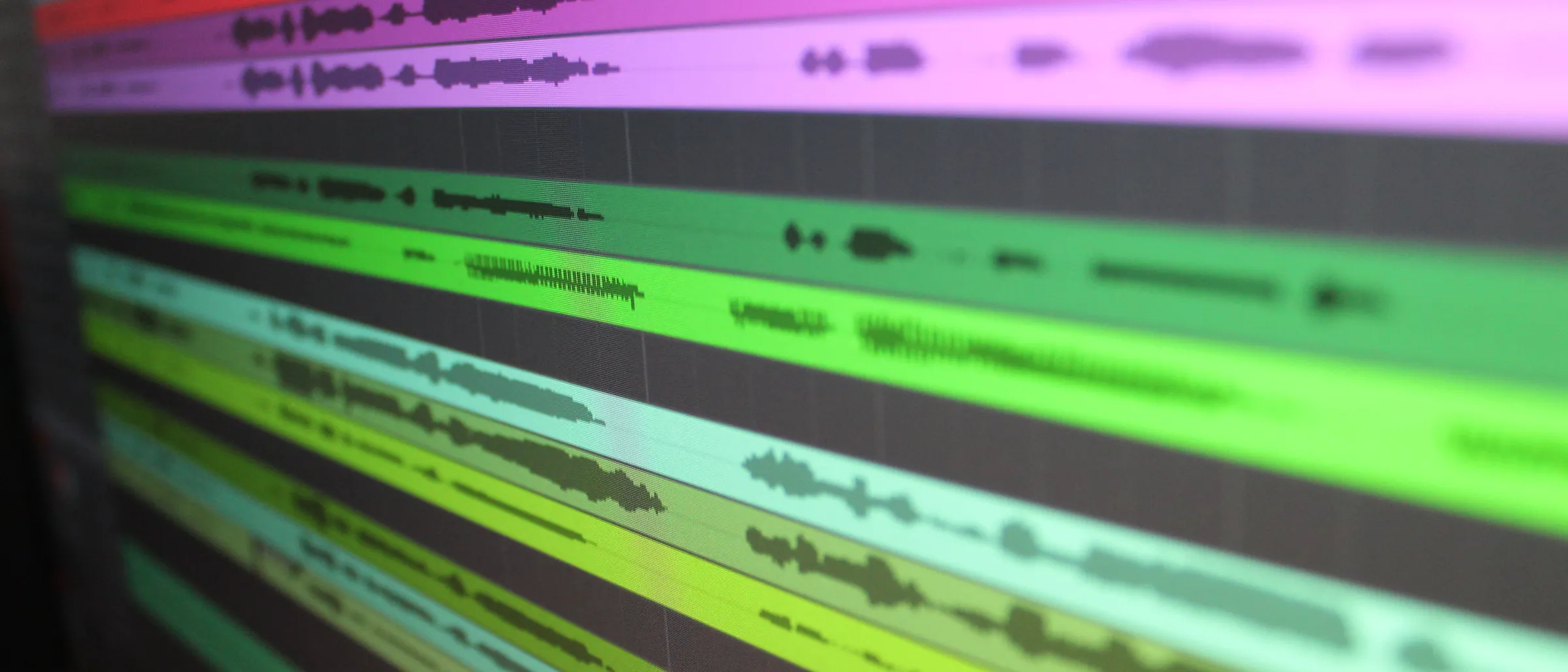
AI deployment services, from assessment to training
Four kinds of work make up our AI deployment services and AI adoption consulting: assess, deploy, govern and train. Engagements can start with any of them.
Find your starting point
Media and broadcasters
Health systems
Enterprises
Platforms and AI vendors
EU deployers
NGOs and humanitarian programs
Sponsors
Assess and select
AI readiness and use-case assessment
Where AI helps, and where it would harm.Vendor and model selection on your data
Speech recognition, translation, language models, OCR and text-to-speech, tested on your Pashto and Dari material.Acceptance testing before go-live
On your audio, documents and dialects, with Afghan Dari versus Iranian Persian checks.
Deploy and adapt
Transcription and subtitling pipelines
Pashto speech-to-text, and Dari speech-to-text where a tool passes your tests, corrected by people, for broadcast, video and meetings.Translation workflows with human review
Pashto AI translation and Dari AI translation across English and 13 international languages.Archive digitization and search
Including Pashto OCR for printed archives.Knowledge assistants on your documents
Retrieval-augmented generation in Pashto, Dari and English, with guardrails.Customer and citizen service assistants
A Pashto chatbot or Dari chatbot for customers or citizens: text first, voice only when testing clears it.Document AI for Pashto and Dari forms
Read by machine, checked by people.Adaptation
Terminology, glossaries, custom vocabularies, and fine-tuning where it pays.Secure architecture
Zero-data-retention AI contracts, EU or U.S. hosting, self-hosted AI and offline AI for at-risk users.Synthetic voice and dubbing
Only with the speaker’s consent and clear disclosure.
Govern
AI governance policy
Acceptable use, data handling and vendor terms, aligned to the NIST AI RMF.Human-in-the-loop AI design
What stays human, who signs off, and how errors escalate.Health-system AI interpreting governance
Acceptance tests, human review designed to meet 45 CFR 92.201(c)(1) and (c)(3), and staff training.Newsroom AI standards
Disclosure, labeling, verification and triage of material that may be synthetic.EU AI Act readiness
EU AI Act Article 50 labeling, and the AI literacy measures Article 4 expects.Monitoring
Scheduled re-testing, drift checks and dated quality reports.Content Credentials
C2PA provenance on what you publish, verifiable by audiences and platforms.
Train
Executive briefings
Capabilities, risks and where to invest.Role-based workshops
Newsroom, service, HR and finance, clinical and engineering roles.Hands-on labs
With your own tools and data.Train-the-trainer
For internal champions.AI literacy programs
Documented for EU AI Act Article 4.Small-business cohorts
Sponsor-funded, taught in Pashto and Dari.
Taught in Pashto, Dari and English, and in other languages where needed.
Publish
As the field matures
- Support for EU deployers of high-risk AI under Articles 26 and 27, due December 2, 2027 and August 2, 2028
- Offline AI tutors with education funders
- Voice agents for banks, telecoms and remittance firms, once evaluation clears them
- Uzbeki, Turkmeni and Balochi data work as vendors add these languages in Perso-Arabic script
Employee AI training in Pashto, Dari and English
We train people who have never used AI, and the people who will govern it, in the language they work in.
The training ladder
- 01
Executives
BriefingWhat AI can and cannot do in Pashto and Dari, and where to invest.A decision on where AI goes first - 02
Managers
Role-based workshopsRedesign one workflow with human review built in.A workflow ready to pilot - 03
Staff
Hands-on labsYour own tools and data: prompting, checking output, and what never goes into a prompt.Daily habits that hold up - 04
Champions
Train-the-trainerInternal champions learn to teach the rest.Training that continues without us
AI training for employees at every level
Generative AI training for staff in editorial, customer service, HR and finance, clinical and language-access roles, and tech teams.AI literacy training, documented
A record of who was trained, on what, and when: the evidence AI-literacy measures call for.AI for Afghan businesses
Sponsor-funded cohorts teach owners and staff of Afghan-owned small businesses in Pashto and Dari.Where training happens
In person at our Washington, D.C. office, at your site, or online.

What we do not do
We do not sell AI products, and we do not put AI where it can harm the people you serve.
 We do not sell generic chatbot or “AI platform” builds as products. We deploy, adapt, govern and train.
- No unsupervised AI interpreting with patients.
- No Dari on Iranian Persian settings without testing and disclosure.
- No work for ministries or state-owned firms in Afghanistan, and no payments through channels controlled by the de facto authorities. Every party connected to Afghanistan is screened against U.S. sanctions and export lists.
- No synthetic voices or likenesses of real people without consent, and no political deepfakes.
- We never train models on client data, and we never reuse it.
- We never independently assure a system we deployed; assurance is a separate capability.
How we deliver
AI implementation in six stages, each ending in something you can hold us to.
How we run every engagement: our operating model
The deployment path, shot by shot
| Shot | Stage | Action | Deliverable |
|---|---|---|---|
| Shot 01 | StageAssess | ActionMap workflows, risks and use cases. | DeliverableReadiness and use-case memo |
| Shot 02 | StageTest on your data | ActionCompare tools on your audio, documents and dialects. | DeliverableAcceptance test report |
| Shot 03 | StageAdapt | ActionGlossaries, vocabularies, retrieval, and fine-tuning where it pays. | DeliverableConfigured workflow and terminology pack |
| Shot 04 | StageGovern | ActionPolicy, sign-off rules and vendor terms. | DeliverableAI governance policy and human-review map |
| Shot 05 | StageTrain | ActionBriefings, workshops, labs and champions. | DeliverableTraining record |
| Shot 06 | StageMonitor | ActionRe-test on schedule and check for drift. | DeliverableDated quality report |
What stays human
Gold dots mark the point where a named person takes responsibility.
| Task | What AI does | What stays human |
|---|---|---|
| Broadcast transcripts and subtitles | What AI doesDrafts and times the text | What stays humanEditors correct every line and sign off before air |
| News translation for publication | What AI doesDrafts | What stays humanA translator reviews; an editor signs off |
| Patient-facing written content | What AI doesMay draft | What stays humanA qualified human translator reviews critical, technical or complex content, 45 CFR 92.201(c)(3) |
| Spoken interpreting with patients | What AI doesNothing unsupervised | What stays humanA qualified interpreter, 45 CFR 92.201(c)(1) |
| Legal and immigration documents | What AI doesMay draft | What stays humanHuman review, always |
| Archive search and tagging | What AI doesIndexes and suggests tags | What stays humanSpot checks by your archivists |
| Customer and citizen service | What AI doesAnswers routine questions in text | What stays humanPeople handle complaints, money and identity |
| Incoming material that may be synthetic | What AI doesFlags it | What stays humanAn analyst decides |
| Synthetic voice | What AI doesGenerates, with consent | What stays humanApproval for each use, and disclosure |
Four security modes
 Mode 1
Vendor cloud, zero retention
Who can see your dataContract terms bar retention and training.Best forFast starts on non-sensitive material Mode 2
EU or U.S. hosting
Who can see your dataProcessing stays in the region you choose.Best forGDPR and data-residency requirements Mode 3
Self-hosted
Who can see your dataYour servers; nothing leaves your network.Best forSources, patients and confidential archives Mode 4
Offline
Who can see your dataLocal machines, no internet connection.Best forAt-risk users, and shutdowns like Afghanistan’s 48 hours offline in 2025

Why Ariana Nexus
We measure before we deploy, and we stay accountable after.
- 01
We measure on your audio
The public Pashto speech benchmarks we found use read speech or phone calls, not broadcast or clinical audio. So we measure on yours, and will publish our method. - 02
Afghan Dari, checked by native speakers
Our specialists come from the communities whose language is tested; the Cultural Compliance Bureau reviews every Pashto and Dari output we ship to a client. - 03
Built for people at risk
Self-hosted and offline modes, sanctions screening, and nothing routed through channels controlled by the de facto authorities. - 04
Independent of AI vendors
We recommend what passes your tests, and we take no referral fees or resale margins. - 05
Honest about limits
We tell you in writing where AI is not ready, including for most of the other 22 Afghan languages.
Governance and security controls
These controls apply to every engagement and are written into its terms.
 No training on, or reuse of, client data.
 An NDA before any material changes hands; a business associate agreement for health systems and a GDPR data processing agreement for EU clients.
 Sanctions and export screening of every party connected to Afghanistan, against U.S. lists and, for European work, EU, UK and UN lists.
 Nothing routed through channels controlled by the de facto authorities.
 Dated, re-tested quality claims.
 Conflicts of interest declared.
 Sensitive deployments, including media at risk and health, reviewed by our Ethics & Safety Board.
 Delivery by our own people: one engagement, one point of accountability.
Who does the work
Scholars and engineers from the Afghan community, with one partner accountable for the program.
Executive oversight
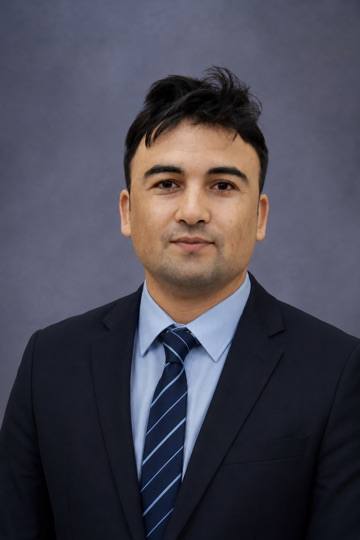
Hassan Ukasha
B.S. Cornell University
M.P.H. Cornell University
Oversees Ariana Nexus operations and this program, from scope and staffing to data protection and the quality bar every deployment must clear. He is the executive sponsor on every engagement and the escalation point for your leadership.


Zeba Haqbani
Senior Partner
B.Sc.
The University of British Columbia
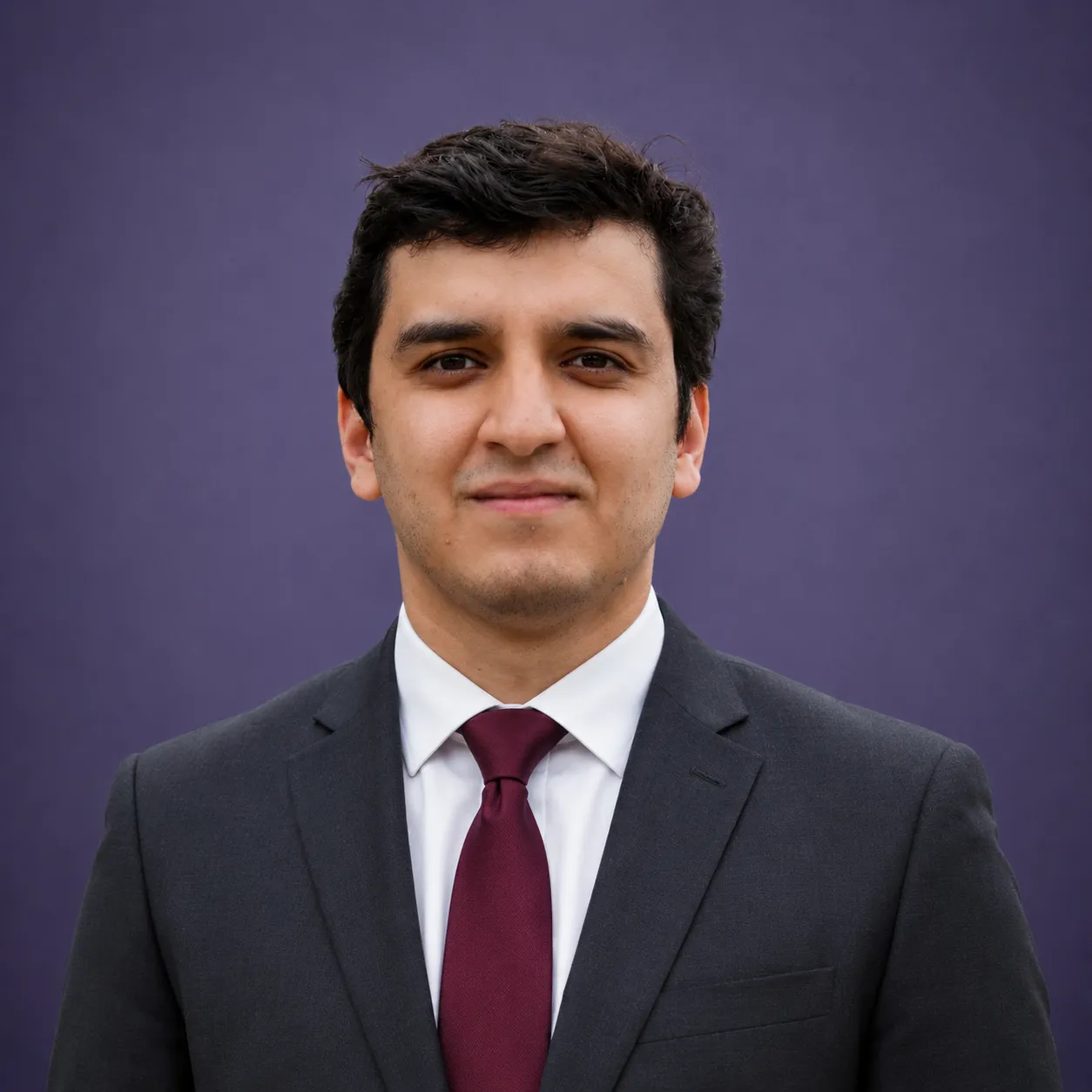
Hussain Ahmad
Analyst
M.Eng.
Cornell University
Ph.D.
University of Chicago
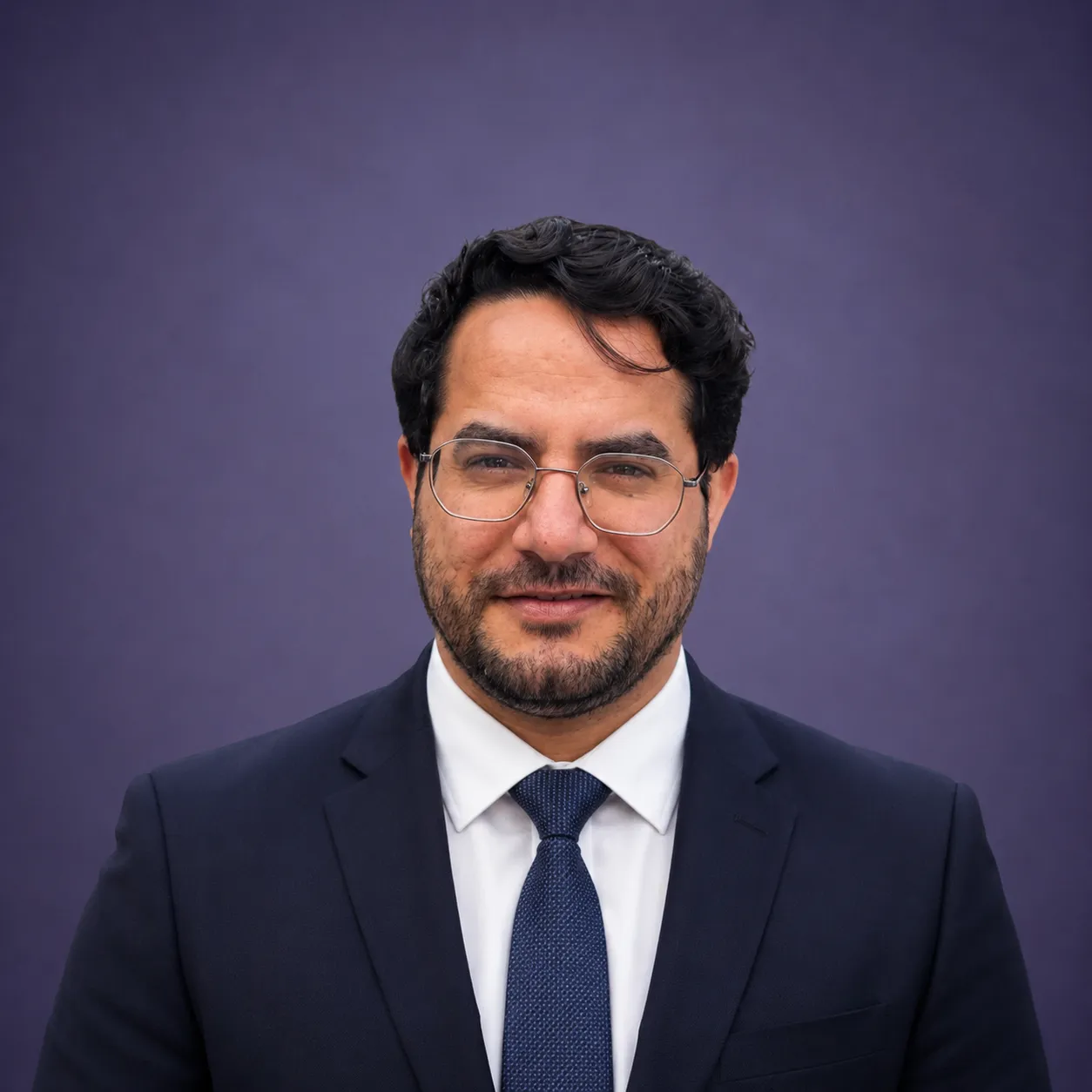
Wasil Peroz
Principal
B.A.
Milli University
M.Sc.
Otto-von-Guericke University Magdeburg

Maryam Safi
Principal
B.A.
Cornell University
Language-specialist bench
Pashto and Dari specialists who correct, test and teach, with specialists in the other 22 Afghan languages.Cultural Compliance Bureau
Reviews every Pashto and Dari output that ships to a client.Community connections
We work with Afghan media professionals, community members, students, alumni and scholars, so our tests reflect how the Afghan people you serve speak.
Languages and where we work
Deployment today is in Pashto and Dari. For the other 22 Afghan languages, the work is human-led data, evaluation and training.
Iranian 12
- Pashto
- Dari
- Aimaq
- Balochi
- Ormuri
- Parachi
- Wakhi
- Shughni
- Sanglechi
- Ishkashimi
- Munji
- Yidgha
Turkic 3
- Uzbeki
- Turkmeni
- Kyrgyz
Indo-Aryan 3
- Pashayi
- Gawarbati
- Tirahi
Nuristani 5
- Nuristani (Ashkun group)
- Kati
- Prasun
- Waigali
- Tregami
Dravidian 1
- Brahui
Wakhi, Shughni, Sanglechi, Ishkashimi, Munji and Yidgha form the Pamir subgroup.
For most of the 22, AI tools are not ready today. We say so in writing; the work is human-led data and evaluation.
We test across dialects: southern, northern and central Pashto; Kabuli, Herati and Hazaragi Dari, among others.
English and 13 international languages: French, German, Spanish, Italian, Hebrew, Urdu, Arabic, Hindi, Portuguese, Chinese, Russian, Turkish and Swedish.
All 50 states and Washington, D.C.
- Alabama
- Alaska
- Arizona
- Arkansas
- California
- Colorado
- Connecticut
- Delaware
- Florida
- Georgia
- Hawaii
- Idaho
- Illinois
- Indiana
- Iowa
- Kansas
- Kentucky
- Louisiana
- Maine
- Maryland
- Massachusetts
- Michigan
- Minnesota
- Mississippi
- Missouri
- Montana
- Nebraska
- Nevada
- New Hampshire
- New Jersey
- New Mexico
- New York
- North Carolina
- North Dakota
- Ohio
- Oklahoma
- Oregon
- Pennsylvania
- Rhode Island
- South Carolina
- South Dakota
- Tennessee
- Texas
- Utah
- Vermont
- Virginia
- Washington
- West Virginia
- Wisconsin
- Wyoming
Also Canada, Europe (Germany above all, home to many Afghan exile outlets) and Australia, by project type and scale.
Related capabilities
Each related capability covers what this page does not.
Website, App and AI Development for Afghan-Owned Businesses
Builds websites, apps and custom models for small businesses; this page puts AI to work inside organizations.LLM Evaluation and Benchmark Development
Model-level measurement for AI labs.Speech Recognition and Text-to-Speech Data and Evaluation
Speech corpora and their evaluation.AI Interpreting and Translation Product Quality Assurance
Product quality for vendors and procurement.Multilingual AI Red Teaming and Safety Testing
Model safeguards.AI Governance Documentation
EU AI Act, SB 53 and ISO 42001 documentation.Deepfake and Synthetic Media Analysis in Pashto and Dari
Detection, labeling and takedown.AI and Machine Translation Quality Review for Patient Communications
A health system’s own patient content.Machine Translation Post-Editing and Quality Evaluation in Pashto and Dari
Post-editing at volume. This page designs the workflow it runs in.Afghan Cultural and Religious Context Training for AI Product and Trust and Safety Teams
For teams that build AI. This page trains teams that use it.Afghan-Language AI Assurance for Government Use
Independent testing for government, never of systems we deploy.
Questions buyers ask
Does AI work in Pashto?
Partly. Pashto speech recognition and machine translation now produce usable drafts, not publishable output: the best off-the-shelf systems still get about four in ten words wrong on read speech. We test tools on your own audio and documents, then deploy only what passes, with human correction built in.
Does Azure or Google support Dari?
Not for speech. Azure Speech lists Pashto but no Dari locale, and we found no Dari in Google’s Speech-to-Text. For text, Azure Translator and the Google Translate app list Dari. A Persian setting can return Iranian forms, so we test on your material first.
How accurate is Pashto speech recognition?
On read Pashto speech, the best zero-shot systems in independent tests get 39.7–43.8% of words wrong; Whisper-large-v3 scored 89.8%. Fine-tuning reaches about 23–25% on same-source tests, but published fine-tuned models fell to 32.5–59% on other test sets. We measure on your audio.
Can we use AI interpreting with patients?
Not unsupervised. Under 45 CFR 92.201, interpretation requires a qualified interpreter, and machine translation must be reviewed by a qualified human translator when the text is critical, accuracy is essential or the language is technical. We test AI tools on your audio, design human review and train staff. No U.S. certification exam tests medical interpreting in Pashto or Dari, so we assess and train interpreters ourselves, including your bilingual staff.
What does EU AI Act AI literacy require?
Article 4, as amended in July 2026 by Regulation (EU) 2026/1744, requires providers and deployers to take measures to support the AI literacy of people using AI on their behalf, without a set level. We deliver role-based training in Pashto, Dari and English and record who was trained.
Do we have to label AI-generated content under the EU AI Act?
Often. Article 50 has applied since August 2, 2026. Deepfake images, audio and video must be disclosed, and so must AI-generated text published to inform the public on matters of public interest, unless it went through human review or editorial control under someone’s editorial responsibility. We set the rules and sign-off steps.
How do you keep journalists’ sources safe when using AI?
By deciding where audio and text may go before any tool touches them. Source material can stay on your servers or offline machines; cloud use runs only under zero-retention terms. Training covers what never goes into a prompt, and our Ethics & Safety Board reviews sensitive media deployments.
Do you train AI on our data?
No. We never train models on client data and never reuse it. When a deployment needs custom vocabularies or fine-tuning, the work is done for you, on your instruction, and the result stays yours.
Can you work with Afghan outlets inside Afghanistan?
With private parties only, after screening against U.S. sanctions and export lists. OFAC General License 20 broadly authorizes transactions involving Afghanistan, but not financial transfers to the Taliban, the Haqqani Network or other blocked persons beyond routine taxes, fees, permits and utilities. We never work for ministries, state-owned firms or channels the de facto authorities control.
How long does an AI deployment take?
It depends on scope and data. As a guide, a readiness assessment takes two to four weeks, acceptance testing another two to four, and a first production workflow six to twelve weeks from the start, with training alongside. It needs from you one owner, sample audio and documents, system access and the people who sign off. We confirm the timeline in writing after the assessment.
What happens when AI models improve?
We re-test. Every quality claim carries a date, and monitoring re-runs your acceptance tests on a schedule and whenever a vendor releases a new model, so you switch tools on evidence.
Will it work with Microsoft 365, Google Workspace and our newsroom systems?
We work inside them, but their built-in AI may not: as of September 2026, Microsoft lists neither Pashto nor Dari for Microsoft 365 Copilot on work accounts. We test what you run and add tools only where it falls short.
Do you build custom chatbots or AI platforms?
We deploy, adapt, govern and train; we do not sell generic chatbot or AI platform builds. When a Pashto chatbot or Dari chatbot fits, we configure and test it on your content. Small-business websites and apps sit with our Website, App and AI Development capability.
Is Ariana Nexus affiliated with Ariana Television Network?
No. Ariana Nexus is an independent advisory and professional services firm for Afghan matters, based in Washington, D.C. It has no affiliation with Ariana Television Network, Ariana Afghanistan International TV or any broadcaster that shares the name.
Sources and terms
Every figure was checked against its source on November 4, 2026, and is re-checked before publication and on a set schedule.
- Zero-shot speech recognition benchmark for PashtoarXiv preprint 2604.04598, 2026
- Fine-tuned speech recognition for PashtoarXiv preprint 2604.06507, 2026
- Pashto speech to text, vendor-reportedElevenLabs
- OpenASR20 challenge results, Pashto telephone speechNIST, 2020
- Speech service language supportMicrosoft Learn
- Translator language supportMicrosoft Learn
- Speech-to-Text supported languagesGoogle Cloud
- Languages added to Google TranslateGoogle Translate Help
- Supported languagesElevenLabs Help Center
- Dari evaluation of small open language modelsSilkRoadNLP workshop, ACL Anthology, 2026
- PsOCR: Pashto text recognition benchmarkarXiv preprint 2505.10055, 2025
- PashtoCorparXiv preprint 2603.16354, 2026
- Afghan Media in ExileJX Fund, 2024
- Inside three women-led Afghan newsroomsiMEdD Lab, 2026
- How Amu TV keeps Afghan independent media alive from exilePress Club Institute, 2026
- Afghanistan’s nationwide internet shutdownDawn, September 30, 2025
- Internet restored in Afghanistan after 48 hoursDawn, October 1, 2025
- Fact-check of an AI-manipulated clipThe Quint, October 2025
- 45 CFR 92.201, meaningful access for individuals with limited English proficiencyeCFR
- Regulation (EU) 2024/1689, the AI ActOfficial Journal of the EU
- Regulation (EU) 2026/1744, the Digital Omnibus on AIOfficial Journal of the EU, July 2026
- Transparency obligations under Article 50: questions and answersEuropean Commission, July 2026
- Supported languages for Microsoft 365 CopilotMicrosoft Support, September 2026
- Afghanistan General License 20U.S. Treasury, OFAC
- AI Risk Management FrameworkNIST
- Generative AI Profile, NIST AI 600-1NIST, 2024
Terms used on this page
- Word error rate
- The share of words a speech recognition system gets wrong, counting substitutions, deletions and insertions against a human reference transcript. Lower is better.
- Human in the loop
- A workflow in which a named person reviews, corrects or approves AI output before it is used or published.
- Retrieval-augmented generation
- A method in which a language model answers from passages retrieved from an organization’s own documents rather than from memory alone.
- Zero data retention
- Contract terms under which an AI vendor processes inputs without storing them or using them to train models.
- Acceptance testing
- Tests run on a client’s own data before go-live to decide whether an AI tool meets the agreed quality bar.
- AI literacy
- The skills, knowledge and understanding that let people use AI with awareness of its capabilities and risks; the subject of EU AI Act Article 4.
- Transparency labeling
- Disclosing that content was generated or manipulated by AI, as EU AI Act Article 50 requires in defined cases.
- Afghan Dari
- The Dari language as written and spoken in Afghanistan, distinct in vocabulary and usage from the Persian of Iran.
Start with your own data.
Tell us what you run, who it serves and what must stay private. We will tell you where AI helps, where it would harm, and what deployment would take.