
Civic Engagement, Constituent Services and Election Language Access in Pashto, Dari and 22 More Afghan Languages
Ariana Nexus helps election offices and officeholders of every party serve Afghan voters and constituents in their own languages: Pashto and Dari facsimile ballots, voter information, poll worker training, election-day interpreters and constituent casework. Native speakers review every text, every party gets identical terms, and every decision stays with you.
- Language-access assessment E–120 to E–90
- Election glossary E–120 to E–75
- Facsimile ballots and instructions E–90 to E–40
- Voter information and signage E–90 to E–30
- Voter education outreach E–60 to E
- Poll worker training E–45 to E–5
- Election-day interpreters E–10 to E
- Post-election review E+7 to E+30
At a glance
- Serves
- Election offices and election management bodies
- Officeholders' offices of every party
- Civic nonprofits and foundations
- Languages
- Pashto and Dari first, 22 more Afghan languages, and English, French and 12 more international languages.
- Where
- All 50 states and D.C., and Canada. Election-office language access and research in the UK, Germany, the rest of Europe and Australia.
- Timing
- Planned backward from your ballot certification, print, mailing and election-day deadlines.
- Terms
- One rate card for every party. Two independent native reviewers on every ballot-related text.
01
What is election language access?
Election language access is the work of making each step of voting usable by people who read or speak a language other than English: registration, ballots, voter information, help at the polls and follow-up. For Afghan communities, that means Pashto and Dari first, accurate, on deadline and strictly nonpartisan.
Ariana Nexus is an independent advisory and professional services firm for Afghan matters in Washington, D.C., founded in 2025, that helps election offices and officeholders of every party serve Afghan communities in 24 Afghan languages.
Constituent services language access applies the same standard to an officeholder's office: casework, letters, town halls and newsletters.
Terms used on this page
- Facsimile ballot
- A translated copy of the official ballot that a voter may consult while marking the official ballot.
- Language minority group
- Voting-age residents who share a language other than English and need help to vote in English. Federal and state election laws use the term to set translation duties.
- Constituent casework
- Help an officeholder's office gives a constituent with a government agency, such as a benefit, a passport or a pending decision.
- Poll worker
- A person who staffs a polling place or vote center on behalf of the election office.
- Election glossary
- An approved list of election terms and their translations, used across ballots, guides, websites and signage.
- Transcreation
- Adapting a message into another language so it keeps its meaning and tone, rather than translating word for word.
- “Paid for by” disclaimer
- The statement on a political communication that names who paid for it. Wording and placement rules vary by jurisdiction.
- Voter information guide
- The official publication that explains what is on the ballot and how to vote.
02
Which election laws require Pashto or Dari?
California Elections Code § 14201 requires Pashto facsimile ballots in parts of three counties. Section 203 of the Voting Rights Act does not yet cover any Afghan language, and California's rule does not cover Dari. The need is documented all the same.
Requirements by level
| Level | What applies | What we deliver | Source |
|---|---|---|---|
| LevelFederal | What appliesSection 203 language assistance under the Voting Rights Act covers no Afghan language today. New coverage determinations are expected in December 2026. | What we deliverReadiness: an approved glossary, tested templates and trained interpreters before any coverage takes effect. | SourceCalifornia Secretary of State |
| LevelState | What appliesCalifornia Elections Code § 14201: Pashto facsimile ballots and instructions in designated precincts of three counties. Other states set their own rules. | What we deliverPashto facsimile ballots and voting instructions, proofed against the official ballot. | SourceCalifornia Secretary of State |
| LevelCounty | What appliesRegistrars post facsimile ballots, train poll workers and staff vote centers and phone lines. | What we deliverPoll worker training, election-day interpreters and voter information. | SourceCalifornia Secretary of State |
| LevelOffice | What appliesThe House Members' Congressional Handbook treats interpreting and translating services as reimbursable and does not authorize consultant services. | What we deliverCasework interpreting, translated letters, town halls and newsletters. | SourceCommittee on House Administration |
This is not legal advice. Counsel reviews each jurisdiction before work begins. Requirements and figures checked November 2026.
California Elections Code § 14201: where Pashto ballots are required
- Sacramento County10 precincts
- San Joaquin County20 precincts
- Ventura County6 precincts
The gap
Our research in November 2026 found no recurring survey of Afghan Americans or Afghan Canadians, no voter guide written for Afghan communities, and no U.S. or Canadian election office publishing voter information in Dari.
Source: Ariana Nexus research
Language need, by the numbers
56% of Afghan immigrants ages 5 and over speak English less than “very well,” against 46% of all immigrants (2022).
Largest metro clusters of Afghan-born residents, 2018–22.
- 19,000Washington, D.C. metro
- 19,000Sacramento metro
- 13,000San Francisco metro
View the data as a table
| Language | Share |
|---|---|
| Pashto | 32% |
| Persian (Farsi), as recorded | 27% |
| Dari | 26% |
| State | Share |
|---|---|
| California | 39% |
| Virginia | 14% |
| Texas | 10% |
| New York | 6% |
| Metro area | Afghan-born residents |
|---|---|
| Washington, D.C. metro | 19,000 |
| Sacramento metro | 19,000 |
| San Francisco metro | 13,000 |
About 250,000 people in the United States were born in Afghanistan or report Afghan ancestry, including 195,000 Afghan-born immigrants (2022 American Community Survey).
Source: Migration Policy Institute
Afghan communities beyond the United States
- CanadaMore than 54,700 Afghans welcomed between August 2021 and 1 October 2024.Public Safety Canada
- United Kingdom42,100 Afghan arrivals under the resettlement routes by the end of June 2026.GOV.UK
- Germany10,861 Afghans naturalized as German citizens in 2025.Deutscher Bundestag
In Canada, Elections Ontario (29 languages) and the City of Toronto (25 languages) publish voter information in Pashto and Persian. Neither publishes Dari.
Source: Elections Ontario; City of Toronto

03
Election translation services and constituent language access
Services are grouped by who buys them. Each one names what you receive, and every group runs on the same review standard and the same terms for every party.
For election offices: Pashto ballots, Dari voter information and election-day help
For county registrars, election directors, state election offices and election management bodies in Canada that serve Afghan American voters and Afghan Canadian voters.

Election language-access assessment
A precinct-level map of Pashto and Dari need, your legal requirements and a prioritized gap list.
Pashto facsimile ballots and voting instructions
Typeset Pashto facsimile ballots proofed line by line against the official ballot; proposed Dari editions where need exists but the law does not yet require them.
Election glossary in Pashto and Dari
An approved term list your office owns, so the ballot, guide, website and signage use the same words.
Dari voter information, notices, web pages and signage
Translated, reviewed and typeset materials in Pashto and Dari. Document translation itself runs through our Translation of Government Notices, Forms, Websites and Voter Guides capability.
Poll worker training for language access
A module and job aids on serving Afghan voters, using facsimile ballots and working with interpreters.
Election-day interpreters
Trained interpreters at vote centers and on your phone lines, on site or remote, scheduled to your hours.
Multilingual voter education through community channels
Nonpartisan voter outreach to the Afghan community, issued by your office: community media, events and short videos in Pashto and Dari.
Post-election review
A report on what reached voters and what did not, with a plan for the next cycle.
Election bodies outside the United States
The same services for election management bodies in Canada; language access only in the UK, Germany, the rest of Europe and Australia.
| English | PashtoDari |
|---|---|
| EnglishElection | Pashto, then Dariټاکنېانتخابات |
| EnglishBallot | Pashto, then Dariد رایې پاڼهورق رایدهی |
| EnglishVote center | Pashto, then Dariد رایې ورکولو مرکزمرکز رایدهی |
| EnglishVoter | Pashto, then Dariرایه ورکوونکیرایدهنده |
| EnglishPoll worker | Pashto, then Dariد ټاکنو کارکوونکیکارمند انتخابات |
| EnglishElection Day | Pashto, then Dariد ټاکنو ورځروز انتخابات |
Afghan community engagement for elected officials of every party
For congressional district offices, state legislators, mayors and councils. Interpreting and translation can be paid from official funds where your chamber's rules allow.

Constituent services interpreters and translation
Congressional casework interpreters in Pashto and Dari, translated letters and notices, town hall interpreting and multilingual newsletters.Staff briefings on serving Afghan constituents
A briefing for district-office staff, drawn from our Afghan cultural competency training.
Community listening sessions
Structured meetings with community organizations and elders, offered on the same terms to every office, with a written summary.
- 01RequestA constituent contacts the district office in Pashto or Dari.
- 02InterpreterA trained interpreter joins in person, by phone or by video.
- 03LetterAgency letters and the office's replies are translated and reviewed.
- 04Follow-upCase updates reach the constituent in their own language.
04
What we do not do
We supply language, research, materials and training. Strategy, targeting, messaging and spending stay with the client.
- StrategyLanguage
- TargetingResearch
- MessagingMaterials
- SpendingTraining

We do not run, manage or staff campaigns, and we do not make their strategy, targeting, messaging or spending decisions.
We do not hold, handle, raise or bundle campaign money. We are never a treasurer, signatory or fundraiser.
We do not do free, discounted or pro bono work for campaigns.
We do not endorse candidates. We have no PAC and no 501(c)(4).
We do not sell voter files, ethnic targeting or “the Afghan vote.” Communities are constituents, not blocs.
We never ask mosques, schools or community nonprofits to endorse or campaign.
We do not run ballot-measure campaigns or nomination membership drives.
No election material leaves us machine-translated and unreviewed.
We decline any engagement linked to a foreign government or to the de facto authorities in Afghanistan.
05
How we deliver election language access
Every engagement follows five stages, each ending in a named deliverable, scheduled backward from your election deadlines.
- 01
Assess
Requirements and community map
We confirm your legal requirements and map Pashto and Dari need by precinct or district. - 02
Plan
Glossary, calendar and approvals
We agree the election glossary, the production calendar and who approves each text. - 03
Produce
Proofed, typeset materials
We translate, typeset in right-to-left script, proof against the official ballot and print where you ask us to. - 04
Deliver
Training and election-day support
We train staff, place interpreters and run outreach through community channels. - 05
Review
Post-election report
We report what reached voters and what to change next cycle.
Quality controls
 Two independent native reviewers check every ballot-related text.
- The Cultural Compliance Bureau reviews register and community framing.
- Pashto and Dari are typeset in correct right-to-left script and checked on the final proof.
- Machine translation and AI output never leave us as election text without full human review.
Interpreters
Trained interpreters only, never “a bilingual.” Each is matched to language, dialect, region and gender, and on U.S. assignments our interpreters are located in the United States.

06
Why Ariana Nexus: how we deliver and how we differ
- 02
Scholars, not bilinguals
Our linguists are trained professionals from the Afghan community, assessed in the exact dialect they work in. - 03
Identical terms for every party
One rate card and the same controls for every party, on every political engagement. - 04
One point of accountability
Every part is produced by our own people: one engagement, one point of accountability.
07
Neutrality, compliance and security
Political work runs under written controls, and each control below can be checked.
One rate card, every party
An office of one party
- Rates
- The published rate card
- Review
- Two native reviewers on ballot-related text
- Scheduling
- The same calendar rules
- Approval
- Ethics & Safety Board review
- Payment
- The client pays its own invoices
- Confidentiality
- An NDA before materials change hands
An office of any other party
- Rates
- The published rate card
- Review
- Two native reviewers on ballot-related text
- Scheduling
- The same calendar rules
- Approval
- Ethics & Safety Board review
- Payment
- The client pays its own invoices
- Confidentiality
- An NDA before materials change hands
Controls on every political engagement
- 01One rate card for every party, and no free or discounted political work.
- 02The client pays its own invoices.
- 03Counsel reviews each jurisdiction before work begins.
- 04A conflicts check runs on every engagement.
- 05The Ethics & Safety Board approves every political engagement.
Ethics & Safety Board decisions
The Board can take any of six decisions on a political engagement, at any stage.
- 01Approve
- 02Approve with conditions
- 03Require changes
- 04Pause
- 05Decline
- 06Stop
Data and safety
 Consent and data minimization for listening sessions.
- No individual-level data sold or shared.
- An NDA before any material changes hands.
- Nothing routed through channels controlled by the de facto authorities in Afghanistan.
Federal registration
- SAM.gov
- Registered
- UEI
- M2UDMUDFXFL9
- CAGE
- 1Z3A3
- NAICS
- 541611, 541930, 611430

08
Who delivers this work
Delivered by our own people: scholars and alumni of Cornell, the University of Chicago, the University of British Columbia and other universities, from the Afghan community.
Executive oversight
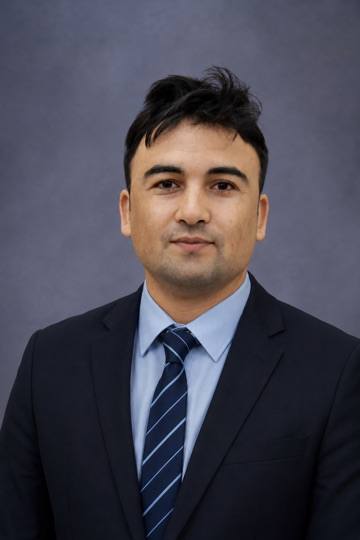
Hassan Ukasha
Managing Partner, Ariana Nexus · Washington, D.C.
- B.S.Cornell University
- M.P.H.Cornell University
Oversees the firm's overall operations and this program: scope, quality and neutrality controls, referral to the Ethics & Safety Board, and accountability to your office from the first assessment to the post-election review.


Delivery team

Zeba Haqbani
- B.Sc.The University of British Columbia
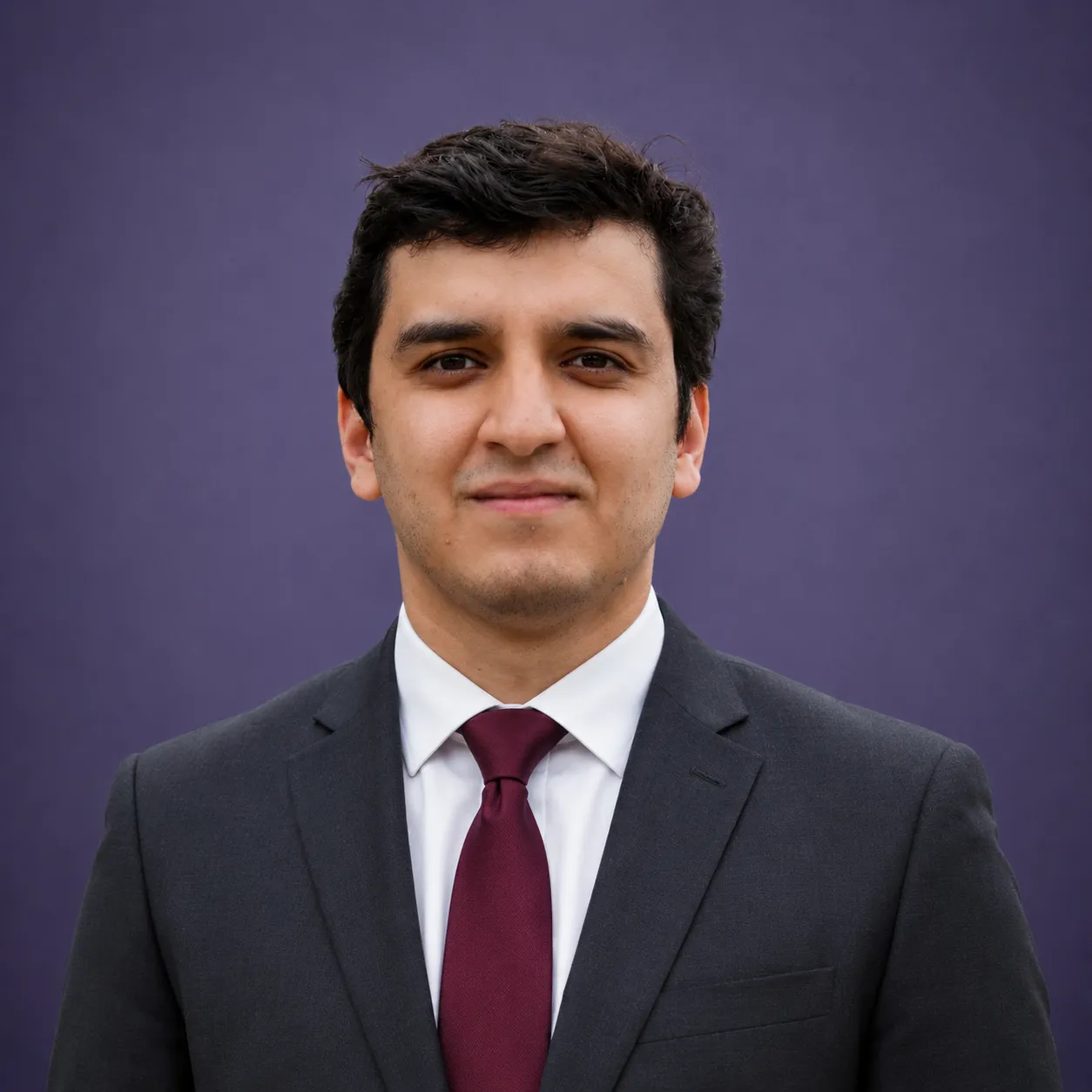
Hussain Ahmad
- M.Eng.Cornell University
- Ph.D.University of Chicago
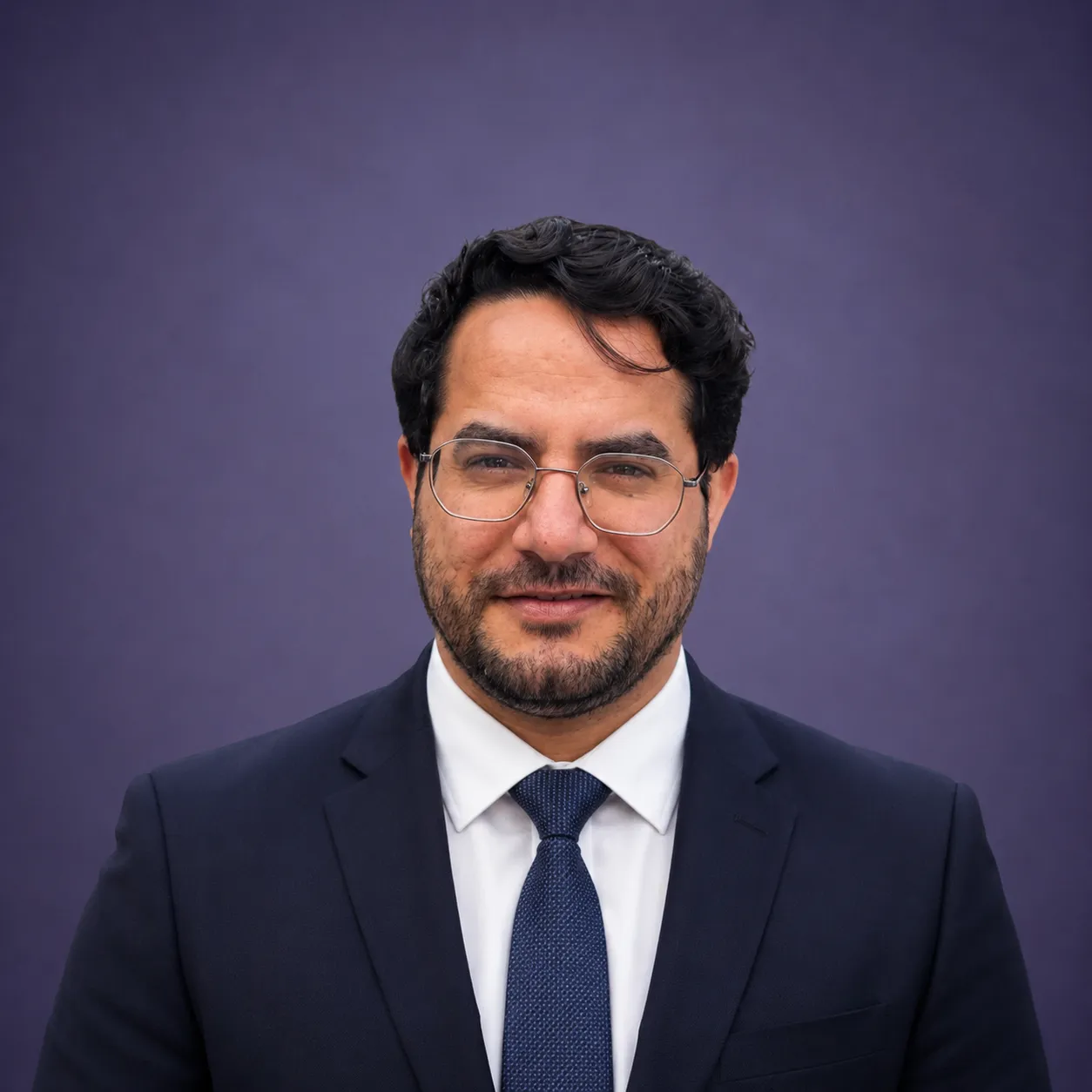
Wasil Peroz
- B.A.Milli University
- M.Sc.Otto-von-Guericke University Magdeburg

Maryam Safi
- B.A.Cornell University
Our benches
Language-specialist bench
Interpreters and translators across the 24 Afghan languages, matched by dialect, region and gender.Cultural Compliance Bureau
Reviews every community-facing text for register, framing and safety.
Community connections
We work with Afghan people across the diaspora: community members, organizations and networks, and we attend community events. That is how we know what communities need.
09
Languages and where we work
Pashto and Dari come first. We work in all 24 Afghan languages, with response times set honestly by how widely each language is spoken.
24 Afghan languages
پښتوPashtoدریDari
Iranian 12
- Pashto
- Dari
- Aimaq
- Balochi
- Ormuri
- Parachi
- Wakhi
- Shughni
- Sanglechi
- Ishkashimi
- Munji
- Yidgha
Turkic 3
- Uzbeki
- Turkmeni
- Kyrgyz
Indo-Aryan 3
- Pashayi
- Gawarbati
- Tirahi
Nuristani 5
- Nuristani (Ashkun group)
- Kati
- Prasun
- Waigali
- Tregami
Dravidian 1
- Brahui
Wakhi, Shughni, Sanglechi, Ishkashimi, Munji and Yidgha form the Pamir group.
Response tiers
- Tier 1Pashto and Dari, including Dari's Kabuli, Herati, Hazaragi and Badakhshi dialectsScheduled to your election calendar; remote interpreting the same business day.
- Tier 2Uzbeki, Turkmeni, Kyrgyz, Balochi, Brahui, Pashayi and AimaqConfirmed within two business days.
- Tier 3Ormuri, Parachi, Gawarbati, Tirahi, the Pamir languages and the Nuristani languagesScoped on request; confirmed within five business days, with a firm date before work begins.
International languages
We also work between the Afghan languages and English, French, German, Spanish, Italian, Hebrew, Urdu, Arabic, Hindi, Portuguese, Chinese, Russian, Turkish and Swedish. French matters for election bodies in Canada.
Where we work
Civic and election services in all 50 states and the District of Columbia, and in Canada.
- Alabama
- Alaska
- Arizona
- Arkansas
- California
- Colorado
- Connecticut
- Delaware
- District of Columbia
- Florida
- Georgia
- Hawaii
- Idaho
- Illinois
- Indiana
- Iowa
- Kansas
- Kentucky
- Louisiana
- Maine
- Maryland
- Massachusetts
- Michigan
- Minnesota
- Mississippi
- Missouri
- Montana
- Nebraska
- Nevada
- New Hampshire
- New Jersey
- New Mexico
- New York
- North Carolina
- North Dakota
- Ohio
- Oklahoma
- Oregon
- Pennsylvania
- Rhode Island
- South Carolina
- South Dakota
- Tennessee
- Texas
- Utah
- Vermont
- Virginia
- Washington
- West Virginia
- Wisconsin
- Wyoming
Election-office language access and research only, with no campaign services: the United Kingdom, Germany and the rest of Europe, and Australia.
11
Frequently asked questions
Which counties require Pashto ballots?
Under California Elections Code § 14201, Pashto facsimile ballots and voting instructions are required in designated precincts of Sacramento County (10), San Joaquin County (20) and Ventura County (6), through 2029. No county is currently required to provide Dari. Confirm the counts against your county's precinct list.
Is Dari covered by Section 203?
No. Section 203 of the Voting Rights Act does not currently cover Pashto, Dari or any other Afghan language, and new coverage determinations are expected in December 2026. We help election offices prepare either way, with an approved glossary, tested templates and trained interpreters in place first.
Who translates and reviews election materials, and is any of it machine-translated?
Our own trained translators produce every text, two independent native reviewers check every ballot-related text, and the Cultural Compliance Bureau reviews register and framing. Machine translation and AI output never leave us as election text without full human review.
Are your translators certified?
No U.S. certification exists for Pashto or Dari translators or interpreters. Quality is assured instead by assessment in the exact dialect each linguist works in, structured training, and two independent native reviews of every ballot-related text.
How fast can you deliver election materials?
We plan backward from your deadlines: ballot certification, print, mailing and Election Day. Pashto and Dari work is scheduled into your calendar from the first meeting. Other Afghan languages follow published response tiers, and the smallest are scoped with a firm date before work begins.
Which Afghan languages do you cover?
All 24 Afghan languages: Pashto and Dari first, then Uzbeki, Turkmeni, Kyrgyz, Balochi, Brahui, Pashayi, Aimaq and 15 smaller languages, including the Pamir and Nuristani languages. Response times are tiered by how widely each language is spoken.
Can congressional offices pay for interpreters with official funds?
In the House, the Members' Congressional Handbook treats interpreting and translating services as reimbursable from official funds and does not authorize consultant services. We invoice interpreting and translation as such. Senate and state rules differ, so confirm with your chamber. This is not legal advice.
Do you run political campaigns?
No. We do not run, manage or staff campaigns, and we do not make strategy, targeting, messaging or spending decisions. We never hold or raise campaign money and never endorse candidates. We supply language, research, materials and training.
Do you sell voter data?
No. We do not sell or share voter files, individual-level data or ethnic targeting, and we do not offer “the Afghan vote” to anyone. Communities are constituents, not blocs. In Europe, our work also follows EU Regulation 2024/900, which bars political-ad profiling on inferred ethnicity or religion.
How do you reach Afghan communities without exploiting them?
Through community media, events and organizations, with the election office or officeholder named as the source. We never ask mosques, schools or community nonprofits to endorse or campaign, and we offer listening sessions to every office on the same terms.
How do you protect community members' data and safety?
We collect only what a task needs, with consent. We never sell or share individual-level data, we sign an NDA before any material changes hands, and we never route documents or data through channels controlled by the de facto authorities in Afghanistan.
How do you handle Canada's foreign-influence rules?
Our Canadian engagements follow the Canada Elections Act as amended by Bill C-25, the Strong and Free Elections Act, whose rule against undue foreign influence now applies at all times. We decline any arrangement with a foreign principal, the trigger for Canada's Foreign Influence Transparency Registry. Canadian counsel reviews each engagement first. This is not legal advice.
Sources
- California Secretary of State, CCROV memorandum #25176 (December 2025): language requirements under Elections Code § 14201
- California Secretary of State, Language requirements for elections
- Elections Ontario, Information in other languages (archived May 2022)
- City of Toronto, Translated election material
- Committee on House Administration, Members' Congressional Handbook
- Migration Policy Institute, Afghan Immigrants in the United States (February 2024)
- Public Safety Canada, parliamentary committee binder note (February 2025)
- GOV.UK, Afghan Resettlement Programme: operational data (updated August 2026)
- Deutscher Bundestag, hib 587/2026 (16 July 2026), citing Destatis
- Parliament of Canada, LEGISinfo: Bill C-25, Strong and Free Elections Act
- Government of Canada, Foreign Influence Transparency Registry
- European Commission, Transparency and targeting of political advertising
- Ariana Nexus research, November 2026
Requirements and figures checked November 2026.
Start with your election calendar
Share your jurisdiction or district, your languages and your next deadline. We confirm the requirements and a plan to meet them.
Ariana Nexus · 1717 Pennsylvania Avenue NW, 10th Floor, Washington, D.C. 20006 · (202) 771-0224