
TC 00:00:00:00
Deepfake and Voice-Clone Authentication for Audio and Video Evidence in Pashto and Dari
We examine Pashto and Dari recordings, videos and voice notes to establish whether they are what they claim to be: genuine, edited or synthetic. Native Pashto and Dari forensic linguists work beside forensic audio and video examiners, and every finding is stated with its level of support and its limits, in a report a court can test.
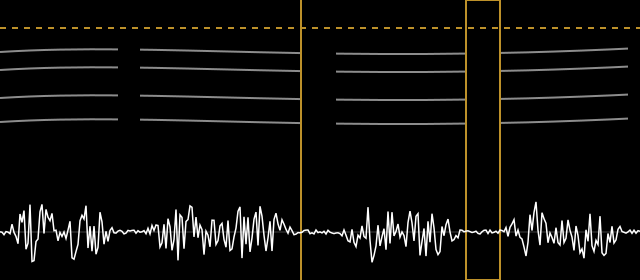
- ABackground noise changes abruptly
- BBand limit consistent with re-encoding
- CNo breath between phrases
Deepfake authentication at a glance
TC 00:01:00:00
- 01
 What we examine
- Audio recordings, voice notes, calls and video, including on-screen Pashto and Dari text.
- 02
 What you receive
- A preliminary assessment, a full examination report, a declaration or affidavit, rebuttal review and testimony.
- 03
 Languages
- Pashto and Dari in their regional varieties, with every report written in English.
- 04
 Who we serve
- Litigators, courts, investigators, insurers, banks, accountability bodies and newsrooms.
What is deepfake authentication?
TC 00:02:00:00
Deepfake authentication is the forensic examination of a recording to determine whether it is consistent with how, when and by whom it is claimed to have been made. It tests for synthetic speech, voice cloning, face swaps, edits and splices, and states how strongly the findings support each answer.
Twelve terms used on this page
- Authentication
- Establishing that a recording is consistent with how it is said to have been made.
- Deepfake
- Audio, video or images made or altered with machine learning to show a person saying or doing what they did not.
- Voice cloning
- Synthesizing speech in a specific person's voice from samples of that voice.
- Synthetic speech
- Speech produced by text-to-speech or voice conversion rather than by a person.
- Chain of custody
- The record of who held an item of evidence, when, and what was done to it.
- Hash value
- A SHA-256 fingerprint of a file's bytes; any change to the file changes it.
- Provenance
- The documented origin and history of a file.
- Content Credentials
- Signed provenance records under the C2PA standard. Their absence proves nothing.
- Metadata
- Data stored with a file, such as format, encoder, timestamps and device traces.
- Equal error rate
- The point where a detector's false-acceptance and false-rejection rates are equal.
- Liar's dividend
- The gain from dismissing genuine evidence as fake once deepfakes are familiar.
- Declaration
- A statement under penalty of perjury, permitted by 28 U.S.C. § 1746 in place of an affidavit.
Why Pashto and Dari deepfakes need their own examination
Detectors are built mostly in English and Chinese and lose accuracy in languages they were not trained on. A Pashto deepfake or Dari deepfake also turns on details only native speakers hear.
TC 00:03:00:00
- Detector accuracy
99.92% → 70.15%
Average accuracy of three leading audio deepfake detectors trained on English, tested first on English and then on Chinese, a language they had not been trained on.
Source: Ba et al., WWW '23
- Training data
0 hours
Of Pashto or Afghan Dari speech in MLAAD, the largest multilingual public anti-spoofing dataset we reviewed. It covers 51 languages, with about 6.7 hours of Persian.
Source: Müller et al., MLAAD v9
- Standards
NIST's Guardians of Forensic Evidence program, which America's AI Action Plan recommends making a formal guideline, addresses voice cloning but names no languages.
- In the field
An Afghan deepfake is already on the record: a clip of Afghanistan's de facto foreign minister with a synthetic voice track circulated in October 2025, and Afghan Witness has documented disputed Afghan political audio that could not be verified either way.
Source: The Quint, October 2025, Afghan Witness, October 2024
An Afghan speaker calls the first month of the year Wray in Pashto or Hamal in Dari; Iranian Persian says Farvardin. Kinship terms, honorifics, numerals and accent carry the same signal, which a detector cannot read and a non-native examiner can miss.
Authentication examinations for Pashto and Dari audio, video and voice notes
Each examination answers defined questions about one item: is this audio AI-generated, was this video edited, is this the person it claims to be. Methods are matched to the medium and the language.
TC 00:04:00:00
Audio authentication

Video authentication

Image and screenshot authentication

Provenance and metadata analysis

Linguistic authenticity analysis

Synthetic-speech and voice cloning detection
Open-source corroboration

Speaker comparison
Deepfake expert reports, declarations and expert witness testimony
Every examination ends in an output written to be filed and tested in court. When a matter needs a deepfake detection expert witness, the examiner who did the work signs and testifies.
TC 00:05:00:00
- M1
Preliminary assessment
A fast, scoped view of whether a full examination is warranted and what it could show. - M2
Full examination report
A deepfake expert report: method, findings, a stated level of support and the limitations, structured for Federal Rule of Civil Procedure 26(a)(2)(B) or your forum's rule. - M3
Declaration or affidavit
A declaration under 28 U.S.C. § 1746, or an affidavit where the court requires one. - M4
Rebuttal review
A review of the opposing expert's method, data and conclusions, and the questions they leave open. - M5
Deposition, hearing and trial testimony
The examiner testifies as forensic audio expert witness at deposition, at a Daubert or Frye hearing and at trial. - M6
Consulting expert support
Non-testifying support for counsel: what to request, what to challenge and what a finding can bear. - M7
Preservation and collection guidance
What to collect and how, and preservation requests to platforms before originals are lost.
Combined with our other capabilities
 A certified transcript and translation of the same recording, through forensic transcription and translation.
- Rapid detection, labeling and takedown support for platforms, through deepfake and synthetic media analysis.
What we do not do
These limits protect the evidence, the court and the client.
TC 00:06:00:00
 No certificates of authenticity. Findings are expert opinions with a stated level of support and stated limits.
- No guarantee of admissibility or outcome, and no fee that depends on the finding or on the result.
- No softened findings. If a finding hurts your case, we report it.
- No altering evidence or cleaning it up for persuasion. Any enhancement for intelligibility is documented, and the original stays untouched.
- No synthetic media of real people without their consent.
- No surveillance, no unmasking of anonymous speakers outside a legal matter, and no doxxing.
- No routing through channels controlled by the de facto authorities in Afghanistan, and no requests to them for originals.
- No examining copies as if they were originals. When only a copy exists, the report says what that limits.
How a forensic examination runs: the record, the conclusion scale and the reliability map
One written method, a record at every step, a second examiner on every report, and every conclusion stated on a published scale.
TC 00:07:00:00
The examination record
- 01Intake, feasibility and conflicts
- 02Hashing on receipt
- 03Working copy
- 04Technical analysis
- 05Linguistic analysis
- 06Corroboration
- 07Independent peer review
- 08Report or declaration
- 09Testimony
- 01Intake, feasibility and conflictsTerms agreed, conflicts cleared, and a feasibility check: enough material, in a condition and a language we can examine.
Record: Intake memo
- 02Hashing on receiptA SHA-256 value computed for every item on arrival, and the custody log opened.
Record: Hash manifest
- 03Working copyAnalysis runs on a verified copy; the original is preserved untouched.
Record: Copy verification
- 04Technical analysisForensic audio analysis of file structure, encoding history and signal, with synthetic-speech testing.
Record: Bench notes, tool versions
- 05Linguistic analysisNative review of dialect, register, names, places, dates and plausibility.
Record: Linguistic worksheet
- 06CorroborationOpen-source checks of place, time and source.
Record: Source log
- 07Independent peer reviewA second examiner of similar qualifications reviews the method, the data and the conclusion.
Record: Review record
- 08Report or declarationFindings, level of support and limitations, signed by the examiner.
Record: Signed report
- 09TestimonyThe examiner who did the work answers for it.
Record: Testimony file
The conclusion scale
- Strong support for authenticity
- Support for authenticity
- Inconclusive
- Support for manipulation or synthesis
- Strong support for manipulation or synthesis
Each level states how strongly the findings support one proposition over the other: that the recording is what it claims to be, or that it was manipulated or synthesized. It is never a percentage, never the probability that the recording is fake, and never a verdict on the case.
Each report also names the lines of examination that carried the finding and those that were silent.
The reliability map: Rule 702, Daubert and Rule 901 authentication of audio and video
| Factor | The question | How the examination answers |
|---|---|---|
| FactorTesting | The questionCan the method be tested, and has it been? | How the examination answersMethods and tools are validated on known genuine and known manipulated material before casework; the validation record goes with the report. |
| FactorPeer review and publication | The questionHas the method been reviewed and published? | How the examination answersA second examiner reviews every report; the method, scale and limits are published here. |
| FactorKnown or potential error rate | The questionWhat is the error rate? | How the examination answersPublished detector error rates are reported with their language limits; where none exists for Pashto or Dari, the report says so. |
| FactorStandards and controls | The questionDo standards control the work? | How the examination answersSWGDE and ENFSI best-practice documents, SHA-256 hashing, custody logs and recorded tool versions. |
| FactorGeneral acceptance | The questionIs the method accepted in the field? | How the examination answersEstablished forensic audio, video and image methods, reported on a verbal scale following the logic of the ENFSI evaluative-reporting guideline. |
| FactorReliable application, Rule 702(d) | The questionWas the method applied reliably here? | How the examination answersEach step on the case material is documented, so the application can be checked, not only the method. |
| FactorRule 901(b)(3) | The questionComparison by an expert witness | How the examination answersQuestioned items compared with authenticated specimens, such as known recordings from the same device or speaker. |
| FactorRule 901(b)(4) | The questionDistinctive characteristics | How the examination answersAcoustic, linguistic and file-structure characteristics examined in their context. |
| FactorRule 901(b)(9) | The questionEvidence about a process or system | How the examination answersEvidence describing how a recording system works and whether it produces an accurate result. |
This map describes our method; it is not legal advice, and admissibility is for the court. Since December 1, 2023, Rule 702 has required the proponent to show that expert testimony more likely than not meets its requirements.
What we need to authenticate an audio recording for court
The closer we get to the original, the more an examination can show.
TC 00:08:00:00
- 01The original fileAs first saved or received, not a forward, export or screen recording.
- 02The deviceThe phone or recorder, where possible, so the file can be examined where it was made.
- 03Metadata and recordsPlatform exports, backups, call logs and download records.
- 04Custody documentsWho held each item, when, and how it was copied or transferred.
- 05The contextWho is said to be speaking, when and where, and what each side claims about the recording.
WhatsApp voice note authentication

Why Ariana Nexus: how we deliver and how we differ
TC 00:09:00:00
Synthetic media forensics is a young field, and Pashto and Dari are at its edge. We have found no public deepfake evaluation that covers Pashto or Dari, and no accredited scheme that qualifies examiners in either. So we publish our method, our conclusion scale and our limits, so that a court can test them.
Native linguists inside the examination
Pashto and Dari forensic linguists work on the same item as the forensic examiner, not after the fact.Both directions, one method
A fake presented as real and a genuine recording attacked as fake are tested with the same method, for either side.Honest about detectors
Detector results are reported with their language limits, and no conclusion rests on a score alone.Findings built to be tested
A published method and scale, a second examiner on every report, and fees that never depend on the finding.
Building the reference
- A Pashto and Dari synthetic-speech reference set, collected under forensic conditions and published with its method, because courts and standards bodies cite published references.
- Training for attorneys, judges and investigators on deepfake evidence in Pashto and Dari.
Chain of custody, security and independence controls
Controls are in place before any material changes hands.
TC 00:10:00:00

Fees independent of findings
Fees never depend on the finding or on the outcome of the case.
Conflicts check
On every matter, before any material is received.NDA first
Signed before any material changes hands.
Encrypted transfer
Material moves only by encrypted transfer.
Need-to-know access
Only the assigned examiners see case material.
Retention and destruction
On your written instruction.
U.S.-located examiners
For U.S. matters.
No training on client material
Never used for training or research without consent.Protective orders
Followed to their terms.
Examiner wellbeing
A protocol for graphic and distressing material, set by Diana Ayubi, Engagement Manager.
Ethics & Safety Board
Oversight with six powers: approve, approve with conditions, require changes, pause, decline and stop.
The team behind every examination
Oversight from the Managing Partner, a named delivery team, and an examiner bench identified by function.
TC 00:11:00:00
Program oversight
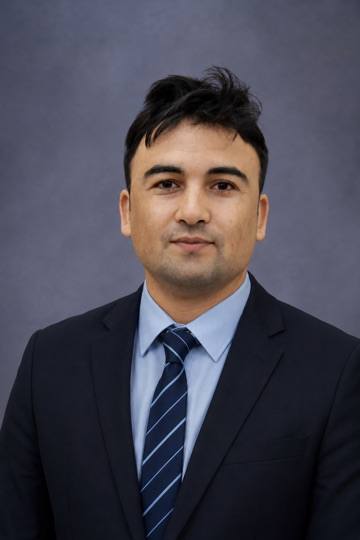
Hassan Ukasha
Oversees the operations of Ariana Nexus and all of its programs, including the authentication of Pashto and Dari media.
- B.S.,Cornell University
- M.P.H.,Cornell University


Zeba Haqbani
Senior Partner
- B.Sc.,The University of British Columbia
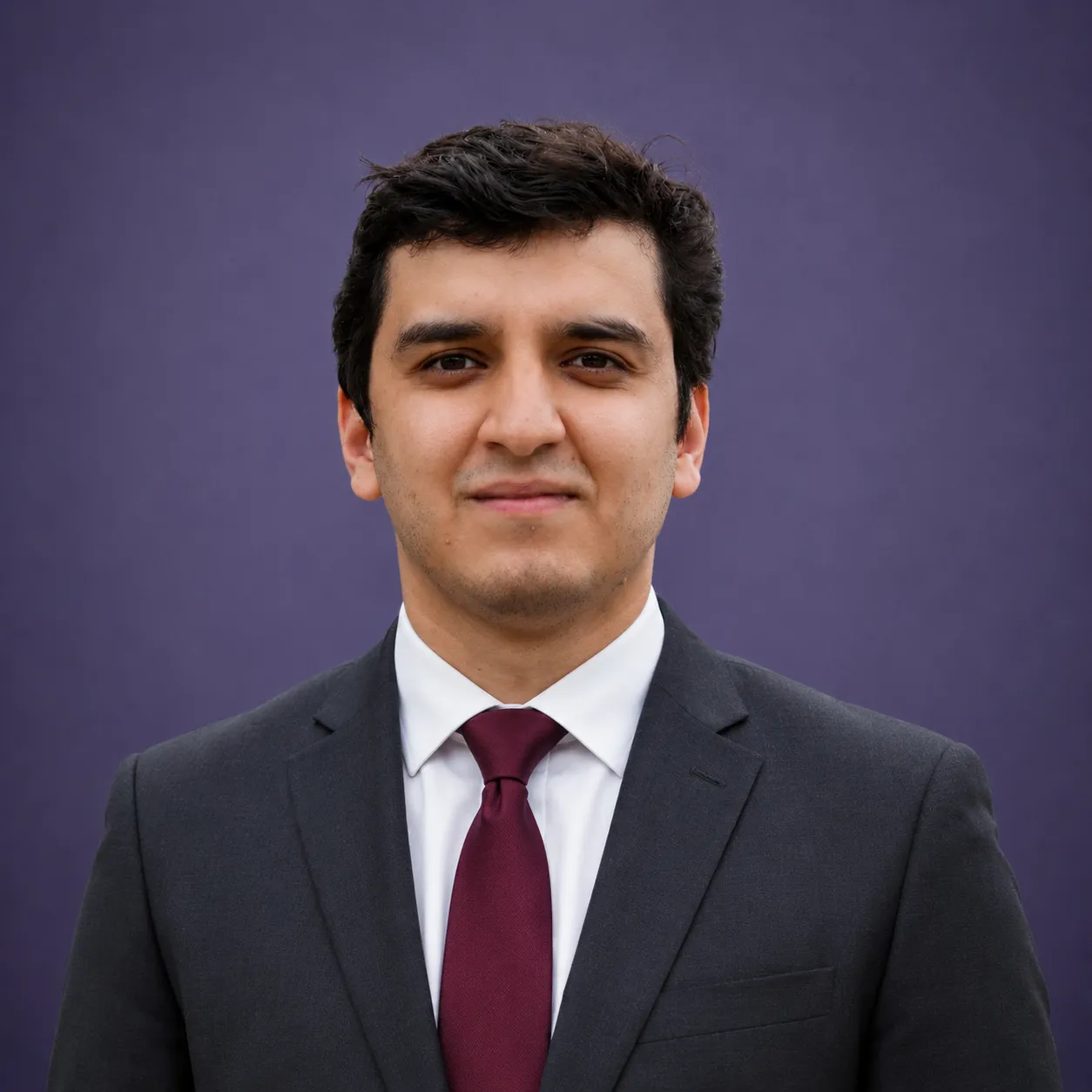
Hussain Ahmad
Analyst
- M.Eng.,Cornell University
- Ph.D.,University of Chicago
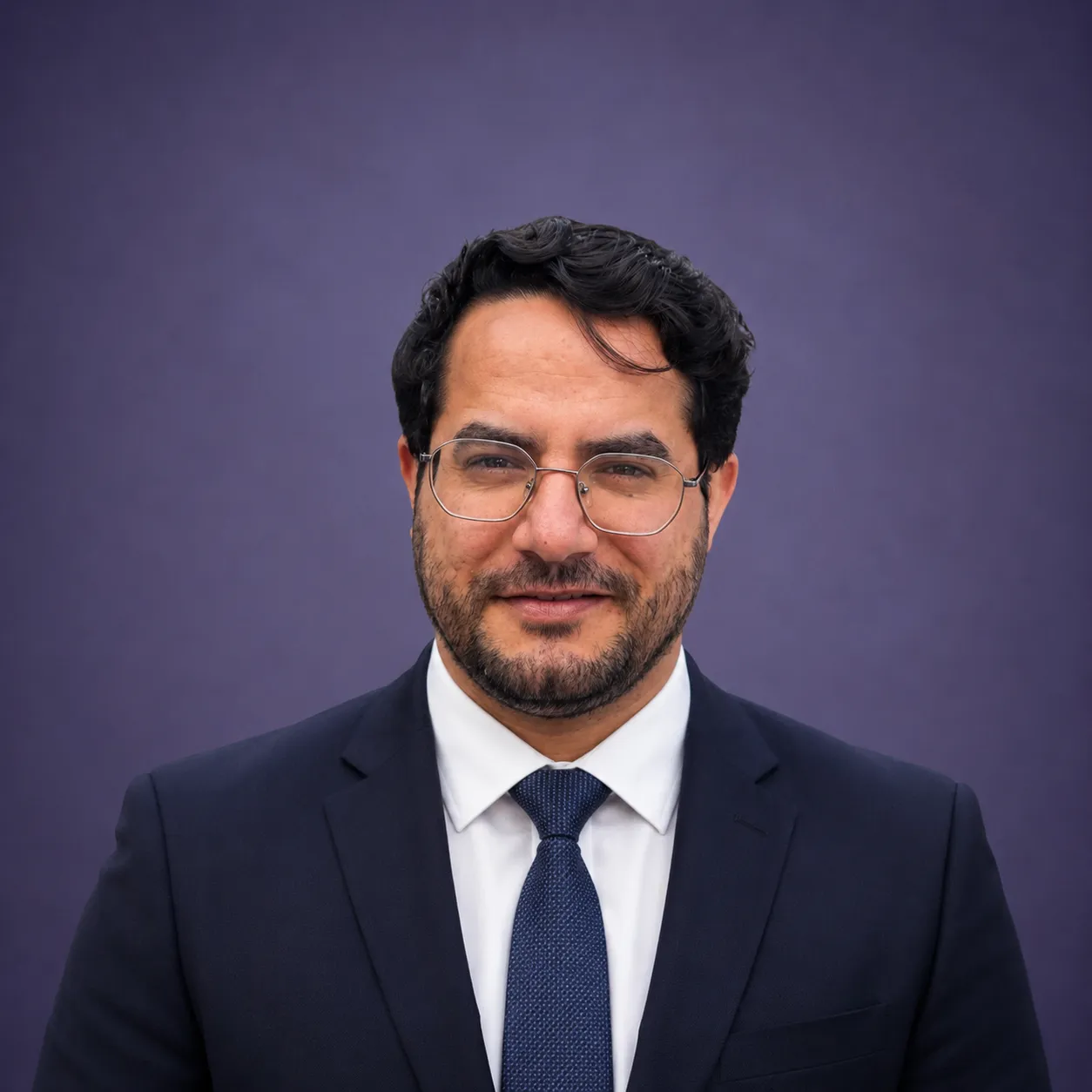
Wasil Peroz
Principal
- B.A.,Milli University
- M.Sc.,Otto-von-Guericke University Magdeburg

Maryam Safi
Principal
- B.A.,Cornell University
The examiner bench, by function
Forensic audio and video examination
Examines the file, the signal and the image to SWGDE and ENFSI practice, and signs the report.Pashto and Dari forensic linguistics
Native linguists who test dialect, register, names, dates and plausibility.Open-source verification
Geolocation, chronolocation and source tracing for every corroboration.
We do not name examiners online. Examiners of Afghan-language material face real risks; their identities are disclosed to courts and parties as required.
Behind them stand the firm's Pashto and Dari language-specialist bench and its Cultural Compliance Bureau, which reviews every native-script line in a report.
Pashto and Dari varieties, and the courts we work in
Pashto audio authentication and Dari audio authentication for matters in every U.S. state and the District of Columbia, and in Canada, Europe and Australia by matter.
TC 00:12:00:00
Pashto
Kandahari (Southern), Nangarhari (Eastern), Ghilji (Central), the Southeastern varieties of Paktia, Khost and Waziristan, and Yusufzai (Northern).
Dari
Kabuli, Herati, Panjshiri, Badakhshi, Hazaragi and the Dari of the northern provinces.
U.S. federal and state courts
- Alabama
- Alaska
- Arizona
- Arkansas
- California
- Colorado
- Connecticut
- Delaware
- District of Columbia
- Florida
- Georgia
- Hawaii
- Idaho
- Illinois
- Indiana
- Iowa
- Kansas
- Kentucky
- Louisiana
- Maine
- Maryland
- Massachusetts
- Michigan
- Minnesota
- Mississippi
- Missouri
- Montana
- Nebraska
- Nevada
- New Hampshire
- New Jersey
- New Mexico
- New York
- North Carolina
- North Dakota
- Ohio
- Oklahoma
- Oregon
- Pennsylvania
- Rhode Island
- South Carolina
- South Dakota
- Tennessee
- Texas
- Utah
- Vermont
- Virginia
- Washington
- West Virginia
- Wisconsin
- Wyoming
Canada, Europe (including universal-jurisdiction proceedings) and Australia, by matter.
Examinations involving other Afghan languages, such as Uzbeki, Turkmeni or Balochi, are scoped case by case.
Reports are written in English, with native-script quotations and their translations.
Related capabilities
TC 00:13:00:00
- Technology, AI, and Digital Platforms
Deepfake and Synthetic Media Analysis in Pashto and Dari
Helps platforms detect, label and remove synthetic content at speed. This page examines one artifact for evidence. - Legal, Regulatory, and Justice
Forensic Transcription and Translation of Pashto and Dari Audio, Video, and Chat Evidence
Establishes what a recording says. This page establishes whether it is genuine. - Legal, Regulatory, and Justice
Expert Witness on Afghan Civil Documents and Identity Records
Documents and identity records, not media. - Legal, Regulatory, and Justice
Afghanistan Country Conditions Expert Reports
Conditions in the country, not the authenticity of an item. - Government and Public Sector
Open-Source Research, Media Monitoring and Disinformation Analysis
Campaigns and narratives, not single artifacts.
Frequently asked questions about deepfake evidence
TC 00:14:00:00
Can you tell if a Pashto voice note is AI-generated?
Often, but never from a detector score alone. We examine the file's structure and encoding history, run detectors whose language limits we report, and have native Pashto linguists check dialect and register. The report states whether the findings support a Pashto voice clone, an edit or a genuine recording, and how strongly.
Will deepfake detection hold up in court?
A detector score alone is easy to challenge. In a Daubert challenge, deepfake findings stand or fall on the expert's method and its application, so our reports set out both, with a stated level of support and limits. Admissibility is for the court; no federal rule specific to deepfake evidence in court has been adopted.
What is the error rate of deepfake detectors in Pashto and Dari?
No published study reports one. Detectors lose accuracy in languages they were not trained on: in one study, three fell from 99.84–99.98% accuracy on English to 60.0–75.87% on Chinese. We report detector results with their language limits and never rely on them alone.
What do you need to authenticate a recording?
The original file as first saved or received, the device where possible, platform exports or backups, and a record of who has held the file. A forward or screen recording can still be examined; the report says what the copy limits.
Can you prove a real recording is not a deepfake?
We can examine whether a recording is consistent with how it is said to have been made and report how strongly the findings support authenticity. No examination proves a negative absolutely, and we never claim one does. Both directions use the same method and the same scale.
Do you testify?
Yes. The examiner who did the work signs the report or declaration and testifies as your deepfake expert witness at deposition, at a Daubert or Frye hearing and at trial, identified to the court and the parties as the proceedings require.
Do you work for the defense and the prosecution?
Yes: for prosecution and defense, plaintiffs and defendants, after a conflicts check on every matter. Every client receives the same method, the same scale and the same disclosure of limits.
Is your fee contingent on the result?
No. Fees never depend on the finding or on the outcome of the case. If a finding hurts your case, we report it and tell you as soon as we know.
How long does an authentication take?
It depends on the material and the questions. A preliminary assessment usually takes days, a full examination with peer review usually takes weeks, and urgent matters are scoped at intake. The timetable is confirmed in writing first.
How do you protect chain of custody?
Chain of custody for digital evidence starts at receipt: every item is hashed with SHA-256 and logged. Analysis runs on verified working copies, the original stays untouched, and every transfer and step is recorded. Material moves only by encrypted transfer, to the assigned examiners.
Can you authenticate recordings from Afghanistan?
Yes. Recordings made in Afghanistan reach us through counsel, investigators and the people who hold them. We never route material through channels controlled by the de facto authorities or ask them for originals.
What is the difference between detection and authentication?
Detection screens content at speed and volume, usually for platforms. Authentication examines one item as evidence, its file, signal, language and context, under a written method, with a stated level of support, a signed report and an examiner who can testify.
Sources and standards
TC 00:15:00:00
Sources, standards and legal texts cited on this page
- 01Ba, Z., et al. Transferring Audio Deepfake Detection Capability across Languages. WWW '23. doi.org/10.1145/3543507.3583222
- 02Müller, N. M., et al. MLAAD: The Multi-Language Audio Anti-Spoofing Dataset, v9. arxiv.org/abs/2401.09512
- 03NIST. Guardians of Forensic Evidence. www.nist.gov/programs-projects/guardians-forensic-evidence
- 04The Quint. Fact check: AI-manipulated clip of Afghanistan's foreign minister, October 2025. www.thequint.com/news/webqoof/ai-generated-clip-foreign-minister-muttaqi-temples-kabul-fact-check
- 05Afghan Witness (Centre for Information Resilience). Alleged AI-generated Afghan political audio, October 2024. www.info-res.org/afghan-witness/reports/pro-taliban-outlet-releases-alleged-ai-generated-audio-of-former-afghan-commander-arranging-mercenary-deal/
- 06Federal Rules of Evidence 702 and 901. www.law.cornell.edu/rules/fre/rule_702
- 07Rule 702 amendment and committee note, effective December 1, 2023. www.uscourts.gov/sites/default/files/2023_congressional_package_april_24_2023_0.pdf
- 08Advisory Committee on Evidence Rules, October 2026 agenda: proposed Rule 707 and draft Rule 901(c). www.uscourts.gov/sites/default/files/document/2026-10-evidence-rules-agenda-book.pdf
- 09Chesney and Citron. Deep Fakes: A Looming Challenge. 107 Calif. L. Rev. 1753 (2019). www.californialawreview.org/print/deep-fakes-a-looming-challenge-for-privacy-democracy-and-national-security
- 10C2PA. Content Credentials Technical Specification 2.4 (April 2026); ISO/DIS 22144. spec.c2pa.org/specifications/specifications/2.4/specs/C2PA_Specification.html
- 11ISO/IEC 21617-1:2025, JPEG Trust, Part 1. www.iso.org/standard/86831.html
- 12SWGDE. Best Practices for Digital Audio Authentication, 15-A-001 v1.3 (2018). www.swgde.org/15-a-001
- 13SWGDE. Digital Video Authentication 23-V-001 v1.2 (2024); Image Authentication 18-I-001 v2.0 (2025). www.swgde.org/documents/current-documents/
- 14ENFSI. Best Practice Manual for Digital Audio Authenticity Analysis (2022). enfsi.eu/wp-content/uploads/2022/12/FSA-BPM-002_BPM-for-Digital-Audio-Authenticity-Analysis.pdf
- 15ENFSI. Guideline for Evaluative Reporting in Forensic Science (2015). enfsi.eu/wp-content/uploads/2016/09/m1_guideline.pdf
- 16OSAC Registry: ASTM E2916-19e2 terminology; ASTM E3150-18 forensic audio laboratories. www.nist.gov/organization-scientific-area-committees-forensic-science/osac-registry
- 1728 U.S.C. § 1746, unsworn declarations. www.law.cornell.edu/uscode/text/28/1746
- 18Federal Rule of Civil Procedure 26(a)(2)(B). www.law.cornell.edu/rules/frcp/rule_26
- 19Daubert v. Merrell Dow, 509 U.S. 579 (1993); Frye v. United States, 293 F. 1013 (D.C. Cir. 1923). supreme.justia.com/cases/federal/us/509/579/
Re-checked November 4, 2026.
Ariana Nexus is an independent advisory and professional services firm for Afghan matters in Washington, D.C., founded in 2025, that authenticates Pashto and Dari audio and video evidence for courts, counsel and investigators.
When the recording is the evidence
Tell us what the recording is, where it came from and what each side says about it. We will tell you what an examination can show, and what it cannot.
Discuss a matterTC 00:16:00:00
Ariana Nexus · 1717 Pennsylvania Avenue NW, 10th Floor, Washington, D.C. 20006 · (202) 771-0224