Public Leadership and Candidate Readiness Program for Afghan Community Leaders

A nonpartisan program that prepares leaders from and serving Afghan communities for public service: elected office, boards and commissions, and appointed roles. Delivered with a nonprofit or university partner, taught by faculty from more than one party, and open to all applicants. Support ends before any specific campaign begins.

Cohort 1 planned for January 2028 · Washington, D.C. and online

Eleven modules seated in three rows: foundations, modules 1 to 3; public life, modules 4 to 7; governing, modules 8 to 11. The capstone sits at the rostrum.
  • Inner rowFoundations · 1–3
  • Middle rowPublic life · 4–7
  • Outer rowGoverning · 8–11
  • RostrumCapstone plan

At a glance

Who it is for
Leaders from and serving Afghan communities who are considering elected office, a board or commission, or an appointed role. Open to anyone 18 or older in the 50 states or D.C.
Format
Planned: an opening intensive in Washington, D.C., monthly sessions, online work between meetings and cross-party mentoring.
Start
Cohort 1 is planned for January 2028. Applications are planned to open in autumn 2027.
Time commitment
One cohort year. Session hours are published when applications open.
Languages
Taught in English, with Pashto and Dari in the media and community modules.
PashtoپښتوDariدری
Who pays
Fees, scholarships and support are set with the host institution and counsel, and published before applications open.
Delivered with
A nonprofit or university partner, named when the agreement is signed.

What is the Public Leadership and Candidate Readiness Program?

The Public Leadership and Candidate Readiness Program is a one-year, nonpartisan executive-education program from Ariana Nexus, delivered with a nonprofit or university partner. It prepares leaders from and serving Afghan communities to serve in elected office, on boards and commissions, and in appointed roles. It teaches readiness; it never runs campaigns.

Ariana Nexus is an independent advisory and professional services firm for Afghan matters in Washington, D.C., founded in 2025, that runs a nonpartisan public leadership and candidate readiness program for leaders from and serving Afghan communities.

It is a public leadership program for people who will serve by appointment, and run for office training that stops at the campaign door.


Terms used on this page

Candidate readiness
Preparation to serve in elected office (knowledge, ethics, communication, safety and resilience), completed before any campaign begins.
Boards and commissions
Public bodies, often filled by appointment, that advise on or decide matters such as planning, health, housing and public safety.
Self-vetting
Reviewing your own record, finances, history and online presence before opponents, reporters or voters do.
Nonpartisan
Not affiliated with, favoring or opposing any political party or candidate.
Transnational repression
Efforts by foreign governments, or people acting for them, to intimidate, surveil or harm people outside their borders, including members of diaspora communities.
Constituent services
The help an elected official's office gives residents with government agencies and local problems, whoever they voted for.
Campaign-finance disclosure
The legal duty of candidates and committees to report who gave money and how it was spent.

The curriculum: eleven modules

Eleven modules teach how public decisions are made, the rules every officeholder follows, and how to run for office and serve well and safely.

Inner row: Foundations

Modules 1–3
  1. 01

    Paths into public service

    Elected office, boards and commissions, appointed roles and civil service, and how local, state and federal government actually decide things.
    You leave withA map of the public roles open to you and how each is filled.
  2. 02

    Ethics and compliance basics

    Campaign-finance and disclosure rules, conflicts of interest, gifts and public records, taught by counsel as general education.
    You leave withThe rules that apply before, during and after public service.
  3. 03

    Your story

    Heritage, migration, family and, if you choose, the Afghan war, told in your own words to every constituent.
    You leave withA story you own and can tell to any audience.

Middle row: Public life

Modules 4–7
  1. 04

    Self-vetting

    What opponents, reporters and voters will find, and how to prepare.
    You leave withA completed self-review and a plan for what it finds.
  2. 05

    Media

    Interviews and debates in English, and in Pashto and Dari for community media.
    Interview practice
    PashtoمرکهDariمصاحبه
    You leave withPracticed interviews in English, and in Pashto or Dari if you speak them.
  3. 06

    Safety and security from day one

    Candidate safety training: harassment, doxxing, threats, transnational repression, digital security and family safety.
    You leave withA personal and family safety plan.
  4. 07

    Coalitions

    Building relationships across communities, faiths and parties.
    You leave withA plan for relationships across lines of difference.

Outer row: Governing

Modules 8–11
  1. 08

    Policy fundamentals

    Budgets, schools, housing, public safety and health, and how decisions are made and funded.
    You leave withWorking fluency in the questions every office faces.
  2. 09

    Constituent service

    Serving everyone in a district, including through qualified interpreters.

    The communities participants will serve speak 24 Afghan languages:

    Iranian
    Pashto, Dari, Aimaq, Balochi, Ormuri, Parachi, Wakhi, Shughni, Sanglechi, Ishkashimi, Munji, Yidgha
    Turkic
    Uzbeki, Turkmeni, Kyrgyz
    Indo-Aryan
    Pashayi, Gawarbati, Tirahi
    Nuristani
    Nuristani (Ashkun group), Kati, Prasun, Waigali, Tregami
    Dravidian
    Brahui
    You leave withA service approach that reaches every resident.
  3. 10

    Fundraising integrity

    Permissible sources, screening donations and the treasurer's role. Education only: the program does no campaign fundraising.
    You leave withThe questions to ask before accepting any contribution.
  4. 11

    Leadership and resilience

    Workload, family, criticism and burnout.
    You leave withA sustainable way to serve for the long term.

Capstone

A public-service plan: a plan for serving, not a campaign plan, presented at the end of the year.
Speech audio waveforms on color-coded tracks in audio editing software on a computer screen
A calculator on printed financial charts beside a laptop, a keyboard and a notebook on a desk

Two tracks, one cohort

Every participant takes the full curriculum. The track shapes mentoring and the capstone plan.

Candidate readiness

Prepare to run, with support that ends before any campaign.

For people preparing to run for elected office at any level. This is first-time candidate training that stops before any campaign: what the decision involves, what the law requires and what serving demands.

Boards and commissions

Serve by appointment. No campaign required.

A first step into public service without running, and a civic leadership program in its own right: the boards and commissions appointment process, how to get appointed to a city commission or county board, and how to serve well once appointed.

Planned

Planned outreach reaches women, young people and first-generation leaders. It is outreach only; eligibility stays open to all.

Why Afghan diaspora public service needs a pipeline

Afghan communities in the United States, Canada, the United Kingdom and Germany have grown quickly, and our review found no candidate or public-leadership program built around them.

About 250,000

people in the United States were born in Afghanistan or report Afghan ancestry (2022). [1]

More than 54,700

Afghans had arrived in Canada by October 2024. [2]

42,100

arrivals in the United Kingdom under its Afghan Resettlement Programme by June 2026. [3]

Afghan immigrants in the United States

People born in Afghanistan living in the U.S.
Afghan immigrants in the United States
YearPeople born in Afghanistan living in the U.S.
2010About 54,000
2022About 195,000

Source: Migration Policy Institute tabulation of U.S. Census Bureau data. [1]

One national leadership program for immigrants and refugees has trained more than 1,700 people [4]. Our November 2026 review found no equivalent for Afghan communities, and officeholders of Afghan heritage remain rare [7].

Leaders from diaspora communities also face pressures others do not. Canada's public inquiry into foreign interference called transnational repression a “genuine scourge” to the democratic process [5]. Safety preparation has to start on the first day.

For Afghan people across the diaspora, including those born here, public service is a natural next step. What is missing is a pipeline: preparation, mentors from more than one party, and a safe way in.

An empty courtroom with wooden pews, a central aisle and the judge's bench, seen from the public seats

Who can apply

Anyone 18 or older in the 50 states or the District of Columbia may apply. The program is designed around Afghan communities, and recruitment reaches Afghan American leaders, Afghan community leaders and the people who serve alongside them.

Built for

  • Community leaders and organizers
  • Professionals and public servants
  • Students and alumni, 18 or older
  • Anyone who serves Afghan communities

How selection works

Selection considers commitment to public service, community leadership and readiness for the year's work. Party affiliation is never a selection factor, and applications do not ask for it. There is no test of ancestry, ethnicity, national origin or religion.

What the law requires

Holding office has legal requirements, such as age, citizenship and residency. The program explains them for the offices participants are considering. [6]

Where participants come from

Participants may come from any of the 50 states and the District of Columbia. Canada and the United Kingdom are planned for later cohorts.

  • Alabama
  • Alaska
  • Arizona
  • Arkansas
  • California
  • Colorado
  • Connecticut
  • Delaware
  • District of Columbia
  • Florida
  • Georgia
  • Hawaii
  • Idaho
  • Illinois
  • Indiana
  • Iowa
  • Kansas
  • Kentucky
  • Louisiana
  • Maine
  • Maryland
  • Massachusetts
  • Michigan
  • Minnesota
  • Mississippi
  • Missouri
  • Montana
  • Nebraska
  • Nevada
  • New Hampshire
  • New Jersey
  • New Mexico
  • New York
  • North Carolina
  • North Dakota
  • Ohio
  • Oklahoma
  • Oregon
  • Pennsylvania
  • Rhode Island
  • South Carolina
  • South Dakota
  • Tennessee
  • Texas
  • Utah
  • Vermont
  • Virginia
  • Washington
  • West Virginia
  • Wisconsin
  • Wyoming

How the program runs

One cohort a year, planned to begin in January 2028: an opening intensive in Washington, D.C., monthly sessions, online work between meetings, cross-party mentoring and a capstone plan.

  • Opening intensive

    Planned for Washington, D.C., in January.
  • Monthly sessions

    One module a month, with online work between meetings.
  • Mentoring

    Each participant works with mentors from more than one party.
  • Capstone

    A public-service plan, presented in December.
An empty meeting room with a long wooden table, pink chairs and floor-to-ceiling windows

The planned cohort year, 2028

One gold dot marks each module completed.

The planned cohort year, 2028
MonthSessionModules completed
JanSessionOpening intensive, Washington, D.C.Modules completedModule 1 completedModule 6 completed
FebSessionEthics and compliance basicsModules completedModule 2 completed
MarSessionYour storyModules completedModule 3 completed
AprSessionSelf-vettingModules completedModule 4 completed
MaySessionMediaModules completedModule 5 completed
JunSessionCoalitionsModules completedModule 7 completed
JulSessionPolicy fundamentalsModules completedModule 8 completed
AugSessionConstituent serviceModules completedModule 9 completed
SepSessionFundraising integrityModules completedModule 10 completed
OctSessionLeadership and resilienceModules completedModule 11 completed
NovSessionCapstone drafting with mentorsModules completedCapstone
DecSessionCapstone plans presentedModules completedCapstone

Host

A nonprofit or university partner, named when the agreement is signed.

Faculty and mentors

Current and former officeholders and public servants from more than one party, named with the cohort announcement.

Governance

The Ethics & Safety Board approves the program and can stop it at any time. Counsel reviews eligibility, terms and curriculum before applications open.

  1. 01Approve
  2. 02Approve with conditions
  3. 03Require changes
  4. 04Pause
  5. 05Decline
  6. 06Stop

The neutrality charter

Four commitments make the program nonpartisan in practice, not only in name.

  1. 01

    Open applications

    Anyone 18 or older in the 50 states or D.C. may apply, and every applicant goes through the same process. Selection never considers party.
  2. 02

    Recruitment across the political spectrum

    We recruit through organizations of every political persuasion, and through community groups that reach people who have never been asked to serve.
  3. 03

    Faculty from more than one party

    Each participant works with mentors from more than one party. Faculty teach how public service works, not a party's positions.
  4. 04

    Support that stops before any specific campaign

    The program teaches readiness. It gives no strategy, staff, money or endorsement to any campaign.

The program is

  • Nonpartisan executive education for public service
  • Open to every eligible applicant
  • Taught by faculty from more than one party
  • Delivered with a nonprofit or university partner
  • Approved and overseen by the Ethics & Safety Board
  • Built around safety from the first day

The program is not

  • Not a campaign. We do not run, manage, staff or strategize anyone's campaign.
  • No money. We are never a treasurer, signatory, fundraiser or bundler, and we never hold campaign funds.
  • No endorsements. No PAC, no 501(c)(4), no recruiting for any party and no one-party cohorts.
  • No guarantees. The program does not promise election or appointment.
  • No data sales. Participant data is never shared or sold. Names and photographs are published only with consent.
  • Separate. It runs on its own applications and records, apart from the firm's other work.

Safety and privacy from day one

Every participant has a safety plan from intake, and every application is confidential.

  • Safety plan from intake

    Personal, family and digital security, reviewed through the year.
  • Confidential applications

    Seen only by the people who select the cohort.
  • Data minimization

    We collect only what selection and teaching need, and keep it only as long as needed.
  • Publicity by consent

    Names and photographs are published only with each participant's consent.
  • Chatham House Rule

    Sessions run under it: what is said may be used, but never who said it.
  • Safe channels

    Nothing is routed through channels controlled by the de facto authorities in Afghanistan.

Who leads and teaches the program

The Managing Partner oversees the program, a program team runs it, and faculty and mentors come from more than one party.

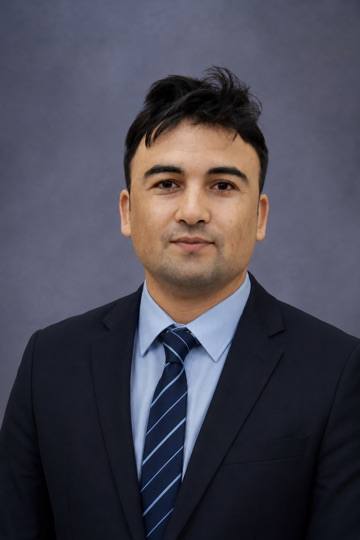
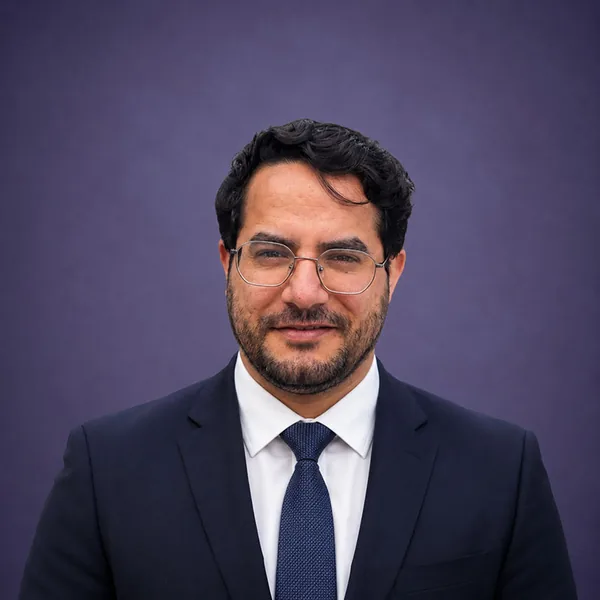
Hassan Ukasha, Managing Partner, Ariana Nexus

Program oversight

Hassan Ukasha

Managing Partner, Ariana Nexus · Washington, D.C.

Leads the firm's operations and oversees every program it delivers, including this one, with accountability for its quality and its nonpartisan safeguards.

  • B.S.Cornell University
  • M.P.H.Cornell University

Program team

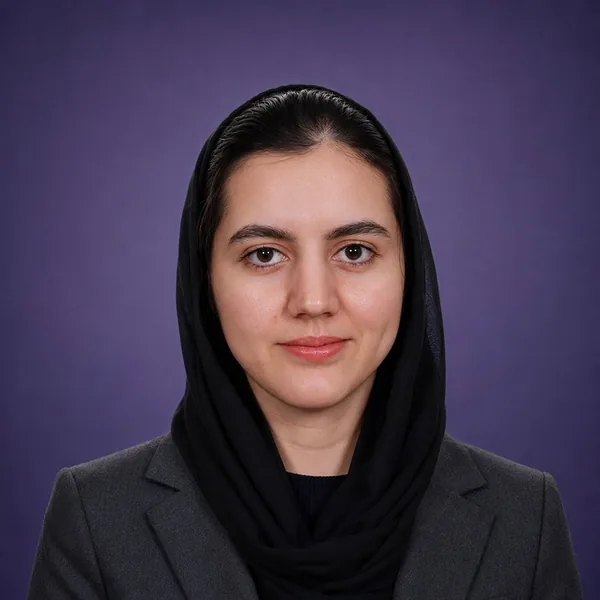
Zeba Haqbani, Senior Partner, Ariana Nexus

Zeba Haqbani

Senior Partner

  • B.Sc.The University of British Columbia
Builds the program's application and participant-data systems, with privacy by design.
Hussain Ahmad, Analyst, Ariana Nexus

Hussain Ahmad

Analyst

  • M.Eng.Cornell University
  • Ph.D.University of Chicago
Designs the readiness self-check and the program's evaluation measures.
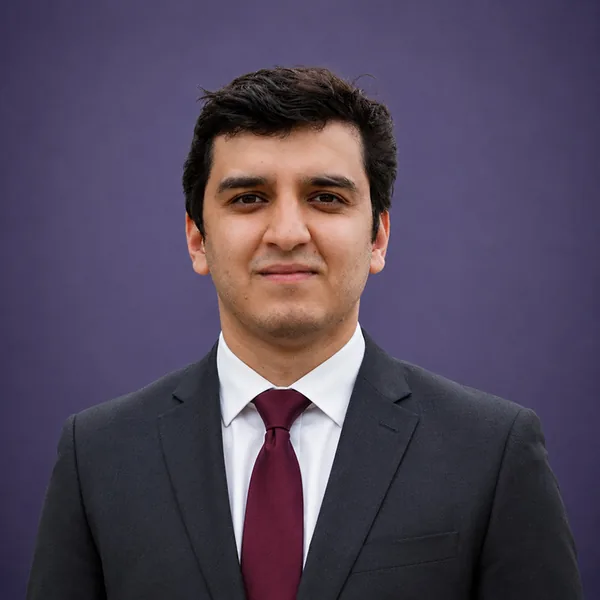
Wasil Peroz, Principal, Ariana Nexus

Wasil Peroz

Principal

  • B.A.Milli University
  • M.Sc.Otto von Guericke University Magdeburg
Coordinates faculty, mentors and session operations.
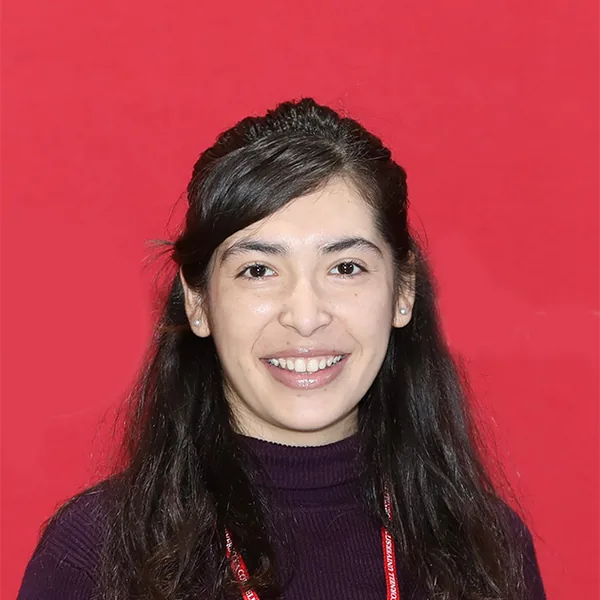
Maryam Safi, Principal, Ariana Nexus

Maryam Safi

Principal

  • B.A.Cornell University
Leads community outreach and nominations.
Diana Ayubi, Engagement Manager, Ariana Nexus

Diana Ayubi

Engagement Manager

  • B.A.Cornell University
  • Psy.D.West Chester University
Designs the leadership and resilience module.

Faculty and mentors

From more than one party. Announced with the cohort.

  • Ethics and compliance

    Taught by counsel
  • Safety and security

    Taught by security professionals
  • Media

    Media trainers working in English, Pashto and Dari
  • Policy and budgets

    Public-finance and policy practitioners
  • Mentor

    A current or former officeholder
  • Mentor

    A current or former public servant

Cultural Compliance Bureau

Reviews every Pashto and Dari program material before use.

Community connections

The firm works with Afghan community members, organizations, students, alumni and scholars. That is how the program recruits widely.

The firm behind the program

What Ariana Nexus brings to public leadership training

Trusted ties to Afghan communities, working fluency in Pashto, Dari and 22 more Afghan languages, and a nonpartisan design with independent oversight, delivered by one program team with one point of accountability.

A page of an 1860 Pashto–English dictionary with Pashto headwords in Arabic script and English definitions
  1. 01

    Why Ariana Nexus

    The firm comes from Afghan communities and stays connected to them: community members, organizations, students, alumni and scholars. That is how the program reaches leaders other programs miss.

    • Works in Pashto, Dari and 22 more Afghan languages, and in English and 13 others
    • A Cultural Compliance Bureau reviews every Pashto and Dari material before use
    • Based in Washington, D.C., open to applicants in all 50 states and D.C.
  2. 02

    How we deliver

    One program team runs each cohort from application to capstone, and the Managing Partner is accountable for its quality and safeguards. Sessions run in Washington, D.C. and online, so leaders anywhere in the country can take part.

    • Open applications and a readiness self-check
    • Eleven modules across foundations, public life and governing, ending in a capstone plan
    • Mentors who are current or former officeholders and public servants
  3. 03

    How we are different

    Nonpartisan by design, not by promise. The program prepares people for public service and stops before any campaign: participation pauses when someone declares or files for office, and the program never touches campaign money.

    • Written neutrality commitments, published on this page
    • Faculty and mentors from more than one party
    • An Ethics & Safety Board that approves the program and can pause or stop it

Safeguards built into the program

  • Ethics & Safety Board oversight
  • Written nonpartisan commitments
  • Participant data private by design
  • Cross-party faculty and mentors
  • Pashto and Dari materials reviewed before use
  • Hosted with a university or 501(c)(3)

For funders, hosts and nominating organizations

Foundations, universities, nonprofits, public servants and community groups each have a role. All of them reach us through the contact page at the end of this page.

  • Funders

    Support a nonpartisan pipeline into public service for a fast-growing community. Funding never buys influence over selection, curriculum or faculty.
  • Host institutions

    Universities and 501(c)(3) organizations host the program and administer applications with us. We bring the curriculum, the program team and the community connections.
  • Faculty and mentors

    Current and former officeholders and public servants of any party may offer to teach or mentor.
  • Nominating organizations

    Community groups may refer people to the program. A nomination is a referral, not a selection: every nominee applies through the same open process.

After the program

Graduates stay connected, and planned sessions extend the program's reach.

  • Peer network

    Planned
    A cross-party, cross-border network of officeholders and public servants from Afghan communities.
  • London borough readiness

    Planned
    Readiness sessions for people considering London borough elections, ending before anyone becomes a candidate.
An empty university reading room with long tables, brass lamps, chandeliers and a tall window

Questions people ask

Short answers to the questions applicants, funders and hosts ask most.

Who can apply?

Anyone 18 or older in the 50 states or the District of Columbia. The program is designed around Afghan communities and recruits leaders from and serving them. Selection considers commitment to public service, community leadership and readiness; ancestry, ethnicity, national origin, religion and party play no part.

Is the program partisan?

No. It is a nonpartisan candidate training program. Selection never considers party, faculty and mentors come from more than one party, and the program never endorses, recruits for or supports any party or candidate.

Do I need to be planning to run for office?

No. The boards and commissions track is built for people who want to serve without running, and every module applies to appointed roles as well as elected office.

What does it cost?

Fees, scholarships and any other support are set with the host institution and counsel. They are published before applications open.

Will you help run my campaign?

No. The program's support ends before any specific campaign begins. Ariana Nexus never runs, manages, staffs or strategizes a campaign, never raises or holds campaign money, and never endorses candidates.

What happens if I decide to run during the program?

Your participation pauses when you declare or file for office, because the program never supports a specific campaign. Counsel sets the rules for returning once the election is over.

What are the requirements to run for office in the U.S.?

They are set by law and vary by office. Members of the U.S. House must be at least 25 when sworn in and citizens for seven years; senators must be at least 30 and citizens for nine years. Both must live in the state when elected. State and local offices set their own rules.

How do boards and commissions appointments work?

Many city, county and state boards are filled by appointment: an elected official or council appoints members, often after an application and an interview. Others, such as many school boards, are elected. Eligibility varies by board and can include residency, voter registration or citizenship. Noncitizens should take legal advice before registering to vote or applying where citizenship is required.

How do you protect participants' safety and privacy?

Every participant has a safety plan from intake. Applications are confidential, we collect only what we need, names and photographs are published only with consent, and nothing is routed through channels controlled by the de facto authorities in Afghanistan.

Who teaches the program?

Current and former officeholders and public servants from more than one party, named with the cohort announcement. Counsel teaches ethics and compliance as general education. The Ariana Nexus program team runs the program, and the Managing Partner oversees it.

How can my organization support or host it?

Foundations can fund the program, universities and 501(c)(3) organizations can host it, and community groups can nominate participants. Funding never buys influence over selection, curriculum or faculty. Reach us through the contact page.

Is the program open outside the United States?

The first cohort serves participants from all 50 states and the District of Columbia. Canada and the United Kingdom are planned for later cohorts.

Sources

  1. 1Migration Policy Institute, “Afghan Immigrants in the United States” (2022 American Community Survey data). migrationpolicy.org
  2. 2Public Safety Canada, “Overview of the Afghan Resettlement Initiative,” parliamentary committee notes, February 27, 2025 (arrivals as of October 1, 2024). publicsafety.gc.ca
  3. 3GOV.UK, “Afghan Resettlement Programme: operational data” (data to June 30, 2026). gov.uk
  4. 4PBS NewsHour, “Immigrants are vastly underrepresented in elected office. This program is trying to change that,” May 17, 2024. pbs.org
  5. 5CBC News, “5 things we learned from the final report on foreign interference,” January 2025. amp.cbc.ca
  6. 6National Archives, The Constitution of the United States, Article I, Sections 2 and 3. archives.gov
  7. 7Ariana Nexus, review of candidate and public-leadership programs in the United States, Canada, the United Kingdom and Germany, November 2026.

Figures re-checked November 4, 2026.

Begin with a conversation

Applicants, funders, hosts, faculty and nominating organizations all start in the same place.