Informed Consent Translation & Linguistic Validation in Dari and Pashto

A trial that cannot enroll the population it intends to treat does not have a diversity problem. It has a validity problem.

IRB review and ICH-GCP turn on equitable selection and genuinely informed consent — and for limited-English-proficiency participants, a translated form is not the same as understanding. Whatever the federal posture on Diversity Action Plans, a sample that excludes the population it treats does not generalize.

Convened by Ariana Nexus · Healthcare Systems Practice · Washington, D.C.

The Generalizability Gap
The sample most trials enroll
The population the therapy will treat
A sample that excludes the population it treats does not generalize. Governed inclusion closes the field.
4645 C.F.R. § 46Common Rule / OHRP
E6ICH E6(R3)Good Clinical Practice
5021 C.F.R. § 50FDA Informed Consent
DAPFDORA 2022Diversity Action Plans
BBelmont ReportResearch Ethics Framework
ISOISO 17100Translation Quality Standard
The Problem

Translated is not the same as informed.

FDORA 2022
Diversity Action Plans set by statute; final FDA guidance pending.
45 C.F.R. § 46 + ICH-GCP
Consent and equitable selection, inspected.
The Consent Comprehension Index
Ariana Nexus validated-consent measure.

Including a diaspora population in a trial is not a recruitment task. It is whether consent is genuine and whether the data generalizes — and both are inspected.

IRB review and ICH-GCP turn on equitable selection and genuinely informed consent — and for limited-English-proficiency participants, a translated form is not the same as understanding. Whatever the federal posture on Diversity Action Plans, a sample that excludes the population it treats does not generalize.

Afghan diaspora participants meet the barriers that defeat enrollment and consent alike — language, trust, cultural distance, gender dynamics, and a literacy gap a vendor translation does not close. The result is under-enrollment, attrition, and a generalizability gap no claim repairs.

Ariana Nexus governs diaspora inclusion to standard — genuine consent, culturally validated, a sample that holds. Never extractive.

The cost of an ungoverned program is documented.

Independent, citable evidence — the numbers a sponsor’s own regulatory team will recognize.

6%of 341 pivotal trials supporting U.S. approvals from 2017–2023 enrolled samples aligned with the four largest racial and ethnic groups.Communications Medicine · 2025
$500Kaverage revenue lost for each day a delayed trial keeps a therapy out of market — before the ≈$40,000-a-day cost of the study itself.Tufts CSDD · 2023
~80%of clinical trials miss their original enrollment timelines, by consistent industry analyses.Industry analyses · Tufts CSDD
29%of federally funded U.S. trials required English proficiency to enroll. Only 4.7% accommodated other languages.PLOS Medicine · 2021
52%of consented participants could correctly explain randomization — the measured gap between signed and informed.Tam et al., WHO Bulletin · 2015
30Mpeople in the United States speak English less than “very well” — roughly one in eleven.U.S. Census Bureau, ACS · 2023

A trial that cannot enroll, retain, or genuinely consent these participants is not under-marketed. It is under-governed.

What is inspected, and when.

Seven instruments govern consent and selection for limited-English-proficiency participants. An IRB, an FDA inspector, or a sponsor audit can ask for the file on any of them.

InstrumentWhat it requiresWhat the inspector asks forStatus
45 C.F.R. § 46.116Common Rule — Informed Consent
Consent in language understandable to the participant, with key information presented first.The consent-process record for each LEP participant — who interpreted, which version, in which language.In force
45 C.F.R. § 46.111(a)(3)Common Rule — Equitable Selection
Equitable selection of subjects — a sample that reflects the population the research serves.Enrollment demographics measured against the protocol’s intended population.In force
21 C.F.R. § 50.20 / 50.25FDA — Informed Consent
Legally effective informed consent in understandable language, with every required element.Version-controlled translated forms; short-form consent and witness records.In force
21 C.F.R. § 56FDA — Institutional Review Boards
IRB review and approval — including consent documents in every enrollment language.IRB approval on file covering each language version in use.In force
ICH E6(R3)Good Clinical Practice
Consent comprehension confirmed; qualified interpreters; data quality fit for purpose.Site files that evidence the consent conversation — not only the signature.In force · FDA-final 2025
FD&C Act § 505(z)FDORA — Diversity Action Plans
Enrollment goals by demographic group for certain pivotal studies, with rationale and method.The Diversity Action Plan submission and supporting enrollment evidence, where applicable.Statutory · guidance pending
45 C.F.R. § 92Section 1557 — Nondiscrimination
Language assistance for LEP individuals across covered health programs, including research settings.The language-access posture of the covered entity hosting the study.In force

The register is advisory. Regulatory determinations rest with the IRB, the investigator, and counsel.

Representative enrollment is not a diversity initiative. It is a scientific-validity and data-integrity requirement.

The Operating Model

One practice. Three coordinated capabilities.

Three institutional capabilities, orchestrated into defensible, ethical diaspora inclusion.

HIC

Human Intelligence Collective

Lived-expertise practitioners

Bilingual, bicultural research navigators and consent-trained interpreters across all 24 Afghan languages — building the trust that genuine consent and retention require.

Protocol: Five-Gate Interpreter Qualification™ →
ADF

AI Data Factory

Governed data infrastructure

Culturally validated translation of consent forms, protocols, and participant materials — back-translation and reconciliation; machine-translation post-editing under human review; de-identified enrollment and retention analytics.

Protocol: The Diaspora Trial Inclusion Standard™ →
CCB

Cultural Compliance Bureau

Audit-grade governance

Cultural and religious-sensitivity review, gender-register sign-off, and consent-comprehension validation — confirming the participant understands, not merely receives.

Protocol: The CCB Sign-Off Mark™ →
Validated Methodology

The Diaspora Trial Inclusion Standard™, validated by the Five-Gate Protocol™.

Integrated 4-phase system. 3 institutional capabilities. 5 validation gates.

1
Linguistic Accuracy
Consent forms, protocols, and participant materials translated by qualified humans across 24 languages, with back-translation and reconciliation; interpreted consent to ICH E6(R3) standard.
2
Cultural Validity
Dialect, gender-register, and religious-sensitivity review; consent-comprehension validated; cleared by the CCB Sign-Off Mark.
3
Standards Conformance
IRB / OHRP (45 C.F.R. § 46) and ICH E6(R3) applied; FDA informed-consent rules (21 C.F.R. § 50); FDA Diversity Action Plan alignment where applicable.
4
Population Risk
Vulnerable-participant safeguards; voluntary, non-coercive consent confirmed; no extraction; no individual participant data retained beyond protocol.
5
Institutional Sign-Off
The inclusion-and-consent file assembled, dated, and ready for IRB and FDA inspection.
Four-Phase Orchestration Cycle
I
Situation · Understand

The trial’s diaspora-inclusion goals and the population mapped against the protocol and IRB requirements.

Cultural mapping · Stakeholder calibration · Constraint discovery
II
Complication · Architect

The Inclusion Standard, the consent-validation process, and the recruitment-and-retention protocol designed before first enrollment.

Program scaffolding · Compliance baseline · Governance charter
III
Resolution · Deploy

Consent-trained interpreters and validated materials integrated into sites and study workflows.

In-context execution · Data infrastructure
IV
Measured Outcome · Govern

Enrollment, retention, consent-comprehension, and inclusion outcomes reviewed across the study.

Continuous documentation · Red-team validation · Multi-decade horizon

Active throughout: Human Intelligence Collective and Cultural Compliance Bureau at full intensity — consent and trust are human-led and culturally governed.

The Validation Architecture

Five gates. Four phases. One inspection-ready file.

Regulatory Alignment

Standards & Compliance

Mapped to the registries an IRB, an FDA inspector, and a sponsor’s regulatory team recognize.

U.S. Statutory & Regulatory
45 C.F.R. § 46
IRB · Common Rule
21 C.F.R. § 50
FDA Informed Consent
21 C.F.R. § 56
FDA Institutional Review Boards
45 C.F.R. § 92
Section 1557 · Nondiscrimination
FDORA 2022
Diversity Action Plans
Research & Ethics Frameworks
ICH E6(R3)
Good Clinical Practice
ICH E8(R1)
General Considerations for Clinical Studies
1979
The Belmont Report
WMA
Declaration of Helsinki
FDA Guidance
Diversity Action Plan (draft)
Professional Credentials & Quality
ATA
American Translators Association
NBCMI
National Board of Certification for Medical Interpreters
CCHI
Certification Commission for Healthcare Interpreters
ISO 17100
Translation Services

Full compliance index and attestation documentation available in the Trust Center.

Review the Trust Center →
The Readiness Ladder

Where does your program stand?

Five levels separate a translation line-item from governed inclusion. The file an IRB or FDA inspector accepts is built at Levels Four and Five.

Level 01Vendor translationForms translated on request. No comprehension evidence. No file.
Level 02Scheduled interpretationInterpreters booked per visit. Consent is still a signature, not a record.Most sponsors sit here
Level 03Validated materialsBack-translated, reconciled, version-controlled materials across every enrollment language.
Level 04Comprehension-verified consentThe participant’s understanding is measured and documented. The consent file holds.
Level 05Governed inclusionEnrollment, retention, and consent governed to standard across the study — The Diaspora Trial Inclusion Standard™. Inspection-ready, by design.

Levels One through Three produce activity. Levels Four and Five produce evidence.

Ariana Nexus Healthcare Systems Practice — culturally governed clinical research operations, Washington, D.C.
Institutional Proof
24
Afghan languages governed
0
Security incidents
100%
Senior-led engagements
41+
Trust Center documents

Your institution, governed.

From foundations to continuous stewardship.

01
Foundations
Scoped, audited, architected.
Inclusion goals and the population mapped against the protocol and IRB requirements.
02
Activation
Deployed into your environment.
The Inclusion Standard and consent-validation process built; the consent-trained cohort provisioned.
03
Operating Rhythm
The active state.
Validated materials and interpreters in the field; enrollment, retention, and consent-comprehension reviewed.
04
Continuous Stewardship
Across the study and beyond.
Audit-grade records maintained; inclusion outcomes reported to the IRB and sponsor.

What you receive.

What you receive is not translated forms. It is consent that holds and data that generalizes.

The Diaspora Trial Inclusion Standard™, applied and attested.
Your inclusion-and-consent posture mapped to IRB/OHRP and ICH-GCP, dated, inspection-ready.
Culturally validated consent forms, protocols, and participant materials.
Translated, back-translated, reconciled, and version-controlled across 24 Afghan languages.
A consent-trained interpreter and research-navigator cohort.
ATA / NBCMI / CCHI-credentialed; consent-comprehension trained.
A consent-comprehension validation record.
Evidence the participant understood — not merely received — the form.
An FDA Diversity Action Plan alignment package, where applicable.
Enrollment goals, rationale, and method, mapped to current guidance.
Enrollment, retention, and inclusion analytics.
By language and subgroup, de-identified, measured across the study.
Site- and IRB-facing documentation, and 24/7 access to the technical team.

Trials are global. So is the consent standard.

United KingdomEuropean UnionCanadaAustraliaThe GulfUnited States

Who leads the Healthcare Systems Practice.

The team that cannot be assembled. The credentials, the lived expertise, the institutional standing, and the linguistic depth do not exist in this combination at any other firm.
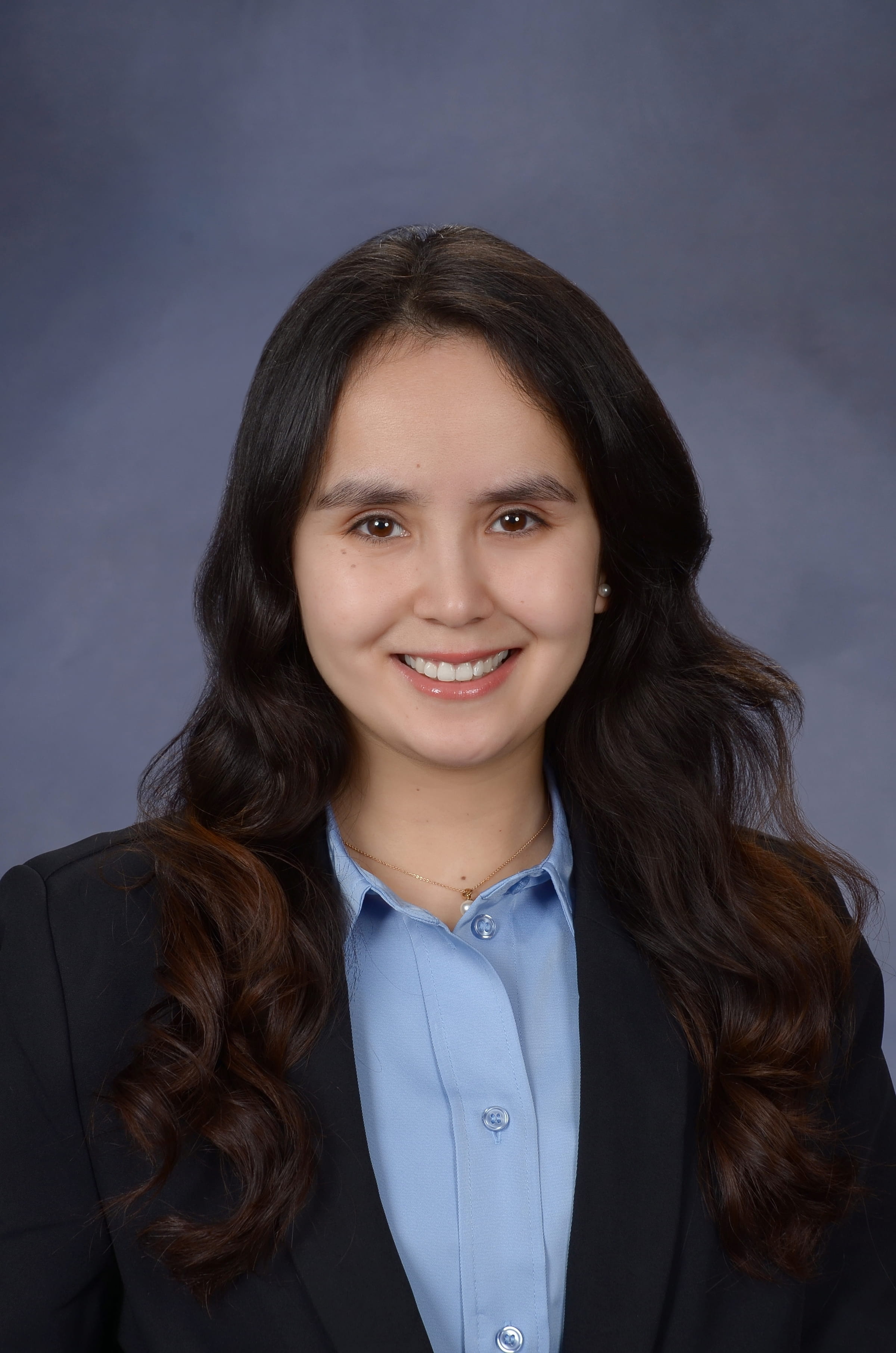
Tamana Ghaznawi
Tamana Ghaznawi
Senior Director, Healthcare Systems Orchestration
B.S. Biological Sciences | Cornell University
M.P.H. | Cornell University
Clinical ResearchRegulatory AffairsAfghan Languages
Profile →
Shukria Sakhi
Shukria Sakhi
Practice Leader
B.S. Public Health | Brown University
M.P.H. | Brown University
Research InclusionConsent ValidationEpidemiology
Profile →
Maryam Safi, Principal, Ariana Nexus
Maryam Safi
Principal
B.A. Biology and Society | Cornell University
Cultural ComplianceLinguistic ValidationResearch Ethics
Profile →
Request a Review

Request a Diaspora Trial Inclusion Review.

For clinical trial sponsors, CROs, academic medical centers, principal investigators, IRBs, regulatory-affairs leadership, and pharmaceutical clinical operations teams. Briefings are conducted under NDA, in Washington, D.C. or virtually.

01
Submit the inquiryReviewed by a Principal — not an intake queue.
02
Sixty-minute confidential briefingUnder NDA, in Washington, D.C. or virtually — your protocol, your population, your timeline.
03
Scoped readiness assessmentA written inclusion-and-consent readiness map against the Mandate Register — yours to keep, whatever you decide.
Request a confidential briefing →Review our compliance documentation →
Assurance & Documentation
  • The Diaspora Trial Inclusion Standard™
  • Standards adherence: 45 C.F.R. § 46, ICH E6(R3), 21 C.F.R. § 50, the Belmont Report
  • Five-Gate Validation Protocol™
  • The Consent Comprehension Index
  • Research-ethics policy position
View full Trust Center →

A trial that excludes them cannot speak for them.