
LLM Evaluation & Red-Teaming in Afghan Languages
Your model answers in fluent Pashto. That proves it is confident — not that it is correct, and not that anyone has checked.
Independent validation, multilingual evaluation, and red-teaming of AI systems across all 24 Afghan languages — where models are weakest, least tested, and most confidently wrong. Aligned to the NIST AI Risk Management Framework, with assurance performed by native-speaker experts who can actually read the output.
Convened by Ariana Nexus · AI & Data Systems Practice · Washington, D.C.
Request an AI Assurance ReviewA model does not warn you when it is wrong in Dari
A model does not warn you when it is wrong in Dari. It gives you the same confident answer it gives in English.
A large language model produces fluent output in every language it touches. But fluency in a low-resource language is not accuracy — and the model offers no signal to tell the two apart. It answers a Pashto prompt with the same confidence whether it is right or catastrophically wrong, and the English-language benchmarks it passed say nothing about either.
The failure is structural. Models are trained on the least data, tested with the fewest benchmarks, and guarded by the weakest safety filters in exactly the low-resource languages where confidence outruns competence. A safety guardrail that holds in English is routinely bypassed by the same request in a language no red team evaluated. The hallucination, the unsafe output, the cultural error — none of it surfaces in evaluation, because the people evaluating cannot read the language.
Governance has caught up to the obligation even as the politics shift around it. The NIST AI Risk Management Framework asks every deployer to measure and manage AI risk; the EU AI Act attaches conformity obligations to high-risk systems; state laws are following. None of that is satisfiable by an English benchmark for a model that operates in 24 languages.
Ariana Nexus validates and red-teams AI systems in the languages they actually serve — fluency separated from accuracy, guardrails tested where they are weakest, and every finding documented for governance and disclosed for repair.
Fluency is not accuracy.
What the evidence shows — and your benchmark cannot
Every figure below is published and independently sourced. None of it is visible to an English-language evaluation.
Figures are published, peer-reviewed where applicable, and current as of June 2026. Full citations available on request.
What is AI model validation and red-teaming for low-resource languages?
Model Validation & Red-Teaming is independent evaluation, validation, and adversarial red-teaming of AI and large language model systems for their behavior in Afghan languages — across all 24, most of them low-resource, where models are weakest and least tested. It is aligned to the NIST AI Risk Management Framework and its Generative AI Profile, and covers multilingual accuracy evaluation, the Cultural Hallucination Audit for fluent-but-wrong output, safety-guardrail and jailbreak red-teaming, and bias testing — performed by native-speaker subject-matter experts and documented for AI governance. Ariana Nexus reports how a model actually behaves in the languages it claims to serve; red-teaming is authorized and responsibly disclosed, with findings sent to the owner to remediate rather than weaponize.
Large language models are trained on the least data and guarded by the weakest safety filters in low-resource languages, so they answer fluently but are more often wrong — and standard English benchmarks never detect it. Validating them requires native-speaker evaluation, hallucination auditing, and red-teaming in the target language, documented to the NIST AI Risk Management Framework.
One practice. Three coordinated capabilities.
Three institutional capabilities, orchestrated into assurance you can put in front of an auditor.
Lived-expertise practitioners across all 24 Afghan languages — the cultural gatekeepers who keep every engagement anchored in ground truth, never extractive.
Native-speaker subject-matter experts across all 24 languages who read model output critically, catch culturally coded errors and hallucinations, and serve as expert human evaluators and red-teamers — the ground truth no automated metric replaces.
Protocol — The Cultural Hallucination AuditGoverned Afghan-language data infrastructure, evaluation benchmarks, and institutional-grade training assets meeting auditable standards.
Afghan-language evaluation datasets and benchmarks, the Cultural Hallucination Audit pipeline, multilingual evaluation harnesses, adversarial and red-team prompt sets, and human-in-the-loop scoring.
Protocol — The ADF PipelineAn audit-grade review regime translating cultural intelligence into compliance-ready practice — the governance layer threading through every engagement.
Methodology rigor and independence audit; reproducibility; bias and fairness review; responsible-disclosure governance for red-team findings; the CCB Sign-Off Mark on every assurance report.
Protocol — The CCB Sign-Off MarkThree capabilities. One honest answer about what your model does.
How Ariana Nexus exposes fluent-but-wrong output: the Cultural Hallucination Audit
Integrated 4-phase system · 3 institutional capabilities · 5 validation gates
The Cultural Hallucination Audit™ exposes fluent-but-wrong output; the Five-Gate Validation Protocol™ governs the whole assurance engagement, evaluation to red-team to sign-off.
The Five Gates
Linguistic Accuracy
Model outputs evaluated for linguistic accuracy across 24 languages by native-speaker experts; the Pashto–Dari Parity Index applied; automated metrics validated against human judgment, never trusted alone.
Cultural Validity
Outputs evaluated for cultural validity and culturally coded error; the Cultural Hallucination Audit applied; cleared by the CCB Sign-Off Mark.
Standards Conformance
NIST AI Risk Management Framework (Govern, Map, Measure, Manage) and the Generative AI Profile; EU AI Act conformity where applicable; recognized AI red-teaming and evaluation practice.
Population Risk
Safety-guardrail robustness across languages, including low-resource jailbreak resistance; bias and harmful-output testing; responsible disclosure of vulnerabilities to the owner — no weaponization, no public exploit tooling.
Institutional Sign-Off
Evaluation and red-team findings documented, reproducible, traceable, and ready for AI governance and audit.
The Four-Phase Orchestration Cycle
Situation — Understand
The system, its intended use and languages, and the assurance requirements — NIST AI RMF, EU AI Act, internal — mapped.
Complication — Architect
The evaluation and red-team plan, benchmarks, and Cultural Hallucination Audit designed for the target languages.
Resolution — Deploy
Multilingual evaluation and red-teaming executed; failures detected, characterized, and reported for remediation.
Measured Outcome — Govern
Findings documented for governance; re-tested after remediation; benchmarked on the Sovereign Speech Index and the Low-Resource Safety Benchmark; monitored across the model lifecycle.
Active throughout: HIC and CCB at full intensity on every evaluation; ADF heaviest at Phases II–III.
Evaluation performed by people who can actually read the output — the ground truth no automated metric replaces.
Standards & compliance
Methodology, controls, and assurance documentation — open for review in our Trust Center.
The obligations your validation evidence has to satisfy
A living register of the frameworks and rules that govern AI validation and red-teaming — with current status, because this audience is not served by stale regulatory framing.
Status current as of June 2026. Draft and voluntary instruments are marked as such; we never present a draft as a binding requirement.
What happens without in-language validation
AI systems deployed into Afghan-language use without in-language validation did not announce their failures. The model answered fluently in Pashto — and was confidently wrong often enough to mislead — while every English-language benchmark it passed reported it as fine. Safety guardrails that held in English were bypassed in a low-resource language no red team had tested.
The hallucination, the unsafe output, the cultural error: none surfaced in evaluation, because no one evaluating could read the language. They surfaced in production, in front of the people the system was supposed to serve — and by then they were not findings in a report but harms in the world.
An unvalidated model in Pashto is an untested model in production.
Your model, tested in the languages it serves
From foundations to continuous stewardship.
Scoped, mapped, architected. The system, its languages, and its assurance requirements understood.
Built to standard. The evaluation and red-team plan, benchmarks, and Cultural Hallucination Audit designed for the target languages.
The active state. Evaluation and red-teaming running; failures found, characterized, and disclosed for repair.
Across the model lifecycle. Re-tested after remediation; benchmarked; monitored as the model and its risks evolve.
The Receivables
What you receive is not a green checkmark from an English benchmark. It is the truth about how your model behaves in the languages it claims to serve.
Where your AI assurance actually stands
Five levels of validation maturity for multilingual AI. Most teams overestimate where they are.
Ariana Nexus engagements move a model from L0–L2 to L3 and hold it at L4.
The framework changes. A model wrong in Pashto is wrong everywhere.
AI assurance obligations span the United States, the EU AI Act’s conformity regime, the United Kingdom’s evaluation work, and enterprise and government deployments worldwide that touch Afghan languages. The regime differs by jurisdiction; the failure mode does not. Ariana Nexus validates and red-teams AI systems in all 24 Afghan languages, worldwide.
— and worldwide.
The regulation changes. The model still has to be right in the language it answers.
Proof & published research
Published research & benchmarks

The Afghan Language AI Accuracy Report Card
How frontier and enterprise models actually perform across Afghan languages — graded against reference sets validated by the Cultural Compliance Bureau.
MethodologyThe Cultural Hallucination Audit™
Methodology for detecting fluent-but-wrong output.
AnnualThe Low-Resource Safety Benchmark
Safety-guardrail robustness and jailbreak resistance across Afghan languages.
QuarterlyThe Pashto–Dari Parity Index
Paired-language accuracy.
Who leads the AI & Data Systems Practice
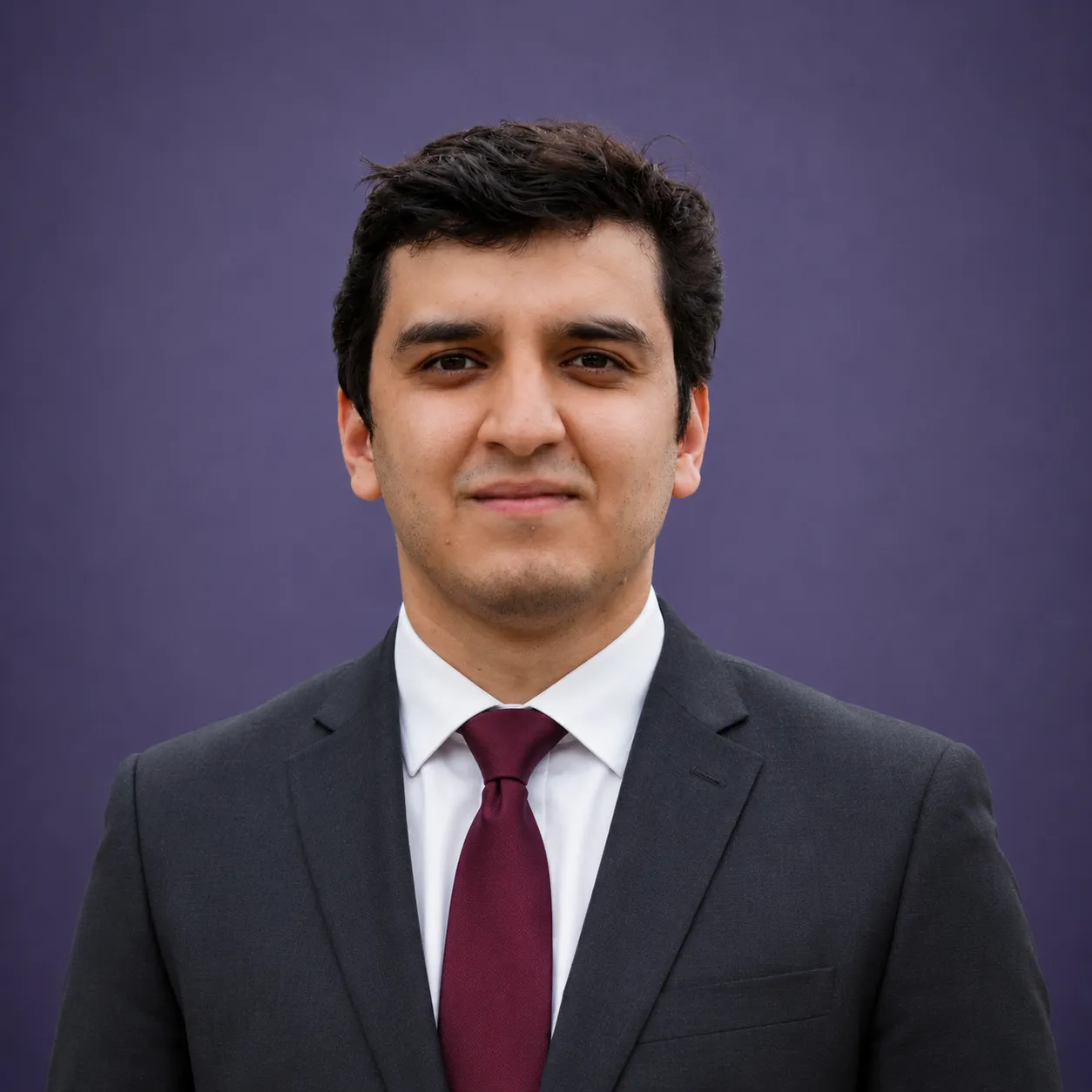
Model evaluation, multilingual AI systems, and assurance engineering · Cornell · University of Chicago.

Cultural compliance and responsible disclosure · Cornell University.
Every engagement is senior-led.
Request an AI Assurance Review.
For AI developers and model providers, government AI programs, enterprises deploying AI in Afghan-language contexts, and AI-governance and assurance teams. Independent and reproducible. Briefings are conducted under NDA, in Washington, D.C. or virtually.
Request a confidential briefingHave a specific question, a use case, or a considered perspective on our work? We welcome substantive input from the institutions we serve. Share it with us.
Until someone can read the output, the model is not validated — only fluent.