
Cultural Hallucination Audits & Bias Red-Teaming in Afghan Contexts
The model got the facts right and the culture wrong — and every quality check you run scored it clean.
CCB-validated detection of cultural and religious defects in AI output — the fluent, plausible mistakes that misrepresent peoples, misstate religious practice, invent customs, or violate norms across Afghan regional and religious contexts, and that factual checks and safety filters never catch. Across all 24 languages, by the experts who can actually see them.
Convened by Ariana Nexus · AI & Data Systems Practice · Washington, D.C.
Request a Cultural Hallucination AuditEach dot is one AI output. Every one cleared your factual and safety checks. The gold ones are wrong for the community it serves — and only an insider can see them.
24
Afghan languages — the full regional, ethnic, and sectarian spectrum
5
Validation gates · the Five-Gate Protocol
3rd
The quality axis standard checks never measure
CCB
Cultural Compliance Bureau sign-off
The Problem
A cultural hallucination does not look like an error
A factual check asks whether output is true. A safety filter asks whether it is toxic. Neither asks whether it is culturally and religiously right — and a model can pass both while being deeply wrong for the community it serves. Cultural and religious correctness is a third axis of quality, orthogonal to accuracy and toxicity, and it is the one no standard pipeline measures.
This is not a hypothetical risk; it is a documented one. Independent, peer-reviewed research has shown that leading language models carry a consistent Western cultural bias, default to Anglo-Saxon norms, and produce inappropriate or stereotyped output in non-Western cultural settings — and that the usual fixes, alignment and prompting, do not fully correct it, because the cultural knowledge was never in the training data to begin with.[1–4] For Afghan and Muslim contexts, that means a model that conflates Pashtun, Tajik, and Hazara, misstates religious practice, invents customs that do not exist, or gives advice that violates norms it cannot see.
The defect is invisible to the people checking. It is fluent, plausible, and confident — and only a reviewer of the culture recognizes it as wrong. By the time it reaches production, it is no longer a quality issue. It is an offense, in front of the exact community the system was built to serve.
Ariana Nexus runs the audit your pipeline cannot: cultural and religious defects detected by native experts, classified and severity-scored, and certified by the Cultural Compliance Bureau — across all 24 Afghan languages and the regional and sectarian spectrum.
A third axis
Cultural and religious correctness — orthogonal to accuracy and toxicity, and the one no standard check measures.
Documented Western bias[1–4]
Peer-reviewed research finds leading models default to Western norms, including stereotyped output in non-Western cultural settings.
The Cultural Fidelity Index
The firm’s defect-rate measure — cultural and religious defect rates, benchmarked per model.
The Evidence
The defect is documented — not hypothetical.
Peer-reviewed findings that cultural and religious defects in AI are measurable, severe, and concentrated exactly where models meet non-Western and multilingual populations.
66%
GPT-3 completions for “Muslims” that referenced violence — versus 20% after priming with positive adjectives.
Abid, Farooqi & Zou, AIES 2021
40–60%
Rate at which leading LLMs favored Western over Arab cultural entities even in explicitly Arab-context prompts (CAMeL; 16 models).
Naous, Ryan, Ritter & Xu, ACL 2024
71–81%
Share of 107 countries where a one-line cultural prompt was required to improve GPT-4 alignment — i.e., defaults were misaligned for most non-WEIRD cultures.
Tao, Viberg, Baker & Kizilcec, PNAS Nexus 2024
<1% → 79%
GPT-4 harmful-response rate when unsafe prompts were translated into low-resource languages, versus the English baseline.
Yong, Menghini & Bach, NeurIPS SoLaR 2023
5.82×
Increased odds GPT-3.5 returns an incorrect answer to a healthcare query in non-English (Spanish, Chinese, Hindi) versus English.
Jin et al., ACM Web Conference 2024
4 of 4
Commercial LLMs (GPT-3.5, GPT-4, Bard, Claude) that produced debunked race-based medical content across nine clinical questions.
Omiye et al., npj Digital Medicine 2023
35.9 / 78.4%
Traditional Chinese Medicine licensing-exam accuracy of Western- versus Chinese-developed LLMs — all four Western models failed.
Wang et al., J. Translational Medicine 2024
Independent, peer-reviewed sources. Figures characterize published model behavior; offensive content is described, never reproduced. Full citations in the References below.
Definition
What is a cultural hallucination audit?
A Cultural Hallucination Audit is CCB-validated detection of cultural and religious defects in AI output — the fluent, plausible mistakes that misrepresent peoples, misstate religious practice, invent customs, or violate cultural norms across Afghan regional, ethnic, and religious contexts. These defects are orthogonal to factual accuracy and toxicity, so factual checks and safety filters do not catch them; only cultural and religious expertise can. Ariana Nexus classifies each defect on the Cultural Defect Taxonomy, severity-scores it, and certifies cultural fidelity with the CCB Sign-Off Mark — across all 24 Afghan languages, by the experts who can actually see what is wrong.
Accurate is not the same as appropriate.
Its sibling doctrine, from Model Validation & Red-Teaming: fluency is not accuracy.
Operating Model
One practice. Three coordinated capabilities — led, here, by the Bureau.
Three institutional capabilities, orchestrated into a judgment only cultural insiders can make.
CCB · Cultural Compliance Bureau · Lead
The Bureau is the protagonist of this capability
An audit-grade review regime translating cultural intelligence into compliance-ready practice — the governance layer threading through every engagement.
Cultural and religious validation against community standards; defect classification and severity scoring on the Cultural Defect Taxonomy; and the CCB Sign-Off Mark that certifies cultural fidelity.
Protocol — The CCB Sign-Off Mark
HIC · Human Intelligence Collective
Lived-expertise practitioners across all 24 Afghan languages; the cultural gatekeepers who keep every engagement anchored in ground truth, never extractive.
Native cultural and religious subject-matter experts across all 24 languages and the regional, ethnic, and sectarian spectrum — Pashtun, Tajik, Hazara, Uzbek, and beyond — who see defects invisible to outsiders.
Protocol — The Cultural Hallucination Audit
ADF · AI Data Factory
Governed Afghan-language data infrastructure, evaluation benchmarks, and institutional-grade training assets meeting auditable standards.
The Cultural Hallucination Audit pipeline; the Cultural Defect Taxonomy; cultural and religious reference corpora; defect-pattern flagging to route candidates to human review; de-identified defect analytics.
Protocol — The ADF Pipeline
Three capabilities. One verdict your own team could not reach.
The Path
How Ariana Nexus runs the audit your pipeline cannot: the Cultural Hallucination Audit.
Integrated 4-phase system. 3 institutional capabilities. 5 validation gates.
The Cultural Hallucination Audit™ is the method; the Five-Gate Validation Protocol™ governs it, with Cultural Validity as the load-bearing gate.
The Five Gates
Linguistic Accuracy
Outputs reviewed for register, terminology, and dialect correctness across 24 languages — the surface where cultural defects often first show.
The core gate
Cultural Validity
Outputs evaluated against the Cultural Defect Taxonomy for regional, ethnic, and religious defects, each classified and severity-scored. The heart of the audit.
Standards Conformance
Responsible-AI cultural-fairness and content-safety practice; religious-content sensitivity standards; the fairness and harm dimensions of the NIST AI Risk Management Framework; the EU AI Act where applicable.
Population Risk
Harm assessment for offense, misrepresentation, religious harm, and group defamation; dignity; no perpetuation of stereotypes — judged by the community’s standards, not an outsider’s approximation.
Institutional Sign-Off
Defects documented, classified, and severity-scored, and certified by the CCB Sign-Off Mark — ready for remediation and governance.
The Four-Phase Orchestration Cycle
Phase I · Situation
Understand.
The system, its outputs, and the cultural, ethnic, and religious contexts and audiences mapped.
Cultural mapping
Stakeholder calibration
Constraint discovery
Phase II · Complication
Architect.
The audit scope, the Cultural Defect Taxonomy applied to the use case, and the CCB review panel assembled.
Program scaffolding
Compliance baseline
Governance charter
Phase III · Resolution
Deploy.
Outputs audited; cultural and religious defects detected, classified, severity-scored, and reported for remediation.
In-context execution
Data infrastructure
Phase IV · Measured Outcome
Govern.
Defect rates benchmarked on the Cultural Fidelity Index; re-audited after remediation; cultural-safety posture monitored as the model evolves.
Continuous documentation
Red-team validation
Multi-decade horizon
Active throughout: CCB at maximum intensity — this is its signature capability; HIC supplies the expert reviewers; ADF runs the pipeline and analytics.
The third axis
A model can pass every test you run — and still be unfit for the people it was built to serve.
Standards & Compliance
Standards & compliance.
Mapped to the registries a responsible-AI lead, a content-safety officer, and a localization director recognize.
01
Responsible-AI & fairness
Security and documentation are first-class here. The full assurance library is indexed in the Trust Center.
Mandate Register
Why a cultural-bias audit is now an obligation.
The frameworks that turn cultural and religious bias auditing from good practice into a documented requirement — with current status, not aspiration.
NIST AI Risk Management Framework 1.0
NIST (United States)
Voluntary · in effect 2023
The MEASURE function calls for evaluating systems for harmful bias; MANAGE for treating it — the analytic backbone of a bias audit.
NIST AI 600-1 — Generative AI Profile
NIST (United States)
Voluntary · Jul 2024
Names “Harmful Bias or Homogenization” as one of twelve generative-AI risk categories to be managed.
EU AI Act — Regulation (EU) 2024/1689
European Parliament & Council
In effect · phased — high-risk Aug 2, 2026
High-risk AI must undergo data governance and examination for bias (Art. 10) and risk management (Art. 9); health deployments must be tested for discriminatory outcomes.
ISO/IEC 42001:2023
ISO/IEC JTC 1/SC 42
Certifiable · Dec 2023
The first certifiable AI management-system standard — an auditable governance hook for ongoing cultural and religious bias monitoring.
ISO/IEC 23894:2023
ISO/IEC JTC 1/SC 42
Guidance · in effect 2023
Adapts ISO 31000 to AI, treating unwanted bias as a named risk source to identify and treat across the lifecycle.
ISO/IEC TS 12791:2024
ISO/IEC JTC 1/SC 42
Technical Spec · 2024
Concrete lifecycle techniques for treating unwanted bias in classification and regression ML — the remediation layer an audit feeds.
Section 1557 — 45 CFR § 92.210
HHS Office for Civil Rights
Final rule · compliance May 1, 2025
Covered health entities must make reasonable efforts to identify and mitigate discrimination from patient-care decision-support tools — including AI — that use race, national origin, sex, age, or disability.
Responsible Use of AI in Healthcare (RUAIH)
The Joint Commission & CHAI
Certification · live Jun 1, 2026
The first U.S. accreditor framework for healthcare AI; its standards explicitly include risk and bias reduction with ongoing monitoring.
Status as of June 2026. EU AI Act high-risk obligations apply Aug 2, 2026 under the current text; a 2025–26 “Digital Omnibus” that would defer that date remains provisionally agreed, not yet adopted. § 92.210 remains in force and was not affected by the 2026 partial vacatur of unrelated provisions.
Loss Exposure
What happens without a cultural audit.
AI deployed into Afghan and Muslim contexts without a cultural audit did not fail quietly. It generated content that conflated distinct peoples, misstated religious practice, invented customs that do not exist, and gave advice that violated norms it did not know were there — all of it fluent, confident, and scored clean by every factual and safety check in the pipeline.
The defect surfaced as offense: a community insulted, a campaign withdrawn, a deployment halted. And the harm was not a line in a bug tracker. It was a relationship, broken in public, in front of the people the product was supposed to serve.
The cultural defect you cannot see is the one your users feel first.
Partnership
Your output, seen as the community will see it.
From foundations to continuous stewardship.
1/4 · Foundations
Scoped, mapped, architected. The system, its outputs, and its cultural and religious contexts understood.
2/4 · Activation
Built to standard. The Cultural Defect Taxonomy applied to the use case; the CCB review panel assembled.
3/4 · Operating Rhythm
The active state. Outputs audited; defects detected, classified, severity-scored, and disclosed for remediation.
4/4 · Continuous Stewardship
As the model changes. Re-audited; defect rates benchmarked; cultural-safety posture held over time.
The Receivables
A Cultural Hallucination Audit of your AI output.
Regional, ethnic, and religious defects detected — the fluent mistakes factual and safety checks miss.
Defects classified and severity-scored on the Cultural Defect Taxonomy.
Not a vague flag — a structured, prioritized finding.
CCB validation and the CCB Sign-Off Mark.
Cultural fidelity certified by the experts who can actually judge it.
Coverage across 24 languages and the regional and sectarian spectrum.
Pashtun, Tajik, Hazara, Uzbek, and beyond; the religious contexts that matter.
A Cultural Fidelity Index score for your model.
Your defect rate, benchmarked.
Remediation guidance, not just findings.
What to fix and how, in cultural terms your team can act on.
Re-audit after remediation, and monitoring as the model changes.
Cultural safety held as a posture, not a snapshot.
Dignity and accuracy — the community’s standards, never an outsider’s approximation.
The audit reduces representational harm; it never catalogs or reproduces it.
What you receive is not a toxicity score. It is the judgment of people who would themselves be offended — telling you before your users are.
Readiness Ladder
Find your team on the ladder.
Cultural-correctness maturity, from no defense at all to a certified, continuously monitored posture. Most teams are lower than they think.
Level 1
Unaware
Accuracy and safety checks only. Cultural and religious defects are never looked for — so they ship undetected, and surface as offense.
Level 2
Ad hoc
Occasional informal review by whoever happens to speak the language. No taxonomy, no severity scale, no record — and no coverage of the regional and sectarian spectrum.
Where most teams operate todayLevel 3
Structured
A defined cultural-review step with a defect taxonomy and severity scoring, run before release — repeatable, but not yet independently validated.
Level 4
Governed
Native-expert validation against community standards, documented sign-off, and remediation tracked across the lifecycle — mapped to NIST, ISO, and EU AI Act expectations.
Level 5
Certified & monitored
The CCB Sign-Off Mark, a Cultural Fidelity Index benchmark for your model, and continuous re-audit as it evolves. Cultural safety held as a posture, not a snapshot.
The Ariana Nexus standardLeadership
Who leads the AI & Data Systems Practice.

Wasil Peroz
Practice Leader, AI Engineering
AI & Data Systems · Otto-von-Guericke University Magdeburg
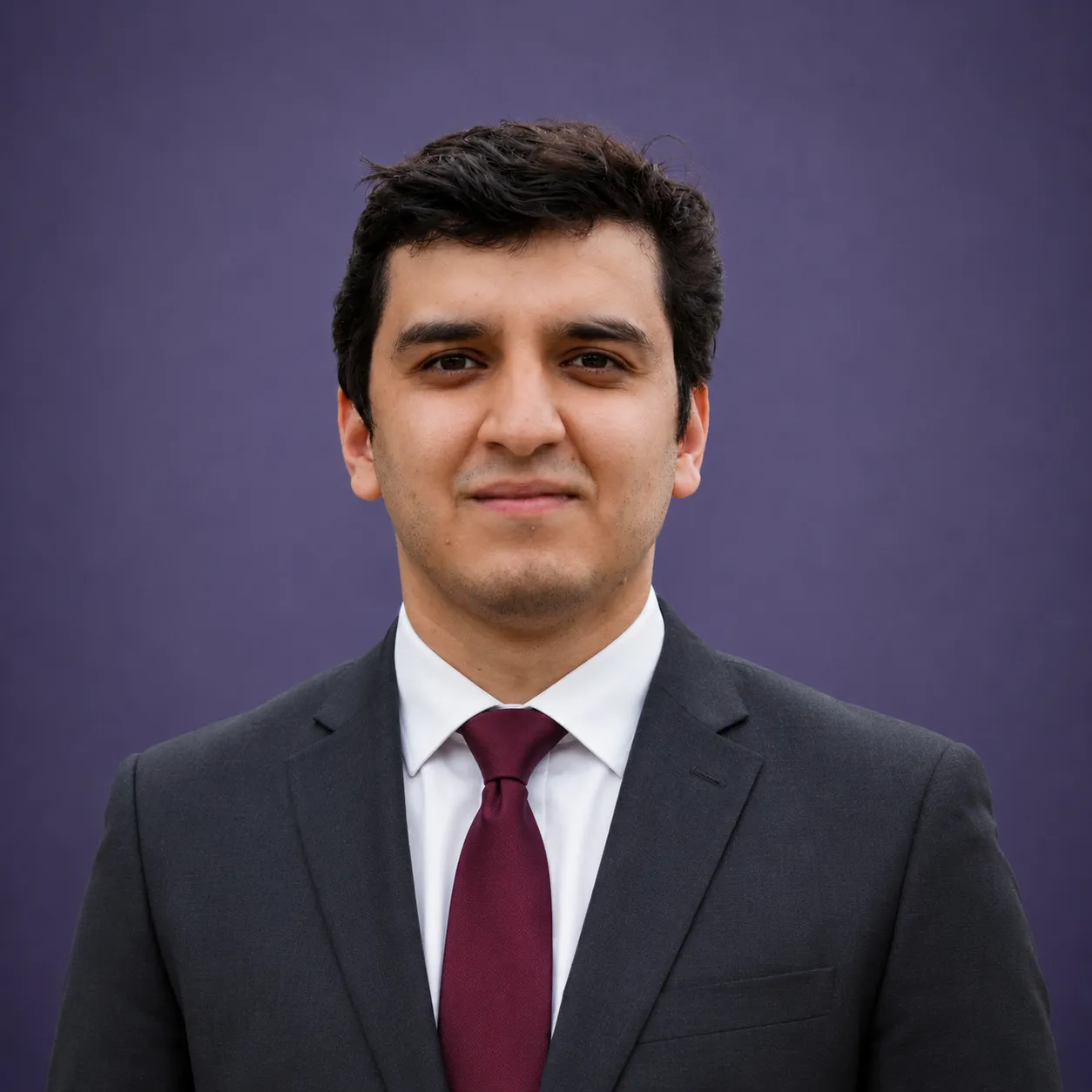
Hussain Ahmad
Senior Practice Leader, Institutional Law
Government & Law · Cornell · University of Chicago
Proof & Published Research
Proof & published research.
Framework
The Cultural Defect Taxonomy™
The structured classification of cultural and religious AI-output defect types — group conflation, invented custom, religious inaccuracy, register and honor violation, stereotype, and more. Defect types are described abstractly; offensive examples are never reproduced.
Quarterly
The Afghan Language AI Accuracy Report Card
Measured rates of cultural defect and hallucination across frontier models in Afghan languages — the recurring benchmark this audit feeds.
Methodology
The Cultural Hallucination Audit™
The audit method itself — detection, classification, severity scoring, and CCB certification, documented in the Trust Center.
Annual
The Sovereign Speech Index
Overall model performance across the 24 languages — published with Model Validation & Red-Teaming.
References
1. Tao, Y., Viberg, O., Baker, R. S., & Kizilcec, R. F. (2024). Cultural bias and cultural alignment of large language models. PNAS Nexus, 3(9), pgae346.
2. Naous, T., Ryan, M. J., Ritter, A., & Xu, W. (2024). Having Beer after Prayer? Measuring Cultural Bias in Large Language Models. ACL 2024, Vol. 1, pp. 16366–16393.
3. AlKhamissi, B., et al. (2024). Investigating Cultural Alignment of Large Language Models. ACL 2024; arXiv:2402.13231.
4. Abid, A., Farooqi, M., & Zou, J. (2021). Persistent Anti-Muslim Bias in Large Language Models. AIES 2021.
Global Reach
Global reach.
The culture changes. The cost of getting it wrong does not.
Cultural and religious defects matter wherever AI serves Afghan, Muslim, and Central Asian populations — across North America, Europe, the Gulf, South Asia, and the diaspora — and the audit methodology extends to other cultural contexts entirely. The specifics differ; the structure of the failure does not. Ariana Nexus audits AI output for cultural and religious defects across all 24 Afghan languages, worldwide.
Coverage register
North America
United States
Europe
United Kingdom · Germany · France · Italy · wider Europe
The Gulf
United Arab Emirates · Saudi Arabia · Qatar
South Asia & diaspora
South Asia · the global Afghan diaspora
All 24 Afghan languages · delivered worldwide from Washington, D.C.
The culture changes. The defect is still invisible — until an insider names it.
The Door
Request a Cultural Hallucination Audit.
For AI developers and model providers, enterprises deploying generative AI in Afghan and Muslim contexts, localization and content teams, and platforms. Briefings are conducted under NDA, in Washington, D.C. or virtually.
Request a confidential briefingEvaluating a specific model, language, or deployment — or seeing something on this page we should sharpen? Bring us the question.
What your reviewers cannot see, your users will feel. See it first.
In this sector
Model Validation & Red-TeamingConversational AI & LocalizationSovereign Language Models & EvaluationData Annotation & BenchmarkingThe Cultural Hallucination Audit™ · The Cultural Defect Taxonomy™ · The CCB Sign-Off Mark · Standards adherence — NIST AI RMF fairness, the Generative AI Profile, the EU AI Act · Five-Gate Validation Protocol™ · The Cultural Fidelity Index. Full index at the Trust Center.