Pashto and Dari Medical Interpreter Assessment and Training for Bilingual Staff and Contractors

Ariana Nexus tests whether your bilingual employees and contract interpreters can interpret accurately in Pashto and Dari, then trains them until they can. You receive a scored record for every person, a roster by language, dialect and gender, and the evidence you need before naming anyone as qualified under Section 1557.

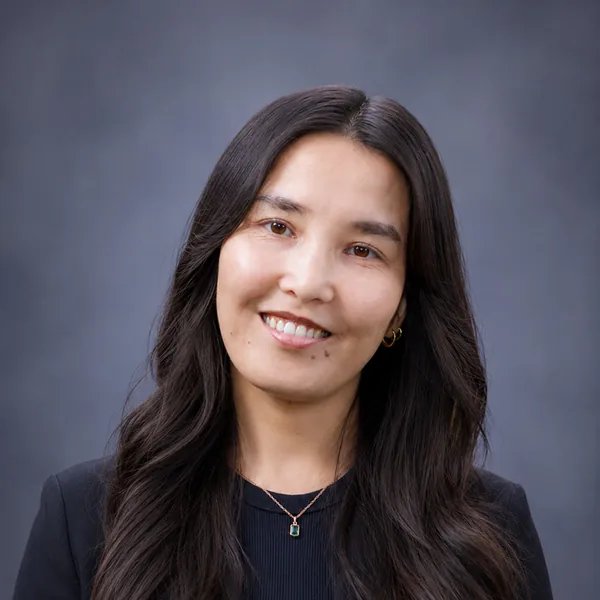
Reviewed by Tamana Ghaznawi, M.P.H., Senior Partner

Key facts

Service
Medical interpreter qualification assessment and training
Languages
Pashto and Dari, each tested in the dialect the candidate speaks
For
Bilingual clinical and front-line staff, contract and agency interpreters, and former military and field interpreters
Assessment
English and Pashto or Dari proficiency, medical terminology, consecutive interpreting, sight translation, ethics
Training
40-hour core program, specialty modules, and supervised practice toward 100 hours
Delivery
Live online or on site, in cohorts of up to 12
You receive
Score records, a qualification recommendation, and a roster by language, dialect, gender and specialty

Why speaking Pashto or Dari is not the same as being qualified to interpret

Many health systems that care for Afghan refugees and evacuees ask employees who speak Pashto or Dari to step in when an Afghan patient needs an interpreter. Speaking a language at home is a different skill from interpreting a diagnosis, a consent form or a medication change without adding, dropping or softening a word.

Federal rules draw the same line. A covered health program may not rely on staff to communicate with patients who have limited English proficiency unless those staff are qualified interpreters or qualified bilingual staff. (45 CFR 92.201(e)(4))

Afghan patients add layers a generic course misses. Dari is not Iranian Persian, Pashto changes from Kandahar to Nangarhar, and many patients will not discuss women’s health, mental health or war-related trauma through an interpreter they do not trust.

1 in 5
dual-role staff interpreters tested at a large U.S. health system did not have the bilingual skills to interpret in a medical encounter.
Moreno, Otero-Sabogal and Newman, Journal of General Internal Medicine, 2007. 840 staff tested in Spanish, Chinese and Russian.
2% vs 12%
errors with potential clinical consequences for professional interpreters with 100 or more hours of training, compared with those who had fewer.
Flores and colleagues, Annals of Emergency Medicine, 2012. Spanish-language pediatric emergency visits.
0
U.S. national bilingual oral certification exams in Pashto or Dari. CCHI and NBCMI test Spanish, Arabic, Mandarin, Cantonese, Russian, Korean and Vietnamese.
CCHI and NBCMI program pages, September 2026.

Is there a national certification for Pashto and Dari medical interpreters?

Not one that tests Pashto or Dari. The two U.S. certifying bodies, CCHI and NBCMI, give bilingual oral exams only in Spanish, Arabic, Mandarin, Cantonese, Russian, Korean and Vietnamese. Pashto and Dari interpreters can earn CCHI’s CoreCHI-P™ or NBCMI’s Hub-CMI, but neither exam hears them interpret in Pashto or Dari.

That is the gap this assessment closes: both languages are tested directly, in the dialect your patients speak, before anyone interprets.

Credential
Format
Languages tested
Tests Pashto or Dari
CCHI CHI™
Bilingual oral exam
Spanish, Arabic, Mandarin
No
CCHI CoreCHI-P™
Written exam plus English-to-English performance exam
Any language
Not in Pashto or Dari
NBCMI CMI
Written exam plus bilingual oral exam
Spanish, Cantonese, Mandarin, Russian, Korean, Vietnamese
No
NBCMI Hub-CMI
Written exam in English
Any language
Not in Pashto or Dari
Ariana Nexus assessment
Oral, written and performance tasks in both languages
Pashto and Dari
Yes, by dialect

CCHI stops awarding its knowledge-only CoreCHI™ certification after December 31, 2026. Interpreters of Pashto and Dari who want a national credential should plan for CoreCHI-P™.

What the assessment and training include

Overlapping brass panels lit from within, photographed close.

Qualification assessment

A structured test of English and Pashto or Dari, medical terminology, consecutive interpreting, sight translation and ethics. Two trained raters who speak the candidate’s dialect score every performance task.

Medical interpreter training

A 40-hour core program taught in Pashto–English and Dari–English language labs, followed by specialty modules and supervised practice that carry interpreters past 100 hours.

Records and program upkeep

Score records, qualification recommendations, a roster by language, dialect, gender and specialty, and a re-assessment calendar your language services team can run.

Medical interpreter skill levels, from bilingual to specialty-ready

Six competencies on a five-level scale. The markers show where a typical bilingual employee starts, and the targets after the 40-hour core program and after 100 hours.

Competency
Level 1
Bilingual
Speaks both languages socially; no interpreting training.
Level 2
Emerging
Handles short, predictable exchanges with support.
Level 3
Qualified
Interprets routine encounters accurately and completely.
Level 4
Proficient
Handles complex and sensitive encounters without loss of meaning.
Level 5
Specialty-ready
Sustains accuracy in a specialty such as oncology or behavioral health.
Language proficiency in both languages
Level 3: typical start, target after the core program
Level 4: target after 100 hours
Accuracy and completeness
Level 1: typical start
Level 3: target after the core program
Level 4: target after 100 hours
Medical terminology
Level 2: typical start
Level 3: target after the core program
Level 4: target after 100 hours
Role and ethics
Level 1: typical start
Level 3: target after the core program
Level 4: target after 100 hours
Cultural and dialect mediation
Level 2: typical start
Level 3: target after the core program
Level 4: target after 100 hours
Managing the encounter
Level 1: typical start
Level 3: target after the core program
Level 4: target after 100 hours
Typical starting levelTarget after the 40-hour core programTarget after 100 hours
  1. Level 1: Bilingual. Speaks both languages socially; no interpreting training.
  2. Level 2: Emerging. Handles short, predictable exchanges with support.
  3. Level 3: Qualified. Interprets routine encounters accurately and completely.
  4. Level 4: Proficient. Handles complex and sensitive encounters without loss of meaning.
  5. Level 5: Specialty-ready. Sustains accuracy in a specialty such as oncology or behavioral health.

Illustrative program targets, not measured results.

What we test and how we score it

Five scored components, about two hours and fifteen minutes per candidate. Written items run online; oral and performance tasks run live, by video or in person.

Component
What it measures
How it runs
Time
Weight
Medical terminology and ethics
Body systems, symptoms, medications, procedures and consent language in both languages; confidentiality, impartiality and role boundaries
Written items online, proctored
60 min
25%
English oral interview
Listening and speaking in clinical English, including register
Structured interview, rated on a scale referenced to ILR proficiency levels
20 min
15%
Pashto or Dari oral interview
Proficiency in the candidate’s own variety, confirmed by a rater who speaks it
Structured interview in the candidate’s dialect
20 min
15%
Consecutive interpreting
Accuracy and completeness in a clinical role-play: omissions, additions, substitutions and shifts in tone
Live role-play, recorded only with written consent
25 min
30%
Sight translation
Reading a short English patient document aloud in Pashto or Dari
Timed live task
10 min
15%

Who scores the assessment

Two raters score every performance task independently. Both speak the candidate’s variety of Pashto or Dari and work from the same rubric, and a third reviewer settles any disagreement. Raters calibrate on shared recordings before each cohort.

A result of qualified to interpret requires every component at or above the standard and no uncorrected error that could change a clinical decision.

Three possible results, each with a next step

Qualified to interpret

Demonstrated the skills the federal definition of a qualified interpreter describes. May interpret between clinicians and patients in Pashto or Dari.

Qualified for direct care in Pashto or Dari

May speak with patients directly within their own role, such as a nurse giving discharge instructions, but does not interpret for other clinicians. Matches the federal definition of qualified bilingual staff.

Not yet qualified

Receives a written training plan and a re-assessment date, and does not interpret or communicate in Pashto or Dari with patients until re-assessed.

Your organization makes the designation. We give you the evidence, formatted for your Section 1557 language access records.

The 40-hour core program

Forty hours is the minimum CCHI and NBCMI require before an interpreter can sit their exams. We treat it as the start: specialty modules and supervised practice carry each interpreter past 100 hours in the first year, the threshold at which one emergency department study found errors with clinical consequences fell from 12% to 2%.

  1. 6
    hours

    Role, ethics and standards of practice

    NCIHC Code of Ethics, confidentiality, HIPAA basics, Section 1557 in plain language
  2. 8
    hours

    Interpreting skills

    Consecutive interpreting, memory and note-taking, first person, managing the flow, transparency
  3. 8
    hours

    Medical terminology in English, Pashto and Dari

    Body systems, common conditions, medications, procedures, consent language
  4. 4
    hours

    The U.S. health system

    Care settings, clinical roles, insurance and billing language, discharge
  5. 2
    hours

    Sight translation

    When to sight translate, and when to ask for a written translation instead
  6. 4
    hours

    Culture, dialect and gender in Afghan care

    Gender-concordant care, family roles, religion and fasting, modesty, Dari and Iranian Persian differences, Pashto dialects
  7. 4
    hours

    Trauma-informed interpreting

    The Afghan war and displacement, moral injury (moral trauma), disclosure and grief, protecting interpreters from vicarious trauma
  8. 4
    hours

    Remote interpreting and practice lab

    Video and phone technique, simulated encounters, final practical check
Core program40 hours

Specialty modules, 4 to 8 hours each

  • Behavioral health and psychiatry
  • Women’s health, pregnancy and birth
  • Pediatrics
  • Oncology, serious illness and end-of-life care
  • Clinical research and informed consent
  • Emergency and urgent care
  • Pharmacy and medication counseling

Formats

Intensive
Five days, eight hours each
On site or live online
Evening
Ten sessions, four hours each
Live online
Blended
Online sessions plus an on-site practice lab
Online and on site

Pashto and Dari, tested in the dialect your patients speak

Every candidate is assessed in their own variety by a rater who speaks it, and every result names that variety.

پښتو

Pashto

Varieties we test
  • Kandahari
  • Central
  • Nangarhari
  • Khosti and Paktiawal
  • Yusufzai
دری

Dari

Varieties we test
  • Kabuli
  • Herati
  • Hazaragi (a variety of Dari)
  • Panjshiri
  • Badakhshi

Every roster records four kinds of match, so the right interpreter reaches the right patient.

Dialect match

Your roster shows which interpreters can serve a Kandahari or a Herati patient, not only which ones speak Pashto or Dari.

Gender match

The roster records gender so you can offer a woman interpreter for women’s health. Candidates can ask for a woman assessor or trainer.

Education match

Candidates with health-science degrees are flagged for specialty tracks. Research on dual-role staff links higher education to passing language tests.

Region and community

Raters know the idioms, naming customs and family roles patients bring from Kandahar, Herat, Jalalabad and Kabul.

Dari is not Farsi

A Farsi (Iranian Persian) speaker is not assumed to be a Dari interpreter. We test the Afghan words patients actually use.

English
Afghan Dari
Iranian Persian
Hospital
شفاخانه
بیمارستان
Doctor
داکتر
دکتر
Patient
مریض
بیمار
Health (ministry name)
صحت
بهداشت

د پښتو طبي ژباړونکو ازموینه او روزنه

که په روغتون یا کلینیک کې کار کوئ او په پښتو او انګلیسي تسلط لرئ، موږ ستاسو د طبي ژباړې مهارت ازمویو او تاسو د دقیقې، محرمانه او مسلکي ژباړې لپاره چمتو کوو.

ارزیابی و آموزش ترجمانان طبی دری

اگر در شفاخانه یا کلینیک کار می‌کنید و به دری و انگلیسی تسلط دارید، مهارت ترجمانی طبی شما را ارزیابی می‌کنیم و شما را برای ترجمانی دقیق، محرمانه و مسلکی آماده می‌سازیم.

For bilingual staff and interpreters: the same program, described in Pashto and in Dari.

Who the program is for

Hospitals and health systems

Language services, patient experience and compliance leaders who need to know which Pashto- and Dari-speaking staff can interpret, and must document it.

Clinics and behavioral health providers

Community health centers and counseling practices that serve Afghan families daily and lean on a few bilingual staff members.

Bilingual staff and contract interpreters

Nurses, medical assistants, patient navigators, community health workers, front-desk staff, and freelance or agency interpreters.

Former military and field interpreters

Afghan diaspora interpreters who served alongside U.S. and allied forces and now want to work in healthcare, where the role, vocabulary and ethics differ.

Language companies and research teams

Agencies building a Pashto and Dari bench, and study teams that need interpreters qualified for informed consent.

How an engagement runs

  1. Step 1, Week 0

    Scope

    Confirm languages, dialects, roles, sites and your state’s rules, and agree what “qualified” means in your policy.
  2. Step 2, Week 1

    Intake

    Candidates submit education, work history and a language background form. We confirm each person’s variety.
  3. Step 3, Weeks 1–2

    Assessment

    Written items online; oral and performance tasks live, scored by two raters.
  4. Step 4, Week 3

    Results

    Score records, qualification recommendations and a roster by language, dialect, gender and specialty.
  5. Step 5, Weeks 3–7

    Training

    The 40-hour core program in small cohorts, then specialty modules.
  6. Step 6, Week 8, then yearly

    Practical check and review

    A practical check at the end of training, an annual skills review, and full re-assessment every two years.

What you receive

Score record for each candidate

Component scores, an error profile by type, and rater notes.

Qualification recommendation

Written in your policy’s own terms, with the evidence behind it.

Roster

Language, dialect, gender, education and specialty for every qualified person.

Training transcript

Hours by module and a certificate of completion.

Cohort summary

Results and gaps for your language services and compliance leads.

Re-assessment calendar

Annual skills reviews and two-year re-assessments, by name.

Ways to work with us

Assessment only

Know today who on your staff can interpret, who can speak with patients directly, and who needs training.

Assessment and training

Test, train and re-test a cohort, and finish with a qualified Pashto and Dari roster.

Ongoing program

New-hire testing, annual reviews, specialty modules and roster upkeep as part of your language services program.

Scoped by number of candidates, languages and dialects, and format. Independent interpreters can join an open cohort.

Why Ariana Nexus for Pashto and Dari interpreter qualification

No national exam in the United States tests Pashto or Dari, so Ariana Nexus set its own written standard and applies it the same way to every candidate: dialect-matched raters, one rubric and a documented result. The same standard trains our own interpreters and Pashto and Dari interpreters across the Afghan diaspora.

Afghan-led and university-trained

Designed and delivered by Afghan alumni of Cornell, Brown and the University of British Columbia, with doctoral training in psychology.

Dialect-true scoring

No one is rated on a variety of Pashto or Dari that the rater does not speak.

Clinical, not only linguistic

Terminology is taught in English, Pashto and Dari together, inside real encounters: consent, discharge, medication changes, difficult news.

Built for Afghan patients

Gender, family roles, religious practice, war and displacement are part of the curriculum, because they shape what patients say and hold back.

Clear about certification

We assess, train and document. We do not issue national certification, and every record states exactly what it shows.

In-house, one point of accountability

Every test, class and record is produced by our own people. No subcontracted raters and no resold courses.

Candidate records are confidential and are never routed through channels controlled by the de facto authorities in Afghanistan.

The team behind the Pashto and Dari interpreter program

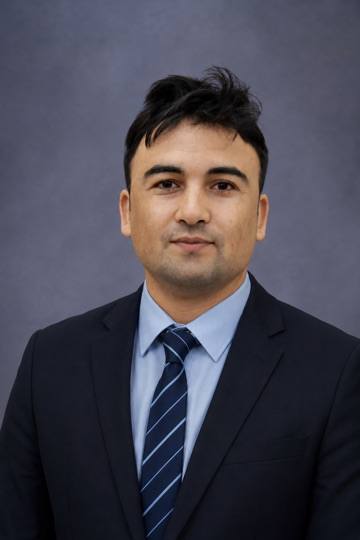
The program is designed and taught by the Ariana Nexus healthcare practice: public health, psychology and systems specialists from the Afghan community, educated at Cornell, Brown, West Chester and the University of British Columbia.
How this team is different

Trained in health sciences, not only in languages
The program’s leads studied public health, psychology and computer systems, so the clinical content and the scoring system are built by people trained in both.
From the Afghan community
The team comes from the community Afghan patients come from and knows the family roles, idioms and subjects patients hold back.
Run like a study
Every cohort runs on a written rubric, calibrated raters and a results summary for your language services and compliance leads.
Hassan Ukasha, Managing Partner, Ariana Nexus
Executive oversight

Hassan Ukasha

Managing Partner
B.S.
Cornell University
M.P.H.
Cornell University

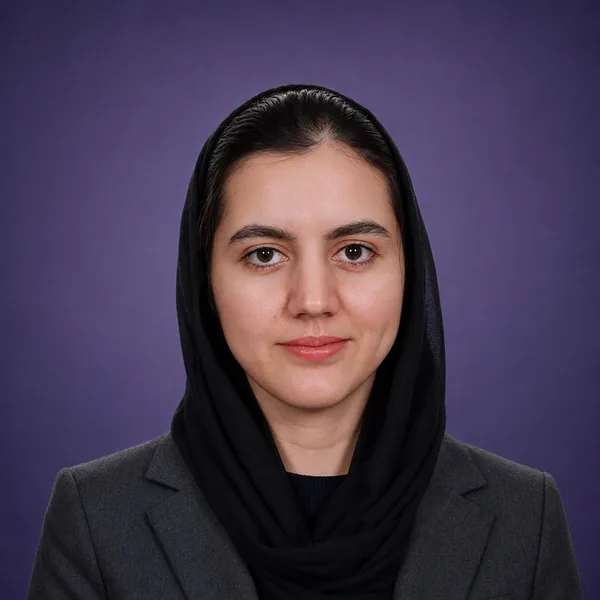
Hassan Ukasha oversees Ariana Nexus operations and is accountable for this program: the assessment standard, the integrity of every score and the commitments made to each client. Grew up in Herat.
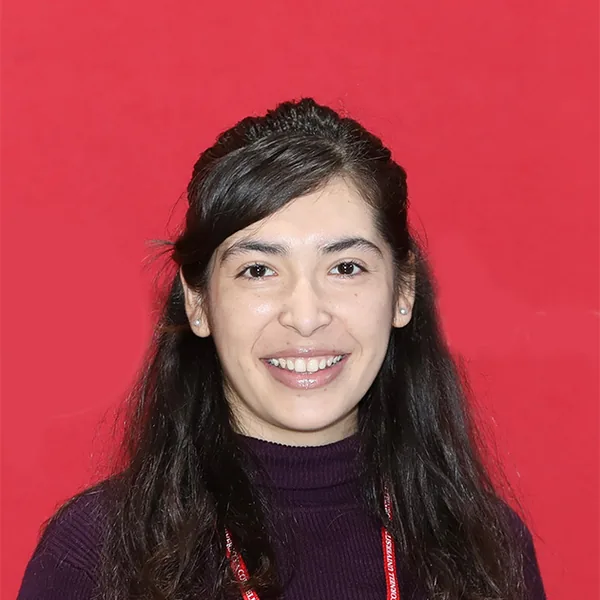
  • Accountable for the assessment standard and scoring integrity
  • Executive point of escalation for every engagement
  • Owns the firm’s confidentiality and data-protection commitments

Program leadership and delivery

Tamana Ghaznawi, Senior Partner, Ariana Nexus

Tamana Ghaznawi

Senior Partner
B.S.
Cornell University
M.P.H.
Cornell University
Zeba Haqbani, Senior Partner, Ariana Nexus

Zeba Haqbani

Senior Partner
B.Sc.
University of British Columbia
Diana Ayubi, Engagement Manager, Ariana Nexus

Diana Ayubi

Engagement Manager
B.A.
Cornell University
Psy.D.
West Chester University
Shukria Sakhi, Engagement Manager, Ariana Nexus

Shukria Sakhi

Engagement Manager
B.S.
Brown University
M.P.H.
Brown University

Who does what on this program

Tamana Ghaznawi
Program lead
Leads the firm’s healthcare practice and sets the program’s clinical and compliance standard. Lived in Kabul.
Zeba Haqbani
Assessment systems and records
Builds the firm’s institutional systems and AI platforms, including the records behind every score and roster. Lived in Kabul.
Diana Ayubi
Trauma-informed curriculum
Architects the firm’s mental health programs and leads the trauma-informed interpreting module. Lived in Kabul.
Shukria Sakhi
Cohort delivery and evaluation
Trained in public health at Brown; manages cohort delivery and measures program results.

The rules and standards behind the program

Instrument
What it requires
How the program answers it
45 CFR 92.4 (Section 1557)
Defines a qualified interpreter and qualified bilingual/multilingual staff.
The five components test each element of both definitions.
45 CFR 92.201(c)(1) and (e)(4)
A qualified interpreter when interpretation is needed; no reliance on unqualified staff.
Results separate who may interpret from who may speak with patients directly.
45 CFR 92.8(d) and 92.9
Language access procedures must name qualified bilingual staff; training records kept three years.
Rosters and transcripts are formatted for both files.
Joint Commission National Performance Goals
Hospital accreditation standard in effect since January 1, 2026.
Qualified-interpreter evidence supports survey readiness.
NCIHC Code of Ethics and Standards of Practice; ISO 21998:2020
Professional ethics and healthcare interpreting service requirements.
Basis for the ethics, role and practice-lab content.
CCHI and NBCMI eligibility; state programs
40 training hours before national exams; Oregon requires 60 for its registry.
The core documents 40 hours; state hours are mapped before enrollment.

Questions care teams and interpreters ask

Is there a national certification for Pashto or Dari medical interpreters?

Not one that tests Pashto or Dari. CCHI and NBCMI, the two U.S. certifying bodies, give bilingual oral exams only in Spanish, Arabic, Mandarin, Cantonese, Russian, Korean and Vietnamese. Pashto and Dari interpreters can earn CCHI’s CoreCHI-P™ or NBCMI’s Hub-CMI, but neither exam hears them interpret in Pashto or Dari. Our assessment tests both languages directly.

Can bilingual staff interpret for patients?

Only once they are qualified. Section 1557 bars covered health programs from relying on staff to communicate with patients who have limited English proficiency unless those staff are qualified interpreters or qualified bilingual staff (45 CFR 92.201). An assessment gives you the evidence to decide who may interpret, who may speak with patients directly, and who needs training first.

What is the difference between a qualified interpreter and qualified bilingual staff?

A qualified interpreter carries a conversation between two people accurately and impartially, without adding, omitting or changing anything. Qualified bilingual staff speak with patients directly in the patient’s language as part of their own job, such as a nurse giving instructions in Dari. Both are defined in 45 CFR 92.4, and our results say which role each person can hold.

How do you test a bilingual employee’s Pashto or Dari?

With a rater who speaks the employee’s own variety. Candidates complete oral interviews in English and in Pashto or Dari, written medical terminology items, a clinical role-play recorded with consent, and a sight translation. Two trained raters score each performance task, and every result names the dialect the candidate was tested in.

How long is medical interpreter training?

At least 40 hours for most certification paths. CCHI and NBCMI both require 40 hours of healthcare interpreter training before their exams, and Oregon requires 60 for its state registry. Our core program is 40 hours, and specialty modules and supervised practice take interpreters past 100 hours, the level a 2012 emergency department study linked to far fewer errors with clinical consequences.

Is Dari the same as Farsi, and can a Farsi interpreter help an Afghan patient?

Dari and Iranian Persian (Farsi) are related, but everyday and medical vocabulary differs: an Afghan patient says shafakhana for hospital and daktar for doctor. A Farsi speaker is not assumed to be a Dari interpreter. We test Afghan Dari directly and record the variety on every result, so patients can be matched to interpreters who speak their Dari.

Do you match interpreters by gender and dialect?

Yes. Every roster we deliver shows each interpreter’s language, dialect, gender, education and specialty, so your scheduling team can offer a woman interpreter for women’s health, or a Kandahari or Herati speaker when a patient needs one. Candidates can also ask for a woman assessor or trainer.

Does the training cover mental health, Afghan war trauma and moral injury?

Yes. A four-hour trauma-informed module covers interpreting for patients who lived through war and displacement, disclosures of violence, grief, moral injury (sometimes called moral trauma), and the stigma many Afghan families attach to mental illness. It also teaches interpreters to recognize vicarious trauma in themselves. Behavioral health is available as a longer specialty module.

Can former Afghan military interpreters become medical interpreters?

Many can, and they start with strong language skills. Medical interpreting asks for a different role: first-person interpreting, strict impartiality, clinical vocabulary in both languages and a healthcare code of ethics. The assessment shows what transfers from field interpreting, and the core program trains the rest.

Can we ask a family member or a child to interpret?

Only in narrow exceptions, and both still involve a qualified interpreter. Under 45 CFR 92.201(e), an accompanying adult may interpret in an emergency until a qualified interpreter arrives and confirms what was said, or when the patient asks for it in private with a qualified interpreter present and the arrangement is documented. A minor may interpret only in that emergency case.

Is the training online or in person?

Both. Cohorts run live online, and we can teach on site at your facility. Written assessment items are completed online, while oral and performance tasks run live by video or in person with two raters. We do not teach interpreting by self-paced video alone, because the skill is built through practice with feedback.

Will this training prepare interpreters for CCHI or NBCMI certification?

It is built to. The core program covers the five content areas of CCHI’s CoreCHI™ exam and the interpreting skills its performance exam measures, and it documents 40 training hours. CCHI stops awarding the knowledge-only CoreCHI™ after December 31, 2026, so plan for CoreCHI-P™, and confirm your documentation with CCHI or NBCMI before applying.

Sources

  1. 1.45 CFR Part 92, Nondiscrimination in Health Programs or Activities. eCFR, current as of September 14, 2026. www.ecfr.gov/current/title-45/subtitle-A/subchapter-A/part-92
  2. 2.Certification Commission for Healthcare Interpreters (CCHI). Certifications and eligibility. cchicertification.org/certifications/eligibility/
  3. 3.National Board of Certification for Medical Interpreters (NBCMI). Hub-CMI and CMI credentials. www.certifiedmedicalinterpreters.org/overview
  4. 4.Flores G, Abreu M, Barone CP, Bachur R, Lin H. Errors of medical interpretation and their potential clinical consequences. Ann Emerg Med. 2012;60(5):545–553. doi.org/10.1016/j.annemergmed.2012.01.025
  5. 5.Moreno MR, Otero-Sabogal R, Newman J. Assessing dual-role staff-interpreter linguistic competency in an integrated healthcare system. J Gen Intern Med. 2007;22(Suppl 2). doi.org/10.1007/s11606-007-0344-8
  6. 6.Diamond L, Moreno M, Soto C, Otero-Sabogal R. Bilingual dual-role staff interpreters in the health care setting. Int J Interpreter Educ. 2012;4(1):5–20. tigerprints.clemson.edu/ijie/vol4/iss1/3
  7. 7.The Joint Commission. National Performance Goals, effective January 1, 2026. www.jointcommission.org/en-us/standards/national-performance-goals
  8. 8.ISO 21998:2020, Interpreting services — Healthcare interpreting — Requirements and recommendations. www.iso.org/standard/72344.html

Qualify your Pashto and Dari interpreters

Tell us how many staff and contractors need assessment, the dialects your patients speak and the states you operate in. Every engagement is covered by a confidentiality agreement.