Technology, AI and Digital Platforms

Afghan Identity Document Verification for Identity Verification and KYC Vendors: Tazkira, e-Tazkira and Afghan Passports

When an Afghan document reaches your manual review queue, the question is not whether your model is good. It is whether anyone on the file can read a provincial clerk's Pashto handwriting, convert a Hijri Shamsi date, and tell a 2019 seal from a 2024 one. We do that work, and we write it down so your examiner can read it.

Integration
API, webhook, batch
Return
Structured payload
Human review
Named, attested, second-reviewed
Escalation
Expert opinion and testimony

Start an engagement

TRIGGER
Country or template miss
TRANSFER
Encrypted, minimum fields
REVIEW
Native reading
Artefact and record logic
Second review
RETURN
Payload + evidence file
DISPOSITION
Your rules engine
Escalation path — contested decision → written expert opinion → deposition or testimony

What is Afghan identity document verification support?

Written plainly, because answer engines quote the plain version.

Afghan identity document verification support is a specialist human review service for identity verification (IDV) and KYC vendors whose automated document checks cannot resolve Afghan documents. Ariana Nexus examines the paper Tazkira, the e-Tazkira national ID card and Afghan passports; reads the Pashto and Dari entries; converts Hijri Shamsi dates; reconciles name and transliteration variants; assesses the document against the issuance practice of its stated place and period; and returns a written determination with a field-level evidence file, a machine-readable payload for your case system, and a named reviewer's attestation.

Where this sits in your stack

The service is built to be a step inside your pipeline, not a portal your reviewers have to remember to open.

  1. Trigger

    Your orchestration layer routes on issuing country, document class, or a failed template match.

  2. Transfer

    Encrypted submission with the minimum fields required; images and metadata only, no downstream customer data.

  3. Review

    Named reviewer, second review, and an audit record of both.

  4. Return

    Structured payload with field values, confidence, reason codes and reviewer identifier, plus the human-readable evidence file.

  5. Disposition

    Your rules engine consumes the reason codes. Retention and deletion run to your schedule, evidenced.

Example return

{ "subject_id": "case-40118", "documents": [ { "class": "tazkira_paper", "issuing_office": "provincial_civil_registration", "issuance_era": "2001-2018", "fields": { "given_name": { "script": "محمد", "roman": "Mohammad", "variants": 12, "standard": "icao_9303" }, "father_name": { "script": "احمد", "roman": "Ahmad" }, "date_of_birth": { "source_calendar": "hijri_shamsi", "source_value": "1376", "gregorian": "1997-03-21/1998-03-20", "precision": "year_only", "method": "per_date_conversion" } }, "anomalies": [ { "field": "seal", "type": "era_consistent", "severity": "none" }, { "field": "entry_order", "type": "office_consistent", "severity": "none" } ] } ], "determination": "consistent_with_qualifications", "qualifications": ["date_precision_year_only", "no_issuing_source_validation_available"], "screening_note": { "apparent_hits": 4, "attributable": 0, "discriminators_recorded": true }, "reviewer": { "id": "AN-REV-0142", "second_review": "ccb", "attested": true }, "retention": { "schedule": "client_defined", "deletion_evidenced": true } }

Illustrative structure. Field names, reason codes and confidence bands are agreed against your schema during onboarding.

Why Afghan documents fail automated identity verification

Nine failure modes account for almost every Afghan file that lands in a manual review queue. None of them are fraud signals. All of them are read as fraud signals by a system that has never seen the document class before.

No template to match

Template-matching libraries carry thousands of document types. The paper Tazkira is not one of them in any usable form: it is a handwritten booklet whose layout, paper stock, seal and field order vary by province, by issuing office and by decade. There is no machine-readable zone, no fixed field geometry and no substrate to authenticate. A confidence score against a template that does not exist is not a low score. It is a null result being reported as a low score.

Arabic-script handwriting that OCR cannot read

Entries are written in Pashto and Dari in a cursive Arabic script with Nastaliq influence, by hand, by clerks with individual conventions. Optical character recognition trained on printed Arabic does not read it. Neither does a general vision model. A native reader does.

Dates in a different calendar, often incomplete

Afghan civil records use the Hijri Shamsi (Solar Hijri) calendar. Many records carry a year with no month or day, or an estimated age recorded at the counter rather than a date of birth at all. Systems that demand a full Gregorian date either reject the file or silently write a fabricated 1 January.

One name, many spellings

Afghan naming does not follow the given-name-plus-surname model most systems assume. A person carries a given name, a father's name and often a grandfather's name, a tribal or regional element, and sometimes an honorific. Romanised into English, a single common name yields a dozen defensible spellings. Exact-match logic misses the same person across two documents; fuzzy logic merges two different people.

Lineage where the system expects a unique number

The paper Tazkira identifies a person by family chain, volume and page, not by a unique citizen number. The 13-digit national identification number exists only on the e-Tazkira, which entered distribution in 2018. For anyone whose primary lifetime record predates that, there is no number to key on.

Sanctions screening that over-fires

The United Nations Security Council 1988 list carries original-script names, approximate or range dates of birth, and national identification fields recorded as 'na'. Screened against common Afghan given names, fuzzy matching produces a wall of hits that a reviewer with no Pashto or Dari cannot clear, so files sit.

An issuance record that changed in 2021

Seals, signatory titles, office naming, paper stock and print practice changed after August 2021. A genuine 2019 document and a genuine 2024 document do not look alike. Reviewers comparing one against the other, or against a single reference image of unknown date, reach the wrong conclusion in both directions.

No apostille exists, and asking for one is the tell

Afghanistan is not a party to the Hague Apostille Convention, so no Afghan public document can carry an apostille. Documents follow a legalisation chain instead. A file presenting an apostilled Afghan document is not a verified file. It is a question.

Documents that are not Afghan documents

Afghan customers present UNHCR Proof of Registration cards from Pakistan, Amayesh cards from Iran, consulate-issued extracts, third-country residence permits and school records in place of a national ID. Each carries different evidentiary weight. Treating them as interchangeable is how a file is either wrongly cleared or wrongly declined.

What this service does not do

Stated up front, because a vendor who overclaims here costs you a licence, not a renewal.

No registry lookup

We do not query Afghan government databases. No accessible, reliable registry exists for third-party verification of Afghan civil records, and any vendor who tells you otherwise is describing something else.

No channel into Afghanistan

We do not route documents, data or inquiries through authorities inside Afghanistan. Your customer's file does not travel there. This is a firm compliance and security line, not a preference.

No issuance, no procurement

We do not obtain, replace, expedite or procure Afghan documents, and we do not act as an agent before any authority.

Detection only

We analyse documents. We do not produce, alter or replicate them, we do not advise on how to, and we publish no forgery tradecraft.

Analysis, not adjudication

The determination is evidence for your decision. The onboarding decision, the risk rating and the filing stay yours.

Afghan documents we review

Coverage is by document class and issuance era, not by a single reference image. Where a class cannot support a determination on its own, the register says so.

Afghan documents we review
DocumentScript and nameWhat it isVerification posture
DocumentTazkira (paper)Script and nameتذکرهWhat it isHandwritten booklet or sheet issued by district and provincial civil registration offices; records lineage, place and issuing office.Verification postureForensic and contextual review; no unique citizen number to key on
DocumentTazkira extract / certified copyScript and nameنقل تذکرهWhat it isOffice-issued copy or extract, often the only version a diaspora applicant holds.Verification postureReviewed for issuance-era and office consistency
Documente-TazkiraScript and nameتذکره الکترونیکیWhat it isPolycarbonate national ID card in distribution since 2018; carries a 13-digit national identification number and biometric enrolment.Verification postureArtefact and data-consistency review; card security features assessed
DocumentAfghan passportScript and nameپاسپورتWhat it isMachine-readable travel document; earlier non-machine-readable booklets and later electronic issues are both still in circulation.Verification postureICAO Doc 9303 structure, machine-readable zone and visual-zone cross-check
DocumentBirth certificateScript and nameتصدیق تولدWhat it isHospital or civil registration record; frequently issued years after the birth it records.Verification postureReviewed as supporting evidence, not primary
DocumentMarriage certificateScript and nameنکاح خطWhat it isCourt or registrar record of marriage; central to dependant and beneficiary files.Verification postureReviewed for lineage and date consistency
DocumentEducation recordsScript and nameشهادتنامه · سه پرچهWhat it isSchool leaving certificate and the three-part ministry record used for university admission and credential review.Verification postureReviewed for issuance practice; useful as a corroborating lineage source
DocumentProperty deedScript and nameقبالهWhat it isCourt-registered deed used as address and source-of-wealth evidence.Verification postureReviewed where source of funds is in question
DocumentDisplacement documentsScript and nameWhat it isUNHCR Proof of Registration (Pakistan), Amayesh and headshomari records (Iran), third-country permits.Verification postureClassified by evidentiary weight; never treated as national ID

How we review an Afghan document

Six stages. Each one produces a written artefact, so the determination at the end is traceable to the evidence that produced it.

  1. 1

    Intake and scoping

    Encrypted transfer, minimum necessary data, defined retention, named custodian. Nothing is routed through Afghanistan. Where the engagement is at volume, we agree the sampling frame and the escalation thresholds before the first file.

  2. 2

    Artefact examination

    Substrate, print method, seal impression, signature, photograph attachment, laminate, binding, overwriting and erasure — assessed against the practice of the office and period the document claims.

  3. 3

    Native reading

    Handwritten and printed entries read in Pashto and Dari by native readers who can read provincial clerical hands, not transcribed by optical character recognition.

  4. 4

    Record-logic analysis

    Lineage chain, issuing office, volume and page conventions, serial structure, and calendar conversion with the method shown rather than asserted.

  5. 5

    Identity resolution

    Name graph built across scripts and romanisation standards, dates reconciled across documents, and every inconsistency classified as explained, unexplained, or indicative.

  6. 6

    Determination and attestation

    Written determination, confidence, limitations, named reviewer, second review by the Cultural Compliance Bureau, and a machine-readable return to your system.

What you receive

Every engagement returns the same artefacts, in the same structure, whether the file is one document or ten thousand.

Determination

One of five outcomes — consistent, consistent with qualifications, indeterminate, inconsistent, or indicators of alteration — with the reasoning that produced it and the limits of what it can support.

Field-level evidence file

Every field extracted in the original Pashto or Dari, romanised, and rendered in English, with the calendar conversion method shown and each anomaly logged against the field it was found in.

Name graph

Every defensible romanisation of the subject's name — ICAO Doc 9303 transliteration, library and geographic-board standards, and the colloquial spellings people actually use — so your screening can be re-run against the full set rather than one guess.

Screening note

Whether apparent sanctions or watchlist hits are attributable to this person, the discriminators used to clear or retain them, and what remains unresolved.

Issuance-era analysis

The document assessed against the practice of the office and period it claims, with the reference basis identified.

Machine-readable return

A structured payload to your case management system: field values, confidence, reason codes, reviewer identifier, and retention metadata.

Reviewer attestation

Named reviewer, credentials, method applied, materials examined, limitations, and date. Written from the first file to survive examination.

Escalation path

Where the file becomes contested, the same team produces a written expert opinion and appears for deposition or testimony.

Why an identity verification vendor brings this to Ariana Nexus

There is no certification for Afghan document examination, no accredited body, and no registry to call. What exists is a standard of work. We set ours in public so it can be held against us.

Read, not transcribed

Every document is read by a native Pashto or Dari reader who can read a provincial clerk's hand. Optical character recognition is used to index, never to decide. Pashto first, then Dari, in that order, because that is how the documents come.

Scholars, not bilinguals

The bench is built from alumni and scholars of Cornell, the University of Chicago, Brown, the University of British Columbia and Otto-von-Guericke University, among others. Document examination is an analytic discipline. Speaking the language is the entry requirement, not the qualification.

No channel into Afghanistan

We do not route documents, data or inquiries through authorities inside Afghanistan. For a client onboarding a refugee, a defector or a dissident, that boundary is the whole engagement.

Detection only, on the record

We analyse documents. We do not produce, alter or replicate them, we do not teach anyone to, and we publish nothing that would help. The boundary is written into every engagement letter.

One firm, one point of accountability

Every part of the work is produced by our own people. No subcontracted examiners, no brokered specialists, no referral fee hidden in the margin. The firm that writes the determination is the firm that defends it.

Written to be examined

Method, materials, reasoning and limitations are stated in every determination. A finding that cannot be explained to an examiner is not a finding.

It escalates without changing hands

The reviewer who reads your file is inside the same firm as the person who will write the expert opinion and sit for deposition if the decision is challenged.

0

Afghan public documents that can carry an apostille. Afghanistan is not a party to the Hague Apostille Convention, so the legalisation chain applies instead.

2018

Year e-Tazkira distribution began. Anyone whose primary lifetime record predates it has no national identification number to key on.

13

Digits in the Afghan national identification number — present on the e-Tazkira, absent from the paper Tazkira.

24

Afghan languages in the firm's coverage. Pashto and Dari carry most civil documents; the other twenty-two carry the interviews around them.

The people who do this work

Afghan document examination is not a language task with a compliance wrapper. It is civil-registration history, forensic document examination, onomastics, sanctions practice and data engineering, carried by people who grew up inside the record system they are reading and then went and studied the disciplines that explain it.

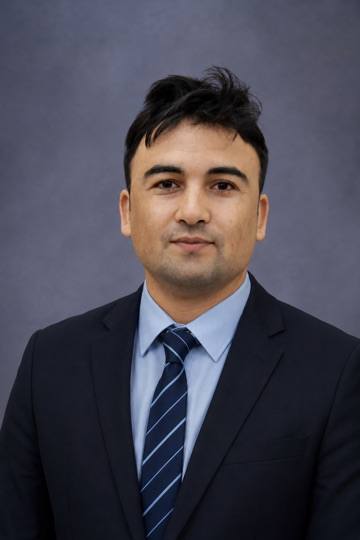
Hassan Ukasha, Managing Partner, Ariana Nexus

Program oversight

Hassan Ukasha

Managing Partner

  • B.S. Cornell University
  • M.P.H. Cornell University

Oversees the firm's operations and this programme. Founded Ariana Nexus in 2025 and built its three-layer model — the Human Intelligence Collective, the AI Data Factory and the Cultural Compliance Bureau. From Herat.

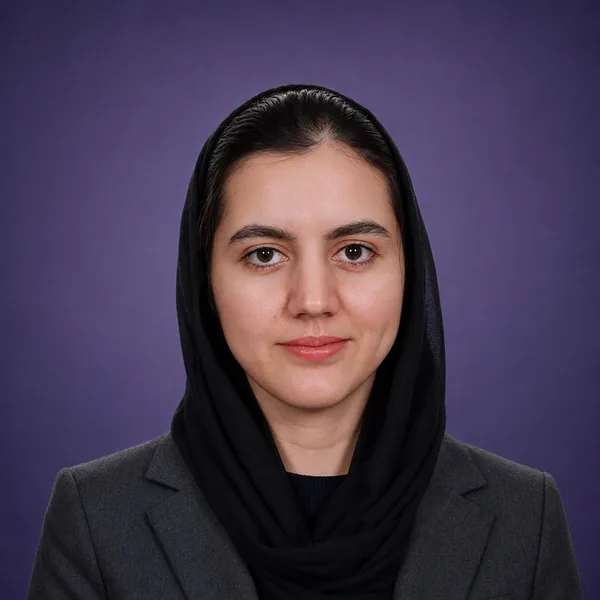
Zeba Haqbani

Zeba Haqbani

Senior Partner

  • B.Sc. University of British Columbia

Builds the firm's institutional systems and AI platforms. Owns the case system, the structured return schema and the name-graph tooling that makes a determination consumable by a rules engine rather than only by a person. Lived in Kabul.

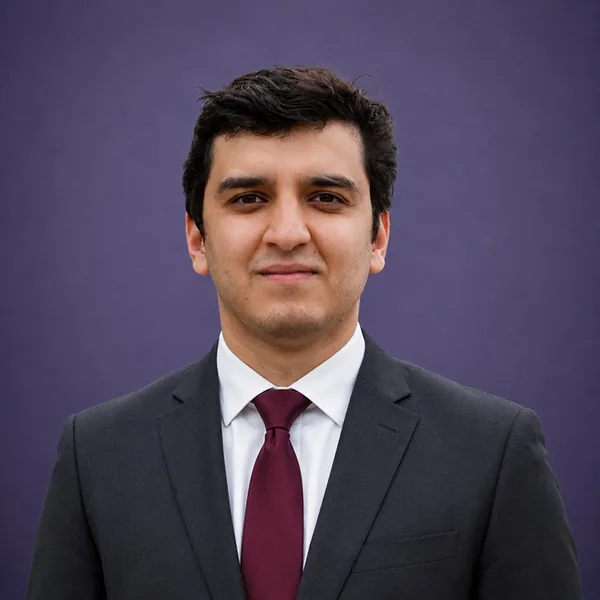
Hussain Ahmad

Hussain Ahmad

Principal

  • M.Eng. Cornell University
  • Ph.D. University of Chicago

Machine learning and data systems. Builds the reference sets, the matching and scoring methods, and the evaluation that tells us when a rule is performing and when it is only agreeing with itself.

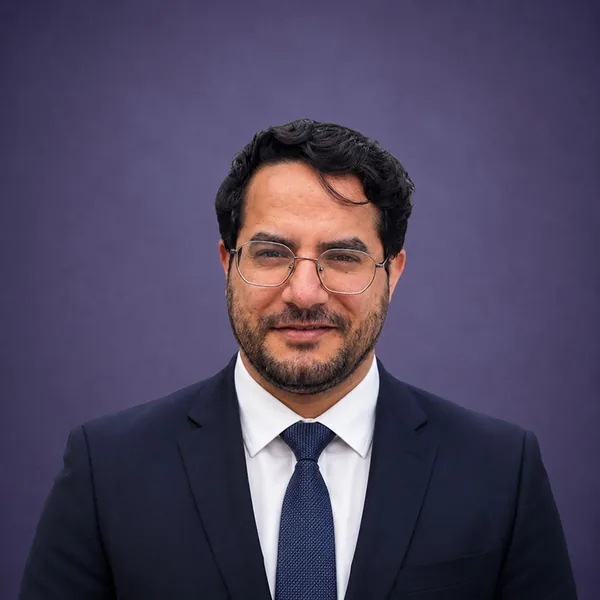
Wasil Peroz

Wasil Peroz

Principal

  • B.A. Milli University
  • M.Sc. Otto-von-Guericke University

Institutional law. Carries the civil-registration and legalisation side of the work: what an office could and could not issue, in what period, under what authority, and what the legalisation chain for a non-Apostille jurisdiction actually requires.

Maryam Safi

Maryam Safi

Principal

  • B.A. Cornell University

Screening and casework. Works sanctions and watchlist alerts against original-script entries, and writes the discriminator record that lets a reviewer clear or retain a name with reasons attached.

The bench behind the named team

  • Forensic document examinerArtefact examination: substrate, seal, print, alteration.
  • Civil registration specialistIssuance practice by office, province and period.
  • Onomastics and transliteration leadName structure, romanisation standards, name graphs.
  • Sanctions and screening analystOriginal-script list work and discriminator records.
  • Solutions engineerIntegration, structured returns, retention and audit.
  • Cultural Compliance Bureau reviewerIndependent second review before release.

Named reviewers appear on every determination. Where a reviewer's own security is a factor, the firm — not the individual — is named on the client-facing document and the identity is held in the engagement record.

The instruments this work is built around

The frameworks below govern how identity evidence is collected, weighed and recorded. They are the design basis for the method, and the vocabulary your examiner will use.

The instruments this work is built around
InstrumentWhat it governsHow this service meets it
Instrument31 CFR 1020.220 — Customer Identification ProgramWhat it governsVerification of identity within a reasonable time using documentary or non-documentary methods, on a risk basis.How this service meets itSupplies the documentary-method analysis and the written record of what was examined and why it was sufficient.
InstrumentFFIEC BSA/AML Examination ManualWhat it governsExaminer expectations for customer due diligence, enhanced due diligence and documented rationale.How this service meets itDeterminations are written in the structure an examiner reads: evidence, method, conclusion, limitation.
InstrumentFATF Recommendation 10What it governsIdentification and verification using reliable, independent source documents, data or information.How this service meets itAddresses the case the recommendation anticipates but most stacks do not handle: reliable documents from a jurisdiction with no queryable source.
InstrumentNIST SP 800-63A-4 (July 2025)What it governsIdentity evidence strength and validation of evidence against the issuing or an authoritative source.How this service meets itProvides the reasoned assessment where validation against the issuing source is unavailable, and states plainly what that limits.
InstrumentICAO Doc 9303What it governsMachine-readable travel document specification, including machine-readable zone structure and transliteration of Arabic-script names.How this service meets itPassport review follows the specification; the name graph uses its transliteration as one of its standards.
InstrumentUNSC Resolution 1988 list · OFAC SDNWhat it governsName screening obligations against lists whose Afghan entries carry original-script names, approximate dates of birth and absent identification numbers.How this service meets itScreening notes work the original script, not a single romanisation, and record the discriminators used.
InstrumentRegulation (EU) 2024/1624 (AMLR) and AMLAWhat it governsHarmonised customer due diligence across the European Union, with reliance and record-keeping rules.How this service meets itEvidence files are produced in a form a relying institution can hold and an authority can inspect.
InstrumenteIDAS 2.0 and the EU Digital Identity WalletWhat it governsPerson identification data and electronic attestation of attributes as Member State wallets come into service.How this service meets itAttribute-level output is structured for attestation flows, not only for a human file.
InstrumentGDPR Articles 9 and 35 · UK GDPRWhat it governsSpecial category data and data protection impact assessment for high-risk processing.How this service meets itMinimum-necessary intake, defined retention, named custodian, and impact assessment support for the client's own record.
InstrumentEU AI ActWhat it governsObligations attaching to automated systems used in identity and access decisions, including human oversight and accuracy.How this service meets itProvides the qualified human review and the documented reasoning that an automated decision cannot produce on its own.

How the service is engaged

How the service is engaged
EngagementShapeWhat happensWho buys it
EngagementEscalation queueShapeContinuousWhat happensYour tier-three queue routes Afghan files to us. Determination and machine-readable return against an agreed service level.Who buys itIDV and KYC platforms, banks, money services businesses
EngagementCorridor readiness reviewShapeOne engagementWhat happensBefore you open Afghan coverage: document class inventory, decision rules, reviewer guidance, acceptance thresholds and a reference set your team keeps.Who buys itPlatforms opening a new market or corridor
EngagementReviewer enablementShapeProgrammeWhat happensWe train your adjudicators to clear the files that do not need us, and to recognise the ones that do. Raises first-pass rate; reduces the volume you send out.Who buys itIn-house review and financial crime teams
EngagementScreening false-positive passShapeRecurringWhat happensYour alert backlog on Afghan names, worked against original-script list entries, with the discriminators documented for your examiner.Who buys itSanctions, AML and financial crime operations
EngagementExpert opinion and testimonyShapeMatter-basedWhat happensWritten opinion prepared to withstand examination, and testimony where a decision is contested.Who buys itCounsel, regulators, adjudicators

Identity verification and KYC platforms

Afghan document classes that fall out of automated review, and the decision rules that keep them from falling out next time.

Banks and credit unions

Diaspora account opening, customer identification programme evidence, and remediation of legacy files.

Money services and remittance operators

Corridor onboarding at volume, where declines cost customers and false clears cost licences.

Digital asset platforms

Enhanced due diligence on customers from a jurisdiction with no queryable identity source.

Marketplaces and gig platforms

Worker verification where the identity document is the only record that exists.

Insurers and benefit administrators

Beneficiary and dependant verification from lineage records rather than numbers.

Immigration counsel and litigators

Document analysis and expert opinion where a decision turns on whether a record is what it claims.

Resettlement agencies and humanitarian organisations

Caseload document review under timelines that do not forgive rework.

Universities and credential evaluators

Shahadatnama and Se-Parcha review for admission and credential decisions.

Federal agencies and prime contractors

Document analysis under a defined scope of work, with a cleared, credentialed and auditable delivery record.

One name, twelve files

A single common Afghan given name, romanised by a passport office, a resettlement caseworker, a bank branch, a sanctions list and the person themselves. Exact matching misses every pairing. Fuzzy matching merges people who are not the same.

Screening configuration, entity resolution and the full variant corpus are a separate engagement — see Afghan name matching, transliteration and identity data for screening and KYC.

محمد
  • Mohammad
  • Mohammed
  • Muhammad
  • Muhammed
  • Mohamad
  • Mohamed
  • Muhamad
  • Mohd
  • Md
  • Moh'd
  • Mahamad
  • Mohammod

Minimum necessary

We receive the document images and the fields required to review them. Not your customer record, not your risk score, not your transaction history.

Defined retention

Retention is set in the engagement, evidenced on deletion, and defaults to the shortest period that supports your audit obligation.

Named custody

Every file has a named custodian and a named reviewer, recorded, for the life of the engagement.

United States delivery

Work on United States engagements is performed by team members located in the United States unless the engagement specifies otherwise in writing.

No secondary use

Client documents are never used as training data, reference material or sample content. The reference set is built from separately sourced material.

Assessment support

We supply the processing description, retention schedule and method record your data protection impact assessment requires.

Terms on this page

Tazkiraتذکره
The Afghan national identity document. Historically a handwritten booklet or sheet recording a person's lineage, place and issuing office rather than a unique citizen number.
e-Tazkiraتذکره الکترونیکی
The electronic Afghan national identity card, a polycarbonate card in distribution since 2018, carrying a 13-digit national identification number and biometric enrolment.
Hijri Shamsiهجری شمسی
The Solar Hijri calendar used in Afghan civil records. Conversion to Gregorian dates is not a fixed offset and must be computed per date.
Nikah namaنکاح خط
Marriage certificate; a primary lineage document in dependant and beneficiary verification.
Shahadatnamaشهادتنامه
School leaving certificate, used in admissions, credential evaluation and as a corroborating lineage record.
Se-Parchaسه پرچه
The three-part Afghan ministry education record used alongside the Shahadatnama for university and credential purposes.
Qabalaقباله
Court-registered property deed, used as address and source-of-wealth evidence.
Machine-readable zone
The two or three lines of encoded text at the foot of a passport data page, specified by ICAO Doc 9303, which a reader parses and cross-checks against the printed visual zone.
Legalisation chain
The sequence of authentications applied to a document destined for or originating in a state that is not party to the Apostille Convention, ending in consular legalisation rather than an apostille.
Name graph
The set of defensible romanisations of one person's name across transliteration standards and colloquial usage, used to re-run screening and to link records that exact matching would miss.

Questions buyers ask before they send the first file

What is a Tazkira?

The Tazkira is the Afghan national identity document. In its historic paper form it is a handwritten booklet or sheet issued by a district or provincial civil registration office, recording a person's name, father's and grandfather's names, place, and the office and volume that issued it. It establishes citizenship and lineage. It does not carry a unique citizen number, and it has no machine-readable zone.

What is the difference between a Tazkira and an e-Tazkira?

The paper Tazkira is a handwritten civil register record. The e-Tazkira is a polycarbonate national identity card, in distribution since 2018, carrying a 13-digit national identification number, printed data fields and biometric enrolment. They coexist: a person may hold both, and the two records may not agree on spelling or date, because they were created years apart by different processes.

Can an Afghan Tazkira be verified against a government database?

No. There is no accessible, reliable registry that a third party can query to confirm an Afghan civil record, and Ariana Nexus does not route documents or inquiries through authorities inside Afghanistan. Verification is therefore forensic and contextual: the artefact, the issuance practice of the office and period it claims, the internal logic of the record, and its consistency with every other document in the file.

Why do Afghan documents fail automated identity verification?

Because the automated check is asking a question the document cannot answer. There is no template to match, no machine-readable zone on the Tazkira, no unique citizen number before 2018, handwritten Arabic-script entries that optical character recognition does not read, and dates in the Hijri Shamsi calendar that are frequently incomplete. The result is a null reported as a low confidence score, and the file lands in manual review.

Can an Afghan document be apostilled?

No. Afghanistan is not a party to the Hague Apostille Convention, so no Afghan public document can carry an apostille. Documents follow a legalisation chain ending in consular legalisation instead. A file presenting an apostilled Afghan document is a question, not a verification.

How do you handle Afghan dates of birth?

Afghan civil records use the Hijri Shamsi calendar, and many carry a year with no month or day, or an age estimated at the counter rather than a recorded date of birth. We convert per date rather than by fixed offset, show the conversion method in the evidence file, and state the precision the record actually supports instead of writing a default date your system will later treat as fact.

How many ways can one Afghan name be spelled in English?

For common given names, a dozen or more, all defensible. Afghan naming uses a given name, a father's name and often a grandfather's name, with tribal or regional elements and honorifics, and no universal family name. We return a name graph covering ICAO Doc 9303 transliteration, library and geographic-board standards and colloquial spellings, so screening can be run against the full set.

Are Afghan documents issued after August 2021 valid for KYC?

Validity is your decision under your own risk policy, and policies differ by regulator and by institution. What we supply is the factual basis for it: whether the document is internally consistent, whether it matches the issuance practice of the office and period it claims, and what the file can and cannot support. Seals, signatory titles and print practice changed after August 2021, so a genuine document from either side of that line does not resemble the other.

Do you verify Afghan passports?

Yes. Afghan passports are reviewed against the ICAO Doc 9303 specification, with the machine-readable zone parsed and cross-checked against the printed visual zone, the booklet assessed as an artefact, and the biographic data reconciled against the Tazkira or e-Tazkira in the same file. Both machine-readable and electronic issues are in circulation, as are older non-machine-readable booklets.

How long does a review take?

Service levels are set in the engagement against your queue, not published as a single number, because a single-document escalation and a ten-thousand-file remediation are different commitments. Escalation queues run on an agreed turnaround with an expedited path; portfolio reviews run to an agreed schedule with interim reporting.

Can your determination be used in court?

Yes, and it is written for that from the first file. Where a decision is contested, the same team produces a written expert opinion prepared to withstand examination, and appears for deposition or testimony. Ariana Nexus is retained directly and does not introduce outside experts to counsel.

Do you work alongside our existing identity verification vendor?

Yes, and that is the normal shape of the engagement. We do not replace your platform. We take the document classes it cannot resolve, return a determination and a structured payload your rules engine can consume, and where you want it, hand your own reviewers the decision rules and reference material that reduce how often you need us.

Sources

  • 01Hague Conference on Private International LawStatus table, Convention of 5 October 1961 Abolishing the Requirement of Legalisation for Foreign Public Documents. Afghanistan is not a contracting party.hcch.net
  • 02National Statistics and Information Authority (Afghanistan)Issuing authority for the Tazkira and e-Tazkira; electronic identity card distribution from 2018.nsia.gov.af
  • 03NIST Special Publication 800-63A-4Digital Identity Guidelines: Identity Proofing and Enrolment, July 2025. Evidence strength and validation against the issuing source.doi.org/10.6028/NIST.SP.800-63A-4
  • 04ICAO Doc 9303Machine Readable Travel Documents, including machine-readable zone structure and transliteration of names in Arabic script.icao.int
  • 05United Nations Security Council Committee pursuant to resolution 1988 (2011)Sanctions list and amendment notices; entries carry original-script names and approximate dates of birth.un.org
  • 0631 CFR 1020.220Customer identification programme requirements for banks.ecfr.gov
  • 07Regulation (EU) 2024/1624Anti-money laundering regulation; harmonised customer due diligence across the Union.eur-lex.europa.eu

Send us one file

The fastest way to assess this service is to put a real Afghan document in front of it. Send one file from your escalation queue under a mutual non-disclosure agreement and we will return the determination, the evidence file and the structured payload in the format your system would receive them.

Start an engagement