
Deepfake and Synthetic Media Analysis in Pashto and Dari
Detection, labeling and takedown support for Pashto and Dari audio, video, images and text. A detector trained on English is not evidence in these languages. We examine the file, say what it is, state how confident we are and why, and carry the finding through to the platform, the regulator or the court.
Figure 1 — Periodicity that does not occur in natural speech is one of several signal-level indicators. On compressed Pashto and Dari voice notes it is frequently absent, which is why a signal finding alone never carries a conclusion.
What is deepfake and synthetic media analysis?
Deepfake and synthetic media analysis is the examination of an audio, video, image or text file to determine whether it was generated or altered by artificial intelligence, how it was made, and how much confidence that conclusion carries. It combines four independent evidence families: content provenance data carried in the file, technical forensic analysis of the signal itself, linguistic and cultural analysis by native speakers of the language spoken, and outside corroboration. In Pashto and Dari the linguistic family is decisive, because the automated detectors used for English are trained on corpora that contain almost no Afghan-language speech.
What counts as a deepfake under the EU AI Act?
Under Article 50 of Regulation (EU) 2024/1689, content is a deepfake when three conditions are all met: it closely resembles a real person, object, place or event; that subject exists, plausibly exists, or plausibly could have existed; and the content appears authentic or truthful in a way that could mislead a viewer. A deployer who publishes such content must disclose it to the viewer on first exposure, clearly and perceivably. A machine-readable mark placed in the file by the generator does not by itself discharge that duty.
- Service
- Deepfake detection, synthetic media forensics, AI content labeling and takedown support
- Languages
- Pashto and Dari, including Kandahari, Nangarhari and Wardaki Pashto and Kabuli, Herati, Mazari and Hazaragi Dari
- Media
- Audio, video, still images, and text attributed to a named person
- Buyers
- AI labs and platforms, newsrooms, law firms, federal agencies and primes, human-rights organizations, Afghan institutions
- You receive
- A written finding with a stated confidence level, an exhibit-ready evidence file, and a disposition recommendation
- Emergency intake
- Within the 48-hour federal removal clock for non-consensual intimate imagery
- Delivery
- In-house, by our own analysts, from Washington, D.C. No subcontractors.
- Boundary
- We analyze media. We do not create synthetic media, and we do not surveil people.
Why deepfake detectors fail on Pashto and Dari
The training data does not exist.
Automated deepfake detectors are trained overwhelmingly on English speech, with Mandarin, Spanish and a short list of other high-resource languages behind it. Pashto and Dari are effectively absent. A detector has no reference for what a genuine Kandahari Pashto voice sounds like, so it has no basis for judging a synthetic one.
Accuracy collapses across a language boundary.
In the first controlled cross-lingual study of audio deepfake detection, three leading detectors that scored 99.84 to 99.98 percent accuracy on English fell to 60 to 76 percent on a language they had not been trained on. Equal error rates rose from roughly 0.02 to 0.09 percent to between 26 and 39 percent. A detector at 60 percent is close to a coin toss dressed as a number.
The channel destroys the evidence.
Most Afghan-language material arrives as a WhatsApp or Telegram voice note or a re-uploaded video: recompressed, resampled, transcoded, often recorded in a noisy room on a low-end handset. The 2026 RADAR benchmark found that detectors still return high error rates on multilingual audio once compression, resampling, noise and reverberation are applied. The exact conditions of the real artifact are the conditions detectors handle worst.
Dialect and register carry the tell.
Where a model does produce Pashto or Dari, the giveaway is usually not an acoustic artifact. It is a Kabuli vowel in a sentence that claims to come from Kandahar, an Iranian Persian construction in Afghanistan Dari, a calendar date rendered in the wrong system, a kinship term used the way a translator would use it rather than a family member, or an honorific that no one of that age would use to that person. A monolingual reviewer cannot see any of this. Neither can a detector.
Detector accuracy, same model, different language
Reported accuracy of three audio deepfake detectors on English test data and on a language absent from training (Ba et al., Proceedings of the ACM Web Conference 2023).
Equal error rate, same model, different language
Equal error rate is the point at which false accepts and false rejects are equal. Lower is better. Same study.
Confidence collapse
The measurable distance between a detector's published performance on English benchmarks and its observed performance on the artifact actually in front of you — same model, different language, different channel, different recording conditions. We report it as a named figure in every technical finding, because a vendor accuracy claim that was measured on clean English audio is not a statement about a compressed Pashto voice note, and treating it as one is how wrong conclusions get into evidence.
The four-signal rule
No finding we issue rests on a detector score alone. Every conclusion is supported by at least two of four independent signal families — provenance, technical forensics, linguistic and cultural analysis, and outside corroboration — and the finding names which ones carried it and which ones were silent. Where the families disagree, we say so and lower the confidence rather than choose the convenient one.
What we analyze
Audio deepfake and voice cloning analysis
Voice notes, phone calls, ransom and extortion audio, leaked recordings, audio attributed to a named official, cleric, commander or family member. We analyze the signal for synthesis and conversion artifacts, and we analyze the speech itself for dialect, register, idiom, prosody, code-switching and religious and kinship usage that a generated voice gets subtly wrong.
- Pashto and Dari voice note verification
- Voice cloning and voice conversion detection
- Speaker consistency across known recordings
- Telephony and messaging-app codec analysis
Video deepfake analysis
Face swaps, lip-sync and dubbing overlays, full-body reenactment, and recycled or miscaptioned conflict footage presented as new. We separate three distinct questions that are routinely confused: was the video generated, was it edited, and was it simply taken somewhere else at some other time.
- Face swap and reenactment analysis
- Lip-sync and dubbing overlay detection
- Frame, codec and container forensics
- Recycled and miscaptioned footage identification
Image manipulation and AI-generated image analysis
Identity documents, tazkira and civil-registration images, screenshots of messages, photographs offered as proof of an event, and imagery circulated to Afghan communities as evidence of a threat, a death or a government action.
- AI-generated image detection
- Splice, clone and inpainting analysis
- Screenshot and message-thread authenticity
- Document image tampering review
Text attribution and generated-text review
Statements, letters, fatwas, threat letters, decrees and social posts attributed to a named person or institution. Automated AI-text detectors are unreliable in English and worse in Pashto and Dari, so we do not rely on them. We work from authorship features, document conventions, institutional formatting, seal and letterhead practice, and translation artifacts.
- Pashto and Dari authorship analysis
- Threat letter and decree review
- Translationese and back-translation artifacts
- Institutional format and seal conventions
Content provenance, labeling and Content Credentials
Reading, validating and implementing C2PA Content Credentials and other provenance signals, and building the disclosure layer that Article 50 of the EU AI Act now requires — in Pashto and Dari, so the label is actually understood by the person it is shown to.
- C2PA manifest reading and validation
- AI content labeling in Pashto and Dari
- Article 50 disclosure text and placement
- Provenance gaps and stripped-metadata assessment
Coordinated activity and narrative analysis
When a single artifact is one node of a disinformation campaign: amplification patterns, account behavior, cross-platform seeding, and the narrative the material is built to carry inside Afghan and Afghan diaspora audiences. Distinguishing deliberate disinformation from ordinary misinformation matters, because the two call for different responses. Reported at the level of behavior and content, never at the level of named private individuals.
- Cross-platform propagation mapping
- Afghan disinformation and misinformation analysis
- Diaspora-targeted fraud and impersonation
- Campaign attribution confidence assessment
How an artifact is examined
Intake and chain of custody
The artifact is received over an encrypted channel, hashed on receipt with SHA-256, and logged with source, time, handler and every subsequent access. Analysis is performed on working copies; the original is never modified. The custody log is produced with the finding, because a conclusion that cannot survive a question about handling is not usable in a proceeding.
Provenance triage
We read what the file already carries: C2PA manifests and Content Credentials, container and stream metadata, EXIF and XMP, encoder signatures, upload and re-encode history. Provenance present and valid is the strongest and fastest signal available. Provenance absent is not evidence of fakery — most platforms strip it — and we say so in the finding rather than let the absence do rhetorical work.
Technical forensics
Signal-level examination appropriate to the medium: spectral and prosodic analysis, synthesis and conversion artifacts, splice and discontinuity detection, compression and double-encoding history, sensor and noise-pattern consistency, frame-level and temporal coherence. Multiple independent methods, each reported with its own result, never a single ensemble number.
Linguistic and cultural adjudication
Native Pashto and Dari analysts examine the language itself: variety and dialect against the claimed origin, register against the claimed speaker, religious and kinship terms, honorifics, calendar and numeral conventions, place-name usage, code-switching patterns, and the specific errors that generated and machine-translated Afghan-language text makes. This is the step that no detector and no monolingual reviewer performs, and on Afghan-language material it is most often the step that decides the case.
Corroboration
Independent checks outside the file: prior recordings of the claimed speaker, geolocation and chronolocation of visible features, weather and light conditions, earlier appearances of the same asset, and the documentary record. Open-source only, on material that is already public.
Dual review and confidence statement
A second analyst who has not seen the first analyst's conclusion reviews the evidence independently. Disagreement is recorded, not resolved by seniority. The finding states a confidence level — high, moderate or low — with the reasoning and the specific evidence behind it, and names what would change the assessment.
Disposition and follow-through
The finding converts into action: a labeling and disclosure recommendation, a platform removal package, a preservation request, an evidentiary exhibit for counsel, a regulator-facing record, or a documented decision to take no action. We stay with the matter through the response, not only to the report.
Confidence levels
| Level | When it is used |
|---|---|
| LevelHigh confidence | When it is usedMultiple independent signal families agree, the evidence is direct, and no credible alternative explanation survives the analysis. Suitable for publication, filing or enforcement. |
| LevelModerate confidence | When it is usedThe evidence supports the conclusion and no alternative explains it as well, but at least one family is silent, degraded or in tension with the others. Usable for decision-making with the limitation stated. |
| LevelLow confidence | When it is usedThe material is too degraded, too short, or too poorly sourced for a defensible conclusion. We report what can and cannot be said and what additional material would raise the level. We do not raise a conclusion to meet a deadline. |
What you receive
| Instrument | Contents |
|---|---|
| InstrumentWritten finding | ContentsConclusion, confidence level, reasoning, evidence relied on, evidence that was silent, alternative explanations considered and why they were rejected. |
| InstrumentEvidence file | ContentsHash register, custody log, working copies, method log with tool versions and parameters, and every intermediate artifact, packaged so an opposing analyst can reproduce the work. |
| InstrumentLanguage annex | ContentsThe linguistic and cultural analysis in full — variety, register, idiom, honorific and calendar findings — with the Pashto or Dari source text and an English rendering side by side. |
| InstrumentRemoval package | ContentsPlatform-specific notice, the evidence a platform's trust and safety team actually needs, duplicate-copy identification, and escalation routes where the first notice fails. |
| InstrumentDisclosure and labeling recommendation | ContentsWhere an Article 50 or platform-policy disclosure is required, the disclosure text in Pashto and Dari and in English, with placement guidance. |
| InstrumentStanding record | ContentsA dated, versioned record of the matter retained under an agreed schedule so the finding can be produced again, unchanged, years later. |
Takedown and platform escalation
A finding that stays in a PDF does not help anyone. Most of the value in this work is in what happens after the analysis, and most removal requests fail for reasons that have nothing to do with whether the content is fake.
Notice drafted to the policy, not to the grievance
A removal request succeeds when it names the specific policy the content violates and supplies the specific evidence that policy requires. We write to the reviewing team's decision criteria, in the form they work in.
Evidence a reviewer can act on in minutes
Hashes, timestamps, the identifying frames or segments, the duplicate copies already located, and a one-page finding summary. Reviewers work under volume; a package that takes twenty minutes to understand gets closed.
Non-consensual intimate imagery, on the statutory clock
Since 19 May 2026 the Federal Trade Commission has enforced Section 3 of the TAKE IT DOWN Act. Covered platforms must remove non-consensual intimate imagery, including AI-generated forgeries, and known identical copies, within 48 hours of a valid request, with civil penalties up to $53,088 per violation. We prepare and file to that standard, including hash submission to the services that prevent re-upload.
Escalation when the first notice fails
Trusted-flagger and Digital Services Act routes for EU-facing platforms, host and registrar abuse channels, content delivery network and app-store paths, and preservation requests that keep the material available for a later proceeding even after it comes down.
Law enforcement and counsel, at the client's direction
Where a matter should go to law enforcement or to litigation, we prepare the material in the form each needs and hand it over. The decision to refer is always the client's.
Afghan diaspora matters
Impersonation, extortion, fabricated audio of a relative, forged documents used in fraud and forced-return threats directed at Afghan families abroad. These rarely arrive with a legal team attached, and they need someone who can read the material and speak to the family in their own language.
Response times
| Track | Acknowledged | Finding | Applies to |
|---|---|---|---|
| TrackEmergency | AcknowledgedAcknowledged within 2 hours | FindingPreliminary finding within 12 hours | Applies toNon-consensual intimate imagery and active-harm matters inside the federal 48-hour removal clock |
| TrackExpedited | AcknowledgedAcknowledged within 4 hours | FindingWritten finding within 48 hours | Applies toBreaking newsroom verification, live platform incidents, election-period material |
| TrackStandard | AcknowledgedAcknowledged same business day | FindingWritten finding within 5 business days | Applies toLitigation exhibits, regulatory records, corporate and institutional matters |
| TrackStanding bench | AcknowledgedReserved capacity, named analysts | FindingAgreed per matter in the retainer | Applies toPlatforms and institutions with continuous Pashto and Dari volume |
The rules that now apply
Synthetic media stopped being a policy question in 2026 and became a compliance obligation with dates attached. These are the instruments that determine what our clients must do, current as of September 2026.
| Instrument | Citation | Status | What it requires |
|---|---|---|---|
| InstrumentEU AI Act, Article 50 | CitationRegulation (EU) 2024/1689 | StatusIn force since 2 August 2026 | What it requiresProviders must apply a machine-readable mark to synthetic audio, image, video and text and enable its detection. Deployers must disclose deepfakes to the viewer on first exposure, clearly and perceivably, and cannot discharge that duty by relying on the provider's machine-readable mark alone. |
| InstrumentDigital Omnibus on AI | CitationRegulation (EU) 2026/1744 | StatusIn force 27 July 2026 | What it requiresDeferred most high-risk obligations — standalone Annex III systems to 2 December 2027 — but did not defer Article 50. Generative systems already on the market before 2 August 2026 have until 2 December 2026 for the machine-readable marking duty. Organizations that read the delay headlines as covering transparency are out of compliance now, not behind schedule. |
| InstrumentTAKE IT DOWN Act | CitationPub. L. No. 119-12, Section 3 | StatusFTC enforcement since 19 May 2026 | What it requiresCovered platforms must operate a notice-and-removal process and remove non-consensual intimate imagery, including AI-generated digital forgeries, and known identical copies, within 48 hours of a valid request. Civil penalties up to $53,088 per violation. |
| InstrumentDigital Services Act | CitationRegulation (EU) 2022/2065 | StatusApplies to platforms serving EU users | What it requiresNotice-and-action obligations, and systemic risk assessment and mitigation for very large platforms — including risks to civic discourse and electoral processes, which is where synthetic media in under-resourced languages sits. |
| InstrumentCalifornia AI Transparency Act | CitationSB 942, as amended | StatusState disclosure regime | What it requiresProvenance and disclosure duties on covered generative AI providers operating in California, aligned in substance with the machine-readable marking approach taken in Article 50. |
| InstrumentC2PA Content Credentials | CitationSpecification 2.4; ISO/DIS 22144 | StatusReleased 21 April 2026 | What it requiresThe open standard for cryptographically signed provenance manifests, with a conformance program and public trust list. JPEG Trust (ISO/IEC 21617-1:2025) is interoperable with it. This is the technical layer the regulatory marking duties are built on. |
| InstrumentFederal Rules of Evidence | CitationFRE 901(b)(9), 902(13), 902(14) | StatusApplies to material offered in U.S. proceedings | What it requiresAuthentication of a process or system, and self-authentication of records generated by an electronic process and of data copies verified by hash. Our custody log, hash register and method log are built against these rules from intake, not reconstructed afterwards. |
| InstrumentNIST guidance on synthetic content | CitationNIST AI 100-4 | StatusFederal reference | What it requiresThe federal reference point on reducing risks from synthetic content — provenance tracking, watermarking, detection and testing — used by agency buyers to frame requirements. |
Who this service is for
AI labs and model providers
Provenance implementation review, Pashto and Dari adversarial testing of marking and detection, Article 50 disclosure text in-language, incident analysis when your model's output appears in a harm report.
Platforms and trust and safety teams
Adjudication of escalated Afghan-language media, appeal and second-look review, policy and playbook development, TAKE IT DOWN readiness, standing bench for continuous volume.
Newsrooms and fact-checking desks
Rapid verification with a stated confidence level, an on-the-record analyst statement where you need one, and a written basis you can publish and defend.
Law firms and courts
Evidentiary examination built to FRE 901 and 902, declarations and expert witness reports, rebuttal of an opposing analysis, and testimony where the matter requires it.
Federal agencies and prime contractors
Program support, standing analytic capacity, method documentation, and findings written to the analytic standards federal customers expect.
Afghan institutions, families and individuals
Assessment in Pashto or Dari, a removal package, and referral preparation. We take these matters, and we explain the outcome in the language the family speaks.
Why institutions bring Afghan-language media to Ariana Nexus
No accredited certification exists for synthetic media analysis in any language, and none exists for Afghan-language media work of any kind. There is nobody to be certified by. So we published the method instead: the seven steps, the four signal families, the three confidence levels and the eight refusals on this page are the standard we hold ourselves to, and the standard you can hold us to.
The linguistic step is performed, not skipped
Scholars, not bilinguals
One firm, one point of accountability
Built for the proceeding, not the dashboard
A declared position, not an implied one
We do not route through Afghanistan
The team behind this service
Synthetic media analysis is a judgment discipline. The quality of the finding is the quality of the people who produced it, so we name them.
Hassan Ukasha
Managing Partner
B.S. Cornell University · M.P.H. Cornell University
Hassan Ukasha oversees the firm's operations and this program. Every engagement accepted under this service is scoped against the firm's stated boundaries before intake and signed before release; where a matter is declined, the reason is recorded. He is a native Pashto and Dari speaker and reads the Afghan-language evidence in the matters the firm accepts, which means the person accountable for the finding can read the material the finding is about.
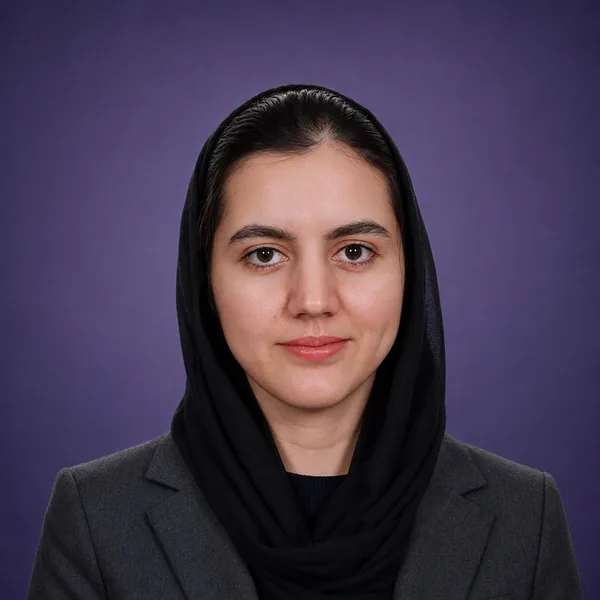
Zeba Haqbani
Senior Partner
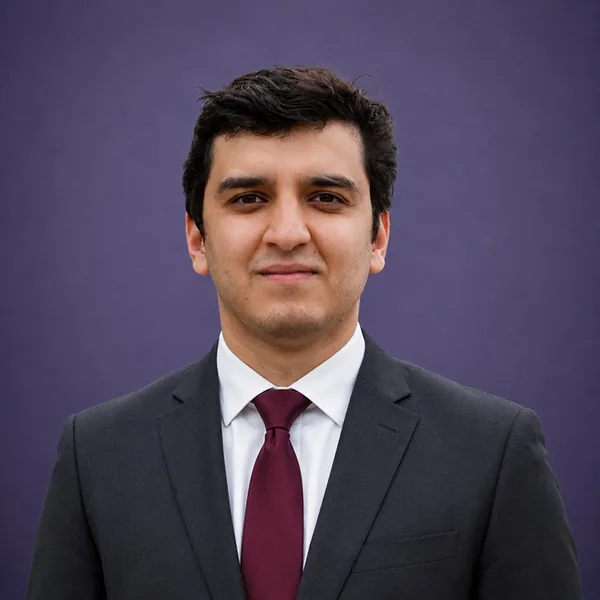
Hussain Ahmad
Principal
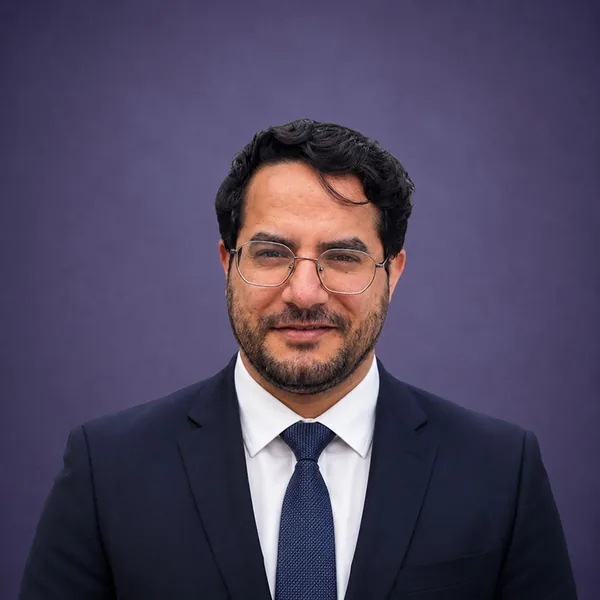
Wasil Peroz
Principal
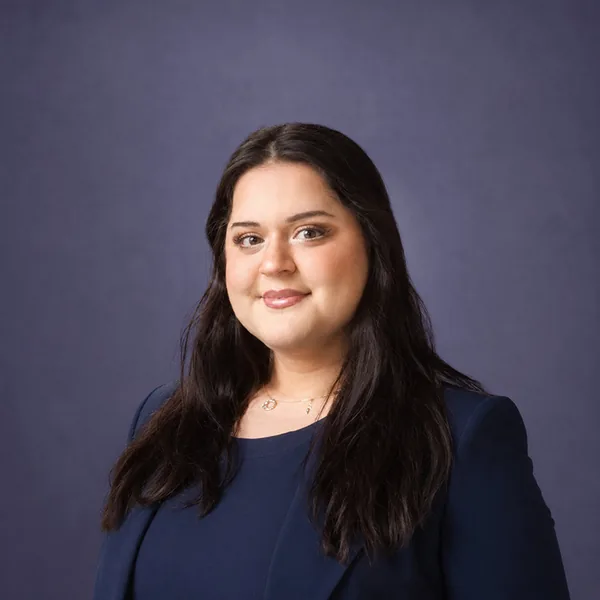
Maryam Safi
Principal
The analyst bench
Behind the named partners is a bench of Pashto and Dari analysts covering Kandahari, Nangarhari and Wardaki Pashto and Kabuli, Herati, Mazari and Hazaragi Dari, each a degree holder trained in the firm's analytic method and in the ethics of work that touches real people's safety. We do not publish their names or photographs. Analysts who examine Afghan-language material about Afghanistan, and who have relatives inside the country, are exposed by being identified, and no marketing benefit is worth that exposure. Named analysts are disclosed under engagement, and are available for declarations and testimony where a matter requires it.
What this service does not do
- We do not create synthetic media of real people. We build no voice clones, no face swaps and no generated likenesses, for any client or any purpose.
- We do not surveil individuals, monitor private communications or compile dossiers on people who are not parties to an engagement.
- We do not decide what is true. We report what an artifact is, how it was made and how confident we are. Whether a claim is correct is a separate question and usually someone else's.
- We do not moderate political speech or take positions in Afghan political disputes.
- We do not certify authenticity. No accredited certification scheme exists for synthetic media analysis, and any firm that offers a seal is selling something that does not exist.
- We do not route documents, data or inquiries through channels controlled by the de facto authorities in Afghanistan.
- We do not accept engagements whose object is to discredit an identified individual.
- We do not price per asset or take volume-graded moderation work. Findings that carry consequences are not produced on a conveyor.
How your material is handled
| Control | Standard |
|---|---|
| ControlIntake | StandardEncrypted transfer, access-controlled storage, hash on receipt, and a custody entry for every subsequent access. |
| ControlConfidentiality | StandardA mutual non-disclosure agreement is executed before material is transferred, not after. |
| ControlAnalyst location | StandardMaterial in U.S. matters is handled by analysts located in the United States. The firm holds no Afghanistan operations. |
| ControlNo model training | StandardClient material is never used to train, fine-tune or evaluate any model, ours or anyone else's, and is never added to a corpus. |
| ControlRetention | StandardRetention is set in the engagement. At the end of the period, material is destroyed and a written destruction record is issued. Evidentiary matters are held to the schedule counsel requires. |
| ControlEuropean clients | StandardGDPR and UK GDPR obligations apply and are addressed in the engagement terms. |
How engagements are structured
Every engagement begins with a scoping conversation and a written scope. We do not quote from a form, and we do not take work we cannot staff to the standard above.
| Model | What it is |
|---|---|
| ModelStanding bench retainer | What it isReserved monthly capacity with named analysts, agreed response times and an escalation path. For platforms, labs and agencies with continuous Pashto and Dari volume. |
| ModelIncident response | What it isActivated on notice for a live matter, including inside the federal 48-hour removal clock. Retainer clients hold priority; new clients are onboarded the same day where capacity allows. |
| ModelCase engagement | What it isA single matter examined end to end, with an evidence file and a written finding built for filing, publication or enforcement. |
| ModelProgram build | What it isProvenance and Content Credentials implementation, Article 50 disclosure design in Pashto and Dari, moderation policy and playbooks, analyst training, and TAKE IT DOWN readiness review. |
Questions buyers ask
Can you tell whether a Pashto or Dari voice note is AI-generated?
In most cases, yes, with a stated confidence level. We combine signal-level forensic analysis with linguistic and cultural analysis by a native analyst of the specific variety, plus any provenance the file carries and outside corroboration. Short, heavily compressed clips are the hardest case; where the material will not support a defensible conclusion we say so rather than produce a number.
Why do deepfake detectors work so poorly in Pashto and Dari?
Because they were not trained on these languages. In the first controlled cross-lingual study of audio deepfake detection, detectors scoring between 99.84 and 99.98 percent accuracy on English fell to between 60 and 76 percent on a language absent from their training data, with equal error rates rising from under 0.1 percent to between 26 and 39 percent. Pashto and Dari are far less represented in detector training corpora than the language used in that study.
Will your finding hold up in court?
Our work is built to be usable in a proceeding: hash on receipt, custody log from intake, a method log recording tools, versions and parameters, independent dual review, and a confidence statement written to survive cross-examination, against Federal Rules of Evidence 901(b)(9), 902(13) and 902(14). Admissibility is decided by the court, not by us, and any firm that guarantees it is telling you something it cannot know.
How fast can you get a fake video or image taken down?
For non-consensual intimate imagery, covered platforms must remove the content and known identical copies within 48 hours of a valid request under Section 3 of the TAKE IT DOWN Act, enforced by the Federal Trade Commission since 19 May 2026. We acknowledge emergency matters within two hours and prepare the removal package inside that clock. For other content, timing depends on the platform and the policy the content violates; the quality of the notice is usually the difference between removal and refusal.
Do I have to label AI-generated content in Europe?
If you deploy AI to create a deepfake, yes. Article 50 of the EU AI Act has applied since 2 August 2026 and requires clear, perceivable disclosure to the viewer on first exposure. The Digital Omnibus on AI, Regulation (EU) 2026/1744, delayed most high-risk obligations but did not delay Article 50. Generative systems already on the market before 2 August 2026 have until 2 December 2026 for the machine-readable marking duty. Relying on the provider's embedded mark does not discharge a deployer's disclosure duty.
What are Content Credentials, and do they prove a file is real?
Content Credentials are cryptographically signed provenance manifests defined by the C2PA specification, now at version 2.4 and progressing to ISO 22144. A valid manifest tells you what tool made or edited the file and what was done to it. It is strong evidence about origin. Its absence proves nothing, because most platforms strip metadata on upload, and we never treat missing provenance as a sign of fabrication.
Can you prove a video is genuine?
No one can, and we do not claim to. Authenticity cannot be proved absolutely; it can be supported to a stated level of confidence by evidence that no alternative explanation accounts for as well. We tell you what the evidence supports, how strongly and why, and what would change the assessment.
What do you need from me to start?
The original file rather than a screenshot or a re-share wherever possible, how and where you obtained it, when you first saw it, what is claimed about it, and any other copies or versions you have. Original files carry provenance and encoding history that re-shares destroy.
Do you work with individuals, or only institutions?
Both. Most of our volume is institutional, but we take matters from Afghan families and individuals facing impersonation, fabricated recordings, forged documents or extortion, and we handle them in Pashto or Dari.
Do you cover Afghan languages other than Pashto and Dari?
This service is scoped to Pashto and Dari, including their major varieties, because that is where the analytic bench is deep enough to support findings that carry consequences. Ariana Nexus works across 24 Afghan languages; for material in Uzbeki, Turkmeni, Pashayi, Balochi or the Pamir languages, ask and we will tell you honestly what we can and cannot support.
What does this cost?
Engagements are scoped per matter or held on a retainer with reserved capacity. We do not price per asset and do not take volume-graded moderation work, because the review standard described on this page cannot be produced at that price. Scope and fee are agreed in writing before work begins.
What happens to my material afterwards?
It is retained under the schedule set in the engagement, never used to train or evaluate any model, and never added to any corpus. At the end of the retention period it is destroyed and you receive a written destruction record.
Can you testify or give a declaration?
Yes. Findings are produced in a form that supports a declaration or an expert witness report, and named analysts are available for testimony where the matter requires it and the engagement provides for it. Ariana Nexus already maintains a litigation-support track for Afghan civil-registration documents, and synthetic media analysis is handled to the same evidentiary standard.
How is this different from an AI content detector I can buy?
A detector returns a score. We return a finding: what the artifact is, how it was made, how confident we are, which evidence carried the conclusion, which evidence was silent, what alternatives were considered, and what to do next — with the Pashto or Dari language analysis that no detector performs.
References
- Ba, Z. et al. — Transferring Audio Deepfake Detection Capability across Languages. Proceedings of the ACM Web Conference 2023 (WWW ’23). doi.org/10.1145/3543507.3583222
- Owais et al. — Deepfake Audio Detection in Low-Resource Languages: A Case Study of Urdu. IEEE Access, 2026. doi.org/10.1109/ACCESS.2026.3654621
- RADAR Challenge 2026 — Robust Audio Deepfake Recognition under Media Transformations. Multilingual benchmark under compression, resampling, noise and reverberation. arXiv:2605.09568
- European Commission — Transparency obligations under Article 50 of the AI Act. Guidelines and Code of Practice on Transparency of AI-generated Content, 2026. digital-strategy.ec.europa.eu
- Federal Trade Commission — TAKE IT DOWN Act enforcement guidance for covered platforms. Section 3 notice and removal, effective 19 May 2026. ftc.gov
- C2PA — Content Credentials: C2PA Technical Specification 2.4. Coalition for Content Provenance and Authenticity, 21 April 2026; ISO/DIS 22144. spec.c2pa.org
Bring us the file
Send what you have and how you got it. We will tell you within one business day whether the material can support a defensible finding, what it would take, and what it would cost — before you commit to anything. Emergency matters are acknowledged within two hours.
Washington, D.C. · 1717 Pennsylvania Avenue NW, 10th Floor · (202) 771-0224