
Machine Translation Post-Editing and Quality Evaluation in Pashto and Dari
Ariana Nexus post-edits machine translation and LLM output into accurate, publishable Pashto and Dari, and measures translation quality with evidence you can audit. Post-editing is aligned with ISO 18587. Quality evaluation is aligned with ISO 5060 and scored with MQM-style error annotation by native Pashto and Dari reviewers.
Source
Your English, Pashto or Dari textMachine
An MT engine or LLM produces a draftHuman
Native linguists post-edit to the agreed levelMeasured
ISO 5060 evaluation scores what is delivered
- Languages
- Pashto and Dari — Afghan Dari, not Iranian Persian
- Directions
- English to Pashto and Dari, Pashto and Dari to English, Pashto to Dari
- Post-editing
- Light, full, and full with second-linguist revision
- Evaluation
- ISO 5060 analytic evaluation, MQM error typology, critical-error gate
- Systems
- Commercial MT engines, custom NMT, open models and LLMs
- Standards
- ISO 18587:2017, ISO 5060:2024, tracking ISO/DIS 18587
- Delivery
- In-house team, no subcontractors; your NDA before any file is shared
لطفاً تذکرهٔ خود را به شفاخانهٔ ولایتی بیاورید.
“Please bring your national ID card to the provincial hospital.”
مهرباني وکړئ خپله تذکره ولایتي روغتون ته راوړئ.
Gold underlines mark the words our reviewers changed. Illustrative segments written for this page. Error categories and severities follow the MQM typology; penalty points are per error, before normalization.
What is machine translation post-editing (MTPE)?
Machine translation post-editing (MTPE) is the human correction of machine translation output — from a neural MT engine or a large language model — until it meets an agreed quality level. The post-editor works from the source text, segment by segment, and fixes meaning, terminology, grammar and style as the specification requires. ISO 18587 sets the requirements for full post-editing and describes light post-editing in its Annex B. Human translation without MT falls under ISO 17100, which places raw MT plus post-editing outside its scope.
Key terms
- Machine translation post-editing (MTPE)
- Human correction of machine or AI translation output to an agreed quality level.
- Light post-editing
- Post-editing that makes output accurate and understandable without polishing style; described in ISO 18587, Annex B.
- Full post-editing
- Post-editing to a quality comparable to human translation; the subject of the ISO 18587 requirements.
- ISO 18587
- International standard (2017) for full human post-editing and post-editor competences; under revision as ISO/DIS 18587.
- ISO 5060
- International guidance (2024) for evaluating human, post-edited and raw machine translation with error types and penalty points.
- MQM
- Multidimensional Quality Metrics: a shared error typology and scoring model for analytic translation quality evaluation.
- Critical error
- An error that could cause harm or legal, safety or financial consequences. It fails the sample whatever the score.
- Quality estimation (QE)
- Automatic prediction of translation quality without a reference translation, used to route segments to post-editing.
- COMET
- A neural metric trained to predict human judgments of translation quality.
- HTER
- Human-targeted translation edit rate: the share of words changed in post-editing, a measure of effort.
- Afghan Dari
- The standard variety of Persian used in Afghanistan, distinct from Iranian Persian (Farsi) in vocabulary, spelling and calendar terms.
- Solar Hijri calendar
- The solar calendar on most Afghan records, with Afghan month names such as Hamal in Dari and Wray in Pashto.
Why raw machine translation fails in Pashto and Dari
Pashto and Dari are low-resource languages for machine translation: engines see far less Afghan text than English, French or Iranian Persian. Output often reads fluently and is still wrong. These are the failure modes we test for on every engagement.
Dari that is really Iranian Persian
Engines trained mostly on Iranian text choose Iranian words — بیمارستان for hospital, استان for province — where Afghan readers expect شفاخانه and ولایت.
DariSubstituted Pashto letters
Pashto uses letters Persian and Arabic do not: ټ ډ ړ ښ ږ ځ څ ڼ ګ ې ۍ ئ. Several carry gender, number or verb agreement, so a look-alike substitute changes the grammar.
PashtoPakistani usage in Afghan Pashto
Output mixes in Pakistani and Urdu-influenced vocabulary, such as شناختي کارت for the national ID where Afghan readers write تذکره.
PashtoPronouns, gender and number
A U.S. court denied a Pashto-speaking refugee’s asylum claim after a translation tool turned “I” into “we” in her written statement, Rest of World reported in 2023.
BothKinship terms and military ranks
Relatives’ terms vary by region and ranks have no one-to-one equivalents. Both decide outcomes in Special Immigrant Visa (SIV) and asylum files.
BothDates and calendars
Most Afghan records use the Solar Hijri calendar with Afghan month names — حمل in Dari, وری in Pashto — not Iran’s فروردین. Administrative documents issued since 2022 often use the lunar Hijri calendar.
BothEncoding and right-to-left layout
Arabic and Persian code points for ی and ک look identical but break search and matching. Missing zero-width non-joiners and bidirectional errors garble mixed Latin and Arabic-script text.
BothLLM omissions and additions
Large language models can drop a clause, add a sentence, or drift into Urdu, Arabic or Iranian Persian words, and still read fluently.
LLM
Pashto and Dari MTPE and translation quality evaluation services
Six services, used alone or as one program. Each starts from a written specification: your content, your readers, the quality level you need and how it will be measured. Every service keeps a qualified human in the loop.
MT readiness assessment
Find out where machine translation is safe to use. We run a representative sample of your content through your engine or the candidates, evaluate the output, and return a go or no-go for each content type with the post-editing level it needs.
You receive: Readiness report, content risk-tier map, recommended workflow
Light post-editing
For internal, high-volume and time-sensitive content. We correct meaning errors, key terminology and anything unsafe or offensive, and leave correct machine phrasing in place. Light post-editing is described in ISO 18587, Annex B.
You receive: Post-edited files, change log
Full post-editing
For published, customer-facing and regulated content. Output comparable to human translation, consistent with your glossary and Afghan locale conventions, in a process aligned with ISO 18587. Second-linguist revision on request.
You receive: Post-edited files, revision record, term base updates
Translation quality evaluation (ISO 5060)
Independent evaluation of machine, post-edited or human translation. Two native evaluators annotate every error by type and severity, a senior reviewer adjudicates, and you receive the score, the quality rating and the annotated evidence.
You receive: Scorecard, annotated segments, root-cause analysis
MT engine and LLM benchmarking
Blind, side-by-side comparison of the MT engines, custom models and LLMs you are considering — such as GPT, Gemini, Claude, Llama-family models and NLLB-200 — on your own content and language directions. Repeated when a model updates, so quality cannot slip unnoticed.
You receive: Benchmark report, selection recommendation, regression test set
Evaluation datasets and metric calibration
For AI labs and MT developers: error-annotated Pashto and Dari test sets, gold-standard reference translations, blind side-by-side system comparisons, and COMET, chrF and quality-estimation thresholds calibrated against human scores. Evaluation data only; training corpora are a separate service.
You receive: JSONL datasets, annotation guidelines, agreement statistics
How we evaluate Pashto and Dari translation quality (ISO 5060 and MQM)
ISO 5060:2024 is international guidance for evaluating translation output — human translation, post-edited machine translation and raw machine translation. Evaluators mark each error by type and severity; penalty points produce an error score, and the score maps to a quality rating agreed before the evaluation starts. Localization teams often call this linguistic quality assurance (LQA). ISO 5060 is guidance, not a certification scheme, and it does not cover interpreting.
The method
- 01
Specify
Content type, readers, error typology, severity definitions, penalty weights and pass thresholds, agreed in writing before evaluation starts.
- 02
Sample
A sample sized to the content and its risk, with full review for tier 3 content. ISO 5060 treats sampling explicitly.
- 03
Annotate blind
Two native evaluators annotate independently. In engine comparisons, system names are hidden.
- 04
Adjudicate
A senior reviewer resolves disagreements and records inter-annotator agreement.
- 05
Score
Penalty points by severity, normalized by evaluated word count, produce the error score and the quality rating.
- 06
Gate
Any critical error fails the sample, whatever the score.
- 07
Report
Scorecard, annotated segments, root causes and fixes, sent back into your glossary, prompts or engine.
Severity levels and penalty points
- Neutral0 points
A preference noted for feedback. Not an error.
- Minor1 point
Does not change meaning or usability.
- Major5 points
Changes meaning or could mislead the reader.
- Critical25 points
Could cause harm or legal, safety or financial consequences. Fails the sample.
Example weights from the MQM scoring model. Weights and thresholds are set per engagement.
How we deliver a Pashto and Dari MTPE program
Five phases, each ending in something you can inspect. A program can stop after the assessment if machine translation is not the right tool.
- 01
Scope
NDA, content inventory, readers, systems in use and success criteria.
Output: Written specification
- 02
Pilot
Readiness assessment and, if needed, a blind engine or LLM comparison.
Output: Go or no-go per content tier
- 03
Configure
Glossary, style guide, Afghan locale conventions, prompts and quality-estimation thresholds.
Output: Configuration pack
- 04
Produce
Light or full post-editing by tier, with revision where specified.
Output: Post-edited files in your formats
- 05
Measure
ISO 5060 evaluation on a sampling schedule and after every engine or model update.
Output: Scorecards and trend report
Ways to engage
Readiness assessment
A fixed-scope answer to whether, where and how to use machine translation.
Managed MTPE program
Post-editing by content tier, with continuous evaluation.
Evaluation retainer
Scheduled ISO 5060 audits of your MT, vendor or in-house output.
Dataset or benchmark project
Annotated Pashto and Dari data and human evaluation for model builders.
Dari or Iranian Persian? Eight words that give the engine away
Engines trained mostly on Iranian text write Iranian Persian and call it Dari. These are the words and dates our reviewers correct first.
Illustrative pairs. Your glossary and your readers decide the final term.
Calendar months are a tell, too
Pashto letters engines substitute
Light vs. full post-editing: which level does your content need?
The right level depends on who reads the text and what happens if it is wrong. We assign a level to each content type before any post-editing starts, and we will tell you when machine translation should not be used at all.
Content risk tiers
- T0
Gist
Raw MT for internal search and triage only. Never sent to a reader.
- T1
Informational
Light post-editing for internal knowledge, support content and research reading.
- T2
Public
Full post-editing for websites, apps and public information for Afghan communities.
- T3
Rights and safety
Full post-editing plus second-linguist revision. Health programs covered by Section 1557 must have critical machine-translated content reviewed by a qualified human translator (45 CFR 92.201(c)(3)).
- T4
Evidence and filings
Human translation, certified where required. USCIS requires a full English translation certified by a competent translator (8 CFR 103.2(b)(3)).
MQM error typology and scoring for Pashto and Dari
Seven error dimensions, four severities, and one rule that a high average cannot override.
Scorecard: why the critical-error gate exists
Illustrative Dari sample: 2,000 evaluated words, tier 2, pass threshold 97.00
Error score = 100 × (1 − penalty points ÷ evaluated words)
Sample A
- Minor errors
- 8 × 1 = 8
- Major errors
- 2 × 5 = 10
- Critical errors
- 0 × 25 = 0
- Penalty points
- 18
- Error score
- 99.10
Pass
Sample B
- Minor errors
- 8 × 1 = 8
- Major errors
- 2 × 5 = 10
- Critical errors
- 1 × 25 = 25
- Penalty points
- 43
- Error score
- 97.85
Fail — critical error
Sample B clears the score threshold and still fails. A linear score averages one critical error away; the gate does not.
Illustrative figures. Weights, thresholds and sample sizes are set in each engagement’s specification.
BLEU, chrF, COMET and quality estimation: what automatic metrics can and cannot tell you
Automatic metrics are useful for monitoring change and routing work. For Pashto and Dari, none of them is a verdict until it has been calibrated against human evaluation on your content.
Formats, file types and data handling
Formats we work in
- XLIFF 1.2 and 2.x
- TMX
- TBX
- DOCX
- JSON
- PO
- SRT and VTT
- HTML
- JSONL annotation data
- PDF and CSV scorecards
Data handling
- Your NDA is signed before any file is shared.
- No public or consumer MT tools: we work in your approved MT environment or an access-controlled workspace.
- Your content is never used to train models or shared with MT or AI vendors.
- Deletion on your instruction, with a written record.
- GDPR and UK GDPR terms for European clients.
- No routing of documents or data through channels controlled by the de facto authorities in Afghanistan.
Who uses Pashto and Dari MTPE and evaluation
AI labs and MT developers
Human evaluation, error-annotated test sets and metric calibration for Pashto and Dari models and LLM translation.
Localization teams running MT
Post-editing and quality evaluation for content already flowing through an MT engine or an LLM prompt.
Public programs and humanitarian organizations
Resettlement, benefits and public-information content for Afghan refugees, SIV holders and the Afghan diaspora.
Law firms and legal teams
MT-assisted review of large Pashto and Dari document productions, with human translation for exhibits and filings.
Health systems and public health agencies
Qualified human review of machine translation for critical health content.
Researchers and survey teams
Questionnaires, consent forms and study materials for research with Afghan communities.
Content we post-edit and evaluate
- Resettlement and benefits information
- Special Immigrant Visa (SIV) and asylum case materials
- Afghanistan war-era employment and service records
- Public health and clinical information
- Trauma-informed mental health content, including PTSD and moral injury terms
- Legal notices and contracts
- Education and scholarship materials
- Software help centers and knowledge bases
- Humanitarian situation reports
- Social media and user-generated content (inbound)
Pashto and Dari varieties we cover
Same language, different readers. We match every reviewer to the variety and background of the people who will read the text, in Afghanistan and across the Afghan diaspora.
Dari
دری
Afghan Dari as written in Afghanistan and across the diaspora, never Iranian Persian by default. Hazaragi, a variety of Dari, is covered for audience matching, as are readers who lived in Iran.
Pashto
پښتو
Southern (Kandahari) and northern and eastern varieties. Afghan and Pakistani usage kept distinct, including for readers who grew up in Pakistan.
- English to Pashto
- English to Dari
- Pashto to English
- Dari to English
- Pashto to Dari and Dari to Pashto, without an English pivot
Uzbeki, Turkmeni, Balochi and other Afghan languages are scoped on request where machine translation output exists.

The team behind Pashto and Dari post-editing and evaluation
Post-editing and evaluation at Ariana Nexus are run by scholars and engineers who come from the Afghan community — trained at universities including Cornell University, the University of Chicago and the University of British Columbia — not by a pool of bilingual freelancers.
Program oversight
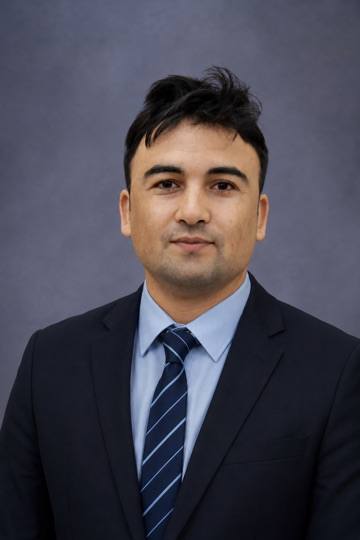
Hassan Ukasha
Managing Partner, Ariana Nexus, Washington, D.C.
- B.S., Cornell University
- M.P.H., Cornell University
Oversees the firm’s operations and this program. Every engagement specification is approved, and every evaluation report signed off, under his oversight. He is the executive point of escalation for every client.
Languages: Pashto, Dari, English, Urdu, Hindi; working Arabic
Delivery team
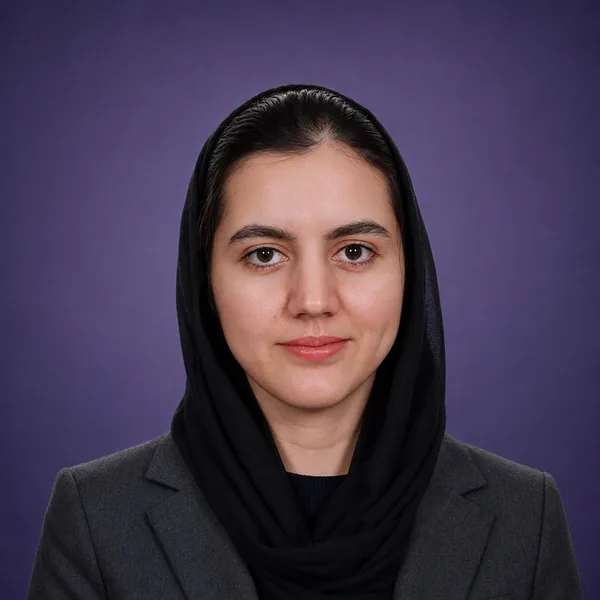
Zeba Haqbani
Senior Partner
- B.Sc.,University of British Columbia
- ,
Builds the firm's institutional systems, technology and AI platforms; owns the evaluation harness and the delivery pipeline.
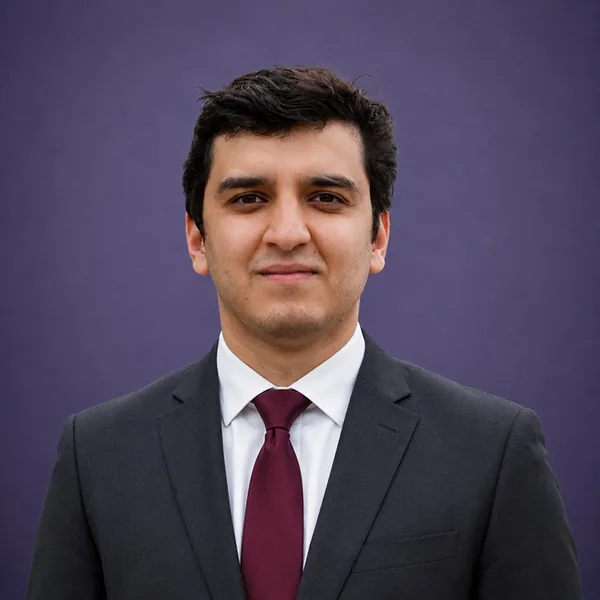
Hussain Ahmad
Principal
- M.Eng.,Cornell University
- Ph.D.,University of Chicago
AI and data engineering: rubric statistics, agreement modeling and judge-model calibration.
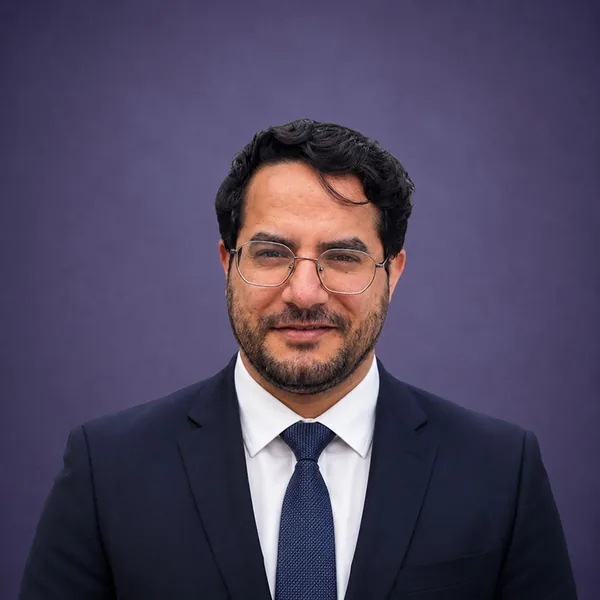
Wasil Peroz
Principal
- B.A.,Milli University
- M.Sc.,Otto-von-Guericke University Magdeburg
Institutional law; maps evaluation evidence onto the EU AI Act, the NIST framework and contract requirements.

Maryam Safi
Principal
- B.A.,Cornell University
- ,
Public-sector engagements: acceptance testing, federal delivery and documentation.
Who owns what on this service
Post-editors and evaluators: native Pashto and Dari linguists, each assessed against the ISO 18587 competences and matched to variety and subject domain.
How this team works, and why it is different
Scholars, not bilinguals
Every post-editor and evaluator holds a university degree and is tested in the variety they work in. Being bilingual is where qualification starts, not where it ends.
Qualified against ISO 18587
Translation, linguistic and textual, research, cultural, technical and domain competence — assessed, not assumed.
Two readers, one verdict
Blind dual annotation and senior adjudication on every evaluation.
Engineers in the room
Evaluation is designed with the people who build and test language AI, so every finding maps to a fix.
From the community we translate for
Our reviewers come from the Afghan community and read Pashto and Dari the way your readers do.
In-house only
No subcontractors, crowd platforms or brokered freelancers. One engagement, one point of accountability.
Why Ariana Nexus for Pashto and Dari MTPE and evaluation
There is no Pashto- or Dari-specific certification for post-editors or translation evaluators. So we work to a standard we can show you: qualified reviewers, a written specification, and evidence behind every score.
- 01
Afghan Dari, not approximated Persian
Our reviewers catch the Iranian vocabulary, spelling and dates engines produce, and fix them to Afghan usage.
- 02
Evidence behind every score
You receive the annotated segments, not just a number, so any result can be audited.
- 03
A critical-error gate
A high average never hides a dangerous error. One critical error fails the sample.
- 04
Independence, with the conflict declared
We sell no MT engine or LLM. We do sell human translation, and we state that on every report, with controls that keep the evaluation independent.
- 05
Ready for the next edition
Aligned with ISO 18587:2017 and ISO 5060:2024, and already treating LLM output the way ISO/DIS 18587 proposes.
- 06
We will tell you when not to use MT
If a content type is not safe for machine translation, the readiness report says so.
What this service does not do
- Deliver raw machine translation as a finished translation.
- Certify, badge or publicly rank MT engines. Every result is tied to your content and a date.
- Train models on your content or share it with MT or AI vendors.
- Evaluate interpreting. ISO 5060 does not cover it; see AI interpreting and translation product quality assurance.
- Certify filings from post-edited MT. Certified translations for USCIS and courts are produced as human translation.
- Route documents or data through channels controlled by the de facto authorities in Afghanistan.
Related services: which one do you need?
This page covers text you already translate, or plan to translate, with machine translation or an LLM: post-editing it and measuring its quality.
Software, App and Website Localization with Right-to-Left QA
You are localizing a product and need Pashto and Dari interface, layout and right-to-left QA.View serviceAI Interpreting and Translation Product Quality Assurance
You are buying or deploying an AI interpreting or translation product and need its accuracy tested.View serviceLLM Evaluation and Benchmark Development
You are building or comparing language models and need benchmarks across Afghan languages.View serviceSpeech Recognition and Text-to-Speech Data and Evaluation
Your system works with Pashto or Dari audio.View serviceAI and Machine Translation Quality Review for Patient Communications
You are a health system reviewing your own patient-facing translations.View serviceTraining Data Collection and Annotation
You need Pashto or Dari training, fine-tuning or preference data at scale, not an evaluation.View serviceMultilingual AI Red Teaming and Safety Testing
You need a model’s safety behavior tested in Afghan languages.View service
Pashto and Dari MTPE and evaluation: frequently asked questions
What is machine translation post-editing (MTPE)?
Machine translation post-editing (MTPE) is the human correction of machine translation or AI translation output until it meets an agreed quality level. The post-editor works from the source text, segment by segment, and fixes meaning, terminology, grammar and style as the specification requires. ISO 18587 sets the requirements for full post-editing and describes light post-editing in its Annex B.
What is the difference between light and full post-editing?
Light post-editing corrects errors that change meaning, key terminology and anything unsafe or offensive, and leaves correct machine phrasing in place. It suits internal and high-volume informational content. Full post-editing produces output comparable to human translation: accurate, consistent with your glossary, grammatically correct and natural for the reader. We set the level per content type after evaluating a sample.
Is Google Translate accurate for Pashto and Dari?
It depends on the content, and it should be measured rather than assumed. Google Translate has supported Pashto for years and added Dari as a separate language in 2024, but both remain low-resource languages for machine translation. Common risks include Iranian Persian vocabulary in Dari output, substituted Pashto letters, and errors in names, dates, kinship terms and pronouns. For anything a reader relies on, evaluate a sample and use post-editing.
Is Dari the same as Farsi, and does it matter for machine translation?
Dari and Farsi (Iranian Persian) are two standard varieties of Persian. Speakers understand each other, but official vocabulary, spelling and calendar month names differ: Afghan Dari uses شفاخانه for hospital and ولایت for province, where Iranian Persian uses بیمارستان and استان. Engines trained mostly on Iranian text drift toward Iranian usage, so Dari output needs Afghan reviewers who catch it.
What is ISO 18587, and is Ariana Nexus certified to it?
ISO 18587:2017 sets requirements for full human post-editing of machine translation and for post-editors’ competences. Our post-editing process is aligned with it; we do not hold third-party ISO 18587 certification and do not claim to. The standard is being revised: ISO/DIS 18587, in ballot since September 2026, extends it to all non-human translation output, including large language models, and our process already treats LLM output that way.
What is ISO 5060, and how is it used to evaluate machine translation?
ISO 5060:2024 is guidance for evaluating translation output: human translation, post-edited machine translation and raw machine translation. Trained evaluators classify each error by type and severity, penalty points produce an error score, and the score maps to a quality rating agreed in advance. It also covers evaluator competences and sampling. It is guidance rather than a certifiable standard, and it does not apply to interpreting.
How do you score translation quality, and what is MQM?
MQM (Multidimensional Quality Metrics) is the error typology most analytic evaluations use, and it fits the ISO 5060 approach. Each error gets a category — accuracy, terminology, linguistic conventions, style, locale conventions, audience appropriateness, or design and markup — and a severity. A common weighting is minor 1, major 5 and critical 25 penalty points, normalized by word count. We add a critical-error gate: one critical error fails the sample.
Can BLEU or COMET scores tell us whether our Pashto or Dari machine translation is good enough?
Not on their own. BLEU and chrF measure overlap with a reference translation. COMET and quality-estimation models such as CometKiwi predict human judgments, but they are trained mostly on high-resource languages and can miss a single critical error in Pashto or Dari. We use automatic metrics to monitor change and route work, after calibrating them against human evaluation on your content.
Which machine translation engine or LLM is best for Pashto and Dari?
There is no fixed answer. Rankings change by domain, direction and model version, and a system that is strong from English into Dari can be weak from Pashto into English. We run blind, side-by-side evaluations of the engines and LLM configurations you are considering on your own content, report the results with the error evidence, and repeat the test when a model updates.
Can machine translation be used for immigration, legal or medical documents in Pashto or Dari?
Not without qualified human review, and not for filings. USCIS requires a full English translation certified by a translator competent in both languages (8 CFR 103.2(b)(3)). For health programs covered by Section 1557, machine translation of critical content must be reviewed by a qualified human translator (45 CFR 92.201(c)(3)). We produce certified filings as human translation and use MTPE only where the content’s risk tier allows it.
Do you evaluate LLM translation output for AI labs and MT developers?
Yes. We build error-annotated Pashto and Dari test sets, run MQM-style human evaluation of model output, run blind side-by-side comparisons of system output, and calibrate automatic metrics against human scores. Data is delivered in machine-readable formats with annotation guidelines and agreement statistics. For benchmarks across 24 Afghan languages, see LLM Evaluation and Benchmark Development.
How is a Pashto or Dari MTPE or evaluation engagement priced?
We price each engagement after a scoping call and a review of sample content, because the work depends on the content’s risk tier, volume, turnaround, post-editing level and the depth of evaluation required. Most programs begin with a readiness assessment that shows where machine translation is safe to use and what each content type will need.
How do you keep our content confidential?
We sign your NDA before any content is shared. Your files are never pasted into public or consumer translation tools; we work inside your approved MT environment or an access-controlled workspace. Your content is not used to train models, is not shared with MT or AI vendors, and is deleted on your instruction with a written record.
Which Pashto and Dari varieties do you cover?
Pashto: southern (Kandahari) and northern and eastern varieties, with Afghan and Pakistani usage kept distinct. Dari: Afghan Dari as written in Afghanistan and across the diaspora, never Iranian Persian by default; Hazaragi is handled as a variety of Dari. Reviewers are matched to the reader’s variety and subject domain. Directions: English to Pashto and Dari, Pashto and Dari to English, and Pashto to Dari directly.
Standards and sources
- ISO 18587:2017 Translation services — Post-editing of machine translation output — Requirements. ISO.www.iso.org/standard/62970.html
- ISO/DIS 18587 Translation services — Post-editing of non-human translation output — Requirements. DIS ballot initiated 4 September 2026.www.iso.org/standard/88184.html
- ISO 5060:2024 Translation services — Evaluation of translation output — General guidance. ISO.www.iso.org/standard/80701.html
- ISO 17100:2015 Translation services — Requirements for translation services. ISO.www.iso.org/standard/59149.html
- MQM Council The MQM scoring models.themqm.org/error-types-2/the-mqm-scoring-models
- 45 CFR 92.201 Meaningful access for individuals with limited English proficiency. eCFR.www.ecfr.gov/current/title-45/section-92.201
- 8 CFR 103.2 Submission and adjudication of benefit requests. eCFR.www.ecfr.gov/current/title-8/section-103.2
- Rest of World, 2023 A. Deck, “AI translation is jeopardizing Afghan asylum claims.”restofworld.org/2023/ai-translation-errors-afghan-refugees-asylum/
- Google, 2024 What’s new in Google Translate: more than 100 new languages, including Dari.support.google.com/translate/answer/15139004
- Hasht-e Subh, 2022 Report on the switch of Afghan administrative communications to the lunar Hijri calendar.8am.media/eng/taliban-changes-solar-year-to-hijri-lunar-calendar/
Last reviewed 21 September 2026 by Hassan Ukasha, Managing Partner, with the Ariana Nexus Cultural Compliance Bureau. Standards status checked against iso.org; next review when the ISO/DIS 18587 ballot closes.
Scope a Pashto and Dari MTPE or evaluation program
Tell us what you translate, who reads it and which engines or models you use. We sign your NDA before anything is shared.