
Court and Deposition Interpreters — Pashto, Dari and 22 More Afghan Languages
Sworn, dialect-matched interpreters for depositions, trials and hearings, immigration and asylum matters, and attorney–client meetings — in person across the United States and by secure video worldwide. Every interpreter is our own, prepared on your case before the record opens.
- Languages you may hear
- Pashto, Dari, Uzbeki, Turkmeni
- What we match
- Dari speakers here may also speak Uzbeki or Turkmeni at home; we confirm which language the witness is strongest in.
- Watch for
- Turkic place and personal names, and Uzbeki or Turkmeni words inside Dari answers.
- Languages you may hear
- Pashto, Dari, Uzbeki
- What we match
- Northeastern and Badakhshani Dari differ from Kabuli Dari in sounds and words.
- Watch for
- Local Dari vocabulary, and Uzbeki in Kunduz and Takhar.
- Languages you may hear
- Wakhi, Shughni, Ishkashimi, Sanglechi, Munji, Kyrgyz, Dari
- What we match
- A direct interpreter where one qualifies; otherwise relay through Dari, disclosed on the record.
- Watch for
- Very small speaker communities, where conflict checks and confidentiality matter even more.
- Languages you may hear
- Dari with Iranian Persian features
- What we match
- Afghans raised in Iran often mix Iranian and Afghan vocabulary; the interpreter must follow both and render what is said.
- Watch for
- Iranian words for documents and institutions, and a witness who calls the language Farsi.
- Languages you may hear
- Pashto, Dari (Herati), Aimaq
- What we match
- Herati Dari has its own sounds and words; Pashto is spoken in Farah and parts of Herat.
- Watch for
- Herati vocabulary, and Aimaq speech in the northwest.
- Languages you may hear
- Hazaragi (variety of Dari), Dari, Aimaq
- What we match
- When the witness speaks Hazaragi, we assign an interpreter who speaks it natively.
- Watch for
- Hazaragi words a Kabuli Dari speaker may misread.
- Languages you may hear
- Pashto, Dari, Pashayi, Parachi, Ormuri
- What we match
- Kabul witnesses are often bilingual in Pashto and Dari; we confirm which language to use for testimony.
- Watch for
- Switching between Pashto and Dari in the middle of an answer.
- Languages you may hear
- Kati, Prasun, Waigali, Nuristani (Ashkun group), Pashayi, Gawarbati, Pashto
- What we match
- A direct interpreter where one qualifies; otherwise relay through Pashto, disclosed on the record.
- Watch for
- Language differences from one valley to the next.
- Languages you may hear
- Pashto (eastern), Pashayi, Tirahi, Dari
- What we match
- Eastern Pashto differs from southern Pashto; Pashayi speakers may be stronger in Pashayi than in Pashto.
- Watch for
- Eastern Pashto vocabulary and Pashayi terms.
- Languages you may hear
- Pashto (northern), Urdu
- What we match
- Afghans raised in Peshawar may speak northern Pashto and switch into Urdu; we assign an interpreter who follows both.
- Watch for
- Urdu and English loanwords, and northern Pashto sounds.
- Languages you may hear
- Balochi, Brahui, Pashto
- What we match
- Balochi witnesses are matched directly; Brahui by arrangement, with relay disclosed on the record.
- Watch for
- Balochi and Brahui terms, and border-region names.
- Languages you may hear
- Pashto (southern, Kandahari)
- What we match
- Southern Pashto sounds differ from northern Pashto; we match the interpreter to the southern variety.
- Watch for
- Southern words for family, land and local institutions.
- Languages you may hear
- Pashto (southeastern), Dari
- What we match
- Southeastern Pashto differs again from Kandahari and Peshawari Pashto.
- Watch for
- Tribal and place names.
- Languages you may hear
- Pashto, Balochi, Brahui, Urdu
- What we match
- Quetta-raised witnesses may use Pashto, Balochi or Brahui, often with Urdu.
- Watch for
- Answers that mix languages.
- Languages you may hear
- English, with Pashto or Dari
- What we match
- Heritage speakers may follow everyday Pashto or Dari but not legal terms; we assess which language gives the fuller testimony.
- Watch for
- A witness who seems fluent in English may still need an interpreter for testimony.
Who provides Pashto and Dari interpreters for depositions and court?
Ariana Nexus provides court and deposition interpreters in Pashto, Dari and 22 more Afghan languages for law firms, courts, court reporting agencies and government agencies. Every assignment is matched to the witness’s dialect and region, staffed as a team of two for proceedings over two hours, and backed by a written qualification record that counsel can place on the record.
- Languages
- 24 Afghan languages: Pashto, Dari and 22 more, including Uzbeki, Turkmeni, Balochi, Pashayi and the Nuristani and Pamir languages
- Proceedings
- Depositions, trials and hearings, arbitration and mediation, asylum interviews, immigration case preparation, attorney–client meetings, investigative interviews and forensic evaluations
- Modes
- Consecutive, simultaneous and sight translation; relay for the smallest languages, disclosed on the record
- Delivery
- In person anywhere in the United States; remote by Zoom, Microsoft Teams, Webex or telephone
- Staffing
- A team of two for proceedings over two hours, rotating every 30 minutes; check interpreters on request
- Record
- A qualification record before the session and a signed statement of accuracy after it
- Based in
- Washington, D.C.
- 195,000Afghan immigrants living in the United States in 2022, up from 54,000 in 2010Migration Policy Institute, 2024 [5]
- 56%of Afghan immigrants speak English less than “very well” — 68% of women who arrived after 2012Migration Policy Institute, 2024 [5]
- 0court interpreter certification exams offered in Pashto or Dari by the federal courts or the National Center for State CourtsU.S. Courts; NCSC oral exam list [1]
What goes wrong in Afghan-language testimony — and how we prevent it
Dari is not Iranian Farsi
Afghan Dari and Iranian Persian share a grammar but differ in legal, administrative and everyday words. Many Afghans call their language Farsi: 27% of Afghan immigrants report Persian (Farsi) at home and 26% Dari. The witness still needs an Afghan Dari interpreter.[5]Pashto has more than one accent
Southern Pashto around Kandahar and northern Pashto around Peshawar differ in sounds and vocabulary. We match the interpreter to where the witness was raised, not only to the language on the intake form.Dates arrive in three calendars
Afghan witnesses and documents may give dates in the Solar Hijri calendar (for example, 1400), in the Lunar Hijri calendar government offices have used since 2022, or in the Gregorian calendar. We interpret the date as spoken and state the calendar; we never convert silently.[13]Names have no single spelling
Many Afghans have no fixed family name, and one name can appear in several Latin spellings across a passport, a tazkira and immigration forms. We confirm names, name order and spellings with counsel before the session.Some terms have no one-word equivalent
Jirga, shura, nikah, mahr and tazkira carry meaning a short English word would distort. The interpreter keeps the term and asks leave to note it, rather than explaining it away.Trauma changes how testimony sounds
Testimony about the war in Afghanistan, persecution, detention and moral injury can be fragmented or delayed. Our interpreters keep the witness’s pace, register and exact words, without softening, summarizing or finishing sentences.Some witnesses speak more fully to a woman
A woman testifying about violence may give fuller testimony through a woman interpreter. We match interpreter gender on request and state it in the assignment.
Pashto, Dari and 22 more Afghan languages
We interpret all 24 languages of the Ariana 24-Language Atlas. Pashto and Dari, including the Hazaragi variety of Dari, are available for scheduled and short-notice proceedings. For the smallest languages we assign a direct interpreter where one qualifies, and otherwise interpret by relay through Pashto or Dari, disclosed on the record.
| Language | Script name | Family | Where it is spoken | Availability |
|---|---|---|---|---|
| LanguagePashto | Script nameپښتو | FamilyIranian | Where it is spokenSouth, east and southeast Afghanistan; Khyber Pakhtunkhwa and northern Balochistan in Pakistan | AvailabilityScheduled and short notice |
| LanguageDari | Script nameدری | FamilyIranian | Where it is spokenKabul, the north, the west and the central provinces; Afghanistan’s common language | AvailabilityScheduled and short notice |
| LanguageHazaragi (variety of Dari) | Script nameهزارگی | FamilyIranian | Where it is spokenCentral highlands | AvailabilityScheduled and short notice |
| LanguageAimaq | Script nameایماق | FamilyIranian | Where it is spokenGhor, Badghis and Herat | AvailabilityScheduled |
| LanguageBalochi | Script nameبلوچی | FamilyIranian | Where it is spokenNimroz, Helmand and southern Kandahar; Pakistan and Iran | AvailabilityScheduled |
| LanguageOrmuri | Script nameاورمړي | FamilyIranian | Where it is spokenBaraki Barak in Logar; Kaniguram in Pakistan | AvailabilityBy arrangement |
| LanguageParachi | Script nameپراچی | FamilyIranian | Where it is spokenValleys northeast of Kabul, in Kapisa and Parwan | AvailabilityBy arrangement |
| LanguageWakhi | Script nameوخی | FamilyIranian | Where it is spokenWakhan corridor, Badakhshan | AvailabilityBy arrangement |
| LanguageShughni | Script nameشغنی | FamilyIranian | Where it is spokenShughnan, Badakhshan | AvailabilityBy arrangement |
| LanguageSanglechi | Script nameسنگلیچی | FamilyIranian | Where it is spokenSanglech valley, Badakhshan | AvailabilityBy arrangement |
| LanguageIshkashimi | Script nameاشکاشمی | FamilyIranian | Where it is spokenIshkashim, Badakhshan | AvailabilityBy arrangement |
| LanguageMunji | Script nameمنجی | FamilyIranian | Where it is spokenMunjan valley, Badakhshan | AvailabilityBy arrangement |
| LanguageYidgha | Script nameیدغه | FamilyIranian | Where it is spokenLotkuh valley, Chitral, close to Munji | AvailabilityBy arrangement |
| LanguageUzbeki | Script nameاوزبیکی | FamilyTurkic | Where it is spokenBalkh, Jowzjan, Faryab, Kunduz and Takhar | AvailabilityScheduled |
| LanguageTurkmeni | Script nameترکمنی | FamilyTurkic | Where it is spokenJowzjan, Faryab and Balkh | AvailabilityScheduled |
| LanguageKyrgyz | Script nameقرغیزی | FamilyTurkic | Where it is spokenThe Pamirs of far northeast Badakhshan | AvailabilityBy arrangement |
| LanguagePashayi | Script nameپشهیی | FamilyIndo-Aryan | Where it is spokenLaghman, Kunar, Kapisa and Nangarhar | AvailabilityScheduled |
| LanguageGawarbati | Script nameگواربتی | FamilyIndo-Aryan | Where it is spokenKunar valley and Chitral | AvailabilityBy arrangement |
| LanguageTirahi | Script nameتیراهی | FamilyIndo-Aryan | Where it is spokenNear Jalalabad, Nangarhar | AvailabilityBy arrangement |
| LanguageNuristani (Ashkun group) | Script nameنورستانی | FamilyNuristani | Where it is spokenNuristan | AvailabilityBy arrangement |
| LanguageKati | Script nameکتی | FamilyNuristani | Where it is spokenNuristan and Kunar | AvailabilityBy arrangement |
| LanguagePrasun | Script nameپارون | FamilyNuristani | Where it is spokenParun valley, Nuristan | AvailabilityBy arrangement |
| LanguageWaigali | Script nameوایگلی | FamilyNuristani | Where it is spokenWaigal valley, Nuristan | AvailabilityBy arrangement |
| LanguageBrahui | Script nameبراهوی | FamilyDravidian | Where it is spokenSouthern Afghanistan; Balochistan in Pakistan | AvailabilityBy arrangement |
- Scheduled and short notice
- Pashto, Dari, Hazaragi (variety of Dari)
- Scheduled
- Aimaq, Balochi, Uzbeki, Turkmeni, Pashayi
- By arrangement
- Ormuri, Parachi, Wakhi, Shughni, Sanglechi, Ishkashimi, Munji, Yidgha, Kyrgyz, Gawarbati, Tirahi, Nuristani (Ashkun group), Kati, Prasun, Waigali, Brahui

Court, deposition and legal proceedings we cover
Every proceeding has its own interpreter rules. We staff each one to the forum’s standard, not to a generic booking.
Depositions
Party, witness and expert depositions, examinations under oath and recorded statements, in person or remote. The court reporter swears the interpreter at the start of the record.Trials and hearings
Bench and jury trials, evidentiary and suppression hearings, sentencing and pretrial proceedings in federal and state court, staffed to the forum’s own interpreter rules.Asylum interviews at USCIS
Affirmative asylum interviews, where the applicant must bring a qualified interpreter, plus declaration review and mock interviews with counsel.Immigration case preparation
Client interviews, declarations, witness preparation and evidence review for removal defense, appeals, SIV and family cases. Immigration courts assign their own interpreters for hearings.Attorney–client meetings and jail visits
Privileged meetings, plea and strategy discussions, discovery review and client counseling — in the office, by video or at detention facilities.Arbitration and mediation
Commercial, employment and family mediation, arbitration hearings and settlement conferences, in consecutive or simultaneous mode.Investigative and compliance interviews
Victim, witness and employee interviews for investigations and compliance reviews, with rights advisements rendered word for word.Forensic and medico-legal evaluations
Psychological and medical evaluations for asylum and litigation, under a trauma-informed protocol for testimony about war, torture and loss.
How we deliver a court-ready interpreter
Six steps, the same on every matter, whether the deposition is next month or tomorrow.
Request and conflict check
Send the date, time zone, location or platform, expected length, the witness’s language and the caption. We run a conflict check against the parties and witnesses before we accept.Dialect and region screen
A short screening call, or counsel’s answers to five questions, establishes where the witness was raised, the languages spoken at home and any second language. The interpreter is matched to the witness, not only the language.Assignment and qualification record
You receive the assigned interpreters’ qualification record: education, assessment in the specific variety, legal-interpreting training and prior forums, ready for the record or for the court’s examination of the interpreter.Preparation on your case
Under NDA and any protective order, the team studies names, places, dates, key terms and exhibits, and builds one glossary shared between the two interpreters.The session
Oath or affirmation at the start of the record. Team rotation every 30 minutes. Corrections stated on the record in the third person. Breaks called before fatigue, not after an error.After the record
A signed statement of accuracy, notes of any on-record corrections, support with transcript errata, and certified translation of exhibits when ordered.
The rules and standards we work to
No single U.S. credential covers Afghan languages, so we work to the rules each forum applies and document how we meet them.
| Standard | What it requires | How we meet it |
|---|---|---|
| StandardFederal Rule of Evidence 604[6] | What it requiresAn interpreter must be qualified and must give an oath or affirmation to make a true translation. | How we meet itEvery interpreter arrives oath-ready, with a written qualification record counsel can use to lay a foundation. |
| StandardCourt Interpreters Act, 28 U.S.C. § 1827[7][1] | What it requiresFederal courts use certified interpreters where an exam exists and otherwise qualified interpreters for every other language; the certification exam is offered only in Spanish. | How we meet itWe document each interpreter’s education, assessment and legal training so the court can classify them under its own categories. |
| StandardState court interpreter rules[11] | What it requiresLanguages without a state exam are credentialed as registered or qualified; Texas treats depositions and mediations as court proceedings for interpreter licensing. | How we meet itWe check the forum’s rules before assignment and tell you in writing if a requirement cannot be met. |
| StandardNAJIT Code of Ethics and Professional Responsibilities | What it requiresAccuracy, impartiality, confidentiality, no legal advice and accurate representation of credentials. | How we meet itInterpreters sign confidentiality and conflict declarations for each matter. An interpreter who has worked for one side does not later interpret for the court in the same matter. |
| StandardISO 20228:2019, Legal interpreting | What it requiresRequirements for legal interpreting services, including interpreter competence, preparation and working conditions. | How we meet itOur assignment, preparation and team rules are built to its requirements. |
| StandardTeam interpreting practice[2][4] | What it requiresFederal courts define team interpreting for trials and lengthy hearings; Virginia and Pennsylvania guidance assigns two interpreters beyond two hours. | How we meet itA team of two for proceedings over two hours, rotating every 30 minutes. |
| StandardUSCIS asylum interview rules, 8 C.F.R. § 208.9[8] | What it requiresApplicants bring an interpreter who is at least 18, fluent in both languages, and not the attorney, a witness or a representative of the applicant’s government. | How we meet itEvery interpreter we assign to an asylum interview meets these rules. |
| StandardArtificial intelligence in court interpreting[9][10] | What it requiresOhio bars its courts from using AI to interpret in any substantive proceeding; the Council of Europe’s 2026 guidelines set safeguards for technology in judicial interpreting. | How we meet itNo machine interpretation in any proceeding. Technology supports scheduling, glossaries and secure platforms, never the rendering. |
Why law firms and courts choose Ariana Nexus for Afghan-language testimony
No U.S. court system offers a certification exam in Pashto or Dari, so we set the standard ourselves. Ariana Nexus trains and assesses Afghan-language legal interpreters — our own bench and interpreters beyond it — in court protocol, interpreting modes, ethics and legal terminology, and every assignment we staff carries that record.
Matched to the witness
Dialect, region, second language and gender, confirmed before assignment, not just the language on the intake form.Teams by default
Two interpreters for proceedings over two hours, rotating every 30 minutes, with a second ear on every name and number.A record you can defend
A qualification record before the session, a statement of accuracy after it, and corrections made on the record.Scholars, not bilinguals
Every interpreter is a college graduate trained in legal interpreting, led by alumni and scholars of Cornell, the University of Chicago and the University of British Columbia.One firm, one point of accountability
Every interpreter is our own. No subcontractors, no brokers, no marketplace.Confidential by design
NDAs and protective orders honored, U.S.-located interpreters for U.S. matters, no recording by default, and no channel through the de facto authorities in Afghanistan.
What a court-ready engagement includes
| What the engagement includes | Ariana Nexus | Typical on-demand line |
|---|---|---|
| What the engagement includesInterpreter matched to the witness’s dialect and region | Ariana NexusScreened before assignment | Typical on-demand lineLanguage only |
| What the engagement includesTeam of two for proceedings over two hours | Ariana NexusStandard | Typical on-demand lineUsually one interpreter |
| What the engagement includesQualification record before the session | Ariana NexusIn writing, every assignment | Typical on-demand lineOn request, if available |
| What the engagement includesPreparation on names, dates and exhibits | Ariana NexusUnder NDA, before the record opens | Typical on-demand lineRarely |
| What the engagement includesStatement of accuracy after the session | Ariana NexusSigned | Typical on-demand lineRarely |
| What the engagement includesWho the interpreter works for | Ariana NexusAriana Nexus, directly | Typical on-demand lineOften a contractor network |
| What the engagement includesMachine interpretation in the proceeding | Ariana NexusNever | Typical on-demand lineVaries by provider |
Who delivers your interpreters
Our legal interpreting practice is led by alumni and scholars of Cornell, the University of Chicago, the University of British Columbia and Otto von Guericke University Magdeburg who come from the Afghan community. They set the standards, make the assignments and answer for every interpreter we send.
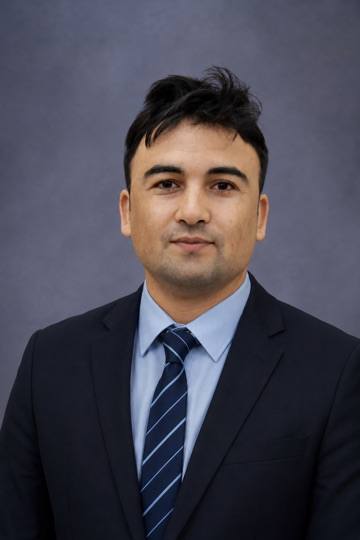
Hassan Ukasha
- B.S. Cornell University
- M.P.H. Cornell University
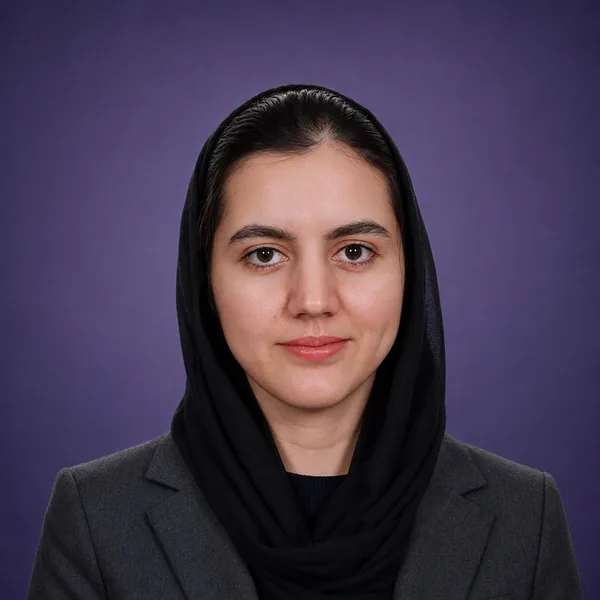
Zeba Haqbani
- B.Sc.University of British Columbia
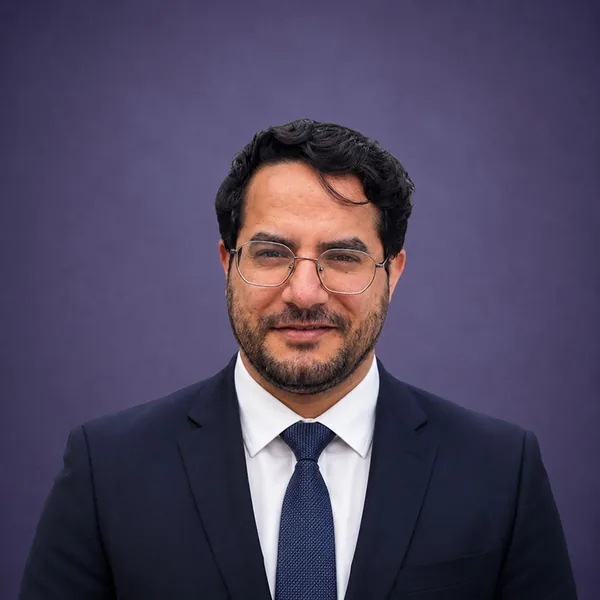
Wasil Peroz
- B.A.Milli University
- M.Sc.Otto-von-Guericke University Magdeburg
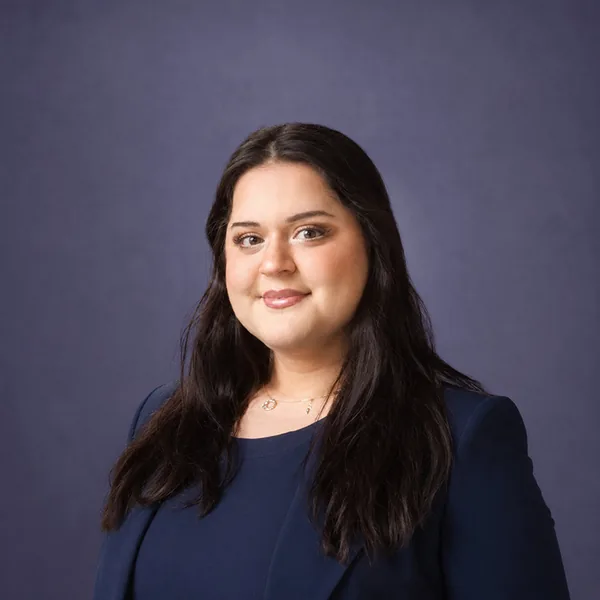
Maryam Safi
- B.A.Cornell University
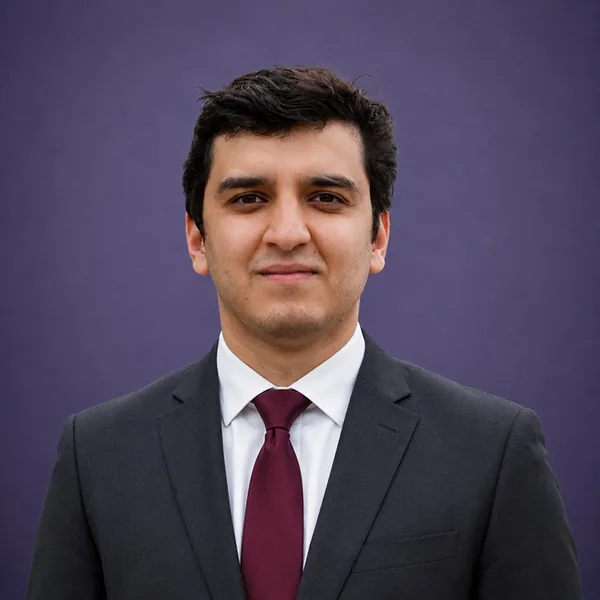
Hussain Ahmad
- M.Eng.Cornell University
- Ph.D.University of Chicago
The interpreter bench
Every interpreter on our bench is a college graduate, assessed in the specific variety they interpret, trained in legal interpreting and the NAJIT code, and bound by confidentiality and conflict declarations on every matter. They work for Ariana Nexus directly; we never subcontract a legal assignment.
Who we work with
Litigation and trial firms
Depositions, witness and expert preparation, and trial teams.Immigration attorneys
Asylum interviews, declarations, removal defense and SIV cases for Afghan evacuees and refugees.Criminal defense, public defenders and CJA panels
Client meetings, jail visits, discovery review and trial. For CJA cases, interpreters are funded as services other than counsel under 18 U.S.C. § 3006A(e).Prosecutors and government agencies
Victim and witness interviews, trial preparation and testimony.Court reporting and litigation support firms
Interpreters booked alongside your reporters and videographers.Courts and court administrators
Qualified Afghan-language interpreters where rosters run thin.Insurers and claims investigators
Examinations under oath, recorded statements and independent medical examinations.Legal aid, NGOs and international inquiries
Human-rights documentation, war-crimes investigations and inquiry testimony.
In person nationwide, remote worldwide
Our base is Washington, D.C., home to one of the two largest Afghan diaspora communities in the United States. We staff in-person assignments in every state and connect remote witnesses across time zones, including witnesses in Pakistan, the Gulf and Europe.
Legal interpreting terms, defined
- Court interpreter
- An interpreter who renders a proceeding between English and another language for a court, under oath, completely and without adding or leaving out anything.
- Deposition interpreter
- An interpreter sworn by the court reporter to interpret a witness’s testimony given under oath outside court, for use in litigation.
- Consecutive interpreting
- The speaker pauses and the interpreter renders the full statement; the standard mode for witness testimony.
- Simultaneous interpreting
- The interpreter renders speech while it is spoken, so a party can follow the whole proceeding, either whispered or with equipment.
- Sight translation
- An oral rendering of a written document, such as an exhibit or a tazkira, read aloud on the record.
- Relay interpreting
- Interpreting through a second language when no direct pair is available, for example Pashayi to Pashto to English, disclosed on the record.
- Team interpreting
- Two interpreters working one proceeding, alternating the active role about every 30 minutes while the other monitors and supports.
- Check interpreter
- A second interpreter, usually retained by the opposing party, who monitors the rendering and raises disputed points for the record.
- Solar Hijri calendar
- The solar calendar long used in Afghanistan. The Solar Hijri year 1400 began in March 2021.
- Tazkira
- The Afghan national identity document, on paper or electronic, often central to identity evidence in immigration and criminal cases.
Questions about Pashto and Dari court and deposition interpreters
Are there certified Pashto or Dari court interpreters?
Not in the formal sense. The federal courts offer a certification exam only in Spanish, and the National Center for State Courts does not offer its oral certification exam in Pashto or Dari. Courts therefore classify interpreters in these languages as professionally qualified, language-skilled, registered or qualified, depending on the forum. What protects your record is documented qualification and an oath. Because no exam exists, Ariana Nexus trains and assesses Afghan-language legal interpreters itself, and every interpreter we assign arrives with a written qualification record.
How do I book a Pashto or Dari interpreter for a deposition?
Send us the date and time zone, the location or video platform, the expected length, the witness’s language and where they were raised, and the case caption. We run a conflict check, screen the dialect, assign the interpreter or team, and send the qualification record before the deposition. The court reporter swears the interpreter at the start of the record.
Do we need two interpreters for a long deposition or trial?
For proceedings over two hours, yes. Accuracy declines after about 30 minutes of continuous interpreting, so federal courts, NAJIT and state guidance such as Virginia’s and Pennsylvania’s use teams of two for longer proceedings. Our teams rotate every 30 minutes, and the support interpreter monitors the rendering and checks names and numbers. Shorter proceedings are staffed with one interpreter and scheduled breaks.
What is a check interpreter, and do you provide one?
A check interpreter monitors the other side’s interpreter and raises disputed renderings so they can be resolved on the record. We provide check interpreters in Pashto, Dari and the other Afghan languages, and our interpreters work professionally alongside an opposing party’s check interpreter.
Can your interpreters work remotely for Zoom depositions and virtual hearings?
Yes. We interpret on Zoom, Microsoft Teams and Webex and by telephone, using a separate interpretation channel where the platform supports it, and we test audio with the court reporter beforehand. For witnesses abroad we plan around time zones: Afghanistan Time is UTC+4:30, eight and a half hours ahead of Washington, D.C., during daylight saving time.
Can a Farsi interpreter interpret for a Dari-speaking witness?
It puts the record at risk. Dari and Iranian Persian share a grammar but differ in legal, administrative and everyday vocabulary, and many Afghans call their own language Farsi. We assign interpreters who speak Afghan Dari natively, including the Hazaragi variety when the witness uses it, and who can follow a witness raised in Iran.
Which Pashto dialect does my witness speak?
Ask where the witness grew up. Southern Pashto around Kandahar and northern Pashto around Peshawar differ in sounds and vocabulary, and eastern and southeastern varieties differ again. Our screening call confirms the variety, any second language, and whether the witness grew up in Afghanistan, Pakistan or Iran before we assign the interpreter.
Do you provide interpreters for asylum interviews at USCIS?
Yes. Since September 13, 2023, affirmative asylum applicants who do not proceed in English must bring their own interpreter. USCIS requires that person to be at least 18 and fluent in English and the applicant’s language, and not the applicant’s attorney, a witness, a representative of the applicant’s government, or someone whose own asylum application is awaiting interview. We assign interpreters who meet those rules and prepare with counsel on the declaration beforehand.
Do you interpret at immigration court hearings?
Immigration courts assign their own interpreters for hearings. We work with counsel before and around the hearing: client interviews, declaration preparation, witness preparation and translation of evidence, so the record the court hears is consistent with what your client has already said.
Can AI or machine interpretation be used in a deposition or court hearing?
Not for the record. Federal Rule of Evidence 604 requires an interpreter who is qualified and under oath, and courts are drawing the line explicitly: Ohio bars its courts from using AI to interpret in any substantive proceeding. We use technology for scheduling, glossaries and secure platforms, and we review machine transcripts counsel has received, but a sworn human interpreter renders every word.
Did the 2025 English-language executive order change the rules for court interpreters?
Executive Order 14224, signed March 1, 2025, revoked Executive Order 13166, and federal agencies have since withdrawn their language-access guidance. It did not change statutes or court rules: the Court Interpreters Act still governs federal courts, Rule 604 still applies to interpreted testimony, and state interpreter laws remain in force. This is general information, not legal advice.
How do you handle dates, names and places in Afghan testimony?
We interpret dates exactly as spoken and state which calendar the witness used, Solar Hijri, Lunar Hijri or Gregorian, so counsel can clarify on the record. Before the session we confirm names, name order, spellings and place names, and share one glossary between the interpreters.
How do you protect privileged and confidential information?
Every interpreter signs a confidentiality and conflict declaration for the matter and follows any protective order. Interpreters on U.S. matters are located in the United States, we do not record sessions unless counsel instructs us to, and we never route documents or inquiries through the de facto authorities in Afghanistan.
How is a court or deposition interpreting engagement priced?
By session rather than by the minute: typically half-day or full-day blocks, with the team size, preparation and any travel stated in the quote. We confirm cancellation terms in writing before the assignment.
Which Afghan languages do you cover besides Pashto and Dari?
All 24 languages of the Ariana 24-Language Atlas: Pashto; Dari and its Hazaragi variety; Aimaq, Balochi, Ormuri and Parachi; the Pamir languages Wakhi, Shughni, Sanglechi, Ishkashimi, Munji and Yidgha; Uzbeki, Turkmeni and Kyrgyz; Pashayi, Gawarbati and Tirahi; the Nuristani languages Nuristani (Ashkun group), Kati, Prasun and Waigali; and Brahui. The smallest are served by arrangement, with relay through Pashto or Dari disclosed on the record where needed.
Sources
- 1.U.S. Courts, “Interpreter Categories,” Federal Court Interpreters. uscourts.gov
- 2.U.S. Courts, Guide to Judiciary Policy, Vol. 5, Court Interpreting, § 140 (definitions). uscourts.gov
- 3.Unified Judicial System of Pennsylvania, “Oral Proficiency Examination” (NCSC oral exam languages). pacourts.us
- 4.NAJIT, letter to the Maryland Rules Committee on team interpreting, August 7, 2024. najit.org
- 5.Migration Policy Institute, “Afghan Immigrants in the United States,” February 15, 2024. migrationpolicy.org
- 6.Federal Rule of Evidence 604, Interpreter (Legal Information Institute). law.cornell.edu
- 7.Court Interpreters Act, 28 U.S.C. § 1827 (Legal Information Institute). law.cornell.edu
- 8.8 C.F.R. § 208.9, procedure for interview before an asylum officer (eCFR). ecfr.gov
- 9.Supreme Court of Ohio, Rules of Superintendence, Rule 87, renumbered Rule 9.09 on July 1, 2026. courtrules.net
- 10.Council of Europe, CEPEJ(2026)2, Guidelines for quality interpreting in judicial proceedings. rm.coe.int
- 11.Texas Judicial Branch Certification Commission, Licensed Court Interpreters: frequently asked questions. txcourts.gov
- 12.Executive Order 14224, “Designating English as the Official Language of the United States,” 90 FR 11363. federalregister.gov
- 13.Hasht-e Subh, “Taliban Changes Solar Year to Hijri Lunar Calendar,” March 26, 2022. 8am.media
- 14.U.S. Courts, Federal Court Interpreter Orientation Manual (Spanish about 96 percent of interpreter usage). uscourts.gov
Request a court or deposition interpreter
Tell us the proceeding, the date and the witness’s language. We confirm the assignment and send the qualification record before the record opens.