
Pashto, Dari and Afghan-language evidence before U.S. courts, agencies and international bodies
- Service no.
- LRJ-04
- Languages
- Pashto, Dari and 22 more
- Forums
- USCIS, immigration courts, federal and state courts
- Reviewed
- September 2026
Legal Document and Discovery Translation for Law Firms — Pashto, Dari and 22 More Afghan Languages
Built for matters where a Pashto or Dari page will be read by a judge, an adjudicator or opposing counsel.
Ariana Nexus translates legal documents, discovery productions and audio evidence from Pashto, Dari and 22 more Afghan languages into court-ready English for law firms, corporate legal teams and government counsel. A legal linguist translates, a second revises line by line, and the certificate is written to the rule of the forum — USCIS, immigration court, or federal and state court.
Reviewed September 2026 by Hassan Ukasha, Managing Partner
Statement of key facts
- What it isTranslation, review and certification of legal and discovery material in Afghan languages — into English, and from English into Pashto and Dari.
- LanguagesPashto, Dari and 22 more Afghan languages, 24 in all, including Hazaragi (a variety of Dari), Uzbeki, Turkmeni and Balochi.
- ForLaw firms, corporate legal and compliance teams, government counsel, federal defenders and international accountability bodies.
- StandardOne legal linguist translates, a second revises against the source, and every name, date and term is fixed once in a matter register.
- CertificationCertificates written to 8 CFR 103.2(b)(3) for USCIS and 8 CFR 1003.33 for immigration courts; declarations under 28 U.S.C. § 1746.
- DiscoveryForeign-language document review inside your review platform, Pashto and Dari search terms, and certified translation of key documents.
- SecurityConflict check and NDA before intake. No public machine translation. No client material used to train AI.
- HeadquartersWashington, D.C., with matters across the United States and before international bodies.
What makes Pashto and Dari legal translation different
Most translation errors in Afghan-language matters are not vocabulary mistakes. They are dates read in the wrong calendar, one witness spelled five ways across a production, Iranian Persian standing in for Afghanistan Dari, and seals, stamps and handwriting left out. Each is small on the page and large under cross-examination.
Two calendars, three sets of month names
Afghan documents are dated in the Solar Hijri calendar, with Pashto month names such as Wray or Dari ones such as Hamal; religious and some recent records use the Lunar Hijri calendar. Every date we translate is shown as written and converted: 1 Hamal 1400 (21 March 2021).One person, many spellings
Afghan names have no fixed English spelling, and many Afghans carry no surname; tazkiras record the father’s and grandfather’s names instead. We fix each name once in a matter register and use it across the whole production.Afghanistan Dari is not Iranian Persian
Afghan legal and administrative Dari has its own terms, and Pashto divides into southern, eastern and northern varieties. We match the linguist to the variety of the document, never a near neighbour.What generalists leave out
Seals, stamps, signatures, thumbprints, handwritten additions and marginal notes are part of the document. A certified translation renders or describes every one of them, in position.Chat evidence in Roman script
WhatsApp, Telegram and Facebook messages are often typed in Romanized Pashto or Dari and mixed with English, Urdu or Arabic. Public machine translation misreads them; native legal linguists do not.Two legal systems on one page
Republic-era statutes, decisions issued after August 2021 and Sharia-court instruments such as the nikah nama and qabala carry terms with no English equivalent. We keep the term, render it and explain it in a translator’s note.
Legal documents we translate from Pashto, Dari and other Afghan languages
eDiscovery and foreign-language document review in Pashto and Dari
In U.S. litigation, foreign-language documents are usually produced as they are kept, and the cost of translating them falls on the party that needs to read them. What is reviewed natively, what is machine-assisted and what is translated in full is therefore a cost and defensibility decision. We design that order of work with you, inside the platform you already license.
Identification
Language identification across custodians and sources, including Romanized and mixed-language chat.Processing
Script normalization, so Pashto and Dari text indexes and searches correctly.Search
Search terms built in Pashto and Dari with spelling, script and romanization variants, tested for hits before they are negotiated.Review
First-pass and second-level review by native legal linguists, in your platform, under your coding manual.Privilege
Potentially privileged communications flagged for attorney decision, with log descriptions drafted in English.Production
Certified translations of produced and key documents, named and numbered to match Bates ranges.Presentation
Trial exhibits, dual-column transcripts and the linguists who did the work, available to testify.
Search terms that fail silently
- نکاحنامهjoined with a zero-width non-joiner
- نکاح نامهseparated by a space
- نکاحنامهfully joined
- ی / يPersian yeh and Arabic yeh
- ک / كkeheh and Arabic kaf
Review first or translate first?
Native review first
Review, then evidentiary translation
Summary translation for assessment
Certified translation from the start
Four levels of legal translation work
- Level 1
Document review and triage
For large productions and investigations- Language identification and relevance coding
- English summaries for case assessment
- Hot-document and privilege flags for attorney decision
- Pashto and Dari search-term reports
Not for filing; summaries are labelled as summaries. - Level 2
Evidentiary translation
For documents the case team must read in full- Complete English translation
- Translator’s notes for terms without an English equivalent
- Dates shown as written and converted
- Names taken from the matter register
Ready to rely on internally; certify when it will be filed. - Level 3
Certified translation
For filings, exhibits and USCIS or immigration court submissions- Independent second-linguist revision
- Certificate written to the forum’s rule
- Layout mirrored to the source
- Notarized affidavit on request
The standard for anything a court or adjudicator will read. - Level 4
Declarations and testimony
For contested translations and trial- Translator declarations under 28 U.S.C. § 1746
- Review and rebuttal of opposing translations
- Deposition and trial testimony
- Escalation to a written expert opinion
The linguists who translated are the ones who testify.
How a legal translation matter runs
Conflict check and NDA
Before any document moves. We sign your protective-order acknowledgment when one applies, and we never act for both sides of a matter.Scope and statement of work
Volume, languages and varieties, formats, deadlines and certification needs, agreed in writing.Secure intake
Documents stay in your review platform or arrive in an access-controlled workspace, hash-verified (SHA-256) on receipt, with a custody log opened.Matter register
Every name, place, date and legal term fixed once, with original script, romanization and conversion, and used across the whole matter.Translation
A legal linguist native to the document’s variety translates in full, mirroring the layout and rendering seals, stamps and handwriting in position.Independent revision
A second linguist compares the translation with the source line by line. Every change is logged with its reason.Certification and delivery
Certificate or declaration written to the forum’s rule, files named to your Bates ranges, and a translation log with the set.Through trial
Rebuttal of opposing translations, declarations, and deposition and trial testimony by the linguists who did the work.
How a certified translation is built to hold up
Complete, never summarized
- A certified translation renders every word, number, stamp and signature. Summaries exist only in triage, and say so.
Translator’s notes
- Terms without an English equivalent keep the original, a rendering and a bracketed note: mahr [TN: dower owed to the wife under the marriage contract].
Uncertainty marked, not guessed
- [illegible], [unclear] and [partially legible] appear exactly where the source is uncertain.
Seals, stamps and handwriting in position
- [Round stamp: …], [signature], [thumbprint] and [handwritten in margin: …] where they appear on the page.
Dates as written and converted
- 12 Sawr 1398 (2 May 2019), with the calendar named in a translator’s note.
Names from the register
- One romanization per person, with the original script at first use.
Layout mirrored
- So a judge can hold the translation beside the source and find every line.
Revision log
- Every reviser change is recorded, so the method can be explained under oath.
Confidentiality, privilege and data security
Conflict check first
No documents before a conflict check. We act for one side of a matter only.NDA and protective orders
We sign NDAs and protective-order acknowledgments and bind every linguist on the matter to them.Named roster
Only the linguists named to counsel for the matter can open its documents.Your platform or ours
Review inside your platform under your access controls, or in our access-controlled, encrypted workspace with SHA-256 hashes and a custody log.No public machine translation
Documents never enter public translation engines, and no client material is used to train AI models.No routing through Afghanistan’s de facto authorities
We do not route documents, data or inquiries through channels controlled by the de facto authorities in Afghanistan.Return or destruction
At matter close, documents are returned or destroyed with a written certificate. GDPR and UK GDPR terms are available.
Testimony describing torture, sexual violence, combat trauma or moral injury is translated in the declarant’s own words, neither softened nor sharpened, by linguists on capped caseloads with scheduled debriefing under a protocol set by Diana Ayubi, Psy.D.
Who we work with
Litigation and trial teams
- Commercial and government-contracts litigation, arbitration and Anti-Terrorism Act cases with Afghan-language productions.
Immigration and asylum attorneys
- Asylum, SIV, adjustment, rescission and removal cases for Afghan clients.
Federal defenders and CJA panel counsel
- Discovery review and trial translation in criminal cases, with scope estimates for funding requests.
Prosecutors and government counsel
- Evidence translation and testimony for federal, state and military proceedings.
Corporate legal, compliance and investigations
- Internal investigations, FCPA, sanctions and anti-money-laundering reviews involving Afghan-language records.
Insurers and claims counsel
- Defense Base Act, life, injury and property claims supported by Afghan documentation.
International accountability bodies
- Witness statements, human-rights documentation and conflict evidence prepared for international accountability processes.
Family and estate lawyers
- Marriage, divorce, custody and inheritance matters for Afghan diaspora families, with Afghan civil and Sharia-court records.
Afghan-context matters we are built for
- Asylum, SIV, parole and adjustment cases for Afghan evacuees, including re-examination, rescission and removal
- Criminal cases with Pashto or Dari messages, calls or recordings
- Commercial disputes and arbitration arising from contracts performed in Afghanistan
- False Claims Act and procurement-fraud matters from Afghanistan reconstruction
- Anti-Terrorism Act civil litigation
- Defense Base Act claims by Afghan contractors and their families
- Human-rights and war-crimes accountability for the Afghan war and its aftermath
- Sanctions, anti-money-laundering and hawala investigations
- Family, custody and inheritance cases with Afghan civil and Sharia-court records
- Employment and whistleblower matters involving Afghan staff of U.S. contractors
Pashto, Dari and 22 more Afghan languages — and how each is handled
Pashto and Dari are the written languages of most Afghan people and carry most Afghan legal records. Several smaller languages are mainly spoken, so their evidence arrives as audio and interviews rather than documents. We publish how each language is handled instead of promising the same service in all 24.
- Full legal service Review, translation, certification and testimony
- Translation and transcription Scoped per matter
- Audio evidence and interviews By arrangement; mainly spoken languages
Why Ariana Nexus for Pashto and Dari legal translation
Afghan-language evidence is decided on details a generalist does not know to look for. The practice is built around those details.
Where no certification exists, we publish the standard
There is no U.S. federal certification for Pashto or Dari and no ATA exam for Pashto. We qualify each linguist in the specific variety, train them in legal translation, and hold every certified translation to a written standard. Our training also reaches Afghan-language interpreters and students beyond our own bench.Scholars, not bilinguals
Our legal linguists are university-educated and trained in legal translation, and the practice is led by alumni of Cornell, the University of Chicago, the University of British Columbia and other leading universities. Speaking the language is where our standard starts.Afghan context, not only Afghan language
Calendars, month names, naming conventions, seals, Sharia-court instruments and the line between Republic-era and post-2021 records are reviewed by our Cultural Compliance Bureau before anything is certified.One firm, one point of accountability
Every part of the work is done by our own people. No subcontractors, no brokered freelancers, no hand-offs you cannot see.Built for cross-examination
Registers, revision logs, custody hashes and certificates are made to be explained under oath, by the linguists who did the work.Technology that answers to counsel
Pashto and Dari search terms, script normalization and secure machine-assisted triage come from our AI Data Factory. People certify; machines never do.
How the work is delivered
- Human Intelligence Collective
- Legal linguists, revisers and subject-matter specialists who translate, review and testify.
- AI Data Factory
- Language identification, search-term engineering, script normalization, matter registers and secure triage tooling.
- Cultural Compliance Bureau
- Cultural and legal-context review, document examination and final sign-off before certification.
How Ariana Nexus compares
The team behind Ariana Nexus legal translation
Legal translation at Ariana Nexus is led by alumni and scholars of leading universities, not assembled from a freelance list. The people accountable for your matter are named here; the linguists who work on it are named to you under NDA.
Respectfully submitted,
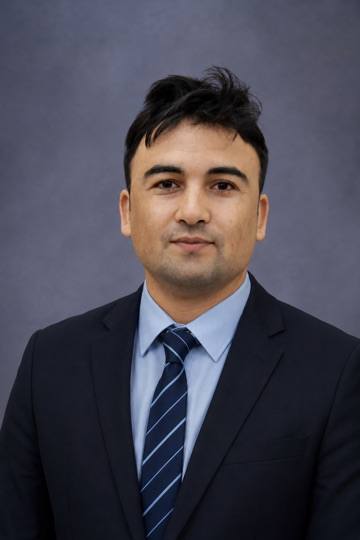
Hassan Ukasha
- B.S.Cornell University
- M.P.H.Cornell University
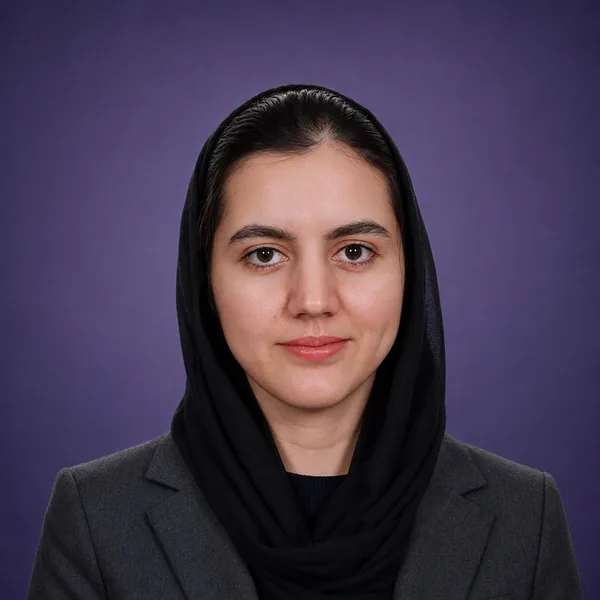
Zeba Haqbani
- B.Sc.University of British Columbia
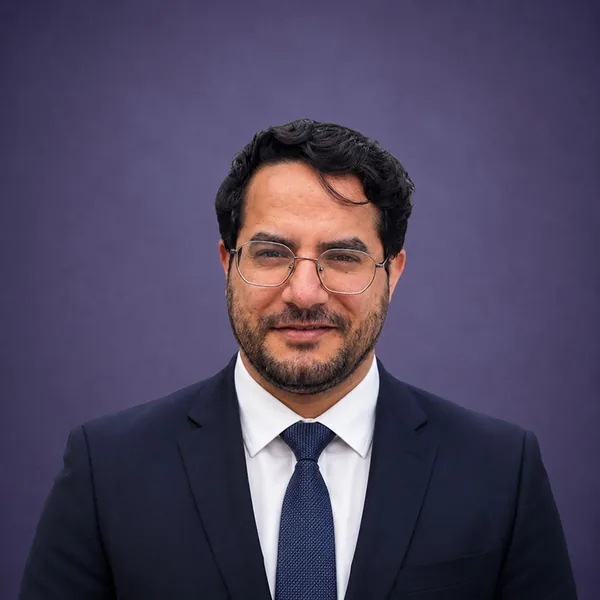
Wasil Peroz
- B.A.Milli University
- M.Sc.Otto-von-Guericke University Magdeburg
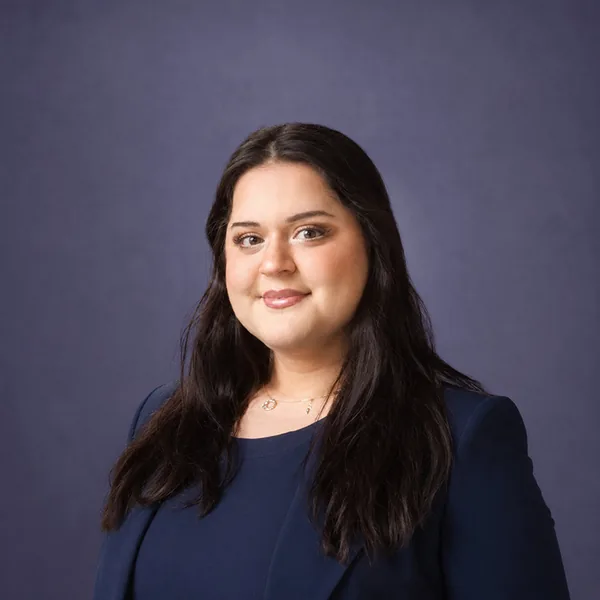
Maryam Safi
- B.A.Cornell University
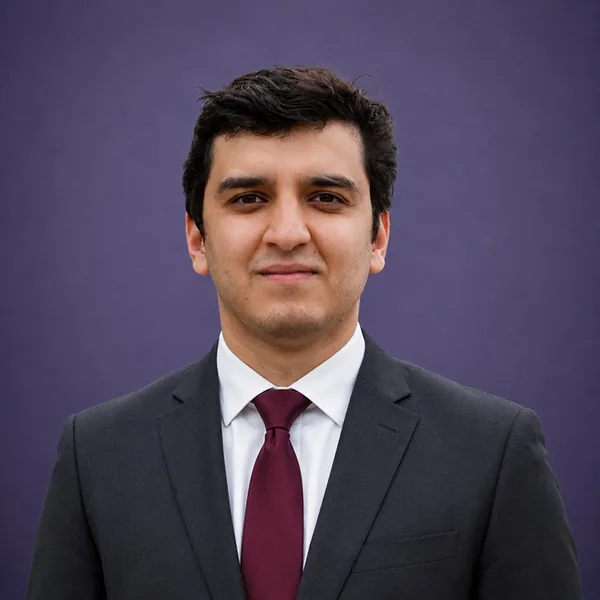
Hussain Ahmad
- M.Eng.Cornell University
- Ph.D.University of Chicago
The rules our certificates and declarations are written to
- 8 CFR 103.2(b)(3)I, XIV, XV
- 8 CFR 1003.33I, XIV, XV
- 28 U.S.C. § 1746I, V, XIV, XV
- Fed. R. Evid. 604, 702 and 901XIV
- Fed. R. Civ. P. 26(b)(1) and 34XIV
- ISO 17100 and ISO 20771XIV
Frequently asked questions about Pashto and Dari legal translation
What is certified legal translation from Pashto or Dari?
A certified legal translation is a complete English translation of a Pashto or Dari legal document with the translator’s signed statement that it is accurate and that they are competent to translate. For U.S. courts and agencies the wording follows the forum’s rule. Ariana Nexus adds a second linguist’s line-by-line revision before anything is certified.
Will USCIS and immigration courts accept your Pashto and Dari translations?
Our certificates are written to 8 CFR 103.2(b)(3) for USCIS and 8 CFR 1003.33 for immigration courts: a complete translation, a signed certification of accuracy and a statement of the translator’s competence. Acceptance of evidence is always the adjudicator’s decision; what we control is a translation and certificate that meet the rule on their face.
Is there a certification for Pashto or Dari legal translators in the United States?
No. The federal courts currently offer interpreter certification only in Spanish, and the American Translators Association offers no Pashto exam; its Persian-into-English exam is listed as temporarily unavailable. That is why Ariana Nexus qualifies its own linguists in the specific variety and publishes the standard every certified translation is held to.
Can you review Pashto and Dari documents inside our eDiscovery platform?
Yes. Our legal linguists review inside the platform you already license, such as Relativity, Everlaw, DISCO or Reveal, under your coding manual and access controls. Where you prefer, documents can be hosted in our access-controlled workspace instead.
Do you use machine translation or AI for legal documents?
Only to triage large volumes, on infrastructure you approve, and never for a certified translation. Documents never enter public translation engines or AI chat tools, and no client material is used to train AI models. Machine translation quality in Pashto and Dari trails high-resource languages, so native review comes first.
How do you handle Afghan dates and names in translation?
Every date is shown as written and converted, with the calendar named, for example 1 Hamal 1400 (21 March 2021). Every person, place and legal term is fixed once in a matter register, with the original script at first use, so one witness is spelled one way across the entire production.
Can a Farsi translator translate Dari legal documents?
Not reliably. Afghanistan Dari and Iranian Persian (Farsi) share a script and most grammar, but differ in legal and administrative vocabulary, month names, place names and handwriting conventions, and Afghan records mix in Pashto terms. A Farsi translator can produce fluent English that is wrong on the details a court tests. Ariana Nexus assigns linguists native to the Afghan variety of the document.
Can the translator sign a declaration or testify in court?
Yes. Translators provide declarations under 28 U.S.C. § 1746 or notarized affidavits, review opposing translations, and testify at deposition and trial about the translation and the method behind it. Where a document’s authenticity is in question, the matter can escalate to a written expert opinion.
How is legal translation priced?
Each matter is priced in a written statement of work after the conflict check, based on volume, languages and varieties, handwritten and audio content, certification needs and deadline. Review-level work and certified translation are scoped separately, so full translation is reserved for the documents that need it.
How quickly can you deliver a legal translation?
The schedule is set in the statement of work and built backward from your filing, hearing or production date. Emergency motions and detention or removal deadlines are scoped on a priority basis.
Which Afghan languages and dialects do you cover?
Twenty-four: Pashto, Dari, Hazaragi (a variety of Dari), Aimaq, Balochi, Ormuri, Parachi, Wakhi, Shughni, Sanglechi, Ishkashimi, Munji, Yidgha, Uzbeki, Turkmeni, Kyrgyz, Pashayi, Gawarbati, Tirahi, Nuristani, Kati, Prasun, Waigali and Brahui. Pashto and Dari are matched by regional variety, and Afghanistan Dari is never replaced with Iranian Persian.
How do you protect privileged and confidential material?
A conflict check and NDA come before intake. Only linguists named to counsel can open the documents, which stay in your platform or an access-controlled workspace with hashes and a custody log. Nothing is routed through channels controlled by the de facto authorities in Afghanistan, and documents are returned or destroyed with a certificate at close.
Do you work for both prosecution and defense?
Yes, but never for both sides of the same matter. Every engagement starts with a conflict check, and a linguist who has worked on one side of a matter is never assigned to the other.
Can you translate audio and video evidence in Pashto and Dari?
Yes. Calls, voice notes, interviews and videos are transcribed in the source language and translated into English as a dual-column transcript with timestamps and speaker labels, ready to be used as an exhibit or read alongside the recording in court.
Do you translate English legal documents into Pashto and Dari?
Yes. Declarations for a client to read before signing, court orders and notices, and client correspondence are translated into Pashto and Dari, with Cultural Compliance Bureau review before delivery.
Definitions
Certified translation
- A complete translation accompanied by the translator’s signed statement that it is accurate and that the translator is competent to translate.
Foreign-language document review
- Review of documents in their original language by native reviewers for responsiveness, privilege and significance.
Dual-column transcript
- A side-by-side source-language transcription and English translation of audio or video, with timestamps and speaker labels.
Translator’s note (TN)
- A bracketed note explaining a term, abbreviation or feature that has no direct English equivalent.
Solar Hijri calendar
- The calendar on most Afghan documents, also called Hijri Shamsi; the year 1400 began on 21 March 2021.
Tazkira
- The Afghan national identity document; paper tazkiras often record age at issuance rather than a date of birth. The electronic version is the e-Tazkira.
Nikah nama
- The Afghan marriage contract, which records the parties, witnesses and the mahr (dower) owed to the wife.
Shabnameh
- A night letter: a threatening letter, often delivered at night, frequently submitted as asylum evidence.
Qabala
- An Afghan property deed; sharia deeds are issued through a court, customary deeds are not.
Hawala
- An informal value-transfer system whose ledgers appear in financial-crime and sanctions matters.
Bates number
- A unique sequential identifier stamped on each page of a document production.
Protective-order acknowledgment
- An undertaking, often attached to a protective order as an exhibit, by which a vendor or expert agrees to be bound by it.
Sources
- 1.8 CFR 103.2(b)(3), translations submitted to USCIS
- 2.8 CFR 1003.33, translation of documents in immigration court
- 3.28 U.S.C. § 1746, unsworn declarations under penalty of perjury
- 4.U.S. District Court, N.D. Cal., interpreter qualifications
- 5.American Translators Association, certification language combinations
- 6.International Refugee Assistance Project, recent U.S. immigration changes for Afghans
Discuss a matter with the practice
A conflict check and NDA come before any document moves. Please do not send documents through this website.
Request a matter consultation