
Forensic Transcription and Translation of Pashto and Dari Audio, Video, and Chat Evidence
Verbatim transcripts and certified English translations of evidence in Pashto, Dari and 22 more Afghan languages: wiretaps, jail calls, WhatsApp voice notes, body-camera footage, police interviews and chat extractions. Produced by native linguists, checked line by line against the recording, and backed by a translator who can testify to every word.
Pashto is also written Pashtu, Pushto and Pakhto. Dari, the Persian of Afghanistan, is often requested as Farsi or Afghan Persian.
- 14Machine outputHe sent the money.Certified record
He[He/She/They] sent the money. TN 1 - 15Machine outputWe meet at breakfast.Certified recordWe meet at
breakfastmidday (chasht). - 16Machine outputThey came yesterday.Certified record
They[He/She, respectful; or: They] came yesterday. TN 3 - 17Machine output15/6/1404, 21:30Certified record
15/6/140415 Sonbola 1404 [6 September 2025], 21:30 Kabul [13:00 EDT]
What is forensic transcription and translation?
Forensic transcription and translation (FTT) turns recorded speech and written messages into a verbatim original-language transcript and a faithful English translation that can be produced in discovery, shown to a jury and defended under oath. Three things separate it from ordinary translation: every utterance is tied to a speaker and a time, nothing is summarized or cleaned up, and every uncertainty is marked on the page instead of guessed.
Who provides forensic transcription and translation for Pashto and Dari evidence?
Ariana Nexus, a consulting and professional services firm in Washington, D.C., produces forensic transcription and translation (FTT) of audio, video and messaging evidence in Pashto, Dari and 22 more Afghan languages for prosecutors, defense counsel, immigration attorneys, investigators and courts. Each recording is transcribed verbatim in its original script by a dialect-matched native linguist, translated into English or another language the forum requires, checked against the audio by a second linguist, and delivered with a signed declaration of accuracy.
Pashto is also written Pashtu, Pushto and Pakhto. Dari, the Persian of Afghanistan, is often requested as Farsi or Afghan Persian.
- Pashto and Dari
- Pashto, including Kandahari, Yousafzai and Waziri, and Dari, including Kabuli and Herati. Code-switched English, Urdu and Arabic are marked in the same transcript.
- 22 more Afghan languages
- Hazaragi, a variety of Dari; Aimaq, Balochi, Ormuri and Parachi; the Pamir languages Wakhi, Shughni, Sanglechi, Ishkashimi, Munji and Yidgha; Uzbeki, Turkmeni and Kyrgyz; Pashayi, Gawarbati and Tirahi; Nuristani (Ashkun), Kati, Prasun and Waigali; and Brahui.
- Translation into
- English, certified for U.S. courts and agencies, and French, German, Spanish, Italian, Portuguese, Russian, Turkish, Arabic, Hebrew, Urdu, Hindi and Chinese for proceedings abroad.
- Evidence
- Wiretaps, jail calls, voicemail and 911 calls; WhatsApp, Telegram and Signal voice notes; body-camera, CCTV, interview and social media video; chats and device extraction reports.
- Deliverables
- Time-coded, speaker-attributed four-column transcripts, certified English translations, subtitle files, chat workbooks and a signed declaration of accuracy.
- Method
- Two independent native linguists on every file, working from the recording, never from a summary.
- Custody
- SHA-256 hash on receipt and at delivery, originals never altered, every handoff logged.
- Testimony
- The linguist who did the work can sign a declaration and testify at deposition, hearing or trial.
- Base
- Washington, D.C., for matters across the United States, the UK, the EU and international forums.
Why Pashto and Dari evidence goes wrong without forensic linguists
Dari is not Farsi
چاشتchasht
Afghan Dari and Iranian Persian share a script and most grammar, not all vocabulary. In Afghan Dari, چاشت (chasht) means midday; classical Persian and Urdu dictionaries give it as mid-morning. On an alibi, that gap is hours. Dari evidence goes to Afghan Dari linguists.Common renderingWe meet at breakfast.Forensic renderingWe meet at midday (chasht).Pashto changes with the province
ښځهwoman: shədza in Kandahar, khəza in Peshawar
Southern Pashto pronounces the letter ښ as sh and northern Pashto as kh, which is why the language is both Pashto and Pakhto: ښځه, woman, is shədza in Kandahar and khəza in Peshawar. Dialect decides how a word is heard, so every file is matched to a linguist from the speaker's region.Common rendering[UI] said she was there.Forensic renderingThe woman said she was there. [northern pronunciation]One small word decides who acted
پیسې یې ولېږلېhe, she or they sent the money
In Pashto, پیسې یې ولېږلې can mean he, she or they sent the money: the pronoun یې names the doer but not gender or number. The transcript keeps the ambiguity and a translator's note explains it, instead of an English 'he' the recording never said.Common renderingHe sent the money.Forensic rendering[He/She/They] sent the money. [TN 1]Respect can read as a crowd
ایشانthey, or a respectful he or she
Dari ایشان is both 'they' and a respectful 'he' or 'she'. Translated carelessly, one person becomes several, or several become one. Every instance is marked and explained.Common renderingThey came yesterday.Forensic rendering[He/She, respectful; or: They] came yesterday. [TN 3]Kinship terms identify people
کاکا، ماماfather's brother, mother's brother
English 'uncle' collapses کاکا (father's brother) and ماما (mother's brother). Titles such as Haji, Mullah and Ustad are not names. When the question is who someone is, the distinction stays on the page.Common renderingMy uncle will bring it.Forensic renderingMy paternal uncle (kaka) will bring it.Three calendars and a half-hour time zone
۱۵ سنبله ۱۴۰۴15 Sonbola 1404
Afghan chats and documents can carry Solar Hijri, Lunar Hijri and Gregorian dates, and Afghanistan keeps UTC+4:30. 15 Sonbola 1404 is 6 September 2025, and a message sent at 21:30 in Kabul reads 13:00 in Washington, D.C. in summer. Every conversion is shown.Common rendering15/6/1404, 21:30Forensic rendering15 Sonbola 1404 [6 September 2025], 21:30 Kabul [13:00 EDT]Script breaks inside extraction reports
ټ ډ ړ ڼ ږPashto-only letters
Right-to-left Pashto and Dari mixed with numbers and English often renders out of order in extraction reports and PDFs, and Pashto letters get typed with Persian or Arabic look-alikes. We read from the underlying data, not the broken display.Common renderingReversed, disconnected text in the PDF report.Forensic renderingMessage read from the underlying export.Code-switching and Romanized chats
za ba saba rashamRomanized Pashto: I will come tomorrow
Speakers move between Pashto, Dari, Urdu, English and Arabic mid-sentence, and many chats are typed in Latin letters with no standard spelling. Each switch is labeled and each Romanized word is read in the speaker's language, not guessed.Common rendering[unintelligible]Forensic renderingI will come tomorrow. [Romanized Pashto]
How we transcribe and translate Pashto and Dari evidence
- v0.0
Conflicts check and engagement
Before any file moves, we run a conflicts check, sign your NDA or the terms of any protective order, and set up the engagement through counsel so the work can sit inside privilege and work product. - v0.1
Secure receipt and hashing
Files arrive by encrypted transfer. We compute a SHA-256 hash of each on receipt, log it, keep the original untouched and work only on verified copies. - v0.2
Language and dialect triage
A senior linguist identifies every language, dialect and speaker, grades audio quality and confirms scope, format and timeline in writing. - v0.3
Verbatim transcription
A native linguist matched to the speakers' dialect transcribes every word in the original script, with time codes at each speaker turn and the conventions key applied. - v0.4
Translation
The transcript is translated into English line by line, faithful rather than polished, with translator's notes for ambiguity, idiom, kinship, dates and time. - v0.9
Independent verification
A second native linguist checks transcript and translation against the recording itself. Disagreements go to a senior linguist, and every change is logged. - v1.0
Certification and delivery
You receive the transcript, translation and supporting files with a signed declaration of accuracy and a hash of every delivered file. - v1.1
Testimony and trial support
The linguist of record prepares declarations, meets counsel, and testifies at deposition, hearing or trial.
What a certified Pashto and Dari transcript looks like
Illustrative specimen. No case material.
| Line | Speaker | Original (Pashto, Dari) | English |
|---|---|---|---|
| Line and time100:00:04 | SpeakerUM1 | Originalپیسې یې ولېږلې؟ | EnglishDid [he/she/they]1 send the money? |
| Line and time200:00:06 | SpeakerUM2 | Originalهو، پرون یې ولېږلې. | EnglishYes, [he/she/they]1 sent it yesterday. |
| Line and time300:00:09 | SpeakerUF1 | Originalبعد از نماز شام در دکان همدیگر را میبینیم. | EnglishWe will meet at the shop after the evening prayer.2 |
| Line and time400:00:13 | SpeakerUM2 | Original[OV] ایشان دیروز آمدند -- | English[OV] [He/She, respectful; or: They]3 came yesterday -- |
| Line and time500:00:15 | SpeakerUM1 | Original[UI] ... okay, [in English] okay. | English[UI] ... okay, [in English] okay. |
- TN 1: The Pashto pronoun یې names the doer but not gender or number; the speaker could mean he, she or they.
- TN 2: The evening prayer (namaz-e sham) is the sunset prayer; clock time depends on date and place.
- TN 3: Dari ایشان is used both as a plural and as a respectful singular; the recording does not resolve which.
Translating WhatsApp, Telegram and Signal chats for court
- Sender and recipient
- Timestamps with time zone
- Solar Hijri and Lunar Hijri dates, converted
- Replies, quotes and forwards
- Reactions and edits
- Deleted-message markers
- Attachments and voice notes
- Romanized Pashto and Dari
AI transcription and machine translation for Pashto and Dari evidence
General-purpose speech recognition is not built for Pashto. In a 2026 benchmark on clean, read Pashto speech, no Whisper model returned Pashto script for more than 0.8% of utterances; the rest came back in Arabic, Dari or Urdu script. The best zero-shot systems still missed roughly four words in ten. Real evidence is harder: phone codecs, crosstalk, dialect and noise. The same benchmark tests Persian as spoken in Iran, not Afghan Dari.
AI may assist with search, alignment and first-pass time-coding inside a closed, contract-controlled environment. It never produces a word of the certified record: every line is written or verified by a named linguist against the recording, our methodology statement discloses any tool used, and client material is never used to train a model.
Courts are moving the same way. Proposed Federal Rule of Evidence 707 would hold machine-generated evidence offered without an expert to Rule 702's reliability standard; in June 2026 the Judicial Conference's Standing Committee sent it back for further study. A transcript with a named, testifying linguist behind every line is ready for either outcome.
When the question is whether a recording is real, we flag linguistic anomalies for counsel and refer the authenticity question to our deepfake and synthetic media analysis service, a separate engagement.
Zero-shot word error rate on Pashto read speech (FLEURS test set)
Clean, read speech: the easiest case. Recorded calls, voice notes and noisy video are harder. A rate above 100% means more errors than words spoken. The dashed line marks 100%.
Source: H. Rahman, “Benchmarking Multilingual Speech Models on Pashto,” arXiv:2604.04598, April 2026.
Audio, video and chat evidence we transcribe and translate
Audio
Audio evidence from Title III wiretaps and consensual recordings, jail and prison calls, voicemail and 911 calls, WhatsApp, Telegram, Signal and IMO voice notes, and recorded phone calls and meetings.You receive: Verbatim transcript, English translation, speaker log
Video
Body-worn camera and dash-camera footage, CCTV, recorded police and agency interviews, deposition video, and TikTok, YouTube or Facebook video offered as evidence.You receive: Transcript and translation, SRT and VTT subtitles
Chats and messages
WhatsApp, Telegram, Signal, Facebook Messenger, Instagram, IMO and Viber threads, SMS, and mobile forensic extraction reports from tools such as Cellebrite, Magnet AXIOM and Oxygen Forensic Detective.You receive: Message-by-message translation workbook
Existing transcripts
Government, opposing-party or earlier vendor transcripts and translations, checked line by line against the recording.You receive: Discrepancy report, competing transcript
Pashto and Dari forensic transcription and translation services
Verbatim Pashto transcription and Dari transcription
Every word, false start, filler and overlap written in the original script, with time codes at each speaker turn, in Pashto, Dari or any of 22 more Afghan languages.Certified English translation and 12 more target languages
A faithful, not polished, rendering beside the original in the four-column format courts expect: English for U.S. proceedings, and French, German, Spanish, Italian, Portuguese, Russian, Turkish, Arabic, Hebrew, Urdu, Hindi or Chinese where the forum requires it.WhatsApp and chat evidence translation
Threads translated message by message with sender, timestamp, time zone and calendar notes kept, and voice notes transcribed in place.Video subtitles for trial
Time-synced SRT and VTT files, and burned-in exhibit copies on request, drawn from the certified transcript.Transcript review and rebuttal
An independent line-by-line check of an existing transcript, with a discrepancy report and a competing transcript where needed.Interview and interpretation review
Recorded police, agency and asylum interviews where an interpreter was used, including Miranda advisements, checked for accuracy and omissions.Triage for large collections
Rapid language and relevance triage across hundreds of hours or thousands of messages, so full certified work goes where counsel needs it.Declarations and testimony
Declarations of accuracy under 28 U.S.C. § 1746, and deposition, hearing and trial testimony by the linguist who did the work.
The rules a Pashto or Dari transcript has to meet
| Rule or standard | What it asks | How we meet it |
|---|---|---|
| Rule or standardFederal Rule of Evidence 604 | What it asksAn interpreter must be qualified and give an oath or affirmation to make a true translation. | How we meet itNamed linguists with documented qualifications who will take the oath. |
| Rule or standardFederal Rule of Evidence 702 | What it asksExpert opinion must rest on sufficient facts and a reliable method, reliably applied. | How we meet itA written, repeatable method and a verification log for every file. |
| Rule or standardFederal Rule of Evidence 901 | What it asksThe proponent must show the item is what it is claimed to be. | How we meet itHash values tie each transcript to the exact file received. |
| Rule or standardFederal Rule of Evidence 902(14) | What it asksData copied from a device can be authenticated by digital identification, such as a hash. | How we meet itThe hash recorded at receipt travels with every deliverable. |
| Rule or standard28 U.S.C. § 1746 | What it asksAn unsworn declaration under penalty of perjury carries the force of a sworn statement. | How we meet itEvery certified translation carries a signed § 1746 declaration. |
| Rule or standard8 C.F.R. §§ 103.2(b)(3) and 1003.33 | What it asksUSCIS and immigration courts require a full English translation with the translator's certification of competence and accuracy. | How we meet itCertification language drafted to both rules. |
| Rule or standardISO 17100 and ISO 20771 | What it asksTranslation by qualified translators, revision by a second, and competence in legal translation. | How we meet itA two-linguist workflow on every file, aligned with both standards. |
| Rule or standardISO/IEC 27037 and SWGDE best practices | What it asksDigital evidence identified, acquired and preserved without alteration. | How we meet itOriginals untouched, verified working copies, logged handoffs. |
| Rule or standardNAJIT guidelines on transcription and translation | What it asksVerbatim transcription followed by faithful translation, by a qualified transcription and translation expert. | How we meet itThe conventions key and verbatim standard applied to every file. |
| Rule or standardEU Directive 2010/64/EU and Rome Statute art. 67(1)(f) | What it asksRights to interpretation and to the translations fairness requires in criminal proceedings. | How we meet itFormats and certifications prepared for European and international proceedings. |
Ariana Nexus aligns its method with these rules and standards. It does not claim ISO certification, and admissibility is always the court's decision.
Why Ariana Nexus for Pashto and Dari evidence
No U.S. certification exists for forensic work in Afghan languages. Federal court interpreter certification is offered only in Spanish, the American Translators Association offers no Pashto exam, and its own guidance notes that no credible certification exists for bilingual forensic transcription. Ariana Nexus fills that gap with a written standard: we train our own linguists and Afghan diaspora interpreters to it, and the people who apply it defend it on the stand.
Scholars, not bilinguals
The practice is led by alumni of Cornell University, the University of Chicago, the University of British Columbia and Otto-von-Guericke University Magdeburg, with native speakers of Pashto, Dari and other Afghan languages who read evidence the way it was spoken.Two linguists on every file
No file goes out on one person's ear. A second native linguist checks every line against the recording, and a senior linguist settles every disagreement.Custody from the first minute
Hashes, logs and untouched originals from intake to delivery, so each transcript can be tied to the exact file you produced.Afghan context, not just Afghan language
Calendars, time zones, kinship, titles, place names, prayer times and dialect geography, read the way they work in Afghanistan and the Afghan diaspora.One firm, one point of accountability
Every part is done by our own people, with no subcontractors or brokers, and the linguist who translated is the one who testifies.A line we do not cross
We never route evidence, data or inquiries through channels controlled by the de facto authorities in Afghanistan, and we keep no offices or operations there.
How Ariana Nexus compares
| What matters | Ariana Nexus | General translation agency | AI transcription tool | Freelance bilingual |
|---|---|---|---|---|
| What mattersDialect-matched native linguists in Pashto, Dari and 22 more Afghan languages | Ariana NexusEvery file | General translation agencyVaries | AI transcription toolNo | Freelance bilingualVaries |
| What mattersAfghan Dari, not Iranian Persian, for Dari evidence | Ariana NexusAlways | General translation agencyOften not | AI transcription toolNo | Freelance bilingualVaries |
| What mattersSecond linguist checks every line against the audio | Ariana NexusAlways | General translation agencyRarely | AI transcription toolNo | Freelance bilingualNo |
| What mattersForensic conventions, time codes and speaker labels | Ariana NexusStandard | General translation agencyVaries | AI transcription toolPartial | Freelance bilingualVaries |
| What mattersChain of custody and hash records | Ariana NexusStandard | General translation agencyRarely | AI transcription toolNo | Freelance bilingualNo |
| What mattersAmbiguity kept and explained, not smoothed | Ariana NexusTranslator's notes | General translation agencyVaries | AI transcription toolNo | Freelance bilingualVaries |
| What mattersDeclaration and testimony by the same linguist | Ariana NexusYes | General translation agencyOften excluded | AI transcription toolNo | Freelance bilingualVaries |
| What mattersNothing routed through Afghan de facto authority channels | Ariana NexusFirm policy | General translation agencyUnknown | AI transcription toolUnknown | Freelance bilingualUnknown |
| What mattersClient material never used to train AI | Ariana NexusContractual | General translation agencyVaries | AI transcription toolCheck terms | Freelance bilingualVaries |
The team behind Pashto and Dari forensic transcription
Ariana Nexus is led by alumni and scholars of leading universities. The people who deliver this service come from the Afghan community, speak Pashto, Dari and other Afghan languages natively, and are trained to treat language as evidence, not as a favor asked of a bilingual.
- 01
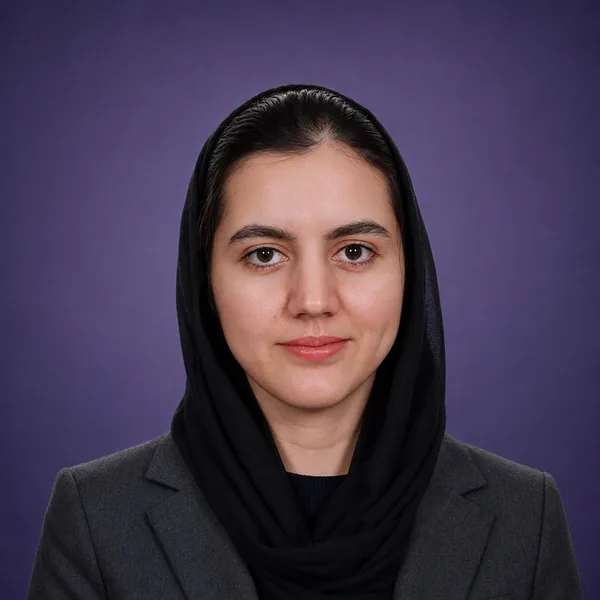
Zeba Haqbani
Senior PartnerLived in Kabul.
- B.Sc.University of British Columbia
Secure intake and delivery systemsOwns the encrypted transfer, hashing and delivery platforms every file passes through. - 02
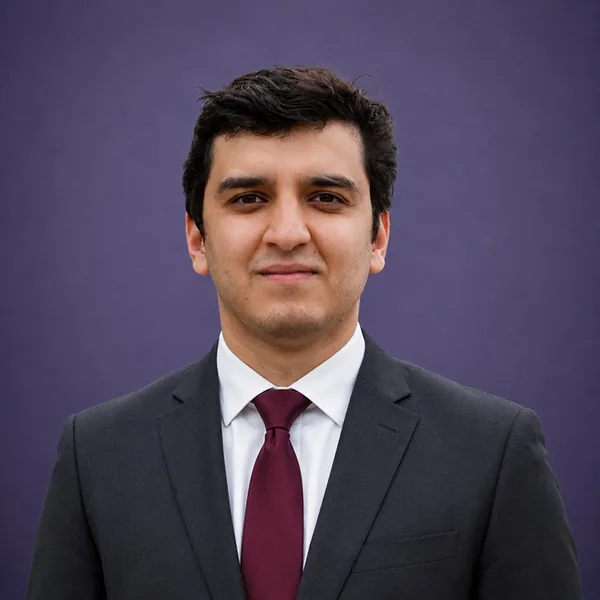
Hussain Ahmad
Principal- M.Eng.Cornell University
- Ph.D.University of Chicago
Time alignment and data integrityChecks time codes, speaker turns and file integrity against the recording. - 03
Native Afghan-language linguists
Pashto, Dari and 22 more, dialect-matched to each recordingUniversity graduatesTranscription, translation and verificationTwo native linguists on every file: one transcribes and translates, the second verifies against the audio. - 04
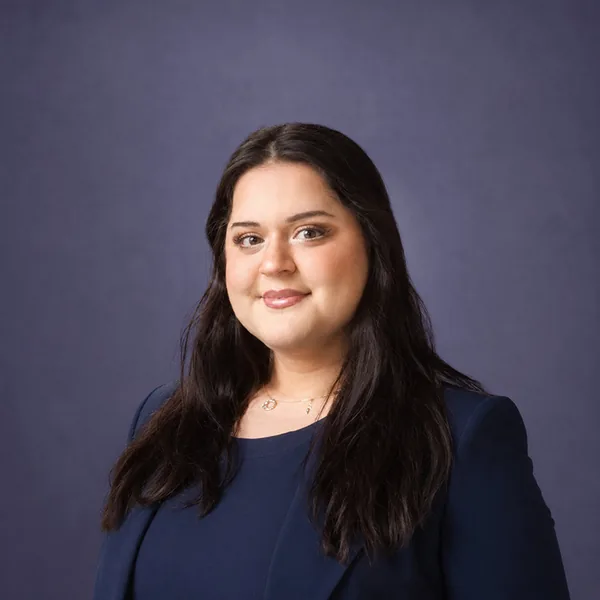
Maryam Safi
Principal- B.A.Cornell University
Engagement and quality reviewRuns the engagement with counsel and reviews every deliverable against the conventions key. - 05
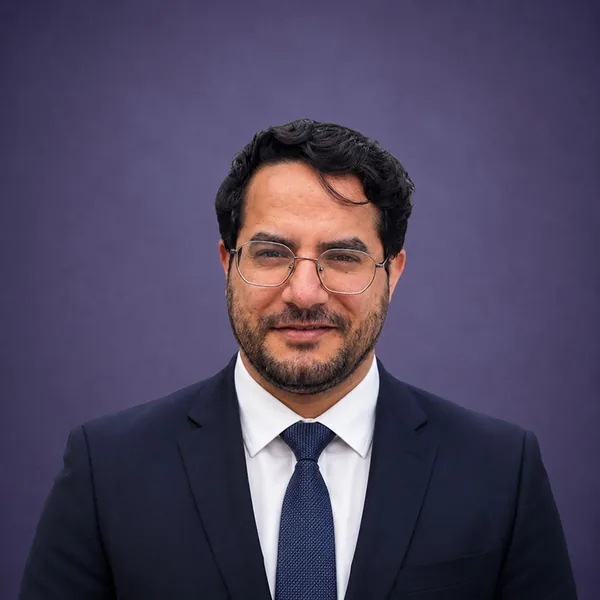
Wasil Peroz
Principal- B.A.Milli University
- M.Sc.Otto-von-Guericke University Magdeburg
Legal and regulatory reviewReviews the method, declarations and formats against the rules of the forum. - 06
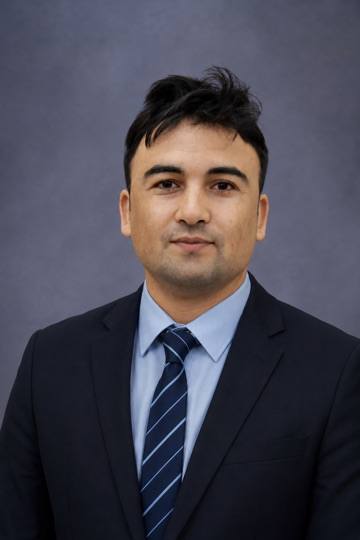
Hassan Ukasha
Managing Partner- B.S.Cornell University
- M.P.H.Cornell University
Program oversightDirects the firm's operations and holds final accountability for the program's method, quality system and client commitments.
Hassan Ukasha, Managing Partner, directs the firm's operations from Washington, D.C. and holds final accountability for the forensic transcription and translation program. He grew up in Herat and holds a B.S. and an M.P.H. from Cornell University. Working languages: Pashto, Dari, English, Urdu and Hindi, with working Arabic.
Recordings of violence, threats and abuse are part of this work. Linguists are warned before graphic content, review in limited blocks and are debriefed.
Who relies on our Pashto and Dari transcripts
Prosecutors and investigators
Discovery-ready transcripts of wiretaps, consensual recordings, interviews and device extractions, with trial exhibits and testimony.Federal defenders and defense counsel
Independent review of the government's transcripts, competing transcripts, and interview-interpretation review for suppression motions.Immigration and asylum attorneys
Certified translations of threat messages attributed to the Taliban, voice notes and video for Afghan evacuees and asylum seekers, for USCIS and immigration court.Family law attorneys
Messages and voice notes between Afghan family members in custody, divorce and protective-order matters, where kinship terms and tone decide meaning.Litigation and eDiscovery teams
Messaging collections triaged and translated into review-platform-ready formats, under privilege and protective-order controls.Corporate investigations and compliance
Internal investigations, sanctions and anti-corruption reviews involving Pashto- or Dari-speaking employees, agents or counterparties.International justice and human rights investigators
Witness recordings and open-source video documenting the war in Afghanistan and the years since, prepared for accountability processes.Insurers and special investigations units
Recorded statements and claim communications in Pashto and Dari, transcribed and translated to evidentiary standard.
- U.S. federal and state criminal courts
- Immigration courts and USCIS
- Family, civil and commercial courts
- UK courts, tribunals and public inquiries, including the Independent Inquiry relating to Afghanistan
- German and wider EU criminal proceedings
- The International Criminal Court's Situation in Afghanistan, where arrest warrants for two Taliban leaders were issued in July 2025

Turnaround, scope and pricing
Forensic transcription and translation is slow work by design. Industry guidance puts it at up to an hour of linguist time for each minute of recording, and more for poor audio, many speakers or wiretaps. We scope after a short triage and confirm the fee and timeline in writing before work begins.
What sets scope
- Recording length and number of files
- Audio quality
- Number of speakers
- Languages, dialects and code-switching
- Deliverable format
- Deadline
- Testimony
Scheduled
Planned against your discovery and motion calendar.Priority
A dedicated team for hearings and trial dates already set.Large collection
Triage summaries across everything first, then full certified transcripts of the segments counsel will use.
Questions about Pashto and Dari forensic transcription
What is forensic transcription and translation (FTT)?
Forensic transcription and translation (FTT) produces a verbatim transcript of a recording in its original language and a faithful English translation beside it, formatted so a court, jury or investigator can check every line. Unlike ordinary translation, every utterance is tied to a speaker and a time code, nothing is cleaned up, and anything unclear is marked rather than guessed.
Can AI or Google Translate transcribe Pashto or Dari evidence for court?
Not on its own. In a 2026 benchmark on clean, read Pashto speech, no Whisper model returned Pashto script for more than 0.8% of utterances, and the best zero-shot systems still got roughly four words in ten wrong. Machine translation also flattens ambiguity into one confident reading. AI can help with search and alignment; the certified record has to come from a qualified linguist who can take the oath under Federal Rule of Evidence 604.
Is Dari the same as Farsi? Can a Farsi translator handle Dari evidence?
No. Afghan Dari and Iranian Persian (Farsi) share a script and most grammar but differ in vocabulary, idiom and pronunciation, enough to change a date, a time or a relationship in a recording. Dari evidence should go to Afghan Dari linguists. Hazaragi, a variety of Dari, is matched to linguists who speak it.
What does a certified Pashto or Dari transcript look like?
A four-column table: line number and time code, speaker, the original Pashto or Dari in its own script, and the English translation. Unidentified speakers are labeled UM1 or UF1, unclear passages are marked [UI] or [IA], language switches are labeled, and translator's notes explain ambiguity. It arrives with a signed declaration of accuracy.
How do you translate WhatsApp messages and voice notes for court?
We work from the export or forensic extraction report, translate each message in order and keep the sender, timestamp, time zone and any Solar Hijri dates, with conversions shown. Voice notes are transcribed and translated in place, Romanized Pashto and Dari are read as the speaker wrote them, and the translation is certified for court, USCIS or immigration court.
Do you provide a certificate of translation accuracy?
Yes. Every certified translation carries a signed declaration of accuracy that meets 28 U.S.C. § 1746, with certification language that satisfies 8 C.F.R. § 103.2(b)(3) for USCIS and 8 C.F.R. § 1003.33 for immigration court. Notarized affidavits are available when a court or agency asks for one.
Can your translator testify in court or at a deposition?
Yes. The linguist who transcribed or verified the recording can sign declarations, meet counsel, and testify at deposition, hearing or trial about the transcript and the method behind it. Testimony is scoped into the engagement from the start rather than added later.
Can you review the government's or the other side's transcript?
Yes. We check an existing transcript line by line against the recording, report every omission, mistranslation and misattribution, and prepare a competing transcript and declaration where counsel needs one. The review is independent of the party that produced the original.
How do you handle poor-quality or noisy recordings?
Noise is handled on working copies only: filtering and level changes are documented and never touch the original. Passages that cannot be heard are marked [IA], and passages heard but not understood are marked [UI], never filled in by guesswork. If enhancement or authentication by a forensic audio examiner is needed, we say so at triage.
How do you protect evidence and maintain chain of custody?
Engagement starts with a conflicts check and your NDA or protective-order terms. Files arrive by encrypted transfer, are hashed with SHA-256 on receipt, and are worked only as verified copies, with every handoff logged. Linguists on U.S. matters work in the United States, public AI tools are never used, and nothing is routed through channels controlled by the de facto authorities in Afghanistan.
Can you handle graphic recordings, including evidence of violence or war crimes?
Yes. Recordings of violence, threats and abuse are part of this work, including human rights and war crimes documentation from Afghanistan. Linguists are warned before graphic content, review in limited blocks and are debriefed, and counsel is told at triage if a recording needs special handling.
Which Pashto and Dari dialects and other Afghan languages do you cover?
Pashto across its main varieties, including Kandahari, Yousafzai and Waziri, and Dari including Kabuli and Herati. We also transcribe and translate evidence in 22 more Afghan languages: Hazaragi, a variety of Dari; Aimaq; Balochi; Ormuri; Parachi; Wakhi; Shughni; Sanglechi; Ishkashimi; Munji; Yidgha; Uzbeki; Turkmeni; Kyrgyz; Pashayi; Gawarbati; Tirahi; Nuristani (Ashkun); Kati; Prasun; Waigali; and Brahui. Code-switched English, Urdu and Arabic are transcribed in the same file, and turnaround for the smallest languages is confirmed at triage.
Can you translate Pashto or Dari evidence into German, French or another language?
Yes. Beyond certified English translation, we translate Pashto, Dari and other Afghan-language evidence into French, German, Spanish, Italian, Portuguese, Russian, Turkish, Arabic, Hebrew, Urdu, Hindi and Chinese. Where a court requires a translator sworn in its own jurisdiction, as many European courts do, our verbatim transcript becomes the source that translator certifies from. The International Criminal Court works in English and French.
How long does forensic transcription take, and how is it priced?
Industry guidance puts forensic transcription and translation at up to an hour of work per minute of recording, and more for noisy audio, many speakers or wiretaps. We scope each matter after a short triage covering length, quality, speakers, languages, format, deadline and testimony, and confirm the fee and timeline in writing before work begins.
Do you work for both prosecution and defense?
Yes, subject to a conflicts check. We never work both sides of the same matter, and our findings do not change with the party paying for them.
Is Ariana Nexus a law firm?
No. Ariana Nexus is a consulting and professional services firm and does not give legal advice. We work at the direction of counsel, usually through an engagement structured so the work can sit within privilege and work product, a Kovel-style arrangement that counsel decides on. Admissibility is decided by the court.
Terms used on this page
- Forensic transcription and translation (FTT)
- A verbatim original-language transcript of a recording with a faithful translation beside it, prepared as evidence.
- Verbatim transcript
- A transcript that keeps every word, false start, filler and overlap exactly as spoken.
- Four-column transcript
- Line and time code, speaker, original language and English translation, side by side.
- Certified translation
- A translation accompanied by the translator's signed statement of competence and accuracy.
- Declaration of accuracy
- A statement signed under penalty of perjury under 28 U.S.C. § 1746, with the effect of a sworn statement.
- Translator's note (TN)
- A note that explains ambiguity, idiom, a date conversion or a cultural reference without changing the translation.
- Unintelligible [UI] and inaudible [IA]
- Heard but not understood, and not heard at all. Both are marked, never guessed.
- Chain of custody
- The record of who held the evidence, when, and what was done to it.
- SHA-256 hash
- A digital fingerprint that changes if a single bit of a file changes, used to show a file is unaltered.
- Afghan Dari
- The Persian of Afghanistan, distinct from Iranian Persian (Farsi) in vocabulary, idiom and pronunciation.
- Solar Hijri calendar
- The calendar used in Afghanistan, with months such as Hamal and Sonbola; year 1404 began on 21 March 2025.
- Afghanistan Time (UTC+4:30)
- Afghanistan's time zone, four and a half hours ahead of UTC, with no daylight saving time.
- Code-switching
- Moving between languages within a conversation or a sentence, such as Pashto to Dari or Dari to English.
Sources
- H. Rahman, “Benchmarking Multilingual Speech Models on Pashto: Zero-Shot ASR, Script Failure, and Cross-Domain Evaluation,” arXiv:2604.04598, April 2026. arxiv.org/abs/2604.04598
- American Translators Association, “From Roncando to the Record: Best Practices for Forensic Transcription/Translation (FTT),” ATA Compass, February 2026. www.atanet.org/client-assistance/blog-best-practices-forensic-transcription-translation-ftt/
- American Translators Association, “Why Hire an ATA-Certified Translator?”, language combinations available, accessed September 2026. www.atanet.org/certification/guide-to-ata-certification/
- U.S. District Court for the Northern District of California, “Interpreters,” federal certification categories. www.cand.uscourts.gov/about/clerks-office/interpreters
- National Association of Judiciary Interpreters and Translators, “Guidelines and Requirements for Transcription Translation.” najit.org/wp-content/uploads/2016/09/Guidelines-and-Requirements-for-Transcription-Translation.pdf
- M. Williams, “Machine-Generated Evidence Challenges the Federal Rules: Inside the Contested Proposed Federal Rule of Evidence 707,” The National Law Review, 2026. natlawreview.com/article/machine-generated-evidence-challenges-federal-rules-inside-contested-proposed
- Federal Rules of Evidence, Legal Information Institute, Cornell Law School. www.law.cornell.edu/rules/fre
- International Criminal Court, Situation in the Islamic Republic of Afghanistan. www.icc-cpi.int/afghanistan
- Rome Statute of the International Criminal Court, article 50: official and working languages. www.icc-cpi.int/sites/default/files/RS-Eng.pdf
Related legal services
- Court and Deposition Interpreters — Pashto, Dari and 22 More Afghan LanguagesLive interpreting in depositions, hearings and trials. This page covers recordings and messages.
- Pashto and Dari Interpreters for USCIS Asylum, Green Card and Naturalization InterviewsInterpreters in the interview room. This page covers the evidence you file.
- Certified Translation of Afghan Documents for USCIS and CourtsTazkira, marriage, passport and diploma translation. This page covers recordings and chats.
- Legal Document and Discovery Translation for Law FirmsContracts, correspondence and document productions. This page covers speech and messaging evidence.
- Deepfake and Synthetic Media Analysis in Pashto and DariWhen the question is whether a recording is real, not what it says.
Discuss a Pashto or Dari evidence matter
Send us the scope, not the evidence: recording hours or message volume, languages, deadline and whether testimony is likely. We run a conflicts check and sign your NDA or protective-order terms before any file changes hands.
Reviewed September 2026 by Hassan Ukasha, Managing Partner.
Ariana Nexus is not a law firm and does not provide legal advice. Admissibility is decided by the court. Specimens on this page are illustrative and contain no case material.