Cultural Training for Attorneys, Judges and Court Staff Working with Afghan Clients

Ariana Nexus trains attorneys, judges and court staff to work accurately with Afghan clients, respondents and witnesses. The training covers Afghan names and dates of birth, Pashto and Dari interpretation, trauma and testimony, family and gender norms, and the documents Afghans carry, in immigration, criminal and family matters. In person or live online, with CLE-ready materials.

Pashtoد وکیلانو، قاضیانو او د محکمې د کارکوونکو لپاره کلتوري روزنه

Dariآموزش فرهنگی برای وکلا، قضات و کارمندان محکمه

See the eight modules

Summary

In short

Afghan cultural training for legal professionals teaches the context of Afghan culture and language that an accurate interpretation does not carry: how Afghan names and calendars work, why dates and spellings differ across documents, how trauma and family honor shape testimony, how to book the right Pashto or Dari interpreter, and what Afghan documents can and cannot prove. Ariana Nexus delivers it to law firms, public defender and prosecutor offices, legal aid organizations, bar associations, immigration and state courts, and tribunals in the United States and abroad.

Who it is for
Immigration, criminal and family law attorneys; judges and tribunal members; court clerks, interpreters, coordinators, security, probation and victim-witness staff.
Formats
90-minute bench briefing, 3-hour CLE seminar, full-day intensive, multi-session institutional program and on-demand modules.
CLE credit
CLE-ready materials, prepared for accreditation in the jurisdictions you name. Judicial education credit follows each state's rules.
Delivery
In person across the United States, live online worldwide, and in person outside the United States by arrangement.
Languages
All 24 Afghan languages covered. Delivered in English, or by arrangement in French, German, Spanish, Italian, Hebrew, Arabic, Hindi, Urdu, Portuguese, Chinese, Russian or Turkish.
Based in
Washington, D.C.

The curriculum

What the training covers: eight points where Afghan cases go wrong on the record

Each module takes one predictable misreading, shows how it appears in a transcript or a file, and gives participants a concrete practice for the courtroom, the interview room or the clerk’s counter. Courts and bar associations often call this cultural competency training. The approach is cultural humility: context to test, never a stereotype to apply.

Foundations: Afghanistan, the Afghan war and the Afghan diaspora

Every program opens with the Afghan people behind the cases: Pashtun, Tajik, Hazara, Uzbek, Turkmen, Baloch and Nuristani communities; Sunni, Shia, Ismaili, Sikh and Hindu Afghans; the Afghan war since 1978; the Taliban takeover and the fall of the Republic in August 2021; the evacuation and Operation Allies Welcome; and who is in U.S. and European courts now: Afghan evacuees on humanitarian parole, Special Immigrant Visa (SIV) holders, refugees and asylum seekers, from former Afghan army and police and interpreters who served with U.S. and coalition forces to women’s rights defenders, journalists, judges and prosecutors.

At the centre

An accurate finding

Every module protects the same thing: a decision that rests on accurate premises about the person and the record.

Module 1

Afghan names and identity

One name in the courtroom, no family name on the tazkira, and different English spellings across filings.
Context and practice
What it may reflect
Many Afghans use a single given name. The tazkira records the father’s name, and often the grandfather’s, instead of a family name. Pashto and Dari names have no fixed English spelling.
The practice
Record the name as written in the source script, capture the father’s name, and treat spelling variants as transliteration, not aliases, until evidence says otherwise.
  • Attorneys: core for this audience
  • Judges: core for this audience
  • Court staff: core for this audience

Module 2

Dates of birth and the Afghan calendar

Three different dates of birth across an I-589, a passport and a tazkira.
Context and practice
What it may reflect
Afghanistan’s civil calendar is Solar Hijri. Older paper tazkiras often recorded an estimated age at issuance rather than a date of birth, and many U.S. records assigned January 1 when a birthday was unknown.
The practice
Convert dates before comparing them, ask how each date was produced, and note the source of every date on the record.
  • Attorneys: core for this audience
  • Judges: core for this audience
  • Court staff: core for this audience

Module 3

Family structure and kinship terms

A witness calls a cousin “my brother” and a paternal uncle “my father”.
Context and practice
What it may reflect
Afghan kinship terms extend across the household and the qawm. Extended families share homes, decisions and risk.
The practice
Ask for each relationship by descent, not by term, and map the household before drawing conclusions about who is family.
  • Attorneys: core for this audience
  • Judges: core for this audience
  • Court staff: included

Module 4

Demeanor, deference and the meaning of “yes”

Averted eyes, “yes” before the question ends, and flat, brief answers about violence.
Context and practice
What it may reflect
Looking away can signal respect for a judge. “Yes” can mean “I am listening”. Flat affect is a known effect of trauma.
The practice
Rest findings on content, not on demeanor cues borrowed from U.S. norms, and check a “yes” by asking what the person understood.
  • Attorneys: core for this audience
  • Judges: core for this audience
  • Court staff: included

Module 5

Time, chronology and memory

Events dated by season, harvest or Ramadan, approximate durations, and gaps around the worst events.
Context and practice
What it may reflect
Many Afghans anchor time to events and seasons rather than calendar dates. Under trauma and PTSD, peripheral details are the least stable across repeated interviews, and former soldiers and interpreters may carry moral injury: the guilt and sense of betrayal that can follow war and make some events hard to narrate.
The practice
Build the timeline from anchor events, convert dates late, separate central facts from peripheral details before weighing an inconsistency, and pace questions about the worst events.
  • Attorneys: core for this audience
  • Judges: core for this audience
  • Court staff: optional

Module 6

Gender, honor and disclosure

An Afghan woman answers through her husband. Sexual violence is disclosed late, or only to a female attorney.
Context and practice
What it may reflect
Namus (family honor), shame and safety shape who speaks and when, especially for Afghan women. Men also under-report sexual violence.
The practice
Offer same-gender attorneys, interpreters and interviewers, allow private disclosure, and treat late disclosure as a known pattern rather than embellishment by default.
  • Attorneys: core for this audience
  • Judges: core for this audience
  • Court staff: included

Module 7

Afghan documents and what they can prove

A tazkira, a nikah khat, a school certificate, a threat letter (shabnama), or none of them.
Context and practice
What it may reflect
Document types, issuers and formats changed across eras, including after the Taliban took power in August 2021. Some records cannot be obtained safely today.
The practice
Know what each document can and cannot establish, how to document an absence, and why requests through the de facto authorities can put relatives at risk.
  • Attorneys: core for this audience
  • Judges: included
  • Court staff: core for this audience

Module 8

Language, dialect, interpreters and AI translation

A Farsi interpreter for a Dari speaker, a Dari interpreter for an Uzbeki speaker, a conflicted interpreter, or a machine-translated declaration in the file.
Context and practice
What it may reflect
Dari is the Afghan variety of Persian, with vocabulary and legal terms that differ from Iranian Farsi. Pashto has major regional dialects. Machine translation and AI interpreting tools remain error-prone in Pashto and Dari, and errors in machine-translated filings have already harmed Afghan asylum claims.
The practice
Confirm the language and variety on the record, screen interpreters for conflicts, match gender where it matters, and have a qualified human verify any machine-translated or AI-generated translation before it is relied on.
  • Attorneys: core for this audience
  • Judges: core for this audience
  • Court staff: core for this audience

Why this training exists

An accurate interpretation can still produce the wrong finding

Interpreters carry words between languages. They are not there to explain what those words assume. When an Afghan respondent gives a birth year of 1370, calls a cousin “my brother”, looks away from the judge, or produces a tazkira with no family name, the interpretation can be perfect and the inference still wrong.

In immigration court the stakes are written into the statute. A credibility finding may rest on demeanor, candor, responsiveness and consistency, and an inconsistency does not have to go to the heart of the claim (8 U.S.C. § 1158(b)(1)(B)(iii)). Afghan naming, calendar and kinship conventions produce exactly the surface inconsistencies that standard reaches. Criminal and family courts meet the same patterns in plea colloquies, protective orders and custody hearings. Getting these details right is a matter of accuracy and due process, not courtesy.Source 1

Why this matters in 2026

  • Since 28 July 2026, USCIS may refer certain affirmative asylum applications to immigration court without an interview, and referral letters no longer need a credibility assessment. For many Afghan applicants, the first person to hear their account will be a judge.Source 2
  • U.S. immigration courts held 3,318,099 pending cases at the end of February 2026. About 70 percent involved an asylum application.Source 3
  • Afghans were the largest nationality among asylum applicants in the EU+ in 2025, with about 117,000 applications. Germany received 63,000 of them.Source 4
  • No NCSC oral certification exam exists for Pashto or Dari, so courts rely on interpreters credentialed as registered or qualified, and on judges and staff to notice when something goes wrong.Source 8

Evidence

The Afghan caseload in numbers

3,318,099
pending cases in U.S. immigration courts, end of February 2026Source 3
70%
of those pending cases involve an asylum applicationSource 3
117,000
Afghan asylum applications in the EU+ in 2025, the largest nationalitySource 4
0
NCSC oral certification exams for Pashto or DariSource 8

Afghan asylum applications in the EU+, 2025

Germany
63,000
Greece
15,000
France
15,000
All other EU+ countries
24,000
Afghan applications for international protection in the EU+ in 2025: about 117,000 in total, up from 88,000 in 2024. The last bar is derived from the EUAA total minus the three named countries.Source 4

Audiences

Who the training is for: attorneys, judges and court staff

Attorneys and legal teams

Immigration and asylum attorneys, removal defense, criminal defense and public defenders, prosecutors, family law attorneys, pro bono counsel at law firms, legal aid organizations, law school clinics, paralegals and accredited representatives.
  • Intake and declarations that hold up under credibility review
  • Preparing Afghan clients for testimony and cross-examination
  • Working with Pashto and Dari interpreters in preparation sessions
  • Corroboration plans that explain missing documents
  • Competence and communication duties under ABA Model Rules 1.1 and 1.4

Recommended format: CLE seminar or full-day intensive

Judges and adjudicators

Immigration judges, state and federal trial judges, family court judges, administrative law judges, tribunal members and asylum officers.
  • A closed, neutral briefing on the context behind demeanor, candor and consistency
  • Checking the interpreter’s language and variety on the record
  • Separating conversion artifacts from contradictions
  • A bench card for the courtroom

Recommended format: 90-minute bench briefing

Court staff

Clerks and self-help center staff, interpreter coordinators and language access managers, court interpreters, court security, probation and pretrial officers, and victim-witness advocates.
  • Entering Afghan names and dates consistently from the first filing
  • Booking the right language and variety the first time
  • Conflict checks inside small Afghan communities
  • Family groups, prayer and gender at the courthouse
  • Safety and disclosure in domestic violence matters

Recommended format: Role-specific sessions within an institutional program

Judicial programs teach context, not conclusions: no party’s position and no pending cases. The same content is offered to prosecutors and defense counsel, and faculty who brief a bench do not appear before that bench as expert witnesses.

Formats

Training formats, CLE credit and delivery

Format
Duration
For
Group size
Credit
Includes
Format
Bench briefing
Duration
90 minutes
For
Judges and adjudicators
Group size
Closed session
Credit
Judicial education credit under state rules
Includes
Bench card, closed Q&A, written follow-up
Format
CLE seminar
Duration
3 hours
For
Attorneys and legal teams
Group size
Up to 60 participants
Credit
CLE-ready, accreditation sought on request
Includes
Counsel card, glossary, knowledge check
Format
Full-day intensive
Duration
6 hours
For
Mixed legal teams and interpreters
Group size
Up to 30 participants
Credit
CLE-ready, accreditation sought on request
Includes
Scenarios with Pashto and Dari speakers, cards, glossary
Format
Institutional program
Duration
Multi-session
For
Courts, offices, bar associations, firms
Group size
Cohorts across roles
Credit
Per session, per jurisdiction
Includes
Needs assessment, cohorts, train-the-trainer, refreshers
Format
On-demand modules
Duration
Self-paced
For
Onboarding for new staff
Group size
Unlimited within your organization
Credit
Where the jurisdiction allows
Includes
Recorded modules delivered to your learning system

What CLE-ready means

The program is built the way accreditors review it: written learning objectives, a timed agenda, substantive written materials, qualified faculty and attendance records. We prepare these for accreditation in the jurisdictions you name. In New York, programs on sensitivity to cultural differences when interacting with litigants fall within the Diversity, Inclusion and Elimination of Bias category. California requires two hours of Elimination of Bias in each three-year period, at least one of them on implicit bias and bias-reducing strategies. Credit is granted by each jurisdiction, not by us.Source 6Source 7

How we are different

Why courts and law firms choose Ariana Nexus

Much of the Afghan training available to legal professionals was produced in 2021 to 2023 for the evacuation response. This program is built for the 2026 docket by people who work in the Afghan record every week.

  • 24
    Afghan languages covered, from Pashto and Dari to Brahui
  • 13
    Languages of delivery: English and 12 more by arrangement
  • 8
    Modules, each tied to a point where the record goes wrong
  • 5
    Formats, from a 90-minute bench briefing to multi-session programs
  1. From the Afghan community, trained at leading universities

    Faculty come from the Afghan community and hold degrees from Cornell University, the University of Chicago, the University of British Columbia and Otto von Guericke University Magdeburg. Scholars, not bilingual presenters.

    See the team

  2. Built from the record itself

    See the eight modules

  3. Measured, not just delivered

    Attorney and staff sessions open and close with a knowledge check, every participant receives a completion record, and questions raised in the room are answered in writing afterwards.

    See what every program includes

  4. Neutral enough for the bench

    Judicial programs teach context, not conclusions. The same content is offered to prosecutors and defense counsel.

    See the neutrality commitments

  5. Every Afghan language, the right variety

    Pashto, Dari and 22 more Afghan languages, with the dialect, region and gender matching courts need to get right.

    See the 24 languages

  6. One firm, and no channels into Afghanistan

    Every session is designed and taught by our own people, with one point of accountability. We never route documents or inquiries through channels controlled by the de facto authorities in Afghanistan.

    See how we deliver

Deliverables

What every program includes

  • Needs assessment

    Case mix, jurisdiction and recent issues, gathered before the session.
  • Tailored materials

    Examples mapped to your docket and procedures.
  • Bench card or counsel card

    A pocket reference for names, dates, language and demeanor.
  • Pashto and Dari glossary

    Legal and cultural terms in both scripts, Pashto first.
  • Calendar conversion table

    Solar Hijri to Gregorian, for reading Afghan documents.
  • Knowledge checks

    Before and after attorney and staff sessions, with completion records.
  • Written follow-up

    Answers to the questions raised in the session.

How we deliver

How we deliver Afghan cultural training

  1. Scope

    A scoping call on audience, case types, jurisdiction, format and credit.
  2. Tailor

    The eight modules mapped to your docket and procedures, faculty assigned, CLE materials prepared where requested.
  3. Deliver

    In person or live online, with scenarios played by Pashto and Dari speakers. No real client story is used without consent.
  4. Measure

    Knowledge checks before and after, participant evaluations, attendance and completion records.
  5. Sustain

    Bench and counsel cards, the glossary, refresher sessions and train-the-trainer for your own faculty.
Three professionals in business attire review printed documents and a chart together at a meeting table.

Faculty

The team behind the training

From the Afghan community, trained at Cornell University, the University of Chicago, the University of British Columbia and Otto von Guericke University Magdeburg, in law, public health, psychology and technology. They translate, interpret and analyze Afghan records as their daily work, and they teach from it.

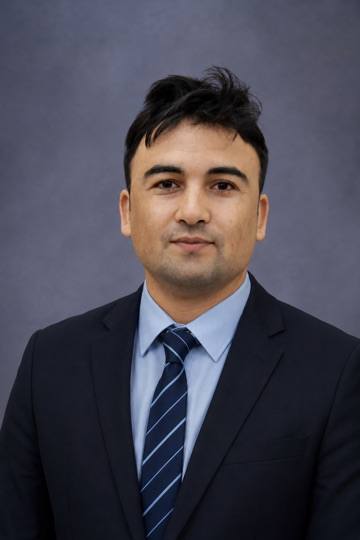
Hassan Ukasha

Program oversight

Hassan Ukasha

Managing Partner
Oversees the firm’s operations and is accountable for this program: curriculum standards, faculty selection, conflict screening and the quality of every engagement.
  • Cornell University

    B.S.
  • Cornell University

    M.P.H.
From
Herat
Languages
Pashto, Dari, English, Urdu and Hindi; working Arabic
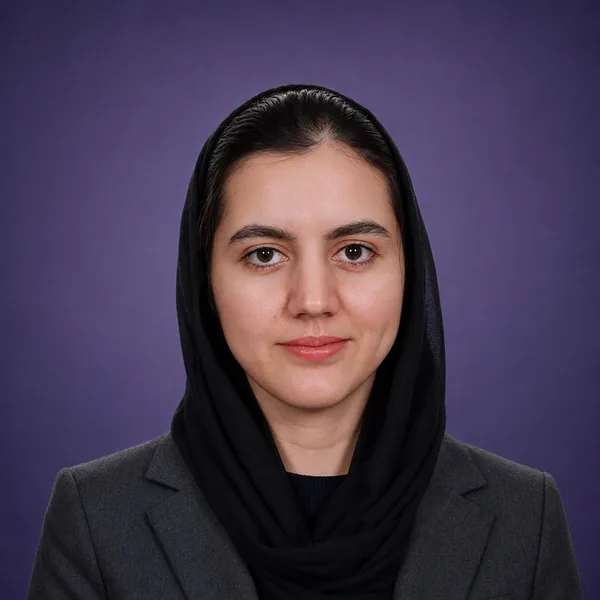
Zeba Haqbani

Zeba Haqbani

Senior Partner
Builds the firm’s institutional systems and AI platforms, including the secure learning and records platform behind every legal engagement. Lived in Kabul.
  • University of British Columbia

    B.Sc.
Wasil Peroz

Wasil Peroz

Principal
Afghan law and institutions: courts, civil registration, customary dispute resolution and family law.
  • Milli University

    B.A.
  • Otto-von-Guericke University Magdeburg

    M.Sc.
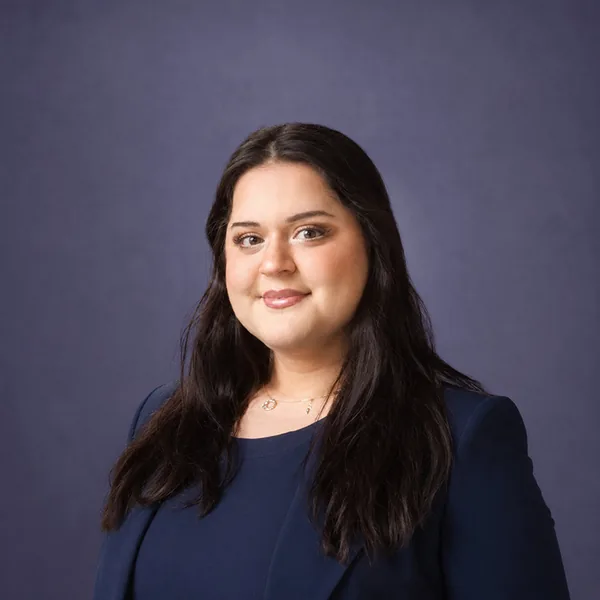
Maryam Safi

Maryam Safi

Principal
Engagement delivery for courts and law firms: scoping, facilitation and quality review.
  • Cornell University

    B.A.
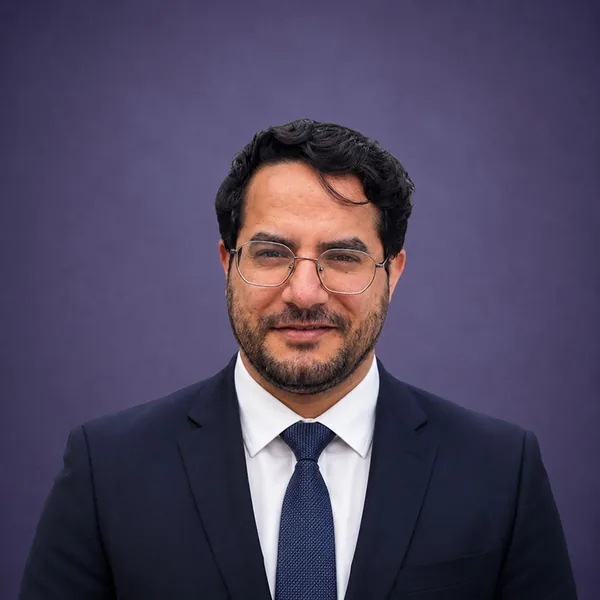
Hussain Ahmad

Hussain Ahmad

Principal
AI and data engineering for legal work: machine-translation risk, evaluation design and reporting.
  • Cornell University

    M.Eng.
  • University of Chicago

    Ph.D.

Responsibilities on this program

Faculty
Title
Responsibility on this program
Faculty
Hassan Ukasha
Title
Managing Partner
Responsibility on this program
Program oversight: curriculum standards, faculty selection, conflict screening and engagement quality.
Faculty
Zeba Haqbani
Title
Senior Partner
Responsibility on this program
Learning platform, on-demand modules and completion records.
Faculty
Wasil Peroz
Title
Principal
Responsibility on this program
Afghan law and institutions content: courts, civil registration, customary dispute resolution and family law.
Faculty
Maryam Safi
Title
Principal
Responsibility on this program
Program delivery: cohort design, facilitation and courtroom scenarios.
Faculty
Hussain Ahmad
Title
Principal
Responsibility on this program
Assessment design and the AI translation module: knowledge checks, evaluation, reporting and machine-translation risk.
Faculty
Diana Ayubi, Psy.D.
Title
Engagement Manager
Responsibility on this program
Trauma-informed practice module and the facilitator wellbeing protocol.

Languages

Pashto, Dari and 22 more Afghan languages

Ariana Nexus works in all 24 Afghan languages and translates and interprets from any of them into English and 12 further languages. Participants learn to recognize each language and its main varieties, so courts book the right interpreter the first time.

Iranian 13

  • Pashto
  • Dari
  • Hazaragi (a variety of Dari)
  • Aimaq
  • Balochi
  • Ormuri
  • Parachi
  • Wakhi
  • Shughni
  • Sanglechi
  • Ishkashimi
  • Munji
  • Yidgha

Wakhi, Shughni, Sanglechi, Ishkashimi, Munji and Yidgha form the Pamir subgroup.

Turkic 3

  • Uzbeki
  • Turkmeni
  • Kyrgyz

Indo-Aryan 3

  • Pashayi
  • Gawarbati
  • Tirahi

Nuristani 4

  • Nuristani (Ashkun group)
  • Kati
  • Prasun
  • Waigali

Dravidian 1

  • Brahui

Wakhi, Shughni, Sanglechi, Ishkashimi, Munji and Yidgha form the Pamir subgroup.

Translation and delivery languages

From Pashto, Dari and the 22 other Afghan languages into English, the working language of our Washington, D.C. practice, and into French, German, Spanish, Italian, Hebrew, Arabic, Hindi, Urdu, Portuguese, Chinese, Russian and Turkish. The training itself is delivered in English and, for teams outside the United States, in any of these twelve languages by arrangement.

  • French
    Français
    Formation culturelle afghane pour avocats, juges et personnel judiciaire
  • German
    Deutsch
    Interkulturelle Schulung zu Afghanistan für Anwälte, Richter und Justizpersonal
  • Spanish
    Español
    Formación cultural afgana para abogados, jueces y personal judicial
  • Italian
    Italiano
    Formazione culturale afghana per avvocati, giudici e personale giudiziario
  • Hebrew
    עברית
    הכשרה תרבותית אפגנית לעורכי דין, שופטים וצוותי בתי משפט
  • Arabic
    العربية
    تدريب ثقافي أفغاني للمحامين والقضاة وموظفي المحاكم
  • Hindi
    हिन्दी
    वकीलों, न्यायाधीशों और न्यायालय कर्मचारियों के लिए अफ़ग़ान सांस्कृतिक प्रशिक्षण
  • Urdu
    اردو
    وکلاء، ججوں اور عدالتی عملے کے لیے افغان ثقافتی تربیت
  • Portuguese
    Português
    Formação cultural afegã para advogados, juízes e servidores judiciais
  • Chinese
    中文
    面向律师、法官和法院工作人员的阿富汗文化培训
  • Russian
    Русский
    Обучение афганской культуре для адвокатов, судей и сотрудников судов
  • Turkish
    Türkçe
    Avukatlar, hâkimler ve adliye personeli için Afgan kültürü eğitimi

Glossary

Glossary: Afghan legal and cultural terms in Pashto and Dari

Term
In Pashto or Dari
What it means in a legal matter
Term
Tazkira
In Pashto or Dari
تذکرهDari
What it means in a legal matter
The Afghan national identity document. Older paper tazkiras often recorded an estimated age rather than a date of birth.
Term
e-Tazkira
In Pashto or Dari
تذکره الکترونیکیDari
What it means in a legal matter
The electronic national identity card, issued since 2018 alongside the paper tazkira.
Term
Solar Hijri calendar
In Pashto or Dari
هجری شمسیDari
What it means in a legal matter
Afghanistan’s civil calendar. The year begins at Nowruz, around 21 March; 1405 began on 21 March 2026.
Term
Lunar Hijri calendar
In Pashto or Dari
هجری قمریDari
What it means in a legal matter
The Islamic lunar calendar, about eleven days shorter than the solar year, used on religious documents.
Term
Nikah khat
In Pashto or Dari
نکاح خطDari
What it means in a legal matter
The Afghan marriage certificate, also called nikah nama. Many marriages were never registered.
Term
Shabnama
In Pashto or Dari
شبنامهDari
What it means in a legal matter
A night letter: a threat left at a home or mosque, often filed as evidence in asylum cases.
Term
Jirga
In Pashto or Dari
جرګهPashto
What it means in a legal matter
A Pashto word for an assembly of elders that settles disputes under customary law; shura is the Dari counterpart.
Term
Pashtunwali
In Pashto or Dari
پښتونوليPashto
What it means in a legal matter
The Pashtun customary code, including hospitality, sanctuary, honor and retaliation.
Term
Namus
In Pashto or Dari
ناموسDari
What it means in a legal matter
Family honor tied to the protection of women; it shapes who speaks, and when, in testimony.
Term
Mahr
In Pashto or Dari
مهرDari
What it means in a legal matter
The dower a husband owes his wife under the marriage contract; it appears in family court disputes.
Term
Baad
In Pashto or Dari
بدPashto
What it means in a legal matter
Giving a girl in marriage to settle a dispute; a harmful customary practice relevant to asylum and family cases.
Term
Qawm
In Pashto or Dari
قومDari
What it means in a legal matter
A solidarity group of tribe, clan, village or profession; a core marker of identity and obligation.

Questions

Questions about Afghan cultural training for legal professionals

What is Afghan cultural training for attorneys and judges?

It is professional training that teaches legal teams the context an accurate interpretation does not carry: how Afghan names, calendars and kinship terms work, how trauma, honor and gender shape testimony, what Afghan documents can prove, and how to book the right Pashto or Dari interpreter. The aim is findings, filings and records that rest on accurate premises.

What should lawyers know before working with Afghan clients?

Five things carry most of the risk. Record names in the original script with the father’s name. Convert Solar Hijri dates before comparing documents. Confirm whether the client speaks Pashto, Dari or another Afghan language, and which variety, before booking an interpreter. Ask about relationships by descent rather than by kinship term. And allow for trauma, family honor and gender in how and when an account is disclosed. The training covers each point in depth.

Who should attend: attorneys, judges or court staff?

All three, usually in separate sessions. Attorneys and legal teams take the CLE seminar or the full-day intensive. Judges and adjudicators take a closed 90-minute bench briefing. Court staff, including clerks, interpreter coordinators, court interpreters, security, probation and victim-witness staff, take role-specific sessions. Institutional programs combine all three.

Does the training qualify for CLE credit?

The program is CLE-ready: written learning objectives, a timed agenda, substantive materials, qualified faculty and attendance records. We prepare these for accreditation in the jurisdictions you name. Content on cultural differences when interacting with litigants fits New York’s Diversity, Inclusion and Elimination of Bias category and can support California’s Elimination of Bias requirement. Each jurisdiction decides credit.

Is the training appropriate for judges?

Yes. Judicial sessions are neutral education. They explain cultural and linguistic context, never a party’s position, and never discuss pending cases. The same content is offered to prosecutors and defense counsel, and faculty who brief a bench do not appear before that bench as expert witnesses.

Why do Afghan clients have different dates of birth on different documents?

Afghanistan’s civil calendar is Solar Hijri, so dates must be converted before they are compared. Older paper tazkiras often recorded an estimated age at issuance rather than a date of birth, and many U.S. records assigned January 1 when a birthday was unknown. A mismatch is often a conversion or recording artifact, not a contradiction.

What is the difference between Dari and Farsi, and why does it matter in court?

Dari is the variety of Persian spoken in Afghanistan. It shares its grammar with Iranian Farsi but differs in vocabulary, pronunciation, and legal and administrative terms. An interpreter who works only in Iranian Farsi can miss meaning a Dari speaker relies on. Hazaragi, a variety of Dari, and the regional dialects of Pashto raise the same question.

How do Afghan names work?

Many Afghans use one given name. The tazkira records the father’s name, and often the grandfather’s, rather than a family name, and people adopt surnames or tribal names inconsistently after arriving. Pashto and Dari names have no single English spelling, so Mohammad, Muhammad and Mohammed can be the same person.

What documents do Afghan clients usually have, and what can they not obtain?

Common documents include the paper tazkira or e-tazkira, a passport, a nikah khat (marriage certificate), school and university records, employment letters and threat letters (shabnama). Many were lost in flight, and requesting records today can put relatives at risk. We never route requests through channels controlled by the de facto authorities in Afghanistan, and the training explains how to document an absence.

Do you train court interpreters in Pashto and Dari?

Yes. No NCSC oral certification exam exists for Pashto or Dari, so most Afghan-language court interpreters are registered or qualified rather than certified. Ariana Nexus trains its own interpreters and other interpreters in Afghan languages, and court interpreters can join the court staff sessions.

Can you train judges and legal teams outside the United States?

Yes. We deliver live online worldwide and in person by arrangement, adapted to the forum: the First-tier Tribunal (Immigration and Asylum Chamber) in the United Kingdom, Canada’s Immigration and Refugee Board, Germany’s BAMF and administrative courts, EU asylum authorities working with EUAA country guidance, and Australia’s Administrative Review Tribunal. Sessions are available in English and, by arrangement, in French, German, Spanish, Italian, Hebrew, Arabic, Hindi, Urdu, Portuguese, Chinese, Russian and Turkish.

How long is the training, and can it be delivered online?

Formats run from a 90-minute bench briefing to a 3-hour CLE seminar, a full-day intensive and multi-session institutional programs. Every format can be delivered in person or live online, and on-demand modules support onboarding.

How is the training priced?

Each program is scoped and priced by proposal after a scoping call, based on audience, format, tailoring, languages of delivery and credit requirements. We do not sell per-seat webinar access.

Can you help with a specific case?

Case work is scoped separately from training: Pashto and Dari court and deposition interpreters, certified translation of Afghan documents, and document analysis for counsel. Training sessions never discuss pending cases.

How do you handle trauma and sensitive content in sessions?

Sessions are trauma-informed. We explain how trauma, PTSD and moral injury shape testimony, signal difficult content in advance, never use a real client’s story without consent, and follow a facilitator wellbeing protocol set by Diana Ayubi, Psy.D. Participants who meet trauma every day also get practical guidance on vicarious trauma.

Evidence

Sources

  1. 1.8 U.S.C. § 1158(b)(1)(B)(iii), credibility determination (Cornell Legal Information Institute). www.law.cornell.edu/uscode/text/8/1158
  2. 2.DHS and USCIS, Affirmative Asylum Referrals Without Interview, interim final rule, 91 FR 47101, 28 July 2026. www.federalregister.gov/documents/2026/07/28/2026-15190/affirmative-asylum-referrals-without-interview
  3. 3.TRAC, Immigration Court Operations: February 2026 Update, 24 March 2026. tracreports.org/whatsnew/email.260324.html
  4. 4.EUAA, Updated Country Guidance on Afghanistan confirms continuing international protection needs, 30 June 2026. euaa.europa.eu/news-events/updated-euaa-country-guidance-afghanistan-confirms-continuing-international-protection-needs
  5. 5.Herlihy, Scragg and Turner, Discrepancies in autobiographical memories, BMJ 2002;324:324. pmc.ncbi.nlm.nih.gov/articles/PMC65293/
  6. 6.New York CLE Board, Diversity, Inclusion and Elimination of Bias category, 22 NYCRR 1500.2(g). www.nycourts.gov/continuing-legal-education-cle/continuing-legal-education-news
  7. 7.State Bar of California, MCLE requirements. www.calbar.ca.gov/legal-professionals/maintaining-compliance/mcle/mcle-requirements
  8. 8.NCSC oral proficiency exam languages, as listed by the Unified Judicial System of Pennsylvania. www.pacourts.us/page/1413
  9. 9.Judicial College, Equal Treatment Bench Book. www.judiciary.uk/about-the-judiciary/diversity/equal-treatment-bench-book
  10. 10.Rest of World, AI translation errors and Afghan asylum claims, 2023. restofworld.org/2023/ai-translation-errors-afghan-refugees-asylum/

Request a program proposal

Tell us your audience, case types and preferred format. Case material is never required; if you want examples drawn from your own docket, we sign your NDA first.

Request a proposal

Content reviewed 23 September 2026. Next scheduled review: December 2026.