
Court Language Access Program Consulting: Qualifying Pashto and Dari Interpreters Where No Exam Exists
No court interpreting exam exists in Pashto or Dari. The National Center for State Courts does not offer an oral exam in either language, and federal court certification is available only in Spanish. Ariana Nexus designs court-owned qualification pathways that test Pashto and Dari interpreters in the three modes of court interpreting, then trains, monitors and documents them.
For state court administrative offices, trial courts, federal court interpreter offices, administrative tribunals and international courts working with Pashto, Dari and 22 more Afghan languages.
The data behind the Pashto and Dari court interpreter gap
Spanish is 96% of federal court interpreting. Pashto and Dari are in the other 4%.
16 languages have a full NCSC oral court interpreting exam. Pashto and Dari do not.
- Amharic
- Arabic
- Cantonese
- Filipino (Tagalog)
- French
- Haitian Creole
- Hmong
- Khmer
- Korean
- Mandarin
- Polish
- Portuguese
- Russian
- Somali
- Spanish
- Vietnamese
- Pashto: no exam
- Dari: no exam
Registered interpreters, the route for Pashto and Dari, are 8% of California's credentialed pool.
Training nearly triples the pass rate on California's interpreting exam.
About a third of California's credentialed court interpreters are over 65.
Where Pashto and Dari are tested abroad, it is at the entry level.
Where no exam exists, the court is relying on proficiency evidence and a shrinking, aging pool. The pathway adds performance evidence the court owns.
Why Pashto and Dari interpreters are hard to qualify for court
Court interpreter credentials were built for high-volume languages. Where an oral exam exists, a certified interpreter has been tested in simultaneous interpretation, consecutive interpretation and sight translation. For Pashto and Dari, most courts rely on a registered, qualified or language-skilled category instead, and those categories measure something narrower.
Proficiency is not performance
Registered pathways usually pair a written English exam with oral proficiency interviews in English and the target language. An interview shows how well someone speaks Pashto or Dari. It does not show whether they can interpret a cross-examination simultaneously or sight-translate a charging document.Farsi is not Dari
Courts that hold Farsi certification sometimes assign Farsi interpreters to Dari speakers. The languages are related, but legal vocabulary, idiom and pronunciation differ, and an Iranian Persian rendering can mislead a Dari-speaking defendant or witness.Varieties decide testimony
Kandahari and Nangarhari Pashto, and Kabuli and Herati Dari, including the Hazaragi dialect, differ in kinship terms, dates, place names and legal words. A credential that does not record the interpreter's variety cannot tell a judge whether the fit is right.Small pools, real conflicts
In a close Afghan diaspora community, the few available interpreters may know the parties. Without screening, a court can seat an interpreter with a relationship to the case in a protective order, family or criminal matter.Afghan legal concepts reach U.S. courts
Nikah, mahr, talaq, khula, jirga decisions and tazkira records appear in family, probate and criminal cases. Interpreters must render them precisely, without explaining or advocating, and judges need to know that they can.Testimony about war and displacement
Afghan witnesses describe the Afghan war, displacement and moral injury, sometimes called moral trauma. Interpreters must carry distress, hesitation and register into English without softening them. A proficiency interview never tests that.
What each court interpreter credential actually tests
The gap is not a missing certificate. It is missing evidence of interpreting skill. Requirements vary by state; this is the typical pattern, and the diagnostic maps your court's actual rules.
Certified candidates show proficiency inside the oral exam itself. In Massachusetts, Pashto and Dari candidates take an abbreviated general interpreting assessment through a vendor instead of a court oral exam.
How we qualify Pashto and Dari court interpreters where no exam exists
We build the pathway inside the categories your rules already recognize, such as registered, qualified, provisionally qualified, language-skilled or conditionally approved, so no new statute or rule is needed to start. The court confers the credential. We produce the evidence behind it.
- Step 1
Screen
Eligibility, identity and conflict checks, and the background check your court requires. Candidates declare the Pashto or Dari variety they will be rated in. - Step 2
Written exam
Your court's written exam on English, court terminology and professional conduct, including the NCSC written exam where your state uses it. - Step 3
Proficiency
Oral proficiency interviews in English and in Pashto or Dari, referenced to the ACTFL and ILR scales, with a minimum set by the court. - Step 4
Performance
A skills assessment in simultaneous interpretation, consecutive interpretation and sight translation, built on the scoring-unit method of court oral exams and rated by two independent raters in the candidate's variety. - Step 5
Orientation
Ethics and protocol training, courtroom observation and mentored first assignments, with trauma-informed practice for testimony about violence and displacement. - Step 6
Designation and renewal
The court decides and confers its designation. We document the record, schedule continuing education and re-assess on the cycle the court sets.
What our court language access program consulting includes
Language access needs assessment
We measure Pashto, Dari and other Afghan-language demand from interpreter request logs, case management data and census language data, and forecast it by court and case type.Qualification pathway design
A written pathway for languages without an exam, mapped to your rules, with eligibility, cut scores, appeal and renewal provisions ready for approval.Pashto and Dari skills assessment
Secure simulated court scripts in the three modes, forms for each variety, trained raters, calibration and a reliability study before any cut score is used.Legal glossaries and terminology
English to Pashto and English to Dari court glossaries for criminal, family, juvenile, protective order and civil matters, with the Afghan legal and customary terms courts meet.Interpreter training
Orientation, ethics and skills training for Pashto and Dari interpreters, including preparation for candidates who narrowly miss the standard.Bench tools for judges and staff
A voir dire script for qualifying a Pashto or Dari interpreter on the record, a bench card, and scheduling and remote interpreting protocols for coordinators.Quality monitoring
In-court and recording reviews, a complaint and skills-review procedure, and an annual program report with the measures your council needs.AI and remote interpreting governance
Rules for video and telephone interpreting in Pashto and Dari, and a tested position on machine translation and AI interpretation for your court.
Independence: your court owns the standard
A firm that supplies interpreters should not also decide who passes. We separate the two, in writing.
The court owns every instrument, cut score and pass decision.
No rater assesses a candidate they have worked with, trained or have a financial interest in.
Ariana Nexus interpreters are assessed only by a panel your court approves.
Test scripts sit in a secure item bank, rotate between cycles and are never published.
Every decision is documented for audit, appeal and reciprocity with other courts.
Why courts choose Ariana Nexus to qualify Pashto and Dari interpreters
No U.S. court interpreting exam exists for any Afghan language. We built our own standard to train and assess our interpreters, and we train other interpreters in Afghan languages. Courts receive that standard as a documented instrument they own.
Why Ariana Nexus
- Native Pashto and Dari speakers with graduate training in law, public health and data science design every instrument.
- We rate by variety and keep Dari separate from Farsi.
- We build inside the credential categories your rules already recognize.
How we deliver
- Every part is produced in-house by our own people: one engagement, one point of accountability.
- Fixed phases with written deliverables: diagnostic, build and pilot, run.
- A secure platform for remote assessment, rater workflow and credential records.
How we are different
- We test interpreting performance, not proficiency alone.
- Independence from our own interpreting work is written into the contract.
- Relay protocols extend the pathway to 22 more Afghan languages.

The team behind this service
Ariana Nexus is a consulting and professional services firm operated and led by alumni and scholars of Cornell University, the University of Chicago, the University of British Columbia, Otto von Guericke University Magdeburg and the American University of Afghanistan. We are not a network of bilinguals. The people who design your pathway work natively in Pashto and Dari and are trained in law, public health, data science and assessment.
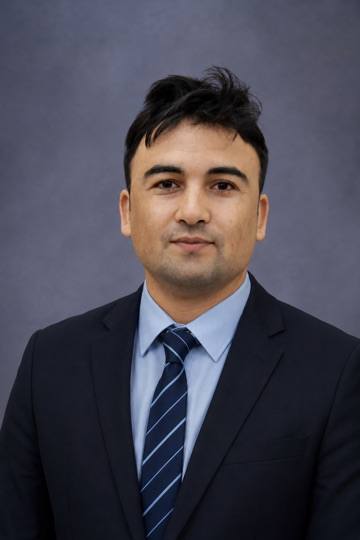
Hassan Ukasha
Managing Partner- B.S. Cornell University
- M.P.H. Cornell University
Leads the firm and oversees this program end to end: engagement governance, the independence safeguards, quality assurance and final sign-off on every instrument, report and credential record a court receives. Raised in Herat.Languages: Pashto, Dari, English, Urdu, Hindi; Arabic (working)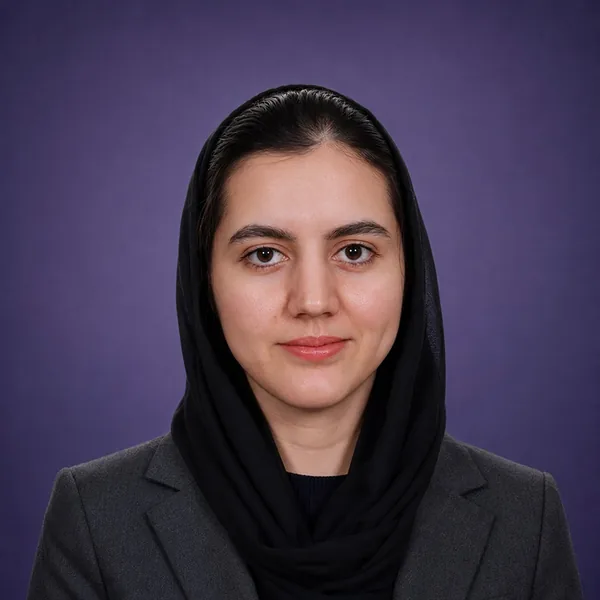
Zeba Haqbani
Senior Partner- B.A. The American University of Afghanistan
- B.A. University of British Columbia
Builds the program's systems: the secure assessment platform, item bank, rater workflow and the credential records courts audit.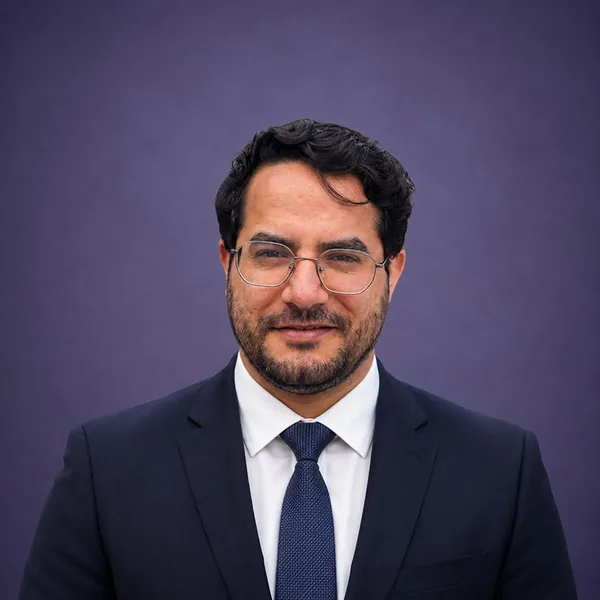
Wasil Peroz
Principal- B.A. Milli University
- M.Sc. Otto von Guericke University Magdeburg
Leads legal content: court procedure, Afghan legal and customary terms, the Pashto and Dari glossaries and the voir dire script.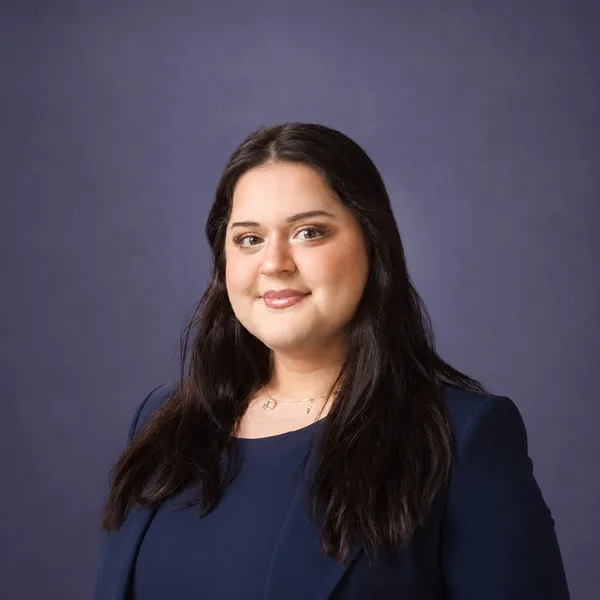
Maryam Safi
Principal- B.A. Cornell University
Leads court engagement and training: orientation, ethics and skills workshops for interpreters, and bench sessions for judges and staff.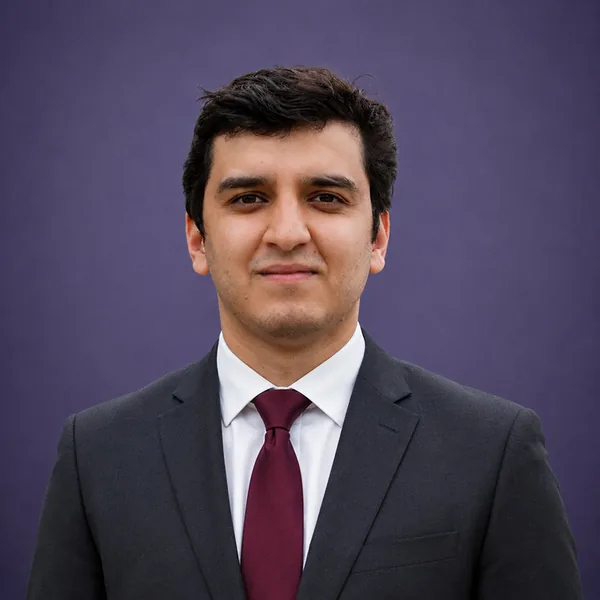
Hussain Ahmad
Analyst- MEng Cornell University
- PhD University of Chicago
Leads measurement: demand analytics, rater agreement statistics, cut-score studies and testing of machine interpretation tools.
Each program has a named partner accountable for it, a legal lead, a measurement lead and a systems lead. Raters and trainers are Ariana Nexus people, matched to the variety being assessed.
Pashto, Dari and 22 more Afghan languages
We design qualification protocols for all 24 Afghan languages. Pashto and Dari receive full performance assessments. For languages with a few thousand speakers, such as Ormuri, Parachi or the Pamir languages, we build relay protocols through Pashto or Dari and qualify both interpreters in the chain.
Pashto
Dari
Iranian, 12
- Pashto
- Dari
- Aimaq
- Balochi
- Ormuri
- Parachi
- Wakhi
- Shughni
- Sanglechi
- Ishkashimi
- Munji
- Yidgha
Turkic, 3
- Uzbeki
- Turkmeni
- Kyrgyz
Indo-Aryan, 3
- Pashayi
- Gawarbati
- Tirahi
Nuristani, 5
- Nuristani (Ashkun group)
- Kati
- Prasun
- Waigali
- Tregami
Dravidian, 1
- Brahui
- English
- French
- German
- Spanish
- Italian
- Portuguese
- Turkish
- Russian
- Arabic
- Urdu
- Hindi
- Hebrew
- Chinese
Law and standards we build to
AI, remote interpreting and Pashto and Dari proceedings
Courts are drawing lines on machine interpretation. Ohio's court rules, effective November 13, 2025, bar AI interpretation in any substantive legal proceeding and allow AI translation only for non-substantive information, with disclosure. We test machine translation and speech tools in Pashto and Dari against the same scoring units we use for people, and write the policy your court can defend: where tools may help, where a qualified human must interpret, and how video and telephone interpreting is set up.
Court interpreter qualification outside the United States
The gap is not only American. Australia's NAATI tests Pashto and Dari only at the entry Certified Provisional Interpreter level; its higher Certified Interpreter test is not offered in either language. European courts keep registers of sworn or court interpreters under Directive 2010/64/EU, with admission rules for Pashto and Dari that vary by country. International justice work on Afghanistan, including the International Criminal Court's Situation in Afghanistan, needs Pashto and Dari interpreters qualified to a legal standard.
- United Kingdom
- Canada
- Australia
- Germany
- European Union
- International courts and tribunals
How an engagement runs
- Phase 1
Diagnostic
Rules mapping, roster audit, demand data and interviews with coordinators and judges.You receive: A gap report and a recommended pathway. - Phase 2
Build and pilot
Instruments, rater training, glossaries, orientation curriculum and bench tools, piloted with real candidates.You receive: A reliability study and a cut-score recommendation for the court's decision. - Phase 3
Run
Assessment cycles, training cohorts, monitoring and complaint reviews.You receive: An annual program report, run by your staff with our support or managed by us.
Each phase has a fixed scope, deliverables and fee agreed in writing.
Who we work with
- State court administrative offices and language access program managers
- Trial courts and court interpreter coordinators
- Federal district and bankruptcy court interpreter offices
- Administrative hearing offices and tribunals
- Public defender, prosecutor and legal aid offices
- Ministries of justice and international courts
Questions about Pashto and Dari court interpreter qualification
Is there a court interpreter certification exam for Pashto or Dari?
No. The National Center for State Courts offers full oral court interpreting exams in a limited set of languages, and neither Pashto nor Dari is among them; the Massachusetts Trial Court lists 16 such languages in 2026. Federal court certification is offered only in Spanish. Courts therefore credential Pashto and Dari interpreters through registered, qualified or language-skilled categories instead.
How do courts qualify a Pashto or Dari interpreter when no exam exists?
Most states combine a written exam on English, court terms and ethics with oral proficiency interviews in English and the target language, an orientation and courtroom observation. The judge then confirms qualifications on the record. We add a performance-based skills assessment in simultaneous, consecutive and sight translation, so the credential reflects interpreting ability, not proficiency alone.
What is the difference between a certified, registered and language-skilled court interpreter?
A certified interpreter has passed a full oral exam in the three modes of court interpreting. A registered or qualified interpreter works in a language without that exam and has usually passed a written exam and proficiency interviews. A language-skilled interpreter has been found qualified by a judge on the record for a particular proceeding. Federal courts add a professionally qualified category.
Can a Farsi-certified interpreter interpret for a Dari speaker?
Not automatically. Dari and Iranian Persian (Farsi) are closely related, but legal vocabulary, idiom and pronunciation differ, and a Farsi rendering can mislead a Dari-speaking defendant or witness. California lists Farsi as a certified language and Dari as a registered one. A court should confirm the interpreter's Dari variety and check the speaker's comprehension on the record.
Can courts use AI or machine interpretation for Pashto or Dari?
Not for substantive proceedings in states that have ruled on it. Ohio's court rules, effective November 13, 2025, bar AI interpretation in any substantive legal proceeding and allow AI translation only for non-substantive information, with disclosure. We test machine translation and speech tools in Pashto and Dari and write the policy that sets where a qualified human must interpret.
Did Executive Order 14224 change court interpreter requirements?
Executive Order 14224, signed March 1, 2025, revoked Executive Order 13166, and the Department of Justice rescinded its 2002 limited English proficiency guidance on March 21, 2025. It did not change statutes or court rules: the Court Interpreters Act, Federal Rule of Evidence 604, due process protections, Title VI and state interpreter laws still apply. This is general information, not legal advice.
Who owns the assessment and the credential?
The court. We design and administer the pathway under the court's authority. The court sets the cut score, makes every pass decision, confers its own designation and keeps the records. The instruments, rater guides and glossaries we build are delivered to the court.
How do you avoid a conflict of interest if Ariana Nexus also provides interpreters?
By separating assessment from supply in writing. No rater assesses a candidate they have worked with, trained or have a financial interest in, and Ariana Nexus interpreters are assessed only by a panel the court approves. The court keeps final authority over every result.
Which Pashto and Dari varieties do you assess?
We build assessment forms and rater panels by variety: southern (Kandahari) and eastern (Nangarhari) Pashto, and Kabuli and Herati Dari, with the Hazaragi dialect rated as Dari. The variety is recorded on each credential record so a coordinator can match the interpreter to the witness.
Do you work with courts outside the United States?
Yes. We build qualification pathways for courts, tribunals and ministries of justice in the United Kingdom, Canada, Australia, Germany and across the European Union, and for international justice work. Assessments can pair Pashto or Dari with English or with the court's language, including German, French, Spanish, Italian, Portuguese, Turkish, Russian, Arabic, Urdu, Hindi, Hebrew and Chinese.
How long does it take to set up a Pashto and Dari qualification pathway?
It depends on your rules and data. A diagnostic takes weeks. Building and piloting instruments takes months, because each form is tested with real candidates and a reliability study before any cut score is used. Each phase has a fixed scope, deliverables and fee agreed in writing.
Do you train interpreters who are preparing for the credential?
Yes. We run orientation, ethics and skills training for Pashto and Dari interpreters, including candidates who narrowly miss the standard. Training changes results: in California in 2024, 23 percent of near-passer training participants passed the Bilingual Interpreting Exam, against 8 percent of all candidates.
What about the other 22 Afghan languages?
For languages with enough speakers we adapt the same pathway. For languages with a few thousand speakers, such as Ormuri, Parachi or the Pamir languages, we design relay protocols through Pashto or Dari and qualify both interpreters in the chain, so the court knows who is interpreting at each step.
Sources
- 1
- 2
- 3
- 4
- 5
- 6
- 7
- 8
Page reviewed September 2026. Sources are public and linked.
Related services
Court and deposition interpreters in Pashto, Dari and 22 more Afghan languages
Pashto and Dari medical interpreter assessment and training for bilingual staff and contractors
Section 1557 language access compliance consulting for health systems serving Afghan patients
AI interpreting and translation product quality assurance in Pashto and Dari
Mental health and trauma-informed interpreting for Afghan patients
Cultural training for attorneys, judges and court staff working with Afghan clients
Give your court a Pashto and Dari standard it can defend
Tell us your court, the Afghan languages on your docket and the credential categories your rules recognize. A partner will scope the diagnostic with you.
Request a program diagnosticAriana Nexus
1717 Pennsylvania Avenue NW, 10th Floor
Washington, D.C. 20006