Expert Consultation and Declarations on Afghan Marriage, Mahr and Custody Matters

Independent expert consultations, declarations and reports on Afghan family law for courts, agencies and counsel outside Afghanistan — on whether an Afghan marriage (nikah) is valid, what a mahr obligation means and is worth, who holds custody and guardianship under Afghan law, and whether an Afghan divorce took effect.

Every opinion is read from the Pashto or Dari original and cited to the Afghan Civil Code, the Shia Personal Status Law, Hanafi jurisprudence and the de facto authorities’ decrees through Decree No. 18 of May 2026 — for family courts, immigration cases and civil registries wherever the Afghan diaspora lives.

One family, two legal systems

What Afghan law calls it — and the question a court abroad asks about it.

  1. نکاح
    nikah
    Was the marriage valid where it was celebrated — and what proves it?
  2. مهر
    mahr
    Is the clause enforceable here as a contract, and for how much?
  3. حضانت
    hizanat
    What do the child’s best interests require — and is there a risk of abduction?
  4. طلاق
    talaq
    Is the foreign divorce recognized, and was a later marriage free to happen?
  5. نکاح‌خط
    nikah khat
    What does the record prove, and can the court rely on it?

What does an expert on Afghan marriage, mahr and custody do?

An expert on Afghan family law explains to a court or agency abroad what Afghan law says about a particular family — whether the nikah created a valid marriage, what the mahr clause obliges, who holds custody and guardianship of the children, and whether a divorce took effect — so the court can apply its own law to those facts. The expert states the law and its sources. The court decides the case.

Questions answered
Marriage validity, mahr, custody and guardianship, divorce recognition, records and dates
Forms of evidence
Privileged consultation, sworn declaration or affidavit, Part 25 or Part 35 report, foreign-law memorandum, testimony, rebuttal review
Forums
U.S. family, federal and immigration courts and USCIS; England and Wales; Canada; Germany; the Netherlands and Nordic countries; Australia and New Zealand
Languages
Pashto, Dari and 22 more Afghan languages, with certified translations into 12 more
Instructed by
Counsel, courts, guardians ad litem, legal aid organizations and public agencies
Based in
Washington, D.C., instructed worldwide

Afghan marriage, mahr, custody and divorce questions we answer

Afghan law on the left; the question your court asks on the right. Each gold point is where our declaration connects them.

نکاح
nikah

Afghan marriage validity (nikah)

Whether an Afghan nikah created a valid marriage — and which record proves it — decides spousal petitions, divorce jurisdiction, property claims and the legitimacy of children.
Civil Code of Afghanistan (1977), Arts. 1, 61, 70–71; Hanafi jurisprudence; Shia Personal Status Law (2009)

Was the marriage valid where it was celebrated — and what proves it?

Afghan law treats the nikah contract as the marriage, and Article 61 of the Civil Code also requires it to be registered — which is what produces a nikah khat. How an unregistered or proxy nikah is treated, and how it is proved, is what the declaration sets out, article by article, against the record.
What the declaration establishes
  • Is a nikah concluded before a mullah but never registered with a court a valid marriage under Afghan law?
  • What is the difference between a nikah nama and a court-issued nikah khat, and what does each prove?
  • Was the nikah concluded through a proxy (wakil), and what does that mean for USCIS under INA § 101(a)(35)?
  • Was either spouse below the marriage age in Articles 70 and 71 of the Civil Code, and what followed?
  • When did the marriage begin — at the nikah, or at the wedding and rukhsati months later?
مهر
mahr

Mahr (mehr) claims and valuation

Mahr is the wife’s own entitlement under the marriage contract. A court abroad has to decide what the clause says, whether it is due, and what it is worth today.
Civil Code of Afghanistan (1977), chapter on mahr; Hanafi jurisprudence; the contract in its original language

Is the clause enforceable here as a contract, and for how much?

Mahr is owed to the wife, not to her family, and is usually split into a prompt and a deferred portion. The declaration identifies which portion is claimed, what triggers it, what it is denominated in, and which payments in the record are not mahr at all.
What the declaration establishes
  • Is the claimed sum prompt (mu’ajjal) or deferred (mu’wajjal) mahr, and what triggers the deferred portion?
  • Is it mahr at all — or walwar, shirbaha or toyana paid to the bride’s family, or jahez brought by the bride?
  • What happens to mahr on divorce before consummation, on khula, or where no amount was named (mahr al-mithl)?
  • How should a mahr fixed in gold, Afghanis or U.S. dollars be valued, and at which date?
  • Did both spouses understand the clause they signed, in the language it was written in?
حضانت
hizanat

Custody (hizanat) and guardianship under Afghan law

Afghan law separates day-to-day custody from legal guardianship. Courts abroad need both explained — for custody, relocation, travel-consent and abduction-prevention hearings.
Civil Code of Afghanistan (1977), custody and guardianship; Shia Personal Status Law (2009); U.S. Department of State country information

What do the child’s best interests require — and is there a risk of abduction?

Under the Civil Code the mother has custody (hizanat) of a boy until seven and a girl until nine, and the father is the legal guardian (wilayat) throughout. Courts abroad decide by their own best-interests standard; the declaration explains the Afghan rules they are asked to weigh, and whether an order made abroad would be honoured in Afghanistan today.
What the declaration establishes
  • Who holds hizanat and wilayat for this child under the Civil Code, and at what age does the mother’s custody end?
  • Does the Shia Personal Status Law govern this family instead, and what changes if it does?
  • Does a mother lose custody on remarriage, and when can a court depart from the default rule?
  • Would a U.S., UK or Canadian custody order be recognized or enforced in Afghanistan today?
  • Which abduction-risk factors apply — no Hague Convention relationship, no U.S. embassy since 31 August 2021, limits on women travelling without a mahram?
طلاق
talaq

Afghan divorce (talaq, khula, tafriq) and its recognition abroad

Whether a marriage has ended decides whether a new one is valid. Afghan divorce takes several forms, and since 2021 some divorces granted by the former courts have been contested.
Civil Code of Afghanistan (1977); Decree No. 18, Code on Judicial Separation of Spouses (2026); UNAMA and UN Women statements (May 2026)

Is the foreign divorce recognized, and was a later marriage free to happen?

Afghan law recognizes talaq by the husband, khula at the wife’s request and judicial separation (tafriq). Whether a particular divorce took effect depends on its form, its record and its date — before or after August 2021, and before or after Decree No. 18 of 14 May 2026.
What the declaration establishes
  • Was a talaq pronounced, and did it take effect under Hanafi rules — including a talaq sent by text or voice message from abroad?
  • Did the marriage end by khula or by a court’s tafriq, and what record exists?
  • Is a divorce granted by a court of the former Islamic Republic still treated as effective by the de facto authorities?
  • What does Decree No. 18, gazetted on 14 May 2026, change for judicial separation?
  • Does the waiting period (iddah) affect the date a later marriage could be concluded?
نکاح‌خط
nikah khat

Afghan marriage and divorce records, dates and translations

Most disputes start with a record read the wrong way: a Solar Hijri date converted incorrectly, a mahr clause mistranslated, a nikah nama taken for a court record.
Civil Code of Afghanistan (1977), Art. 61; court registration practice; the record in its original language

What does the record prove, and can the court rely on it?

The declaration states what each document is, which authority issued it and when, what it can prove and what it cannot. Whether a document is genuine is examined separately by our civil-documents expert service.
What the declaration establishes
  • What does each field of the nikah khat record, and which authority issued it?
  • Do the Solar Hijri and lunar Hijri dates convert to the Gregorian dates the petition states?
  • Was the record issued before or after August 2021, and by whom?
  • How can a record be legalized when Afghanistan is outside the Apostille Convention and U.S. consular services in Kabul are suspended?

What a declaration puts in front of the court

Who holds custody under the Afghan Civil Code

Default rules by the child’s age, from birth to majority at 18 solar years (Civil Code, Art. 39).
  • Mother’s custody (hizanat)
  • Father’s custody
  • Father as legal guardian (wilayat)

Custody passes to the father at 7 for boys and 9 for girls; guardianship never leaves him.

Source: Civil Code of Afghanistan (1977), as summarized by the Swedish Migration Agency (Lifos, 2018). The Shia Personal Status Law, a mother’s remarriage and a court’s findings can change the outcome.

The same mahr, valued at different dates

Value of a mahr fixed in gold in 2005, relative to its 2005 dollar value, at LBMA annual average gold prices. A mahr fixed in U.S. dollars stays at 1.00× in every year.
  • Mahr fixed in U.S. dollars — 1.00× in every year
  • Mahr fixed in gold — value relative to 2005

Which date and which denomination a court uses can change the sum more than sevenfold.

Source: LBMA annual averages, USD per troy ounce — 2005 $444; 2010 $1,225; 2015 $1,160; 2020 $1,770; 2025 $3,432. An Afghani sum moves with an exchange rate that swung sharply after August 2021.

Three facts that shape Afghan custody and divorce cases abroad

No
Hague Abduction Convention relationship between Afghanistan and the United States — and no bilateral agreement on parental abduction.
Source: U.S. Department of State
31 Aug 2021
U.S. Embassy Kabul suspended operations. There has been no U.S. consular channel for Afghan civil records since.
Source: U.S. Department of State
14 May 2026
Decree No. 18, the Code on Judicial Separation of Spouses, gazetted by the de facto Ministry of Justice.
Source: UNAMA

Who instructs us

  • Family law attorneys and solicitors

    Divorce, mahr claims, property division, custody, relocation and abduction prevention.
  • Immigration attorneys

    I-130 and I-730 spousal petitions, K-1 cases, requests for evidence on marriage validity, and proof that a prior marriage ended.
  • Courts, guardians ad litem and children’s counsel

    A neutral account of Afghan custody and guardianship rules.
  • Legal aid and refugee legal services

    Afghan evacuees and refugees whose marriages were never registered, or whose records were lost in war and displacement.
  • Civil registries and public agencies

    Recognition of Afghan marriages and divorces for registration and benefits.

Expert declarations, reports and testimony: the forms of evidence

  • Privileged consultation

    An oral briefing and a short written memorandum on the Afghan-law questions in the matter, directed by counsel.
    Consulting role, structured through counsel so the work can stay protected as attorney work product where the forum allows.
  • Expert declaration or affidavit

    Qualifications, materials reviewed, the questions put, Afghan law with pinpoint citations, and certified translations as exhibits.
    Signed under penalty of perjury (28 U.S.C. § 1746 or the state equivalent) or sworn before a notary.
  • Expert report for England and Wales

    A report complying with Part 25 of the Family Procedure Rules 2010 or Part 35 of the Civil Procedure Rules.
    Statement of truth and acknowledgement of the expert’s duty to the court.
  • Foreign-law memorandum

    Afghan law set out for a Rule 44.1 determination in U.S. federal court, or for § 293 ZPO proceedings in Germany.
    Signed by the named expert and cited to article and date.
  • Testimony

    Deposition, trial and hearing testimony, in person or remote, with preparation sessions.
    Given by the expert who signed the declaration.
  • Rebuttal review

    A written critique of the opposing expert’s report, citations or translations.
    Consulting or testifying, as counsel directs.

How an expert declaration on Afghan family law is prepared

Before drafting

  1. 01

    Conflict check

    Both parties and counsel are checked before any document is read. Engagement terms and a non-disclosure agreement follow.
  2. 02

    Questions put

    The precise questions are agreed with counsel in writing. An expert answers the question put, not a broader one.
  3. 03

    Record intake

    Documents are logged on receipt and read in the original Pashto, Dari, Arabic or Urdu. Every date is converted and checked.
  4. 04

    Source analysis

    Each proposition is tied to an article, a decree, a recognized Hanafi or Ja’fari text, or documented court practice — with the period it applies to.

From drafting to testimony

  1. 05

    Drafting

    The declaration separates what Afghan law provides, what the record shows and what remains uncertain. It draws no conclusion on the forum’s own law.
  2. 06

    Second review

    A second member of the bench checks every citation, translation and date against its source before signature.
  3. 07

    Execution

    The expert signs under penalty of perjury or a statement of truth. Exhibits are paginated and translations certified.
  4. 08

    Testimony

    Preparation with counsel, then deposition or hearing, in person or remote.

Typical timing: a consultation within five business days of instruction; a declaration in two to three weeks; expedited schedules for fixed hearing dates.

Why counsel instruct Ariana Nexus on Afghan family law

No licensing body certifies foreign-law experts in U.S. courts. Admissibility turns on qualifications and method under Rule 702 — so we publish our method and let it be tested.

Law and language in one reading

The people who read the Pashto or Dari original are the people who analyse the law. There is no handoff between a translator and an expert — the gap where mahr cases fail. In Obaidi (2010) a Washington appeals court refused a $20,000 mahr because the husband could not read the Farsi he signed.

Primary sources, cited to the article

Civil Code articles, the Shia Personal Status Law, Hanafi texts and gazetted decrees, each with its date. A court can check every sentence.

Current to 2026

Afghan family law changed after August 2021, and again with Decrees No. 12 and No. 18 in 2026. Every opinion states which rules governed the family on each relevant date.

Independent of the instructing party

Our duty is to the court. We accept instructions from husbands, wives, children’s counsel and agencies, the analysis does not change with who instructs us, and fees never depend on the outcome.

Scholars, not bilingual contractors

Alumni and scholars of Cornell University, the University of Chicago, the University of British Columbia and European universities, from the Afghan community — every part produced in-house, one point of accountability.

No channel through the de facto authorities

We do not route documents, data or inquiries through channels controlled by the de facto authorities in Afghanistan.

Afghan family law experts: the team behind this service

Every declaration is prepared by people who read the originals and the law — alumni and scholars of Cornell University, the University of Chicago, the University of British Columbia and European universities, from the Afghan community, working in-house: one engagement, one point of accountability.

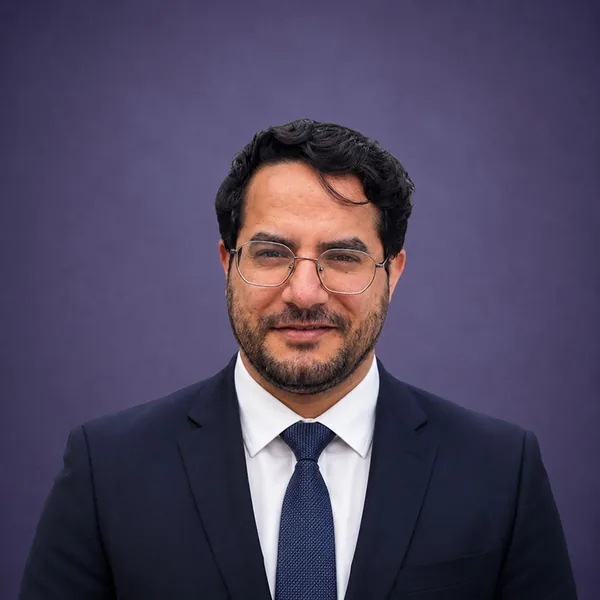
Hassan Ukasha, Managing Partner, Ariana Nexus
Program oversight

Hassan Ukasha

Managing Partner
  • B.S.
    Cornell University
  • M.P.H.
    Cornell University
Oversees the firm’s overall operations and this program: conflict checks and engagement terms, the independence and quality standard every declaration is held to, and the firm’s accountability to instructing counsel and the court.
Grew up in Herat. Languages: Pashto, Dari, English, Urdu, Hindi; Arabic (working).
Zeba Haqbani, Senior Partner, Ariana Nexus

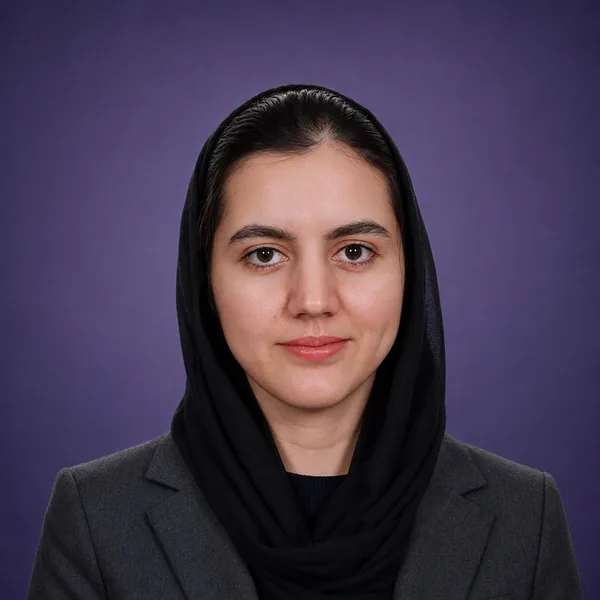
Zeba Haqbani

Senior Partner
  • B.Sc.
    University of British Columbia
Builds the firm’s institutional systems — the secure matter record, document intake and the audit trail behind every declaration.
Lived in Kabul.
Wasil Peroz, Principal, Ariana Nexus

Wasil Peroz

Principal
  • B.A.
    Milli University
  • M.Sc.
    Otto-von-Guericke University Magdeburg
Leads Afghan legal-source analysis: the Civil Code, personal status law and the decrees issued since 2021.
Maryam Safi, Principal, Ariana Nexus

Maryam Safi

Principal
  • B.A.
    Cornell University
Owns the research framework and evidence standard: every proposition in a declaration traced to its source and auditable before it is signed.
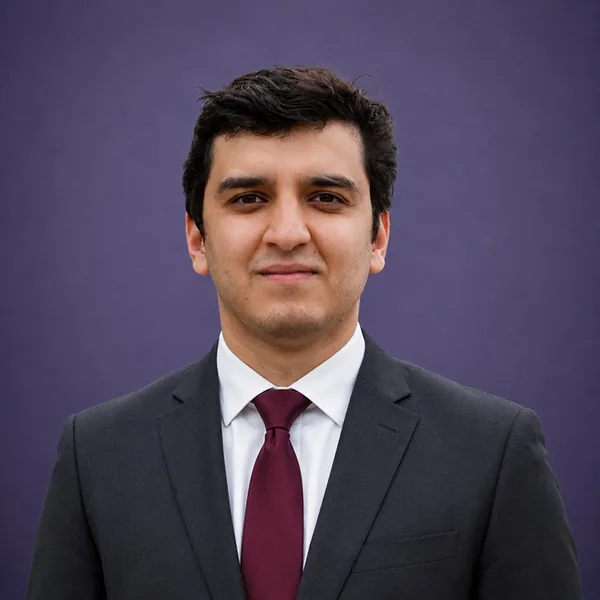
Hussain Ahmad, Principal, Ariana Nexus

Hussain Ahmad

Principal
  • M.Eng.
    Cornell University
  • Ph.D.
    University of Chicago
Leads verification: source tracing, date conversion across the Solar Hijri, lunar Hijri and Gregorian calendars, and the citation checks run before signature.

Each declaration is signed by the named expert whose qualifications fit the questions put. A current CV, publications and the list of prior testimony the forum requires accompany every report.

Marble-clad office corridor with bronze elevator doors leading to a reception desk
Every declaration begins with the original record, read in Pashto or Dari before a word of analysis is written.

Pashto, Dari and 22 more Afghan languages — and the languages Afghan records arrive in

Afghan families’ marriage and custody records are rarely in one language. A nikah khat in Pashto or Dari, a nikahnama from Pakistan in Urdu, a contract from the Gulf in Arabic, a court order from Germany or France — we read them in-house and deliver declarations in English, with certified translations into the language the forum requires.

Iranian

  • Pashto
  • Dari
  • Aimaq
  • Balochi
  • Ormuri
  • Parachi
  • Wakhi
  • Shughni
  • Sanglechi
  • Ishkashimi
  • Munji
  • Yidgha

Turkic

  • Uzbeki
  • Turkmeni
  • Kyrgyz

Indo-Aryan

  • Pashayi
  • Gawarbati
  • Tirahi

Nuristani

  • Nuristani (Ashkun group)
  • Kati
  • Prasun
  • Waigali

Dravidian

  • Brahui
Dari work includes the Hazaragi dialect, with dialect-matched specialists.

Languages of delivery, and of the records Afghan families bring

  • English
  • French
  • German
  • Spanish
  • Italian
  • Portuguese
  • Turkish
  • Arabic
  • Urdu
  • Hindi
  • Hebrew
  • Russian
  • Chinese
  • Urdu — nikahnamas and court records from Pakistan
  • Arabic — marriage contracts from the Gulf
  • Turkish — civil records from Türkiye
  • Russian — records from Central Asia
  • German, French, Italian, Spanish and Portuguese — court orders and registry records in Europe and Brazil
  • Hindi — records from India
  • Hebrew and Chinese — where a forum requires them

Courts and agencies we prepare Afghan family law evidence for

Forum
Instrument
What is usually at issue
Forum

United States — state family courts

Instrument
Declaration under penalty of perjury, or affidavit
What is usually at issue
Mahr enforceability under neutral principles of contract law; custody and relocation; abduction prevention under the UCCJEA and, where adopted, the Uniform Child Abduction Prevention Act
Forum

United States — federal courts

Instrument
Foreign-law declaration for Fed. R. Civ. P. 44.1; Fed. R. Evid. 702
What is usually at issue
The content of Afghan law, decided as a question of law
Forum

USCIS and immigration courts

Instrument
Expert declaration with certified translations
What is usually at issue
Validity of the marriage where it was celebrated; proxy marriage and consummation under INA § 101(a)(35); proof that prior marriages ended
Forum

England and Wales

Instrument
Part 25 FPR or Part 35 CPR report with statement of truth
What is usually at issue
Nikah-only ceremonies after Akhter (2020); mahr as a contractual claim; recognition of overseas divorces
Forum

Canada

Instrument
Expert affidavit or report
What is usually at issue
Mahr as a domestic contract in provincial courts; marriage validity for spousal sponsorship
Forum

Germany, Austria and Switzerland

Instrument
Party or court-appointed expert opinion on foreign law (Germany: § 293 ZPO)
What is usually at issue
Mahr claims (Morgengabe); recognition of marriages and divorces for civil registration
Forum

Netherlands and the Nordic countries

Instrument
Expert opinion as the court directs
What is usually at issue
Recognition of Afghan marriages and divorces; custody
Forum

Australia and New Zealand

Instrument
Expert affidavit or report
What is usually at issue
The nikah as an enforceable contract (Almarzooqi v Salih, 2023); property and parenting matters

We also prepare evidence for proceedings in Belgium, France, Italy, Spain, Ireland, Finland and Türkiye.

How courts abroad have treated Afghan and Islamic marriage contracts

Decision
Forum
What the court held
Outcome
Decision

In re Marriage of Obaidi & Qayoum

154 Wn. App. 609 (2010)
Forum
Washington
What the court held
Afghan nikah; a $20,000 deferred mahr written in Farsi. Enforcement reversed: the husband could not read the language and had fifteen minutes’ notice, so there was no meeting of the minds.
Outcome
Refused
Decision

Odatalla v. Odatalla

810 A.2d 93 (N.J. Super. Ct. Ch. Div. 2002)
Forum
New Jersey
What the court held
Mahr enforced as a contract under neutral principles of law.
Outcome
Enforced
Decision

In re Marriage of Shaban

88 Cal. App. 4th 398 (2001)
Forum
California
What the court held
A marriage certificate that referred only to Islamic law was too indefinite to enforce as a premarital agreement.
Outcome
Refused
Decision

Nouri v. Dadgar

245 Md. App. 324 (2020)
Forum
Maryland
What the court held
Mahr judged like a premarital agreement between parties in a confidential relationship; the party seeking enforcement carries the burden.
Outcome
Standard set
Decision

Attorney General v Akhter and Khan

[2020] EWCA Civ 122
Forum
England and Wales
What the court held
A nikah-only ceremony in England created no marriage recognized in English law — a non-qualifying ceremony.
Outcome
Not recognized
Decision

Almarzooqi v Salih

[2023] NZCA 645
Forum
New Zealand
What the court held
A nikah can be enforced as a contract at civil law, but it cannot be interpreted without evidence of its cultural and Sharia-law context. The claim was sent back to the High Court because that evidence was insufficient.
Outcome
Remitted

Listed for context. We explain Afghan law and the record; the law of the forum is for counsel and the court.

Afghan family law since 1977: the dates that decide a case

Which rules governed a family depends on the date. These are the dates our declarations are built around.

  1. 1977

    Civil Code

    Published in Official Gazette No. 353 on 5 January 1977: marriage, mahr, custody and divorce, with Hanafi jurisprudence filling the gaps.
  2. 2004

    Constitution

    Article 131 allows personal-status matters of Shia citizens to be decided under Shia jurisprudence.
  3. 2009

    Shia Personal Status Law and EVAW Law

    A separate family code for Shia citizens; the Elimination of Violence Against Women Law criminalized marriage below the legal age.
  4. Aug 2021

    Takeover

    The Islamic Republic’s courts and registries give way to the de facto authorities.
  5. Dec 2021

    Decree on women’s rights

    Requires a woman’s consent to marriage and addresses widows’ mahr and inheritance.
  6. 2023

    Divorces contested

    Lawyers report divorces granted by the former courts being annulled.
  7. 2026

    Decrees No. 12 and No. 18

    Limited judicial intervention in cases of severe beating; on 14 May, new rules for judicial separation with no minimum marriage age.

Afghan family law terms: nikah, mahr, hizanat and more

Nikah
نکاح
The Islamic marriage contract, formed by offer and acceptance before witnesses.
Nikah khat
نکاح‌خط
The court-issued Afghan marriage certificate, a booklet recording the spouses, witnesses and mahr.
Nikah nama
نکاح‌نامه
A written marriage contract signed before a mullah; on its own it is not a court registration.
Mahr (mehr)
مهر
What the husband owes the wife under the marriage contract. It is hers alone; German courts call it Morgengabe.
Mu’ajjal
معجل
The prompt portion of mahr, due on demand.
Mu’wajjal
مؤجل
The deferred portion of mahr, usually due on divorce or the husband’s death.
Mahr al-mithl
مهر المثل
The ‘proper’ mahr, assessed by comparison with women of similar standing where none was fixed.
Walwar
ولور
A payment to the bride’s family in Pashtun custom. It is not mahr.
Shirbaha
شیربها
Literally ‘milk price’: a payment to the bride’s family in Dari-speaking communities. It is not mahr.
Toyana
طویانه
A payment toward wedding costs. It is not mahr.
Jahez
جهیز
Goods the bride brings to the marriage — the actual ‘dowry’ in English usage.
Wali
ولی
The marriage guardian, usually the father.
Wakil
وکیل
A proxy authorized to conclude the nikah on a spouse’s behalf.
Hizanat
حضانت
Physical custody and day-to-day care of a young child.
Wilayat
ولایت
Legal guardianship over a child’s person and property, held by the father under the Civil Code.
Talaq
طلاق
Divorce by the husband’s pronouncement.
Khula
خلع
Divorce at the wife’s request, usually in return for giving up her mahr.
Tafriq
تفریق
Judicial separation ordered by a court on grounds set by law.
Iddah
عده
The waiting period after divorce or a husband’s death before a woman may remarry.
Rukhsati
رخصتی
The bride’s departure to the marital home, often months after the nikah.
Solar Hijri
هجری شمسی
Afghanistan’s official calendar; the year 1405 began on 21 March 2026.

Frequently asked questions about Afghan marriage, mahr and custody expert witnesses

Is an Afghan marriage (nikah) legally valid in the United States?

U.S. law generally asks first whether a marriage was valid where it was celebrated. A nikah concluded in Afghanistan is judged under Afghan law — the Civil Code, the Shia Personal Status Law where it applies, and Hanafi jurisprudence — and then against the forum’s own limits. An expert declaration establishes the Afghan half of that question: whether the nikah met Afghan requirements and which record proves it.

What is the difference between a nikah nama and a nikah khat — and is an unregistered Afghan marriage valid?

A nikah nama is a marriage contract signed before a mullah. A nikah khat is the certificate an Afghan court issues when the marriage is registered, as Article 61 of the Civil Code requires. Many Afghan marriages were never registered, especially during war and displacement. How an unregistered nikah is treated, and how it can be proved without a nikah khat, is answered in the declaration with the governing articles and the evidence available.

Is mahr enforceable in a U.S. divorce?

It depends on the state. U.S. courts treat mahr as a contract and apply neutral principles of contract law: New Jersey enforced one in Odatalla (2002); Washington refused one in Obaidi (2010), an Afghan case, because the husband could not read the Farsi he signed. Our declaration explains what the clause means under Afghan law and custom, so counsel and the court can apply the state’s contract rules.

Is mahr the same as a dowry or bride price?

No. Mahr belongs to the wife. Walwar in Pashtun custom and shirbaha in Dari-speaking communities are payments to the bride’s family; toyana goes toward wedding costs; jahez is what the bride brings to the marriage. Courts and translations often call mahr a ‘dowry’, and the confusion can change who is owed what. A declaration separates them using the document and the family’s practice.

How is a mahr fixed in gold or Afghanis valued by a court abroad?

The court has to choose a denomination, a unit and a date. A mahr fixed in gold in 2005 was worth about 7.7 times its 2005 dollar value at 2025 average gold prices; an Afghani sum moves with an exchange rate that swung sharply after August 2021; and the weight of a misqal of gold has to be fixed before any conversion. We set out the options and the data behind each. The court chooses.

Who gets custody of children under Afghan law?

The Afghan Civil Code gives the mother custody (hizanat) of a boy until age seven and a girl until age nine; the father remains the legal guardian (wilayat) throughout and takes custody after those ages. The Shia Personal Status Law, a mother’s remarriage and a court’s findings can change the outcome. Courts abroad apply their own best-interests standard; the declaration explains the Afghan rules they are asked to weigh.

Is Afghanistan part of the Hague Child Abduction Convention, and would a U.S. or UK custody order be enforced there?

Afghanistan is not a party to the 1980 Hague Abduction Convention and has no bilateral agreement with the United States on parental abduction, and the U.S. Embassy in Kabul suspended operations on 31 August 2021. Whether an order made abroad would be recognized in Afghanistan today, and which other risk factors apply, is set out in our declaration for relocation, travel-consent and abduction-prevention hearings.

Is an Afghan divorce recognized abroad, and what changed after 2021?

Recognition depends on the forum’s rules and on whether the divorce took effect under Afghan law. Since August 2021, lawyers have reported divorces granted by courts of the former Islamic Republic being annulled by the de facto authorities, and in May 2026 Decree No. 18 set new rules for judicial separation. We document which rules applied when the divorce occurred and how the record was made.

What is Decree No. 18 of 2026?

Decree No. 18, the Code on Judicial Separation of Spouses, was gazetted by the de facto Ministry of Justice on 14 May 2026. It sets the grounds on which women may seek judicial separation and sets no minimum marriage age, and, according to UNAMA, allows a girl’s silence at puberty to be read as consent. It matters abroad whenever a court must decide whether a marriage or separation in Afghanistan was effective.

Does USCIS recognize an Afghan proxy marriage?

Under INA § 101(a)(35), a marriage in which the parties were not physically present together is not recognized for immigration purposes unless it was later consummated. Afghan nikahs are often concluded through a wakil when one spouse is abroad. Our declaration explains how the proxy nikah was performed under Afghan law and what the record shows; evidence of consummation is for the petitioner and counsel.

Do we need a consulting expert or a testifying expert?

A consulting expert advises counsel privately and is usually not disclosed; a testifying expert signs a declaration or report and can be deposed. Many matters start with a privileged consultation to decide whether expert evidence will help. We act in either role and keep the roles separate, so the consultation can stay protected where the forum allows.

How long does an expert declaration take, and how are fees set?

A consultation typically follows within five business days of instruction and a declaration within two to three weeks, with expedited schedules for fixed hearing dates. Fees are quoted in writing for each stage after a conflict check and a review of the questions; testimony is quoted separately. Our fees never depend on the outcome of the case.

Do you act for the husband or the wife?

Either, through counsel — and for children’s counsel, guardians ad litem, courts and agencies. An expert’s duty is to the court, so our account of Afghan law does not change with the party who instructs us. A conflict check runs before we read any document.

Can you help if I do not have a lawyer?

We are instructed through counsel, courts and agencies; we do not give legal advice to individuals or represent parties. If you are a party to a case, ask your attorney or legal aid provider to contact us. Our certified translation service can translate your Afghan marriage or divorce documents directly.

Which languages do you work in?

Pashto, Dari and 22 more Afghan languages, among them Uzbeki, Turkmeni, Balochi and Pashayi; our Dari work includes the Hazaragi dialect. Declarations are written in English, with certified translations produced in-house into French, German, Spanish, Italian, Portuguese, Turkish, Arabic, Urdu, Hindi, Hebrew, Russian and Chinese where the forum requires.

What this service does not do

  • Legal representation or advice to individuals

    We are instructed through counsel, courts and agencies.
  • Advocacy for an outcome

    The expert’s duty is to the court, and fees never depend on the result.
  • Religious rulings or religious divorces

    We explain law and practice. We do not issue fatwas.
  • Custody evaluations or home studies

    Those belong to licensed evaluators in the forum.
  • Opinions on the forum’s own law

    The law of the forum is for counsel and the court.
  • Any channel through the de facto authorities

    We do not contact them, route documents or inquiries through them, or obtain records from inside Afghanistan.

Sources

  1. Civil Code of Afghanistan, Official Gazette No. 353, 5 January 1977 (Arts. 1, 39, 61, 70–71 and the chapters on mahr, divorce and custody).
  2. Shia Personal Status Law, 2009.
  3. UNAMA, Statement on Decree No. 18, ‘Code on Judicial Separation of Spouses’, May 2026; UN Women Afghanistan statement, May 2026.
  4. U.S. Department of State, International Parental Child Abduction — Afghanistan country information.
  5. Swedish Migration Agency (Lifos), Afghanistan – vårdnad av barn, 2018.
  6. LBMA gold price annual averages, 2005–2025.
  7. In re Marriage of Obaidi & Qayoum, 154 Wn. App. 609 (2010), and the other decisions listed on this page.

Reviewed 25 September 2026 — current through Decree No. 18 (May 2026)

Instruct Ariana Nexus on an Afghan marriage, mahr or custody question

Start with a conflict check. Engagements run through counsel and under a non-disclosure agreement from first contact; we reply within one business day.

Request a conflict check