
Litigation Support for Afghanistan-Related Civil, Anti-Terrorism Act and Group-Claim Matters.
We support counsel in litigation arising from Afghanistan: Anti-Terrorism Act and JASTA claims, civil and commercial suits, class actions and group claims. We turn records in Pashto, Dari and 22 more Afghan languages into evidence that holds up: reviewed, translated, verified against the source and defended under oath.
- Regional Command North: Germany
- Regional Command West: Italy
- Regional Command Capital: Multinational
- Regional Command East: United States
- Regional Command South: Rotating, then United States
- Regional Command Southwest: United States and United Kingdom
- Partner-language team: German, Italian, Spanish, Turkish or French records
ISAF regional commands as organized from 2010, simplified. Lead nations and team locations from public NATO and national records.
- Matters
- Anti-Terrorism Act and JASTA claims, terrorism-exception and enforcement proceedings, civil and commercial litigation, class actions, mass torts and UK group litigation.
- Who we support
- Claimants' and defense counsel, litigation funders, claims administrators, courts and special masters. Conflicts are cleared before scoping; we never act on both sides of one matter.
- Languages
- Pashto, Dari and 22 more Afghan languages, with English, French, German, Spanish, Italian, Hebrew, Urdu, Arabic, Hindi, Portuguese, Chinese, Russian and Turkish.
- Work product
- Coded review sets, certified translations with signed declarations, transcripts, attribution memos, claimant records, expert reports and testimony.
- Safeguards
- Delivered in-house by Ariana Nexus staff, headquartered in Washington, D.C. No operations inside Afghanistan and no channels through the de facto authorities.
Where the records of the war sit
Coalition partners led security and reconstruction across Afghanistan for two decades, and their files are in their own languages.
ISAF regional commands as organized from 2010, simplified. Lead nations and team locations from public NATO and national records.
Languages in the files
- GermanRegional Command North, led from Mazar-i-Sharif, with German teams in Kunduz and Badakhshan.
- ItalianRegional Command West, led from Herat.
- SpanishThe Spanish-led reconstruction team in Badghis.
- TurkishTurkish-led reconstruction teams in Wardak and Jawzjan.
- FrenchFrench forces in Kapisa and Surobi.
- EnglishU.S., British and Canadian commands in the east and south.
- UrduPakistani records, cross-border evidence and the Afghan community in Pakistan.
- ArabicGulf financial records and militant publications.
- RussianSoviet-era records and Central Asian neighbors.
- ChineseChinese-operated mining and energy concessions.
- HindiIndian-built infrastructure projects and their workforce.
- HebrewIsraeli co-counsel in terrorism-victim litigation.
- PortugueseAfghan communities resettled in Brazil and Portugal.
What is Afghanistan-related litigation support?
Afghanistan-related litigation support is the specialist work that makes evidence from Afghanistan usable in court. It covers finding and reviewing records in Pashto, Dari and other Afghan languages; translating and certifying them; resolving names, scripts and Solar Hijri dates; interviewing claimants and witnesses; and giving expert evidence on the context in which the records were made.
Where this work arises
Twenty years of war in Afghanistan and the fall of the Afghan republic in August 2021 left claims in U.S., UK and European courts that depend on Afghan-language evidence.
Anti-Terrorism Act and JASTA claims
Claims by U.S. service members, Afghanistan war veterans, contractors and Gold Star families, for deaths and injuries in attacks in Afghanistan, against companies alleged to have funded or assisted the attackers, including through protection payments and financial services. JASTA liability needs an attack committed, planned or authorized by a designated Foreign Terrorist Organization such as al-Qaeda or the Haqqani Network, so proof runs attack by attack, often through Pashto and Dari sources.Terrorism-exception and enforcement proceedings
Claims against state sponsors under the Foreign Sovereign Immunities Act (28 U.S.C. § 1605A), damages hearings on default, and enforcement against blocked assets, including Da Afghanistan Bank assets blocked under Executive Order 14064.Civil and commercial litigation
Contract, insurance, employment and injury disputes rooted in Afghanistan: reconstruction and logistics contracts, Defense Base Act claims by injured workers, False Claims Act matters, and wrongful-death suits that turn on Afghan witnesses and records.Class actions, mass torts and group claims
Programs that find, reach, verify and interview Afghan claimants across the Afghan diaspora, in the United States, Canada, the UK, Germany, Pakistan and Türkiye, with notices and claim forms written in their own language.UK and European group litigation
Group litigation orders and representative actions in England and Wales, and group claims in European courts, including ARAP data-breach claims by Afghans who applied to UK relocation schemes.Arbitration and cross-border disputes
International arbitration and foreign-court proceedings with records in Pashto, Dari, Urdu, Arabic, Russian, Turkish or Chinese: telecom, mining, energy and infrastructure disputes with an Afghanistan footprint.
Why Afghanistan evidence breaks standard review
Most review platforms, translation vendors and machine tools were built for languages with one script, one calendar and stable spellings. Afghan evidence has none of those.
Two scripts that look identical
Pashto and Dari are written in Perso-Arabic script, but the same word can be stored with Persian or Arabic code points. The word for province, typed with a Persian yeh or an Arabic yeh, looks the same on screen and does not match in search. Digits differ the same way.- ولایتولايتProvince: Persian yeh, U+06CC and Arabic yeh, U+064A
- کندهاركندهارKandahar (Pashto spelling): Keheh, U+06A9 and Arabic kaf, U+0643
- ۱۴۰۰١٤٠٠The year 1400: Extended Arabic-Indic digits and Arabic-Indic digits
One person, a dozen spellings
Mohammad, Muhammad, Mohammed, Mohamad, Muhammed, Mohd. Afghan identity records historically carry no surname; a person is identified by name, father's name and grandfather's name. One individual can split into several in a review set, and several can merge into one.محمد- Mohammad
- Muhammad
- Mohammed
- Mohamad
- Muhammed
- Mohamed
- Mohammod
- Mahmad
- Muhammet
- Mohd.
- Md.
- M.
A different calendar
Afghan documents are dated in the Solar Hijri calendar, with Pashto month names in some records and Dari month names in others. 24 Zmaray 1400 and 24 Asad 1400 are the same day: 15 August 2021.۲۴ زمری ۱۴۰۰۲۴ اسد ۱۴۰۰15 August 2021Dialects and code-switching
Speakers move between Pashto, Dari and English within a sentence. Kandahari and eastern Pashto differ; Herati, Kabuli and the Hazaragi dialect of Dari differ. A linguist from the wrong variety misses meaning a court will later hear about.Machine output that reads as fluent
Machine translation and speech recognition in Pashto and Dari trail the major languages, and their errors arrive as confident English. Unverified machine output is impeachment material.Words that carry legal weight
Records use terms whose context decides the case: ushr and zakat collected by the Taliban, shabnama night letters, hawala transfers, jirga decisions, qabala deeds. A literal translation can be accurate and still mislead a jury.
What we deliver
One engagement can combine any of these workstreams under one standard and one point of accountability.
Foreign-language evidence review
First- and second-level document review of Pashto, Dari and mixed-language productions for relevance, privilege and issues, with search terms built for every script and spelling variant.You receive Coded review sets, search-term reports and issue memos.Certified translation and declarations
Translations of exhibits, pleadings and productions, verified by a second linguist against the source and signed under 28 U.S.C. § 1746 or the forum's equivalent.You receive Certified translations with signed declarations.Audio, video and messaging evidence
Verbatim transcription and translation of recordings, videos, voice notes and chat exports, with timestamps, speaker attribution and dialect notes.You receive Two-column transcripts ready to exhibit.Attribution and context analysis
Analysis of claims of responsibility, statements, publications and local records to show who committed, planned or authorized an attack: the question JASTA claims turn on.You receive Attribution memos with source registers.Afghan records and identity analysis
Examination of tazkiras, passports, civil-registration records, deeds and contracts; Solar Hijri date conversion; name and relationship mapping across a whole production.You receive Document reports with date and name registers.Claimant and witness programs
Locating and interviewing Afghan claimants and witnesses across the diaspora, with trauma-informed interviewers, including for veterans and Afghan allies living with moral injury.You receive Interview records and translated statements for counsel's review.Notices and claimant communications
Class and group notices, claim forms and call scripts in Pashto, Dari and other languages, written in plain language and comprehension-tested before release.You receive Notice translations with plain-language and audio versions.Deposition, hearing and trial interpreting
Consecutive and simultaneous interpreting for depositions, witness interviews, hearings and arbitral sessions, in person or remote, from a case glossary prepared in advance.You receive Interpreters briefed on your case glossary.Expert reports and testimony
Written opinions and testimony on translation accuracy, Afghan documents, naming and calendar conventions, and the context of the conflict, prepared for Rule 702 scrutiny and Rule 26 disclosure.You receive Signed reports, deposition and trial testimony.
How we deliver
Every engagement follows the same six steps, so the method a court hears about is the method we used.
Conflicts check
We clear conflicts before we hear the facts. We work for claimants and for defendants, never on both sides of one matter.Scoping
Languages, varieties, volumes, deadlines, forum and the protective order: who may see what, and where it may be stored.Secure intake
Files arrive in a matter-specific workspace, are hashed on receipt and enter a chain-of-custody log that follows them to trial.Triage
Language and dialect identification, script and date normalization, and a case glossary of names, places and terms.Review, translation and verification
Two linguists on every certified item: one translates, a second verifies against the source, and every difference is reconciled and recorded.Declarations, reports and testimony
Signed declarations, expert reports, and a witness who can explain the method under cross-examination.
The law that shapes this work
Afghanistan claims rest on a small set of statutes and decisions. These decide what the evidence must show.
- 1992
Anti-Terrorism Act civil remedy
U.S. nationals injured by an act of international terrorism may sue for treble damages (18 U.S.C. § 2333). Claims must be brought within ten years (§ 2335). - 1999 and 2012
al-Qaeda and the Haqqani Network designated
al-Qaeda was designated a Foreign Terrorist Organization in 1999 and the Haqqani Network in 2012. The Afghan Taliban is a Specially Designated Global Terrorist, not an FTO; its FTO status has been under review since 2025. - 2016
JASTA
The Justice Against Sponsors of Terrorism Act added aiding-and-abetting and conspiracy liability for attacks committed, planned or authorized by a designated FTO (§ 2333(d)(2)). - 2021
The republic falls
Kabul fell on 15 August 2021 and the U.S. Embassy suspended operations on 31 August. Afghan records and witnesses became harder to reach, and certified copies harder to obtain. - 2022
Da Afghanistan Bank assets blocked
Executive Order 14064 blocked Afghan central bank assets held in the United States, which terrorism judgment creditors have sought to reach. - 2023
Twitter v. Taamneh
The Supreme Court held that aiding-and-abetting liability requires conscious, culpable participation: knowing and substantial assistance, not an ordinary business relationship. - 2025
Attack-by-attack proof
In Ashley v. Deutsche Bank, the Second Circuit held that a JASTA claim must rest on specific attacks, not a campaign, raising the bar for attack-level evidence. - 2025
UK data-breach claims
On 15 July 2025 the High Court lifted the super-injunction over the 2022 Ministry of Defence breach of data on Afghans who applied under the Afghan Relocations and Assistance Policy (ARAP), and group claims followed.
Sources: 18 U.S.C. §§ 2333 and 2335; OFAC FAQ 928; Twitter, Inc. v. Taamneh, 598 U.S. 471 (2023); Ashley v. Deutsche Bank AG (2d Cir. 2025); Executive Order 14064. Status as of September 2026. Not legal advice.
The rules the work product is built to meet
- Fed. R. Evid. 604Interpreters must be qualified and swear to a true translation.
- Fed. R. Evid. 702Expert testimony must rest on sufficient facts and a reliable, reliably applied method.
- Fed. R. Evid. 902(3)Foreign public documents; with no U.S. embassy in Kabul, courts may accept an attested summary for good cause.
- Fed. R. Civ. P. 23Class notice must be clear, concise and in plain, easily understood language.
- Fed. R. Civ. P. 26 and 28(b)Expert disclosures, and depositions taken in a foreign country.
- 28 U.S.C. § 1746Unsworn declarations under penalty of perjury, used for translator declarations.
- CPR Part 19, PD 32 and PD 57ACGroup litigation in England and Wales; witness statements drafted in the witness's own language, filed with a translation the translator signs and certifies as accurate.
- UK GDPR and GDPRClaimant data held for European matters.
Languages we work in
Pashto and Dari first, and 22 more Afghan languages, matched to the variety a witness speaks: Kandahari, central and eastern Pashto; Kabuli and Herati Dari and the Hazaragi dialect.
- Pashto
- Dari
- Aimaq
- Balochi
- Ormuri
- Parachi
- Wakhi
- Shughni
- Sanglechi
- Ishkashimi
- Munji
- Yidgha
- Uzbeki
- Turkmeni
- Kyrgyz
- Pashayi
- Gawarbati
- Tirahi
- Nuristani (Ashkun group)
- Kati
- Prasun
- Waigali
- Tregami
- Brahui
For cross-border records and proceedings
- EnglishEnglish
- FrançaisFrench
- DeutschGerman
- EspañolSpanish
- ItalianoItalian
- עבריתHebrew
- اردوUrdu
- العربيةArabic
- हिन्दीHindi
- PortuguêsPortuguese
- 中文Chinese
- РусскийRussian
- TürkçeTurkish
The team behind this service
Afghanistan litigation support at Ariana Nexus is led by alumni and scholars of Cornell University, the University of Chicago, the University of British Columbia and Otto von Guericke University Magdeburg, from the Afghan community. It is not a roster of freelance bilinguals.
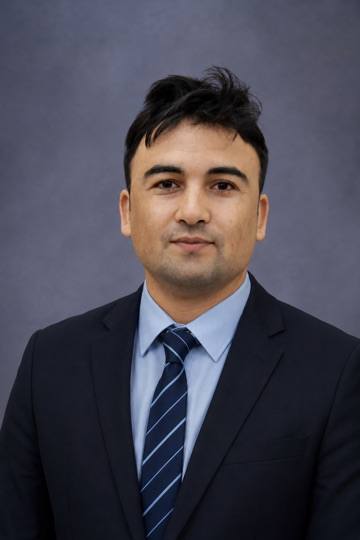
Hassan Ukasha
- B.S. Cornell University
- M.P.H. Cornell University
Languages: Pashto and Dari (native); English, Urdu and Hindi (fluent); Arabic (working).
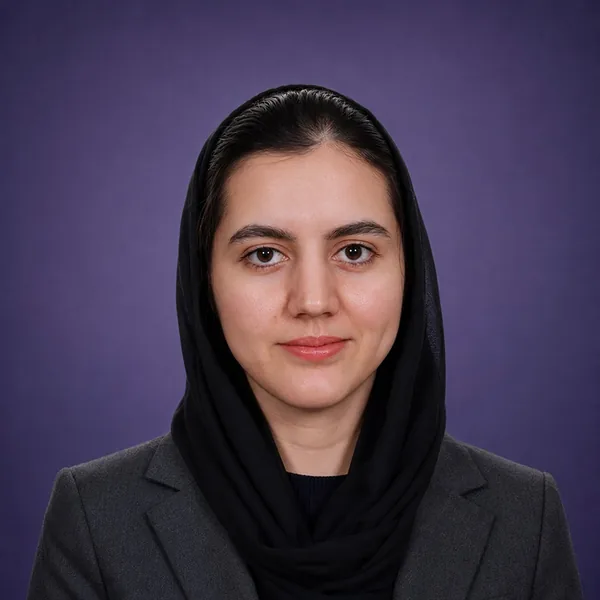
Zeba Haqbani
Senior Partner- B.Sc. University of British Columbia
Builds and runs the firm's systems and AI platforms. On this program: the secure review workspace, chain-of-custody logging and the machine-assisted first pass every human reviewer checks.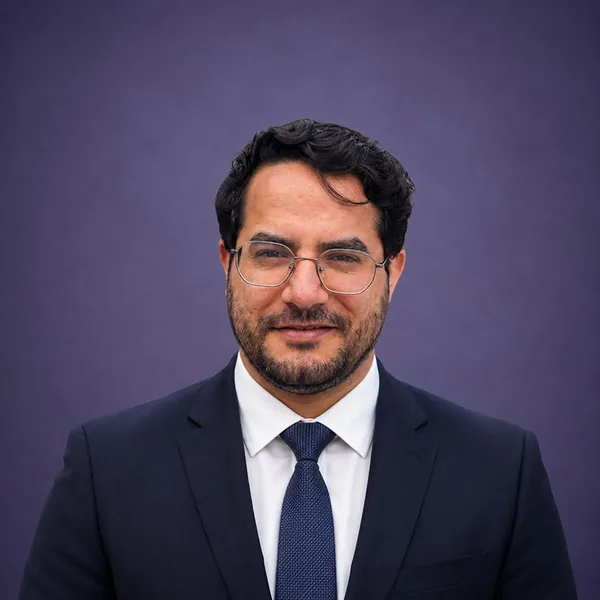
Wasil Peroz
Principal- B.A. Milli University
- M.Sc. Otto von Guericke University Magdeburg
Leads the legal-process workstream: forum rules, protective-order obligations, and the declarations and exhibits that travel with every certified translation.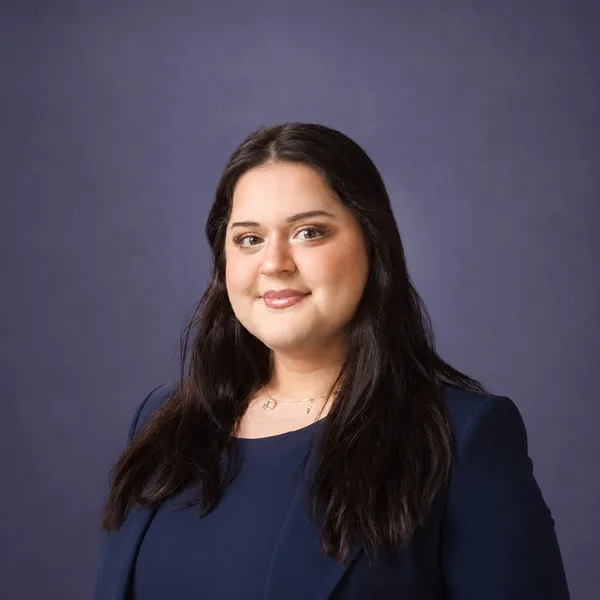
Maryam Safi
Principal- B.A. Cornell University
Leads claimant and witness programs: intake design, trauma-informed interviewing and claimant communications in Pashto and Dari.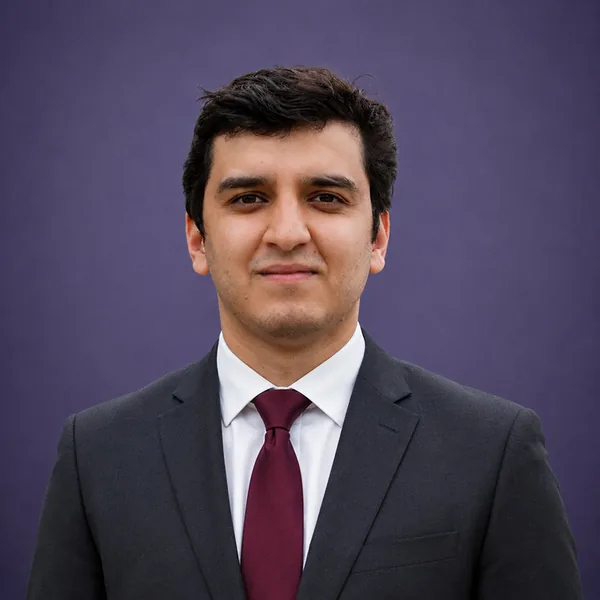
Hussain Ahmad
Principal- M.Eng. Cornell University
- Ph.D. University of Chicago
Leads the data layer: text recognition and search across Pashto and Dari scripts, name and date normalization, and review analytics.
Behind them is a bench of trained legal linguists and subject-matter experts in Pashto, Dari and 22 more Afghan languages. Every one is a college graduate, assessed in the variety they work in and bound by confidentiality before they see a file.
Why Ariana Nexus for Afghanistan litigation
Evidence, not word counts
We are a consulting and professional services firm. Language is the instrument; the deliverable is evidence that survives challenge.Scholars, not bilinguals
The work is led by alumni and scholars of leading universities, and every linguist is a college graduate, trained and assessed in their variety.One engagement, one standard
Every part is produced by our own people, with no subcontractors and no brokered experts, so one method and one signature stand behind the whole record.Defensible by design
Two-linguist verification, reconciliation records, custody logs and signed declarations: a method our witnesses can explain line by line.Safe for witnesses and linguists
No operations inside Afghanistan and no channels through the de facto authorities. We screen payments and contacts against sanctions lists and support counsel in seeking anonymity where courts permit.Where no certification exists, we set the standard
No U.S. court certification exam exists for Pashto or Dari. We train and assess our own linguists, and other interpreters in Afghan languages, to a standard we can put in front of a judge.
What to require from Afghanistan litigation support
Eight questions to put to any provider before a production, a deposition or a claimant program.
Terms counsel will meet
- Solar Hijri calendar هجری شمسی
- The calendar on Afghan official documents. The year begins at the March equinox, and months carry Pashto names (Wray to Kab) or Dari names (Hamal to Hoot). 1400 ran from March 2021 to March 2022.
- Tazkira تذکره
- The Afghan national identity document, issued on paper and, since 2018, as the electronic e-Tazkira. Paper tazkiras record the holder's father's and grandfather's names rather than a surname.
- Shabnama شبنامه
- A night letter: a threat letter used by the Taliban and other armed groups to warn or intimidate. Common evidence in threat and persecution claims.
- Ushr عشر
- An Islamic tithe on harvests, collected by the Taliban as a tax in areas under its control.
- Hawala حواله
- An informal value-transfer system run on trust between brokers, widely used in Afghanistan and the diaspora and a frequent subject of financing evidence.
- Qabala قباله
- A property deed. Afghan practice distinguishes deeds registered with a court from customary deeds drawn up locally.
- Jirga جرگه
- A council of elders that settles disputes under customary law. Jirga decisions appear in land, family and compensation evidence.
Five dates, each written three ways
Questions counsel ask
What does Afghanistan-related litigation support include?
It covers every step that turns Afghan-language material into evidence: review of Pashto and Dari productions, certified translation with declarations, transcription of recordings, analysis of Afghan documents and dates, attribution analysis, claimant and witness programs, interpreting, and expert reports and testimony. Counsel can engage one workstream or the whole program.
Do you work for plaintiffs or defendants in Anti-Terrorism Act cases?
Both, in different matters. We run a conflicts check before any facts are shared and never act on both sides of the same matter. Claimants' counsel use us to build attack-level proof; defense counsel use us to test attribution, authentication and the accuracy of the other side's translations.
Can your translators sign declarations and testify?
Yes. Certified translations carry a signed declaration from the translator, and the second linguist's verification is recorded. The linguists and experts who did the work are available for deposition and trial testimony about their method.
Are your Pashto and Dari interpreters court-certified?
No U.S. court certification exam exists for Pashto or Dari, so no interpreter in those languages can honestly claim one. Federal courts treat such interpreters as professionally qualified or language-skilled. We train and assess our own linguists, and other interpreters in Afghan languages, and document each one's qualifications for the court and opposing counsel.
How do you handle Afghan names spelled many different ways?
We build a name register for the matter. Every variant found in the record, in Latin and Perso-Arabic script, is linked to its source document and to the person's father's and grandfather's names where they appear, so reviewers and experts work from one identity per person.
How do you convert Solar Hijri dates on Afghan documents?
Every date is converted to the Gregorian calendar and logged with its original form, month name and script, so anyone can check the conversion. Pashto and Dari use different month names for the same month: 24 Zmaray 1400 and 24 Asad 1400 are both 15 August 2021.
Can you review large Pashto and Dari productions, and do you use AI?
Yes. Machine-assisted tools sort, cluster and draft, but no machine output reaches counsel unverified: a trained linguist checks every coding decision and every translation we certify. Search terms are normalized across Persian and Arabic code points, digits and spelling variants.
How do you protect witnesses and linguists connected to Afghanistan?
We have no operations inside Afghanistan and route nothing through the de facto authorities. Contact with witnesses is minimized and secured, payments and contacts are screened against sanctions lists, and we support counsel in seeking anonymity or sealing where courts permit. Linguists' identities are protected the same way.
Do you support class actions and UK group claims with Afghan claimants?
Yes. We design and run claimant programs, from outreach and intake to identity checks, interviews and notices, in Pashto, Dari and other languages, for U.S. class actions and mass torts and for group litigation in England and Wales, where a witness statement must be drafted in the witness's own language and filed with a translation the translator certifies as accurate.
Which languages do you work in besides Pashto and Dari?
Twenty-two more Afghan languages, from Uzbeki, Turkmeni and Balochi to Pashayi and the Nuristani and Pamir languages, plus English, French, German, Spanish, Italian, Hebrew, Urdu, Arabic, Hindi, Portuguese, Chinese, Russian and Turkish for cross-border records and proceedings.
Do you authenticate Afghan documents such as tazkiras?
We examine and report on Afghan documents, including tazkiras, passports, civil-registration records, deeds and court records, and explain how they were issued and what they can and cannot show. Opinions rest on the document, the issuing practice and the record, never on channels to the de facto authorities.
Is Ariana Nexus a law firm?
No. Ariana Nexus is a consulting and professional services firm. We support counsel, who remain responsible for legal advice, strategy and filings. Nothing on this page is legal advice.
How does an engagement start?
With a conflicts check. Send the parties and the forum only, with no privileged or confidential material. Once conflicts are cleared, we scope languages, volumes, deadlines and the protective order, and confirm the engagement in writing.
Begin with a conflicts check.
Tell us the parties and the forum. We clear conflicts first, then scope languages, volumes and deadlines. Please send no privileged or confidential material until conflicts are cleared.
Request a conflicts checkAriana Nexus is not a law firm and does not give legal advice. Legal references are current as of September 2026. Reviewed September 2026 by Wasil Peroz, Principal.