
Afghan Cultural Competency Training for Police, Fire, EMS, 911 and Government Staff
Scenario-based training for police and sheriff’s offices, fire and EMS, 911 centers, emergency management, child and family services, social services and public health departments that serve Afghan residents. Taught by scholars from the Afghan community, built from your agency’s own calls and policies, and measured in the field.
Twelve signals staff misread with Afghan families, decoded
What staff see, what it often means, what it does not mean, and what to do. Open any signal.

Signal 01 · what you see“He answers every question for his wife.”
M03 · Family, gender and the home
- What it often means
- Custom, or shielding her from an unfamiliar official.
- What it does not mean
- Consent, or that she has nothing to add.
- What to do
- Ask to speak with her directly, with a woman officer or interpreter.
Signal 02 · what you see“She avoids eye contact.”
M03 · Family, gender and the home
- What it often means
- Modesty and respect toward a stranger or an official.
- What it does not mean
- Deception.
- What to do
- Judge credibility on content, not eye contact.
Signal 03 · what you see“He won’t shake a woman officer’s hand.”
M04 · Faith and daily practice
- What it often means
- A religious or cultural norm about touch.
- What it does not mean
- Hostility or contempt.
- What to do
- Offer a nod and continue.
Signal 04 · what you see“The form says “Farsi”.”
M02 · Language and interpreters
- What it often means
- Often Afghan Dari; many Afghans write Farsi.
- What it does not mean
- Iranian Persian.
- What to do
- Confirm the variety and book a Dari interpreter.
Signal 05 · what you see“His birth date is January 1.”
M06 · Names, dates and documents
- What it often means
- The exact date was never registered.
- What it does not mean
- False documents.
- What to do
- Record it as given and note the source.
Signal 06 · what you see“There is no family surname.”
M06 · Names, dates and documents
- What it often means
- Afghan documents list father and grandfather instead.
- What it does not mean
- An alias.
- What to do
- Record the name exactly as on the document.
Signal 07 · what you see“She smiles while describing violence.”
M05 · Trust, trauma and moral injury
- What it often means
- A trauma or politeness response.
- What it does not mean
- That it did not happen.
- What to do
- Slow down and let an interpreter confirm the meaning.
Signal 08 · what you see“He says “yes” to every question.”
M02 · Language and interpreters
- What it often means
- Politeness toward authority, or not understanding.
- What it does not mean
- Agreement.
- What to do
- Ask open questions and confirm with a teach-back.
Signal 09 · what you see“The family keeps a teenager as interpreter.”
M02 · Language and interpreters
- What it often means
- Trust and convenience.
- What it does not mean
- Adequate interpreting.
- What to do
- Bring in a qualified interpreter; never a child.
Signal 10 · what you see“They refuse to let the K9 into the home.”
M07 · Entries, searches and custody
- What it often means
- Dogs are considered unclean by many Muslims.
- What it does not mean
- Obstruction.
- What to do
- Explain the need, and keep the dog out of prayer areas where you can.
Signal 11 · what you see“They ask for burial within a day.”
M12 · Death, notification and critical incidents
- What it often means
- Islamic practice.
- What it does not mean
- Refusing to cooperate.
- What to do
- Explain the medical examiner’s role and timeline early.
Signal 12 · what you see“They won’t open the door to a uniform.”
M05 · Trust, trauma and moral injury
- What it often means
- Fear rooted in war, or in immigration worries.
- What it does not mean
- Guilt.
- What to do
- Identify yourself, explain why you are there, and offer a phone interpreter.
What is Afghan cultural competency training for first responders?
Afghan cultural competency training, also called Afghan cultural awareness training, prepares police officers, firefighters, EMS crews, 911 dispatchers, emergency managers, caseworkers, social workers and other public staff to serve Afghan families, from recent Afghan refugees and evacuees to long-settled residents, accurately and safely. Ariana Nexus teaches Afghan family and gender norms, Islamic practice, war trauma and moral injury, names and documents, and how to work with Pashto and Dari interpreters, through scenarios built from each agency’s own calls and policies.
- Service
- Afghan cultural competency training for government staff and first responders
- Who it is for
- Police and sheriff’s offices, fire and EMS, 911 and dispatch centers, emergency management, child and family services, social workers and resettlement staff, corrections and probation, public health departments
- Formats
- Leadership briefing, roll-call modules, half-day and full-day workshops, scenario workshops, agency programs, train-the-trainer, e-learning and tabletop exercises
- Contact hours
- From 10-minute roll-call modules to a 16-hour agency program, plus a three-day instructor course
- Class size
- Up to 30; scenario workshops up to 24; instructor courses up to 12
- Delivery
- On site across the United States; live online for the United States, Canada, the United Kingdom and the European Union
- Faculty
- Scholars and professionals from the Afghan community, with Afghan role-players and a Pashto or Dari interpreter in every scenario session
- Records
- Attendance, contact hours, objectives, instructor qualifications and assessment results for your POST or CE submission
- Afghan languages covered
- Pashto, Dari and 22 more Afghan languages, and their regional dialects
- Procurement
- SAM.gov registered · UEI M2UDMUDFXGL9 · CAGE 1Z3A3
Pashto, Dari and 22 more Afghan languages your residents speak
Afghan residents speak Pashto, Dari and 22 more languages across five language families. The training teaches staff to tell them apart and to book the right interpreter.
د دولتي کارکوونکو او بیړنیو خدمتونو لپاره کلتوري روزنه چې افغان ټولنو ته خدمت کوي
آموزش فرهنگی برای کارمندان دولتی و خدمات عاجل که به جوامع افغان خدمت میکنند
Iranian 12
- Pashto
- Dari
- Aimaq
- Balochi
- Ormuri
- Parachi
- Wakhi
- Shughni
- Sanglechi
- Ishkashimi
- Munji
- Yidgha
Turkic 3
- Uzbeki
- Turkmeni
- Kyrgyz
Indo-Aryan 3
- Pashayi
- Gawarbati
- Tirahi
Nuristani 5
- Nuristani (Ashkun group)
- Kati
- Prasun
- Waigali
- Tregami
Dravidian 1
- Brahui
Pashto and Dari each have regional dialects: Kandahari and Yousafzai Pashto; Kabuli, Herati, Hazaragi and Badakhshani Dari. Staff learn to ask for the dialect when they book an interpreter.
Delivery and materials languages
- English
- French
- German
- Spanish
- Italian
- Portuguese
- Turkish
- Arabic
- Urdu
- Hindi
- Hebrew
- Russian
- Chinese
Is Dari the same as Farsi? What staff need to know
Pashto and Dari are different languages, and a speaker of one may not understand the other. Afghan Dari and Iranian Persian are close, but they part ways in the words public services use every day. Many Afghans write “Farsi” on forms, so staff learn to confirm the variety and book a Dari interpreter, not an Iranian Persian one.
What Afghan cultural training covers
Six core modules for every role, and six role modules for the calls and cases that need them. Every module ends with what to do, not only what to know.
- M01
Afghan communities today
Peoples and regions, Pashto, Dari and 22 more languages, four decades of war, the 2021 evacuation under Operation Allies Welcome, and how families arrived: Special Immigrant Visas for Afghan allies, parole, refugee status and asylum.90 min - M02
Language and interpreters
Pashto and Dari, Afghan Dari versus Iranian Persian (Farsi), Dari dialects such as Kabuli, Herati and Hazaragi, booking and briefing a qualified interpreter, and where phone apps and AI translation fail.90 min - M03
Family, gender and the home
Who speaks for the family, when a woman officer or medic is needed, entering a home, handshakes and eye contact, and the role of elders.90 min - M04
Faith and daily practice
Prayer times, Ramadan fasting, halal food, modesty, the Quran, dogs, and religious head coverings in custody and care.60 min - M05
Trust, trauma and moral injury
Why uniforms and checkpoints frighten, war and evacuation trauma, moral injury, sometimes called moral trauma, how trauma shows in an interview, and de-escalation that works.90 min - M06
Names, dates and documents
No family surname, many spellings of one name, Solar Hijri dates, January 1 birth dates, the tazkira, and recording names the same way in every system.60 min
- M07
Entries, searches and custody
Knocking and waiting, women in the home, K9 teams, searches of people and prayer spaces, the Quran, booking and religious head coverings.60 min - M08
Medical calls and modesty
Same-gender care where possible, explaining when it is not, exposure and consent, fasting and medication, and refusals.60 min - M09
The 911 call
Identifying Pashto or Dari in seconds, bridging an interpreter, Afghan location descriptions, and callers who say “Farsi”.45 min - M10
Family violence and child protection
Culture explains, it never excuses: interviewing women and children, explaining U.S. law plainly, safety planning, and the extended family.90 min - M11
Shelters, evacuations and warnings
Family units and women’s spaces, halal meals, prayer space and Ramadan, and warnings through trusted messengers and community channels.60 min - M12
Death, notification and critical incidents
Notifying the right family member, faith leaders, burial within a day, autopsy objections, and grief.60 min
Training formats, from roll call to train-the-trainer
Start where your schedule allows. Every format uses the same curriculum and the same standard.
- 90 min
Leadership briefing
Risks, legal duties, your Afghan community profile, and what to require of staff. - 12 × 10 min
Roll-call modules
One module per shift: a situation, what it may mean, what to do, and your policy. Supervisor-led. - 4 h
Core workshop
The six core modules, condensed, with case discussion. - 8 h
Scenario workshop
Core modules plus two role modules, with scenarios run with Afghan role-players and a Pashto or Dari interpreter. - 16 h
Agency program
All core and role modules, a scenario assessment, field cards and a 90-day follow-up. - 3 days
Train-the-trainer
Certifies your instructors to deliver the curriculum inside your agency for 12 months, after an observed first delivery. - 6 × 25 min
E-learning
SCORM 1.2, SCORM 2004 and xAPI packages built to WCAG 2.1 AA. - 3–4 h
Tabletop exercise
An HSEEP-aligned shelter, evacuation or warning exercise, ending in an after-action report and improvement plan.
Community dialogue sessions: two hours, co-facilitated with Afghan community organizations, so residents and staff meet before the next emergency.
The five-point contact sequence
Every module, scenario and field card follows one sequence, so staff act the same way under pressure. Nothing in this training overrides officer safety, scene safety or the law.
Safety, Language, People, Place, Record — in that order.
- 1
Safety
Secure the scene first. Nothing here overrides safety or the law. - 2
Language
Identify Pashto, Dari or another Afghan language and bring in a qualified interpreter, never a child. - 3
People
Ask who speaks for the family, who must be present, and whether a woman officer, medic or caseworker is needed. - 4
Place
Mind shoes, women’s space, prayer, dogs, the Quran and religious head coverings. - 5
Record
Write names as they appear on documents, convert Solar Hijri dates, and note the interpreter’s ID and the variety spoken.
Afghan communities in the United States today
Most Afghan residents arrived after the 2021 evacuation, and new arrivals have nearly stopped. The work now is serving Afghan families who live here, many of whom are still learning English and lived through the Afghan war.
Immigration rules for Afghans have changed repeatedly since 2025, and many families now hesitate to open the door to anyone in uniform. The training covers how staff explain who they are and why they are there.
Source: Migration Policy Institute, analysis of 2022 American Community Survey data
Source: Migration Policy Institute, 2018–2022 American Community Survey
Afghan cultural training for police, fire, EMS, 911 dispatchers and caseworkers
One curriculum, adapted to each role. Staff train on the calls and cases they actually handle.
Command staff, department directors and elected officials take a 90-minute leadership briefing.
Why our training is scenario-based
The research on public-safety training points one way: practice changes behavior, and awareness alone fades. So every program is built on your own calls and reinforced for 90 days.
- 28%fewer use-of-force incidentsafter scenario-based de-escalation training in Louisville, Kentucky, with 26% fewer citizen injuries and 36% fewer officer injuries. One department, not a randomized trial.
Source: Engel et al., Criminology & Public Policy (2022), via PERF’s ICAT program
- 1 monthbefore awareness training fadedOfficers’ knowledge and intentions rose after awareness-only diversity training, then largely faded within about a month, with no clear change in behavior.
Source: Lai and Lisnek, Psychological Science (2023), Washington University in St. Louis
Why agencies choose Ariana Nexus for Afghan cultural training
There is no national standard for Afghan cultural training in U.S. public safety. So we wrote one: every module is built by scholars from the Afghan community, reviewed by our Cultural Compliance Bureau, and taught alongside the Pashto and Dari interpreters we train.
How we build your Afghan cultural training program
- Step 1 of 6
Scope
A scoping call and a short needs review: your roles, call types, policies and the Afghan communities you serve. - Step 2 of 6
Tailor
Scenarios built from your own de-identified calls and cases, aligned with your policies on searches, custody, domestic violence and language access. - Step 3 of 6
Review
The Ariana Nexus Cultural Compliance Bureau reviews every module, script and Pashto or Dari phrase before it reaches your staff. - Step 4 of 6
Deliver
Faculty from the Afghan community teach on site or live online, with Afghan role-players and a Pashto or Dari interpreter in scenario sessions. - Step 5 of 6
Measure
Pre- and post-training assessments, a scenario rubric, and a 90-day follow-up with supervisors. - Step 6 of 6
Sustain
Field cards, roll-call refreshers, instructor certification and an annual content update.
What changes after Afghan cultural training
What your supervisors should see in the field within 90 days.
- Language
- Staff identify Pashto or Dari in the first minute and book the right interpreter, never a child.
- Homes
- Officers and caseworkers enter homes in ways that keep families cooperative.
- Care
- EMS crews offer same-gender care where they can, and explain why when they cannot.
- Records
- Names and dates are recorded the same way across your records and case systems.
- Shelters
- Shelter plans include family units, women’s spaces, halal meals and prayer space before families arrive.
- Notifications
- Death notifications reach the right family member, with room for faith and burial practice.
How we measure training results
Level 1 · Reaction
Session evaluation: relevance and confidenceDay of training · Ariana NexusLevel 2 · Learning
Pre- and post-training knowledge check and scenario rubricBefore and after · Ariana NexusLevel 3 · Behavior
Supervisor checklist and staff follow-up survey90 days · Your supervisors, with our analysisLevel 4 · Results
Agency indicators you choose: interpreter bookings by language, complaints, repeat calls, missed appointments6 to 12 months · Your agency, with our report
We measure results; we never promise a number we cannot show.

The team behind Ariana Nexus Afghan cultural training
Ariana Nexus is led by scholars and professionals from the Afghan community who studied at Cornell University, the University of Chicago, the University of British Columbia and Otto-von-Guericke University Magdeburg. They design the curriculum, lead every engagement and answer for every session.
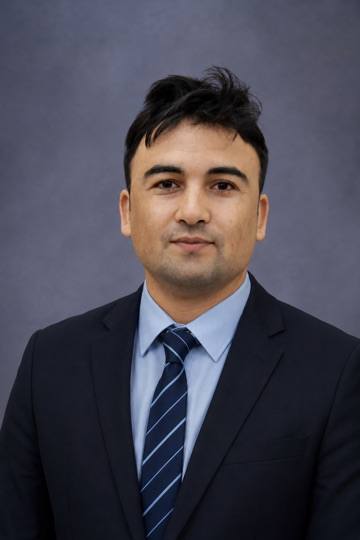
Hassan Ukasha
- B.S.Cornell University
- M.P.H.Cornell University
Profile · LinkedIn · ORCID · Google Scholar
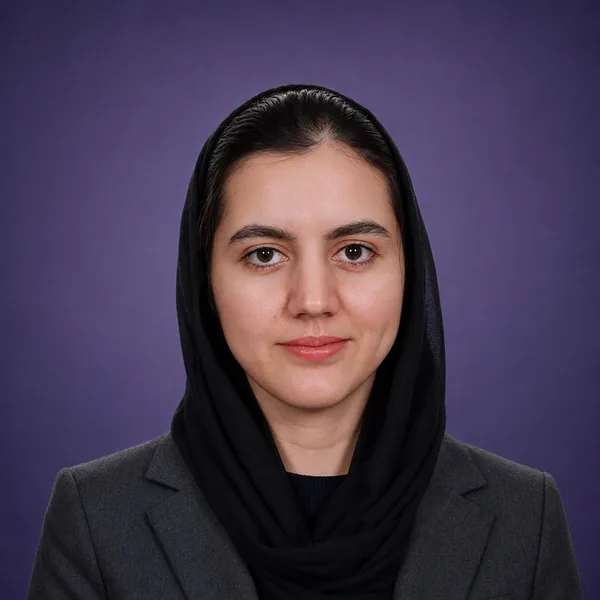
Zeba Haqbani
- B.Sc.University of British Columbia
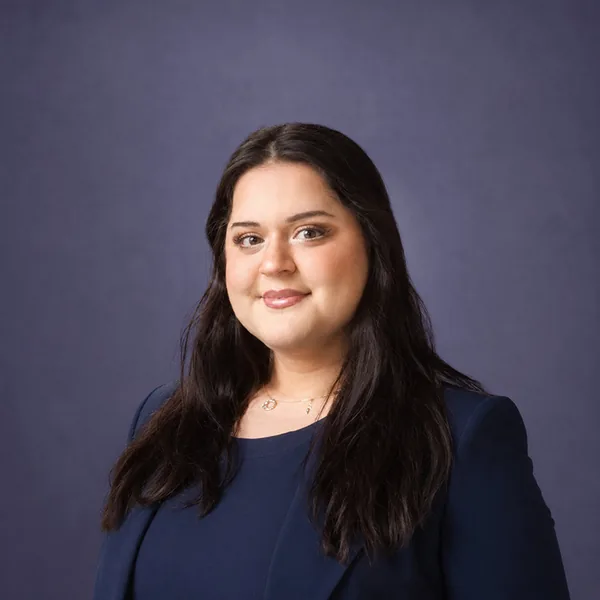
Maryam Safi
- B.A.Cornell University
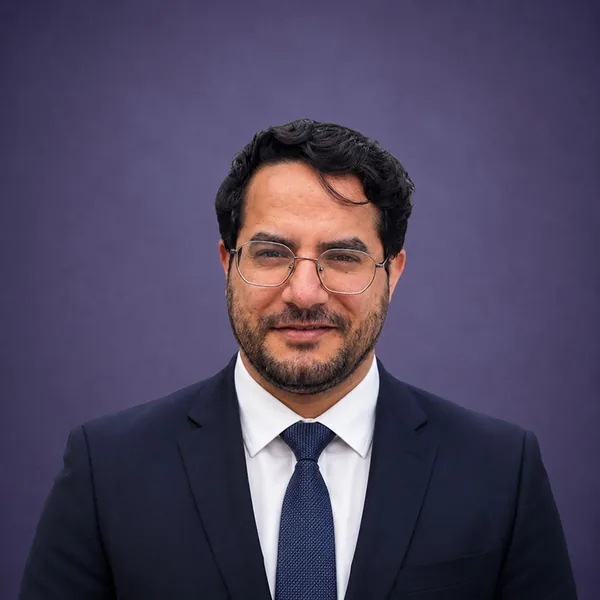
Wasil Peroz
- B.A.Milli University
- M.Sc.Otto-von-Guericke University Magdeburg
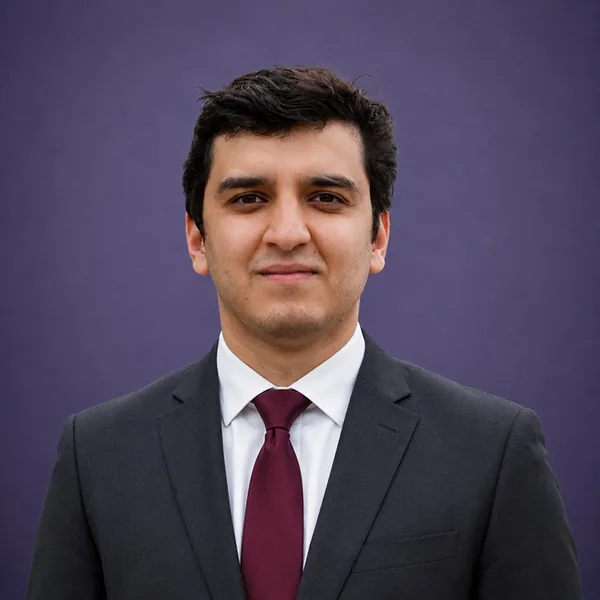
Hussain Ahmad
- M.Eng.Cornell University
- Ph.D.University of Chicago
Ariana Nexus Cultural Compliance Bureau
Reviews every module, scenario script and Pashto or Dari phrase before staff see it, and updates content as communities change.Faculty, role-players and interpreters
Faculty and role-players from the Afghan community and qualified Pashto and Dari interpreters staff every scenario session. Role-players are never named or photographed.
Does Afghan cultural training count toward POST and CE hours?
Many states require recurring cultural diversity or cultural competency training. Our modules are built for submission under those requirements: we supply the objectives, hours, instructor qualifications, roster and assessment records. Approval rests with each commission or CE body.
California
Penal Code § 13519.4
- Requirement
- Racial and cultural diversity training, with a refresher every five years
- Route to credit
- POST-certified course
Texas
37 TAC § 218.3
- Requirement
- Cultural Diversity (#3939) each four-year cycle for officers below Intermediate certification, reserves and jailers
- Route to credit
- TCOLE provider rules
Illinois
50 ILCS 705/7
- Requirement
- At least 30 hours of in-service training every three years, including cultural competency
- Route to credit
- State training board certification
Minnesota
Minn. Stat. § 626.8469
- Requirement
- 16 credits every three years, including recognizing and valuing community diversity and cultural differences
- Route to credit
- Board-approved provider
Virginia
6VAC20-30-30
- Requirement
- Two hours of cultural diversity within 40 in-service hours every two years
- Route to credit
- DCJS in-service rules
Washington
WAC 139-11-020
- Requirement
- Continuing training that includes communication with immigrant and refugee communities and people with limited English proficiency
- Route to credit
- CJTC rules
EMS
NREMT recertification
- Requirement
- Cultural training fits the local or individual hours
- Route to credit
- CAPCE accreditation or state approval
Child welfare
45 CFR 1356.60(b)
- Requirement
- Title IV-E can reimburse eligible staff training at 75%; federal policy lists cultural competency related to children and families
- Route to credit
- Your state training plan
Emergency management
HSEEP (2020)
- Requirement
- Exercises rated P, S, M or U against FEMA core capabilities, including Public Information and Warning and Mass Care Services
- Route to credit
- HSEEP-aligned design
A reference, not legal advice. Reviewed September 2026. We never describe a course as approved before the commission approves it.
Security, privacy and accessibility
Vetted faculty

Your data stays yours

Participant records

No recording without consent

Role-players protected

Accessible e-learning

European public bodies

No channel into Afghanistan
What we will not do
- Teach profiling, surveillance or intelligence gathering on Afghan communities.
- Present culture as an excuse for violence, abuse or crime.
- Put an Afghan label on generic diversity content.
- Use a resident’s real case, name or image without consent.
- Take sides on immigration policy in the classroom.
- Route anything through the de facto authorities in Afghanistan.
How agencies buy Afghan cultural training
Registered, identified and ready for your contracting or training office.
- SAM.gov
- Registered
- UEI
- M2UDMUDFXGL9
- CAGE
- 1Z3A3
- Headquarters
- 1717 Pennsylvania Avenue NW, 10th Floor, Washington, D.C. 20006
Purchase order
Training agreement
Grant-funded training
Subcontract or teaming
Public bodies abroad
What sets the price
Afghan cultural training for Canada, the United Kingdom, Germany and the EU
Afghan diaspora communities are growing across Canada, the United Kingdom and Europe. We train councils, police services, job centers and settlement programs by live video, in English with interpretation into German, French and other working languages, under GDPR and UK GDPR processor terms.
- 449,780GermanyAfghan nationals living in Germany at the end of 2025
- 39,058United Kingdompeople resettled through the UK’s Afghan schemes, 2021 to June 2026
- 55,195CanadaAfghan arrivals in Canada, August 2021 to November 2024
- 117,000European Union+asylum applications by Afghans in 2025, the most of any nationality
Source: European Union Agency for Asylum
This training, as public bodies search for it
12 languages
- DeutschInterkulturelle Kompetenz: Afghanistan-Schulung für Polizei, Rettungsdienst und Behörden
- FrançaisFormation interculturelle sur l’Afghanistan pour la police, les secours et les services publics
- EspañolFormación en competencia cultural afgana para policía, emergencias y administraciones públicas
- ItalianoFormazione sulla cultura afghana per polizia, soccorso e pubblica amministrazione
- PortuguêsFormação em competência cultural afegã para polícia, emergência e serviços públicos
- TürkçePolis, acil servis ve kamu personeli için Afgan kültürü eğitimi
- РусскийОбучение афганской культуре для полиции, экстренных служб и госслужащих
- 中文面向警察、急救人员和政府工作人员的阿富汗文化能力培训
- हिन्दीपुलिस, आपातकालीन सेवाओं और सरकारी कर्मचारियों के लिए अफ़ग़ान सांस्कृतिक प्रशिक्षण
- العربيةتدريب على الثقافة الأفغانية للشرطة وفرق الطوارئ وموظفي الجهات الحكومية
- اردوپولیس، ایمرجنسی سروسز اور سرکاری عملے کے لیے افغان ثقافتی تربیت
- עבריתהכשרה בתרבות אפגנית לשוטרים, לצוותי חירום ולעובדי ציבור
Afghan cultural competency training FAQs
What is cultural competency training for law enforcement?
It is training that helps officers communicate and act accurately with communities whose language, faith and customs differ from their own. Ariana Nexus focuses on Afghan communities: family and gender norms, Islamic practice, war trauma, names and documents, and working with Pashto and Dari interpreters, taught through scenarios built from each agency’s calls.
Is this DEI training?
No. It is operational training for specific public-service tasks: entering a home, interviewing a victim, running a shelter, notifying a family. It is built from your agency’s calls, forms and policies, is open to every employee, and measures what staff do differently in the field.
Who should attend Afghan cultural training?
Police officers and sheriff’s deputies, firefighters and EMS crews, 911 dispatchers and telecommunicators, emergency managers and shelter staff, child protective services caseworkers and social workers, corrections and probation officers, and public health department staff. Command staff and elected officials take a 90-minute leadership briefing.
How many hours is the training?
It ranges from 10-minute roll-call modules and a 90-minute leadership briefing to half-day and full-day workshops, a 16-hour agency program and a three-day train-the-trainer course. Most agencies start with a full-day scenario workshop for field staff and a leadership briefing.
Does the training count toward POST or continuing education hours?
It is built for submission. Many states require recurring cultural diversity or cultural competency training, including California, Texas, Illinois, Minnesota, Virginia and Washington. We supply the objectives, hours, instructor qualifications, roster and assessment records. Approval rests with each POST commission or CE body, and we never describe a course as approved before it is.
What is the difference between Pashto and Dari?
They are Afghanistan’s two main languages, and a speaker of one may not understand the other. Pashto is an Eastern Iranian language with southern and northern varieties. Dari is the Afghan form of Persian and the country’s most widely shared language. Staff should ask which language a resident prefers.
Is Farsi the same as Dari?
No. Afghan Dari and Iranian Persian (Farsi) are closely related but differ in pronunciation and in everyday public-service words such as municipality, district and interpreter. Many Afghans write “Farsi” on forms. Staff learn to confirm the variety and book a Dari interpreter.
What languages do Afghans speak?
Afghanistan’s 2004 constitution recognized Pashto and Dari as official languages, and Uzbeki, Turkmeni, Pashayi, Nuristani, Balochi and the Pamir languages as third official languages where most people spoke them. Ariana Nexus works in Pashto, Dari and 22 more Afghan languages, including regional dialects such as Kandahari and Yousafzai Pashto and Kabuli, Herati and Hazaragi Dari.
What is trauma-informed policing with Afghan residents?
It means recognizing how war, displacement and fear of authority shape a resident’s reactions, and adjusting how you approach, question and explain, without lowering safety or legal standards. Many Afghan residents lived through the Afghan war and the 2021 evacuation, and many first responders served in it.
What is moral injury?
Moral injury, sometimes called moral trauma, is lasting distress from perpetrating, failing to prevent, witnessing or learning about acts that violate deeply held moral beliefs (Litz et al., 2009). It is not a diagnosis. It can affect Afghan residents and the veterans on your staff, and our sessions make room for both.
How should staff greet Afghan residents?
A calm “salaam” and a nod work well, and many Afghans place a hand on the heart. Many do not shake hands with the opposite sex, which is not disrespect. Ask before entering a home, address the resident directly, and expect to be offered tea.
Are autopsies permitted in Islam?
Views differ among Muslims, and many families object to autopsy and aim to bury within a day, so the question comes up at notification. New York, Ohio and Rhode Island limit autopsies over a family’s religious objection absent a compelling public need, and California honors a signed certificate of religious belief. Staff learn to explain the medical examiner’s role.
How do you measure whether the training worked?
At four levels: a session evaluation, pre- and post-training assessments, a 90-day supervisor follow-up, and, if you choose, agency indicators such as interpreter bookings, complaints and repeat calls over six to twelve months. We report what we measure and promise nothing we cannot show.
Can you train our instructors to deliver the course?
Yes. Our three-day train-the-trainer course certifies up to 12 agency instructors, followed by an observed first delivery. Certified instructors deliver the curriculum inside your agency for 12 months, with an annual content update and recertification.
How is Afghan cultural training priced?
Per engagement, not per seat. The quote depends on the format, contact hours, number of cohorts, scenario staffing, travel, e-learning licences and instructor certification. We quote before every engagement.
Related services
This page covers government agencies and first responders. Courts have their own program in our cultural training for attorneys, judges and court staff, and hospitals and clinics in our training for healthcare staff.
Request Afghan cultural training for your agency.
Tell us your roles, headcount and the Afghan communities you serve. A named engagement lead replies within one business day with a recommended format, contact hours and a scoped proposal.