Pashto and Dari Conference and Diplomatic Interpreters

for international organizations, dialogues and delegations — and 22 more Afghan languages

  1. T–15
  2. T–10
  3. T–7
  4. T–5
  5. T–1
  6. Day 0
  7. T+1

Ariana Nexus provides Pashto and Dari conference and diplomatic interpreters for international organizations, embassies, government delegations and dialogue organizers. We deliver simultaneous, consecutive, whispered and remote simultaneous interpreting (RSI), in person or online. Our Pashto and Dari interpreters work directly into English, and we cover 22 more Afghan languages. Conference teams are staffed to AIIC team-strength and working-hour standards and led from Washington, D.C.

Reviewed September 2026 · Wasil Peroz, Principal

How we staff a conference or delegation

Every engagement runs on the same clock, counted in working days. Book three weeks out and nothing is left to the day.

  1. T–15

    Send the brief

    Agenda, dates, venue or platform, languages and who speaks. You receive a staffing plan and a written proposal within one business day.
    working days before
  2. T–10

    Team and combination

    We set team strength by the standard, name each booth's combination and any relay route, and match dialect and gender.
    working days before
  3. T–7

    Conflicts and security

    Each interpreter signs the non-disclosure agreements, declares conflicts and receives the security and protocol brief.
    working days before
  4. T–5

    Preparation

    Speeches, background and names reach the team at least five working days ahead. Our Cultural Compliance Bureau checks names, titles and sensitive terms, and the team builds the glossary.
    working days before
  5. T–1

    Technical check

    Booths, sound feed and relay are tested on site, or the platform and every channel are tested with your technician the day before.
    the working day before
  6. Day 0

    Delivery

    The team lead is your contact in the room, and interpreters change turns by the standard.
    the meeting
  7. T+1

    Close

    Notes shredded or collected, documents destroyed with a written record, and a short debrief with you.
    the working day after
T–15
working days before

Send the brief: what we need to staff your meeting

  • Agenda, dates and times, and which sessions will be closed
  • Venue and room layout, or the remote platform you will use
  • Languages, and who speaks which
  • Speeches, background papers and participant lists you can share
  • Your naming policy and any security or protocol rules
  • One contact on your side

You receive a staffing plan and a written proposal within one business day.

Simultaneous, consecutive or whispered: the interpreting your meeting needs

Conference interpreting is interpreting for meetings with an audience: plenaries, panels, forums and hearings, usually simultaneous from a booth or through a remote platform. Diplomatic interpreting is interpreting for officials in talks, visits and negotiations, usually consecutive or whispered, where protocol, discretion and exact wording carry the weight.

Most engagements mix both: a plenary in the booth, a bilateral in consecutive, a press statement at the end. We staff each part of the day by the mode it needs, with Pashto and Dari interpreters who know how Afghan officials, delegates and the Afghan diaspora actually speak.

Simultaneous interpreting

In a soundproof booth or on a remote platform, in real time through headsets. For plenaries, panels and any meeting with more than two languages.

Consecutive interpreting

The speaker pauses and the interpreter renders each passage from notes. For bilateral talks, press statements, toasts and site visits.

Whispered interpreting (chuchotage)

The interpreter sits beside one or two listeners and interprets quietly as the meeting runs. For a principal in a meeting held in another language.

Remote simultaneous interpreting (RSI)

Interpreters join by Zoom, Webex, Microsoft Teams or a dedicated interpreting platform, from a professional setup or an interpreting hub. For online and hybrid meetings.

Liaison and escort interpreting

An interpreter travels with a delegation through meetings, visits and meals, interpreting short exchanges. For official visits, study tours and parliamentary delegations.

Seminar interpreting with portable equipment

Simultaneous interpreting with portable transmitters and receivers instead of a booth. For site visits, workshops and small working groups.

How many interpreters a Pashto or Dari meeting needs

Team size is set by the professional standard, not by the budget. These are the AIIC minimums, and how we staff each case.

Meeting
Two languages, interpreted into one (Pashto into English)
Mode
Simultaneous
AIIC minimum
1 booth, 2 interpreters
How we staff it
2 interpreters with Pashto A and a tested English B
Meeting
Two languages, interpreted both ways (Pashto and English)
Mode
Simultaneous
AIIC minimum
1 or 2 booths, 3 interpreters
How we staff it
3 interpreters, each tested in both directions
Meeting
Three languages, into all three (Pashto, Dari, English)
Mode
Simultaneous
AIIC minimum
3 booths, 5 interpreters
How we staff it
Two per booth (six or more), and three in any booth that feeds relay
Meeting
Bilateral talks (Pashto and English)
Mode
Consecutive
AIIC minimum
2 interpreters
How we staff it
One interpreter for each delegation, working for its own principal
Meeting
One or two listeners in an English meeting
Mode
Whispered
AIIC minimum
At least 2 interpreters
How we staff it
2 interpreters, alternating
Meeting
Online or hybrid meeting
Mode
RSI
AIIC minimum
Larger team or shorter hours; turns of 15–20 minutes
How we staff it
3 per channel for sessions over two hours
Meeting
Any meeting
Mode
Working day
AIIC minimum
Two sessions of 2.5 to 3 hours
How we staff it
A longer day adds interpreters, not hours
Sources: AIIC Professional Standards, Articles 6 and 7; AIIC Guidelines on Distance Interpreting (2025).
T–10
working days before

Team, combination and languages

We support every language the Afghan people speak across the country and the diaspora. Pashto and Dari are staffed at conference level; the service level for the others is stated plainly, so you can plan the meeting around it.

Pashto, Dari and 22 more Afghan languages, with 13 working languages beside them

Conference level

Simultaneous and consecutive
  • Pashto
    پښتو
    Southern (Kandahari) and Northern (Peshawari) Pashto, and central and eastern varieties
  • Dari
    دری
    Kabuli, Herati, Badakhshi and Hazaragi Dari

Consecutive and liaison

Whispered and consecutive; simultaneous by arrangement
  • Uzbeki
  • Turkmeni
  • Balochi
  • Pashayi
  • Aimaq

By arrangement

Consecutive, usually with a Pashto or Dari relay
  • Kyrgyz
  • Brahui
  • Ormuri
  • Parachi
  • Wakhi
  • Shughni
  • Sanglechi
  • Ishkashimi
  • Munji
  • Yidgha
  • Gawarbati
  • Tirahi
  • Nuristani (Ashkun group)
  • Kati
  • Prasun
  • Waigali
  • Tregami

Working languages

English and the five other UN official languages — Arabic, Chinese, French, Russian and Spanish — plus German, Italian, Portuguese, Turkish, Urdu, Hindi and Hebrew.
  • English

  • Arabic

  • Chinese

  • French

  • Russian

  • Spanish

  • German

  • Italian

  • Portuguese

  • Turkish

  • Urdu

  • Hindi

  • Hebrew

Dialect and region

Kandahari or Peshawari Pashto; Kabuli, Herati, Badakhshi or Hazaragi Dari.

Gender

Female interpreters for women's delegations, women-only sessions and testimony, when you ask.

Subject

Security, economics, humanitarian law, health and education, briefed before the meeting.
On site in Washington, D.C. and New York. Travelling teams for Geneva, Vienna, Brussels, The Hague, London, Berlin, Oslo, Ottawa, Doha, Istanbul, Tashkent and Almaty. Remote simultaneous interpreting worldwide.
T–7
working days before

Confidentiality, neutrality and security

Closed-door meetings run on trust. These are the rules every interpreter works under, written into every engagement.

AIIC Code of Professional Ethics, Article 2

“Members of the Association shall be bound by the strictest secrecy, which must be observed towards all persons and with regard to all information disclosed in the course of the practice of the profession at any gathering not open to the public.”

The Chatham House Rule

“When a meeting, or part thereof, is held under the Chatham House Rule, participants are free to use the information received, but neither the identity nor the affiliation of the speaker(s), nor that of any other participant, may be revealed.”

  • Strict secrecy

    Every interpreter signs your non-disclosure agreement and ours, and is held to the confidentiality standard in AIIC's Code of Professional Ethics for any meeting not open to the public.
  • Conflict declarations

    Each interpreter declares ties to parties, employers or causes before staffing. We do not staff a declared conflict.
  • Notes and documents

    Interpreters' notes are shredded at the close of each session, or collected by your security office. Preparation documents arrive by encrypted transfer and are destroyed with a written record.
  • No recording, no AI

    Nothing is recorded without your consent and the interpreters'. No third-party speech AI or machine translation runs on closed-session audio, and your audio never trains a model.
  • Devices and rooms

    Personal devices stay out of the booth and the room when you ask. We follow your venue's security procedures and your protocol office's instructions.
  • Sanctions screening

    Engagements involving listed individuals are screened against U.S. (OFAC), UN (1988 Sanctions List), EU and UK lists before we accept them. We work for the convenor, never for a listed party.
  • No channels through Afghanistan

    We do not route documents, data or communications through channels controlled by Afghanistan's de facto authorities.
  • Location and data

    Interpreters on U.S. assignments are located in the United States. European clients receive GDPR and UK GDPR terms. Clearable interpreters are available on request; classified meetings are staffed only under our defense and intelligence linguist service, never with uncleared interpreters.
T–5
working days before

Preparation and the speaker brief

For your speakers

  1. Send speeches and slides five working days ahead, even as drafts.

  2. Speak in your own language; you will be clearer, and so will the interpretation.

  3. Say names, titles and numbers slowly, and in full the first time.

  4. If you read a text, read it at speaking pace, not reading pace.

  5. For UN meetings under rule 53, tell us which official language your interpretation must reach.

Speaking Pashto or Dari at the United Nations

“Any representative may make a speech in a language other than the languages of the General Assembly. In this case, the representative shall provide for interpretation into one of the languages of the General Assembly or of the committee concerned.”

UN General Assembly rules of procedure, rule 53. The Security Council's rule 44 says the same.
A delegate or briefer who speaks Pashto or Dari brings the interpreter. UN interpreters then work from that interpretation into the other official languages. We provide the Pashto or Dari interpreter, normally into English, prepared on the speech in advance.

Pashto dialects, Dari versus Farsi, and Afghan names, titles and dates

Pashto or Pakhto

Kandahar says Pashto; Peshawar says Pakhto. The letter ښ sounds different by region, and so do dozens of words. We match interpreters to the speakers' region.

Dari, not Farsi

Afghan officials say pohantun (پوهنتون) for university; Iranian speakers say daneshgah (دانشگاه). Words like these signal origin in the room, so Afghan delegations get Afghan Dari interpreters.

Register

Formal Afghan speech moves between classical Persian, Pashto oratory and Arabic religious and legal vocabulary. Our interpreters are prepared for all three.

Names and titles

Honorifics, family names and titles are rendered consistently, spelled to match your records and checked by our Cultural Compliance Bureau.

Dates

Afghan speakers usually date events in the Solar Hijri calendar, with its own month names, and some official documents use the lunar Hijri calendar. ۱۵ ثور ۱۴۰۵ is 5 May 2026; our interpreters render both correctly.

Contested names

Speakers use their own names for institutions, places and each other. We interpret every name as spoken, without comment; your written record follows your organization's naming policy.

Direct interpretation or relay: how every language reaches the room

Pashto and Dari interpreters work directly with English as standard. Where a meeting needs Pashto or Dari with Arabic, Chinese, French, Russian, Spanish or another language, we staff a direct combination if our team holds it. If not, our interpreters render Pashto or Dari into English, and the other booths take relay from the English channel.

We name every direct combination and every relay route in the staffing plan, and put our strongest interpreters in the booth that feeds relay. AIIC's code asks teams to avoid the systematic use of relay; we use it only where no direct combination exists.

T–1
the working day before

Technical check: booths, sound, relay and remote platforms

We cite current editions only. Several standards still quoted in the market have been withdrawn and replaced.

Standards we work to

Standard
ISO 23155
Edition
2022
What it governs
Conference interpreting services
Our practice
Team composition, preparation and working conditions
Standard
ISO 17651-1
Edition
2024
What it governs
Permanent interpreting booths
Our practice
Booth check with your venue before the meeting
Standard
ISO 17651-2
Edition
2024
What it governs
Mobile interpreting booths
Our practice
Specified in the technical rider we send
Standard
ISO 17651-3
Edition
2026
What it governs
Interpreting hubs
Our practice
Remote interpreters work from hubs or equivalent setups
Standard
ISO 20109
Edition
2025
What it governs
Simultaneous interpreting equipment and sound
Our practice
Sound feed and relay tested before day one
Standard
ISO 24019
Edition
2022
What it governs
Remote interpreting platforms
Our practice
Every channel tested with your technician
Standard
AIIC Professional Standards
Edition
Current
What it governs
Team strength and working hours
Our practice
Never below the minimum
Standard
AIIC Code of Professional Ethics
Edition
2022
What it governs
Secrecy, preparation, relay
Our practice
Written into every engagement
Standard
ASTM F2089
Edition
2024
What it governs
Spoken and sign language interpreting (U.S.)
Our practice
Baseline for U.S. assignments
Aligned with, not certified to. We apply AIIC's published standards; this is not a claim of AIIC membership. Where a standard applies to your venue or platform, we check it with you.

Zoom

Hosts can add Pashto and Dari as custom interpretation languages.

Webex and Microsoft Teams

We confirm how the Pashto and Dari channels are labelled before the meeting.

Interpreting hubs

Remote interpreters work from hubs built to ISO 17651-3:2026, or professional setups with wired connections and a backup line.
Day 0
the meeting

In the room: the rooms we staff and the team you work with

Pashto and Dari interpreters for the UN, embassies, peace talks and summits

  1. United Nations and international organizations

    Security Council and General Assembly side events, Human Rights Council sessions, agency consultations, and donor and humanitarian coordination meetings.
  2. Official visits and delegations

    State, official and working visits, study tours, embassy events and parliamentary delegations.
  3. Bilateral and multilateral talks

    Ministerial meetings, technical working groups and negotiations.
  4. Peace talks, mediation and Track II dialogues

    Closed-door dialogues, often under the Chatham House Rule, including proximity talks and shuttle mediation.
  5. Parliamentary hearings and briefings

    Committee hearings, briefings for legislators and cross-party roundtables.
  6. Summits, forums and press conferences

    Plenaries and panels, joint press statements and media briefings.
  7. Consultations and testimony

    Consultations with the Afghan diaspora, women's groups and civil society, and hearings with witnesses and survivors of the Afghan war and its aftermath.
  8. Regional dialogues

    Connectivity, trade, water, returns and displacement, and counter-narcotics meetings across Central and South Asia.

The team behind your interpreters

Our people studied at Cornell, the University of Chicago, the University of British Columbia and Otto von Guericke University Magdeburg, and they come from the Afghan communities our interpreters serve. They test, brief and supervise every team.
An empty meeting room with a long wooden table, pink chairs and a wall-mounted screen beside floor-to-ceiling windows.
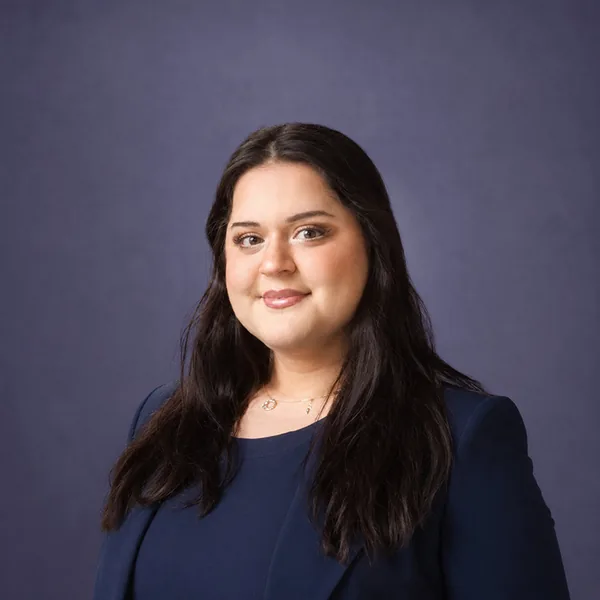
Hassan Ukasha
Program oversight

Hassan Ukasha

Managing Partner

Oversees the firm's operations and this program: engagement terms and conflict checks, the standard every interpreter is tested and briefed against, and final approval of every team fielded for a high-level meeting.
Education
  • B.S.
    ,
    Cornell University
  • M.P.H.
    ,
    Cornell University
Record
Herat · Pashto, Dari, English, Urdu and Hindi; working Arabic
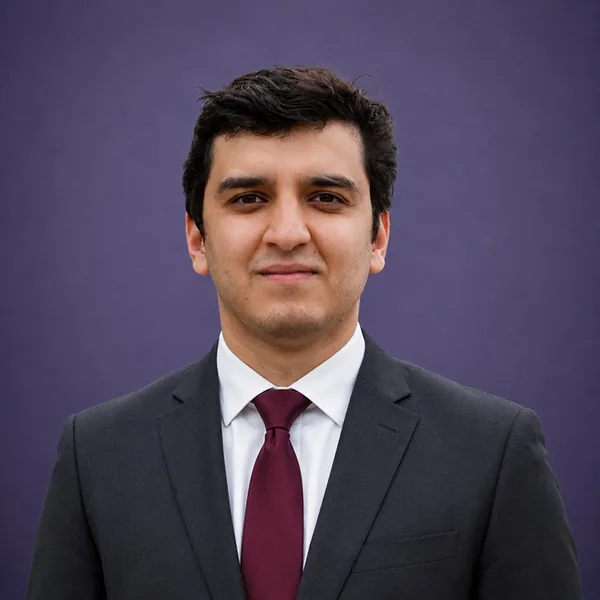
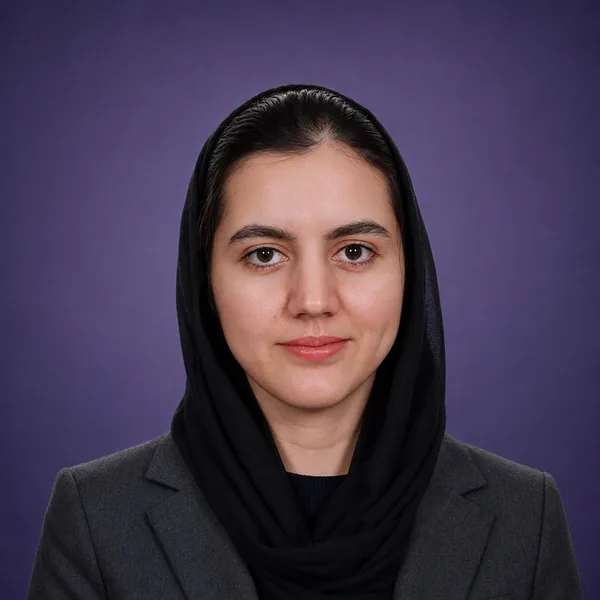
Zeba Haqbani

Zeba Haqbani

Senior Partner
  • B.Sc.
    ,
    University of British Columbia
Runs the secure systems behind each engagement: encrypted document transfer, remote-interpreting platform setup and the destruction record.
Lived in Kabul
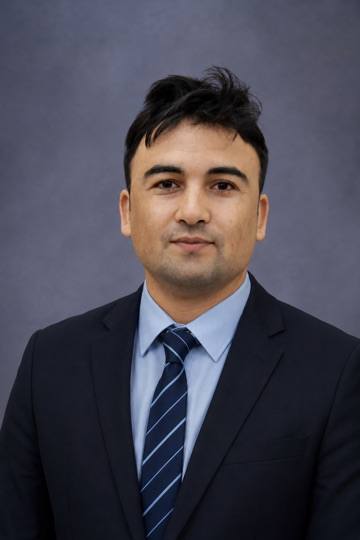
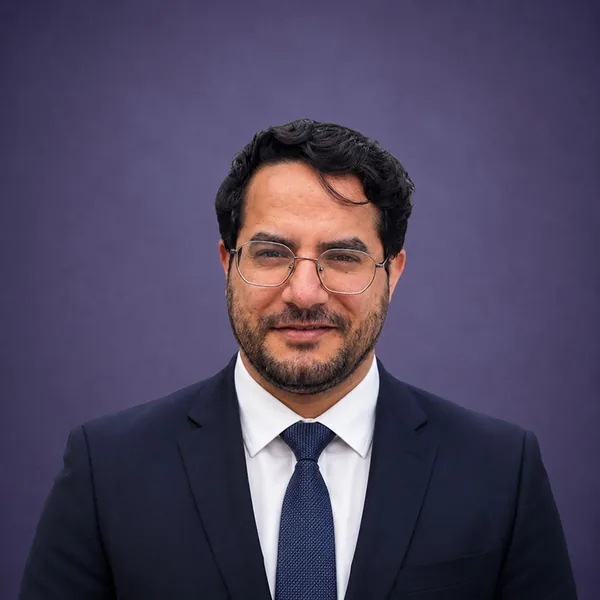
Wasil Peroz

Wasil Peroz

Principal
  • B.A.
    ,
    Milli University
  • M.Sc.
    ,
    Otto-von-Guericke University Magdeburg
Owns diplomatic and legal terminology: agreement texts, titles, contested names and the glossaries every team works from.
Maryam Safi

Maryam Safi

Principal
  • B.A.
    ,
    Cornell University
Tests and assembles each team: language combination, mode and level, conflict declarations, and dialect and gender matching.
Hussain Ahmad

Hussain Ahmad

Analyst
  • M.Eng.
    ,
    Cornell University
  • Ph.D.
    ,
    University of Chicago
Tests remote and hybrid setups — audio paths, relay channels, platform labels — and sets where AI may and may not be used.

Conference interpreters

Tested at liaison, seminar or conference level in their exact combination. We do not publish their names, for their safety and their families'.

Cultural Compliance Bureau

Reviews names, titles, sensitive terms and the multilingual glossary before every high-level meeting.

Protocol coordinators

Work with your protocol office on seating, order of speakers, press arrangements and movements.
T+1
the working day after

Close and debrief

Notes

Interpreters' notes are shredded at the close of each session, or collected by your security office.

Documents

Preparation documents are destroyed, and you receive a written destruction record.

Debrief

A short debrief with you: what worked, what to change for the next round.

Interpreter care

After testimony about the Afghan war, interpreters are debriefed too; moral trauma is part of the work.

Why Ariana Nexus for Pashto and Dari conference interpreting

No U.S. certification exists for conference interpreters in any language, let alone Pashto or Dari. So we set the standard: we test every interpreter ourselves, in the combination and mode they will work in, train our own team and Afghan diaspora interpreters, and hold them to it on every assignment.

  1. University-educated, tested interpreters

    Our interpreters are university graduates, tested in the exact language combination, mode and level they will work at, and briefed on the subject of the meeting. Not bilingual staff on loan.
  2. Afghan context in every rendering

    Dialect, register, titles, names and dates are where Afghan meetings go wrong. Our teams come from the communities they interpret for, and our Cultural Compliance Bureau checks sensitive terms before high-level meetings.
  3. The standard sets the team

    Never one interpreter alone in a simultaneous booth. Team strength and working hours follow AIIC's professional standards; a longer day adds interpreters, not hours.
  4. Neutral by design

    Every interpreter declares conflicts before staffing. We interpret every speaker with the same fidelity and take instructions only from the client who engages us: the convenor, or the delegation we interpret for.
  5. Confidential by default

    Strict secrecy, the convenor's rules, notes shredded or collected, nothing recorded without consent, and no third-party AI on closed-session audio.
  6. Honest about relay

    We name every direct combination and every relay route in the staffing plan, so you know how each language reaches the room.
  7. One firm, one point of accountability

    Our own interpreters, never another agency's, and one engagement lead from the first brief to the debrief.

In your language

Conference and diplomatic interpreting in Pashto and Dari, described in the languages our clients work in.

  • Deutsch
    Konferenzdolmetscher für Paschtu und Dari – simultan und konsekutiv, für Konferenzen und Delegationen.
  • Français
    Interprètes de conférence en pachto et en dari : interprétation simultanée et consécutive pour conférences et délégations.
  • Español
    Intérpretes de conferencias de pastún y darí: interpretación simultánea y consecutiva para conferencias y delegaciones.
  • Italiano
    Interpreti di conferenza di pashto e dari: interpretazione simultanea e consecutiva per conferenze e delegazioni.
  • Português
    Intérpretes de conferência de pashto e dari: interpretação simultânea e consecutiva para conferências e delegações.
  • Türkçe
    Peştuca ve Darice konferans tercümanları: simültane, ardıl ve heyet tercümanlığı.
  • Русский
    Устные переводчики с пушту и дари для конференций и дипломатических делегаций: синхронный и последовательный перевод.
  • العربية
    مترجمون فوريون للبشتو والدرية للمؤتمرات والوفود الدبلوماسية.
  • اردو
    کانفرنسوں اور سفارتی وفود کے لیے پشتو اور دری ترجمان۔
  • हिन्दी
    सम्मेलनों और राजनयिक प्रतिनिधिमंडलों के लिए पश्तो और दारी दुभाषिए।
  • 中文
    普什图语和达里语会议口译与外交口译。
  • עברית
    מתורגמנים לפשטו ולדארי לכנסים ולמשלחות דיפלומטיות.
پښتو
د کنفرانسونو، ډیپلوماټیکو غونډو او پلاوو لپاره د پښتو او دري ترجمانان
دری
ترجمانان پشتو و دری برای کنفرانس‌ها، نشست‌های دیپلوماتیک و هیئت‌ها

Frequently asked questions

Straight answers to the questions delegations, protocol offices and conference organizers ask us first.

What is the difference between conference interpreting and diplomatic interpreting?

Conference interpreting is interpreting at meetings with an audience, usually simultaneous from a booth or through a remote platform. Diplomatic interpreting is interpreting for officials in talks, visits and negotiations, usually consecutive or whispered, where the interpreter works for one side and protocol, discretion and exact wording carry the weight. Most engagements mix both: a plenary in the booth, a bilateral in consecutive, a press statement at the end.

Do we need simultaneous or consecutive interpreting?

Choose simultaneous for plenaries, panels and any meeting with more than two languages or a fixed schedule; it needs booths or a remote platform. Choose consecutive for bilateral talks, press statements, site visits and small meetings where precision and rapport matter more than speed; it roughly doubles speaking time. Whispered interpreting suits one or two listeners in a meeting held in another language. Send us the agenda and we will recommend the mode for each session.

How many interpreters does a Pashto or Dari meeting need?

For simultaneous interpreting, at least two interpreters per booth, and three when a booth works into both languages, following AIIC's professional standards; we also put three in any booth that feeds relay. A working day is at most two sessions of two and a half to three hours; longer days need more interpreters. Consecutive and whispered interpreting also need two interpreters for anything beyond a short session. Remote meetings need larger teams or shorter turns.

Are your Pashto and Dari conference interpreters certified?

No U.S. certification exists for conference interpreters in any language, Pashto and Dari included. So we set the standard ourselves. Every interpreter is tested in the exact language combination, mode and level they will work at, using the three levels the U.S. Department of State's Office of Language Services uses for its contract interpreters: liaison, seminar and conference. Every interpreter is briefed on the meeting before the assignment. We also train Afghan-language interpreters beyond our own team, including interpreters from the Afghan diaspora.

Can a delegate speak Pashto or Dari at the United Nations?

Yes. Under rule 53 of the General Assembly's rules of procedure, and rule 44 in the Security Council, a representative may speak in a language other than the six official languages. The representative must then provide interpretation into one of them, and UN interpreters work from that interpretation into the other official languages. We provide the Pashto or Dari interpreter, normally into English, prepared on the text in advance.

Is Dari the same as Farsi? Can a Farsi interpreter cover an Afghan delegation?

Dari is the Afghan variety of Persian. Speakers of Dari and Iranian Persian (Farsi) understand each other, but vocabulary, official terms, pronunciation and idiom differ: an Afghan official says pohantun for university where an Iranian speaker says daneshgah. In a diplomatic room those differences carry meaning. We staff Afghan Dari interpreters for Afghan delegations, matched to the speakers' region where it matters.

Can one interpreter cover both Pashto and Dari?

Many of our interpreters work in both, and Afghan meetings often switch between them mid-session. In simultaneous interpreting we staff by direction, Pashto into English and Dari into English, with enough interpreters in the booth that no one works alone or covers both for a full session. In consecutive talks, one interpreter can cover both when speakers alternate.

What is relay interpreting, and when do you use it?

In relay, one booth interprets from a language the other booths do not cover into a shared language, usually English, and the other booths interpret from that version. It lets a Pashto speaker reach Chinese, Russian or Arabic listeners. We use relay only where no direct combination is available, name every relay route in the staffing plan, and put our strongest interpreters in the booth that feeds relay.

Do you provide remote simultaneous interpreting (RSI) on Zoom, Webex or Microsoft Teams?

Yes. On Zoom, hosts can add Pashto and Dari as custom interpretation languages; on Webex and Microsoft Teams we confirm how the channels are labelled before the meeting. Interpreters work from professional setups or interpreting hubs with wired connections and backup lines, and every channel is tested with your technician the day before. For sensitive meetings we advise which platform settings to use.

What booth and equipment standards do you work to?

ISO 17651-1:2024 for permanent booths, ISO 17651-2:2024 for mobile booths, ISO 17651-3:2026 for interpreting hubs, ISO 20109:2025 for equipment and sound, and ISO 24019:2022 for remote interpreting platforms, with ISO 23155:2022 for conference interpreting services. We check the booths, sound feed and relay set-up with your venue or audiovisual provider before the meeting.

How do you keep closed-door meetings confidential?

Every interpreter signs a non-disclosure agreement and is held to strict secrecy for any meeting not open to the public. We honour the convenor's rules, including the Chatham House Rule. Interpreters' notes are shredded at the close of each session or collected by your security office, nothing is recorded without consent, no third-party AI touches closed-session audio, and preparation documents are destroyed with a written record.

Can you interpret at meetings where representatives of Afghanistan's de facto authorities take part?

Yes, when a government or an international organization convenes or commissions the meeting. Our interpreters work for the convenor, render every speaker with the same fidelity and take no instructions from any party. Engagements involving listed individuals are screened against U.S., UN, EU and UK sanctions lists and accepted only where the applicable rules allow. We never route documents or communications through channels controlled by the de facto authorities.

Do you provide female interpreters?

Yes. We match interpreter gender when you ask, including for women's delegations, women-only consultations and testimony sessions. We also match dialect and region, such as Kandahari or Peshawari Pashto, or Kabuli, Herati or Hazaragi Dari, when it changes how speakers are understood.

How far in advance should we book?

For conference teams, two to three weeks is best, with speeches and background sent at least five working days before the meeting. Liaison and escort interpreters can often be confirmed within 48 hours. Short-notice requests are possible when a tested team is available, so call us rather than waiting on email.

How is conference interpreting priced?

We quote per engagement: the number of interpreters and days, the mode, preparation, travel, and any equipment or platform support. Team size follows the professional standard for the meeting, not the budget, and preparation is included. You receive a written proposal with the staffing plan within one business day of a complete brief.

How do you support interpreters in testimony sessions about the Afghan war?

Testimony about the Afghan war and its aftermath can carry moral trauma, including moral injury and vicarious trauma, for speakers and interpreters alike. We brief interpreters before such sessions, staff them so no one works alone, and debrief afterward under a protocol set by Diana Ayubi, Psy.D. It protects the interpreters and the accuracy of what the room hears.

Tell us about the meeting

Send the agenda, dates and languages. You'll receive a staffing plan — team, modes, relay routes and preparation schedule — with a written proposal within one business day.

Request conference interpreters

Short notice or urgent: +1 (202) 771-0224 · 1717 Pennsylvania Avenue NW, 10th Floor, Washington, D.C. 20006
SAM.gov registered · UEI M2UDMUDFXGL9 · CAGE 1Z3A3 · NAICS 541930