
Interpreters for Government Agencies and Public Services in Pashto, Dari and 22 More Afghan Languages
Qualified Pashto and Dari interpreters, and interpreters in 22 more Afghan languages, for federal, state, county and city agencies. On site across the United States, and by video and phone. Every interpreter is matched to the resident’s language variety and dialect, and to their gender when it matters, and every assignment produces a written record.
Capability StatementWho provides Pashto and Dari interpreters for government agencies?
Ariana Nexus provides Pashto interpreters, Dari interpreters and interpreters in 22 more Afghan languages to federal, state, county and city agencies and public services. Interpreters work on site, by video remote interpreting (VRI) and over the phone (OPI), in consecutive and simultaneous modes, and sight-translate forms and notices. Each is assessed in the variety they interpret, screened for conflicts with the people they serve, and bound by confidentiality on every assignment.
Three readiness levels for public agencies
Interpreting that holds on an ordinary Tuesday and on the night a shelter opens.
- Level 1
Routine services
- When
- Everyday interviews, visits, meetings and calls.
- What we provide
- A standing agreement: Pashto and Dari on demand by video and phone, on site with 24 hours’ notice.
- Level 2
Planned surge
- When
- Intake drives, clinics, resettlement arrivals and public meetings.
- What we provide
- Roster and glossary agreed in advance; interpreters scheduled by site and shift.
- Level 3
Emergency activation
- When
- Shelters, evacuations, disaster recovery centers and public warnings.
- What we provide
- An activation call to your engagement lead; video and phone first, on-site interpreters as travel allows.
The Afghan residents your agency serves
The Afghan diaspora in the United States grew quickly after the 2021 evacuation, and many Afghan people served by public agencies are still learning English. These are the figures agencies plan around.
- August 2021The evacuation from Kabul brings tens of thousands of Afghans to the United States under Operation Allies Welcome, and public agencies across the country begin serving newly arrived families.
- March 202273,566 Afghan evacuees have been paroled into the United States.
- Fiscal year 2023Afghanistan leads U.S. asylum grants: about 14,500, or 27% of the total.
- March 2025Executive Order 14224 revokes Executive Order 13166. Agencies are not required to stop services in other languages.
- 2025Afghans file about 117,000 asylum applications in the EU+, more than any other nationality.Source: European Union Agency for Asylum
- June 2026The United Kingdom has resettled 39,058 people through its Afghan schemes since 2021.
Pashto and Dari interpreters for every public service
From the benefits window to the emergency shelter, the same standard applies: the right language, the right variety and an interpreter the resident can trust.

Emergency management
Shelters, evacuation orders, disaster recovery centers and public warnings in Pashto and Dari.
Police, sheriff and public safety
Victim and witness interviews, community policing and follow-up after 911 calls, by interpreters who complete your agency’s background check.
Public health departments
Outreach, vaccination and screening clinics, contact investigations and public health orders.
Refugee resettlement and newcomer services
State refugee programs and services for Afghan evacuees, Special Immigrant Visa (SIV) holders and other Afghan allies.
Child and family services
Child protective services visits, family assessments, case plans and foster care meetings, with a woman interpreter for mothers and children on request.
Social services and benefits
SNAP, TANF and cash assistance interviews, eligibility reviews and appeals, where one misunderstood answer changes what a family receives.
Corrections, probation and parole
Intake, classification, disciplinary hearings, supervision meetings and reentry planning.
Housing, workforce and unemployment
Housing authority briefings, American Job Centers, unemployment claims and appeals.
Public meetings and elected offices
City council and county board meetings, public hearings, town halls and constituent services, with simultaneous interpreting.
Why Ariana Nexus for Pashto and Dari interpreting
The federal court interpreter certification exam is offered only for Spanish, and no national medical interpreter exam tests Pashto or Dari. With no U.S. interpreter exam for these languages, we wrote our own standard, hold every interpreter to it, and train Afghan-language interpreters beyond our own bench.
- 01
Scholars, not bilinguals
Every interpreter holds a college degree and passes a two-way assessment in the exact variety they interpret. A bilingual employee is not an interpreter, and we never send one. - 02
The right variety, confirmed at booking
Southern or northern Pashto, Afghan Dari (including the Hazaragi dialect of Dari), Uzbeki or Turkmeni: we confirm the variety before we assign, and we record it. - 03
Gender matched, or you know first
When a resident needs a woman or a man to interpret, we match it. If we cannot, you hear it before the assignment, not at the door. - 04
Screened for conflicts in a close community
Before or at the start of every assignment, the interpreter confirms no family, village or community tie to the resident, and steps aside if there is one. Where confidentiality demands it, we assign an interpreter from another region by video. - 05
Our own bench, one point of accountability
Every interpreter is on our own bench, and every assignment is ours to answer for. We never broker another agency’s interpreters, and interpreters on U.S. assignments are located in the United States. - 06
A record your language access plan can use
Each assignment produces a record of language, variety, interpreter ID, channel, connect time and duration, so your agency can report language access by the numbers.
How to book a Pashto or Dari interpreter
- Step 1
Request
Tell us the program, the setting, the date, the address or link, and the language your resident reported. - Step 2
Confirm
We confirm the variety, the gender needed and the channel, and run the conflict check. - Step 3
Brief
The interpreter receives your agency’s terms, forms and any safety notes before the assignment. - Step 4
Interpret
Accurate, complete and impartial interpreting in the first person, with sight translation of forms where needed. - Step 5
Record
The assignment record is written the same day: language, variety, interpreter ID, channel, connect time and duration. - Step 6
Review
Your engagement lead reviews quality and any concern with you, and interpreters are re-assessed on a fixed cycle.
Pashto, Dari and 22 more Afghan languages we interpret
We match the language and the variety. Pashto has southern and northern varieties; Afghan Dari differs from Iranian Persian in the words public services use every day; and we send dialect-matched Dari interpreters for the Hazaragi dialect.
Iranian 12
- Pashto
- Dari
- Aimaq
- Balochi
- Ormuri
- Parachi
- Wakhi
- Shughni
- Sanglechi
- Ishkashimi
- Munji
- Yidgha
Turkic 3
- Uzbeki
- Turkmeni
- Kyrgyz
Indo-Aryan 3
- Pashayi
- Gawarbati
- Tirahi
Nuristani 5
- Nuristani (Ashkun group)
- Kati
- Prasun
- Waigali
- Tregami
Dravidian 1
- Brahui
Working languages
- English
- French
- German
- Spanish
- Italian
- Portuguese
- Turkish
- Arabic
- Urdu
- Hindi
- Hebrew
- Russian
- Chinese
On-site, video and phone interpreting for agencies
Choose the channel by the stakes of the conversation, not by what is quickest to book.
Is Dari the same as Farsi? Why the variety decides the interview
Afghan Dari and Iranian Persian are understood across the border in conversation, but they part ways in the words public services use: offices, places and documents. A resident who writes “Farsi” on an intake form is often an Afghan Dari speaker. We confirm the variety at booking and never send an Iranian Persian interpreter for an Afghan Dari assignment without your agency’s written consent.

The team behind Ariana Nexus government interpreting
Ariana Nexus is led by scholars and professionals from the Afghan community who studied at Cornell University, the University of Chicago, the University of British Columbia and Otto-von-Guericke University Magdeburg. They set the interpreter standard, lead every engagement and answer for every assignment.
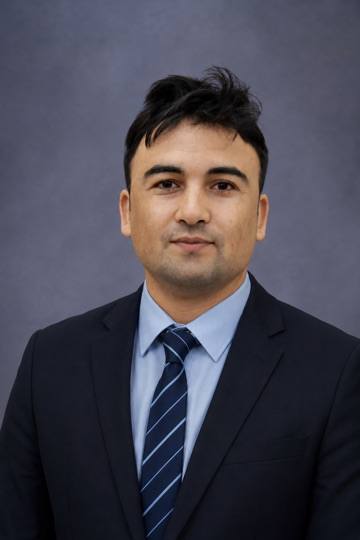
Hassan Ukasha
- B.S.Cornell University
- M.P.H.Cornell University
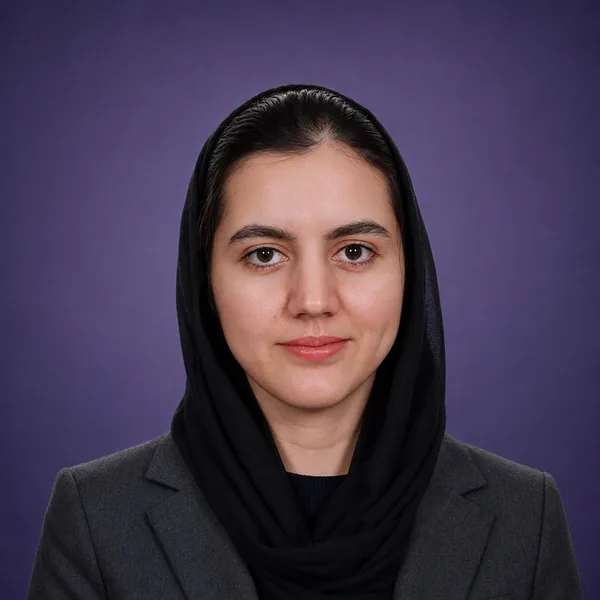
Zeba Haqbani
- B.Sc.University of British Columbia
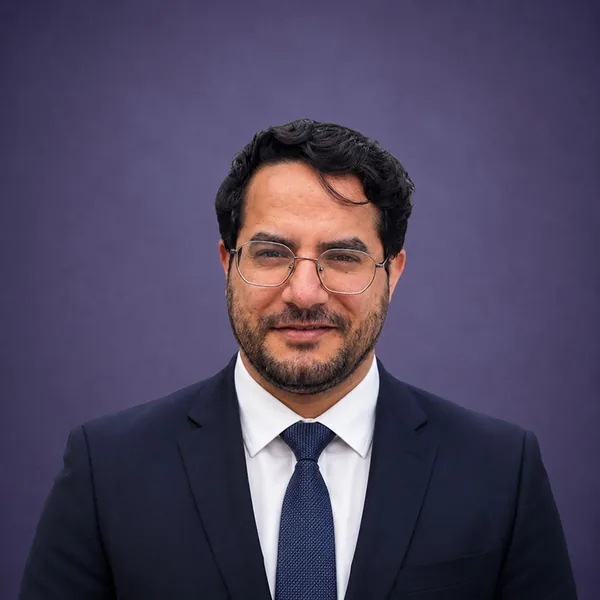
Wasil Peroz
- B.A.Milli University
- M.Sc.Otto-von-Guericke University Magdeburg
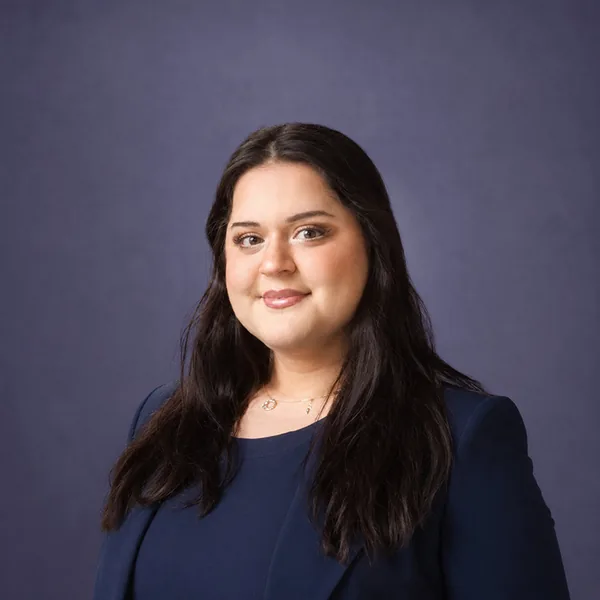
Maryam Safi
- B.A.Cornell University
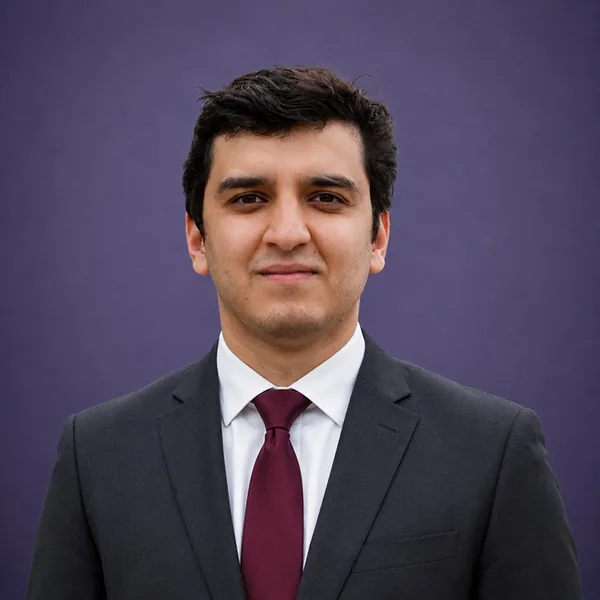
Hussain Ahmad
- M.Eng.Cornell University
- Ph.D.University of Chicago
Cultural Compliance Bureau
Reviews agency glossaries, Pashto and Dari public notices and terminology before interpreters use them.The interpreter bench
College-educated interpreters from the Afghan community, assessed in the varieties they interpret, and located in the United States for U.S. assignments.
The standard every interpreter meets
- 1A completed college degree.
- 2A two-way assessment in the specific variety they interpret, such as southern Pashto or Afghan Dari.
- 3Structured training for public-service settings: consecutive interpreting, sight translation, note-taking and role boundaries.
- 4A written code of ethics: accuracy, completeness, impartiality and confidentiality.
- 5Annual confidentiality and data-protection training, plus your agency’s own background or fingerprint check where required.
- 6Supervised first assignments before independent work.
- 7Periodic re-assessment, and review of every concern raised.
Trauma-informed interpreting
Human interpreters, not machine translation
Security, confidentiality and data protection
- No recording by default
- Recording happens only on your agency’s written request and under your retention rules.
- U.S.-located interpreters
- Interpreters on U.S. assignments work from the United States.
- Confidentiality agreements
- Signed for every agency; interpreter notes are destroyed at the end of each assignment unless your records rules require otherwise.
- Criminal justice information
- Interpreters complete your agency’s state and national fingerprint-based checks where required (FBI CJIS Security Policy v6.1, control PS-3).
- Health information
- A business associate agreement is signed before the first encounter where your program is covered by HIPAA.
- Public bodies abroad
- GDPR and UK GDPR processor terms (Article 28) with approved transfer safeguards, and Canadian privacy terms for Canadian public bodies.
- No channel into Afghanistan
- We have no operations in Afghanistan and never route documents, data or requests through the de facto authorities there.
What we will not do
- Send a bilingual employee, a volunteer or a family member in place of a qualified interpreter.
- Send an Iranian Persian (Farsi) interpreter for an Afghan Dari assignment without your written consent.
- Assign an interpreter who knows the resident or their family.
- Record an assignment by default.
- Route documents, data or requests through the de facto authorities in Afghanistan.
- Use machine translation in place of an interpreter where rights, benefits or safety are decided.
Are government agencies required to provide interpreters in 2026?
Executive Order 14224 designated English the official language on March 1, 2025 and revoked Executive Order 13166. The Department of Justice and several other federal agencies have since withdrawn their limited English proficiency (LEP) guidance, and a July 14, 2025 Attorney General memorandum tells agencies to minimize non-essential multilingual services. The order also says agencies are not required to stop offering services in other languages. What still applies depends on your funding and jurisdiction.
Federal agencies now decide which multilingual services their mission requires. Accurate interviews, sound eligibility decisions, public safety and due process are mission requirements, and a qualified interpreter is how they are met.
How agencies buy Pashto and Dari interpreting
Registered, identified and ready for your contracting office.
- SAM.gov
- Registered
- UEI
- M2UDMUDFXGL9
- CAGE
- 1Z3A3
- NAICS (this service)
- 541930 Translation and Interpretation Services
- State vendor registrations
- California, Maryland, Virginia
- Headquarters
- 1717 Pennsylvania Avenue NW, 10th Floor, Washington, D.C. 20006
Purchase order
Single assignments, short programs and first engagements, including purchases under the federal micro-purchase threshold ($15,000 since October 1, 2025).Blanket purchase agreement
Recurring interpreting across offices and programs, ordered call by call at agreed rates.As a subcontractor to your prime
Pashto, Dari and Afghan-language interpreting under a prime contractor’s task order.State, county and city purchasing
Through your vendor registration and local procurement rules.Public bodies outside the United States
Video and phone interpreting under GDPR, UK GDPR or Canadian privacy terms.
What changes the price
Public service interpreting for Canada, the United Kingdom and Europe
Afghan diaspora communities are growing across Canada, the United Kingdom and Europe. We interpret by video and phone for councils, ministries, job centers and settlement programs there, between Pashto, Dari or another Afghan language and English, French, German, Spanish, Italian, Portuguese or Turkish, under GDPR, UK GDPR or Canadian privacy terms.
- 449,780Germany Afghan nationals living in Germany at the end of 2025
- 39,058United Kingdom people resettled through the UK’s Afghan schemes, 2021 to June 2026
- 55,195Canada Afghan arrivals in Canada, August 2021 to November 2024
- 117,000European Union+ asylum applications by Afghans in the EU+ in 2025 (approximate), the most of any nationalitySource: European Union Agency for Asylum
This service, as public bodies search for it
- DeutschDolmetscher für Paschtu und Dari für Behörden und öffentliche Stellen
- FrançaisInterprètes en pachto et en dari pour les administrations et les services publics
- EspañolIntérpretes de pastún y dari para administraciones y servicios públicos
- ItalianoInterpreti di pashto e dari per la pubblica amministrazione e i servizi pubblici
- PortuguêsIntérpretes de pastó e dari para órgãos e serviços públicos
- TürkçeKamu kurumları ve kamu hizmetleri için Peştuca ve Darice tercümanlar
- РусскийУстные переводчики пушту и дари для социальных и общественных служб
- 中文为公共服务机构提供普什图语和达利语口译
- हिन्दीसार्वजनिक सेवाओं के लिए पश्तो और दरी भाषा के दुभाषिए
- العربيةمترجمون فوريون للغتين البشتوية والدرية للجهات الحكومية والخدمات العامة
- اردوسرکاری اداروں اور عوامی خدمات کے لیے پشتو اور دری کے مترجمین
- עבריתמתורגמנים לפשטו ולדרי לרשויות ולשירותים ציבוריים
Pashto and Dari interpreter FAQs for government agencies
Are government agencies still required to provide interpreters in 2026?
Often, yes. Executive Order 14224 revoked Executive Order 13166 in 2025, but it does not require agencies to stop language services. Title VI still bars national-origin discrimination in federally funded programs; SNAP, WIOA and Section 1557 rules and state and local laws, including the D.C. Language Access Act, still require language help in many settings; and the Stafford Act bars discrimination in disaster relief on the basis of English proficiency.
What is the difference between Pashto and Dari?
Pashto and Dari are Afghanistan’s two main languages, and speakers of one do not automatically understand the other. Pashto is an Eastern Iranian language with southern and northern varieties. Dari is the Afghan form of Persian and the country’s most widely shared language. Interview residents in the language they are most comfortable in.
Is Dari the same as Farsi?
No. Afghan Dari and Iranian Persian (Farsi) are closely related, but they differ in pronunciation and in everyday public-service words such as municipality, district, province and ID card. Many Afghans write “Farsi” on forms. We confirm the variety at booking and do not send an Iranian Persian interpreter for an Afghan Dari assignment without your written consent.
Can we request a female or male interpreter?
Yes. Tell us when you book. We match the interpreter’s gender for child protective services, domestic violence and victim interviews, and for any assignment where the resident asks. If a match is not possible in time, we tell you before the assignment, not at the door.
How quickly can we get a Pashto or Dari interpreter?
Pashto and Dari, including the Hazaragi dialect of Dari, are available on demand by video and phone, and on site with 24 hours’ notice. Uzbeki, Turkmeni, Balochi, Pashayi and Aimaq are available by video and phone the same or next business day, and on site with 48 hours’ notice. For the smallest Afghan languages, we confirm availability before you book, usually within two business days.
Do you provide on-site interpreters outside Washington, D.C.?
Yes. We arrange on-site interpreters across the United States, with travel billed where it applies. Our headquarters is at 1717 Pennsylvania Avenue NW in Washington, D.C., and interpreters on U.S. assignments are located in the United States.
Can a family member or a child interpret for a resident?
They should not. Family members and children are not trained, are not impartial and may be part of the matter being discussed. Federal rules for HHS-funded health programs bar relying on a minor child to interpret except in an emergency, and many agency language access policies draw the same line.
Are your Pashto and Dari interpreters certified?
No U.S. interpreter certification exam tests Pashto or Dari. The federal court interpreter exam is offered only for Spanish, and no national medical interpreter exam covers either language. Every Ariana Nexus interpreter holds a college degree, passes our two-way assessment in the variety they interpret, and completes structured training and supervised assignments.
How do you protect residents’ information?
Assignments are not recorded by default. Interpreters sign confidentiality agreements, work from the United States on U.S. assignments, and complete your agency’s fingerprint-based background check where criminal justice information is involved. We never route documents or data through the de facto authorities in Afghanistan.
How is Pashto and Dari interpreting priced?
On-site interpreting is billed by the hour with a minimum; video and phone interpreting by the minute. The price depends on the language’s service level, the notice you give, the channel, after-hours timing, travel and whether a public meeting needs a simultaneous team of two. We quote before every engagement.
How can our agency buy from Ariana Nexus?
Ariana Nexus is registered in SAM.gov (UEI M2UDMUDFXGL9, CAGE 1Z3A3), with NAICS 541930, Translation and Interpretation Services, among its codes, and holds state vendor registrations in California, Maryland and Virginia. Agencies buy by purchase order, by blanket purchase agreement, or through us as a subcontractor under a prime contract.
Do you interpret for public bodies outside the United States?
Yes, by video and phone. We work with councils, ministries, job centers and settlement programs in Canada, the United Kingdom and the European Union, between Afghan languages and English, French, German, Spanish, Italian, Portuguese or Turkish, under GDPR, UK GDPR or Canadian privacy terms.
Can AI or machine translation replace an interpreter?
Not where rights, benefits or safety are decided. Machine translation is weakest in lower-resource languages such as Pashto and Dari, and its errors are hard for staff to catch. Federal rules for HHS-funded health programs already require review by a qualified human translator when machine translation is used for critical content.
Do you provide interpreters for the Hazaragi dialect?
Yes. Hazaragi is a dialect of Dari, and we send dialect-matched Dari interpreters for Hazaragi-speaking residents on request. The dialect is noted on the assignment record, so your agency can report it.
What languages do Afghans speak?
Afghanistan’s 2004 constitution recognized Pashto and Dari as official languages, and Uzbeki, Turkmeni, Pashayi, Nuristani, Balochi and the Pamir languages as third official languages where most people speak them. Ariana Nexus interprets Pashto, Dari and 22 more Afghan languages across five language families.
Related services
Request Pashto and Dari interpreters for your agency
Tell us the program, the setting and the languages your residents speak. A named engagement lead replies within one business day with the variety, channel and service level we can commit to.