School Interpreters for IEP Meetings, Enrollment and Parent-Teacher Conferences in Pashto, Dari and 22 More Afghan Languages

Ariana Nexus provides qualified Pashto and Dari interpreters for IEP and 504 meetings, school enrollment and parent-teacher conferences, on site, by video or by phone, in all 50 states. Every interpreter is a college graduate, matched to the parent’s language, variety and preferred gender, and trained in special education.

How to book
  • 24
    Afghan languages, led by Pashto and Dari
  • 50
    states served
  • 37
    states where we are a registered vendor
  • 3
    ways to meet: on site, video, phone

Where school meetings fail Afghan families

Eight meetings, eight failure points. The largest bubbles are where a district without a qualified, prepared, matched interpreter is most exposed.
  • 1
    Wrong language or variety
  • 2
    Untrained or family interpreter
  • 3
    No preparation
  • 4
    Terms unexplained
  • 5
    Notices not read aloud
  • 6
    Gender mismatch
  • 7
    Silence or “yes” misread
  • 8
    No record kept
  • High
  • Medium
  • Low

Ariana Nexus field assessment of where interpreted school meetings with Afghan families most often fail. Bubble size shows how often and how badly. It is a practitioner’s map, not a statistical study.

From gap to control

Each failure point, and the control that addresses it

Most controls leave a trace in the meeting record or the booking, so a complaint, an audit or a due process hearing finds an answer.

Failure point
The control we deliver
Where it shows
Failure point
1

Wrong language or variety

The wrong Pashto, or “Farsi” booked for an Afghan Dari family.
The control we deliver
We ask where the family is from and book by variety. Afghan Dari, never Iranian Farsi.
Where it shows
Language and variety on the meeting record.
Failure point
2

Untrained or family interpreter

A sibling, a relative or bilingual staff without training.
The control we deliver
Qualified interpreters only, to our education standard and your state’s.
Where it shows
Interpreter ID on the meeting record.
Failure point
3

No preparation

No agenda or documents before the meeting.
The control we deliver
Agenda and drafts 48 hours ahead; terms prepared from our glossary.
Where it shows
Documents received, on the booking.
Failure point
4

Terms unexplained

Eligibility, percentile, least restrictive environment, left as English.
The control we deliver
Terms explained by the speaker and rendered exactly, never invented.
Where it shows
Our glossary, available on request.
Failure point
5

Notices not read aloud

Written notices handed to a parent who does not read them.
The control we deliver
Notices read aloud for parents who do not read, and logged in the meeting record.
Where it shows
Documents read aloud, listed on the meeting record.
Failure point
6

Gender mismatch

A man interpreting for a mother who asked for a woman.
The control we deliver
Gender matched on request and confirmed before the meeting.
Where it shows
Interpreter gender on the booking.
Failure point
7

Silence or “yes” misread

Courtesy recorded as agreement.
The control we deliver
Cultural signals flagged aloud to the whole table.
Where it shows
Raised aloud in the meeting, for everyone to hear.
Failure point
8

No record kept

Nothing to show a complaint or an audit.
The control we deliver
A meeting record the same day, and a monthly report.
Where it shows
The meeting record itself, the same day.
The need

Why school meetings go wrong for Afghan families

Afghan families rarely complain to a school. They withdraw quietly, and the district learns nothing. Most of what goes wrong starts with four misreadings.

  • Silence is read as defiance.

    Usually it is respect. Many Afghan parents will not question a teacher, even when they disagree or do not understand.
  • “Yes” is read as agreement.

    Ho in Pashto and bale in Dari often mean “I am listening,” not “I agree.” Our interpreters flag that openly, so the team asks again.
  • Deference is read as guilt.

    In a discipline hearing or a manifestation determination review, lowered eyes and few words are how many Afghan parents show respect to an institution.
  • A signature is read as consent.

    Many parents sign what a school hands them, out of courtesy. Under IDEA, consent means the parent was fully informed in their native language, agreed in writing, and knows consent is voluntary.
190,000+
Afghans have settled in the United States since August 2021.
Their children are in U.S. schools now, in nearly every state.
56%
of Afghans in the U.S. age 5 and older speak English less than “very well.”
Most Afghan parents need an interpreter for anything that matters.
27%
of Afghan immigrants name “Persian (Farsi)” as their home language. 32% name Pashto and 26% Dari.
Ask one more question before you book. For an Afghan family, book Dari, not Farsi.
15.8%
of U.S. English learners, 832,200 students, also have a disability.
Special education meetings are where language access is tested hardest.

“language interpretation is often inadequate to ensure that the parental participation, informed parental consent, and interpretation mandates of IDEA … are met.”

“cross-cultural misunderstandings related to the meanings of disability”

An Afghan student in Pennsylvania was given Google Translate output in Iranian Farsi she could not follow. Her teachers then translated tests into Dari, which she could not read, because she had not attended school in Afghanistan.

Many Afghan parents lived through the Afghan war, displacement and loss, and some carry moral injury, sometimes called moral trauma. Our interpreters are trained in trauma-informed practice: they stay neutral, keep the pace the family can follow, and never press a parent to retell what happened.

Scope

Meetings we interpret: IEP, 504, enrollment and parent-teacher conferences

One firm for every meeting between your schools and an Afghan family, from the first registration appointment to the annual review.

Special education

The meetings IDEA and Section 504 govern.
  • IEP meetings: eligibility, initial IEP, annual review, reevaluation, amendment and transition planning
  • Evaluation feedback with the school psychologist and specialists
  • Manifestation determination reviews, inside IDEA’s 10-school-day window
  • Section 504 plan meetings
  • IFSP meetings for early intervention (IDEA Part C)
  • Mediation and resolution sessions

Enrollment and registration

Where a family’s first impression of your district is formed.
  • Registration and welcome-center appointments
  • The home language survey, asked the way Afghan families answer it
  • English learner placement notices and screening results
  • Records, health and immunization conversations, with documents read aloud
  • Newcomer orientation for families

Family meetings

Everything else a parent should hear in their own language.
  • Parent-teacher conferences, including whole conference weeks
  • Attendance and truancy meetings
  • Discipline and expulsion hearings
  • Counseling, course planning and graduation meetings
  • Safety, bullying and crisis meetings
  • Family nights and orientations, interpreted for groups
Meeting layouts

Where the interpreter sits: on site, by video or by phone

Six school meeting layouts, one rule: the interpreter works beside the parent, in the first person, so the family and the school speak to each other.

  • Ariana Nexus interpreter
  • Family
  • School staff
  • On site · Conference room

    IEP and 504 meetings

    Beside the parent, facing the team. Consecutive interpreting in the first person, with whispered simultaneous interpreting for long evaluation reports.
    Book 90 minutes for a 60-minute meeting.
  • On site · Classroom

    Parent-teacher conferences

    Beside the parent, across from the teacher. In conference weeks we staff rooms and time slots back to back, so no family waits.
    Book 30 minutes for a 20-minute conference.
  • On site · Front office

    Enrollment and registration

    At the counter with the family. Documents are read aloud in English for your registrar, and your forms in Pashto or Dari for the family.
    Book 45 minutes for a 30-minute appointment.
  • On site · Group, with equipment

    Family nights and orientations

    At the side of the room with a transmitter, while families listen on receivers. Simultaneous interpreting keeps the evening at its pace.
    Interpreting equipment provided for groups.
  • Video · Zoom, Teams, Meet, Webex

    Video meetings

    The interpreter joins your link as a named participant and interprets in the first person, exactly as at the table.
    Pashto and Dari on demand.
  • Phone · Three-way call

    Phone calls

    A three-way call for short conversations: an attendance follow-up, a schedule change, a question after the meeting.
    Pashto and Dari on demand.
How we deliver

How we deliver a school interpreter

Six steps, the same every time, so your staff know exactly what to expect.

  1. Step 01

    Request

    Book the meeting type, date and language, and the variety and interpreter gender the family prefers, if you know them.
  2. Step 02

    Match

    We match language, variety and gender, and assign the same interpreter to the family again when you ask.
  3. Step 03

    Prepare

    When you can, share the agenda and draft documents 48 hours ahead, under our FERPA school-official terms. The interpreter prepares the terms from our Pashto and Dari special education glossary.
  4. Step 04

    Interpret

    First person, complete and neutral. Notices are read aloud for parents who do not read. Anything cultural is said aloud to everyone at the table, never to the family alone.
  5. Step 05

    Record

    The same day, you receive a meeting record: language, variety, interpreter ID, mode, start and end times, and the documents read aloud.
  6. Step 06

    Review

    Each month, a report by school, language and meeting type. Each term, a senior interpreter observes sampled meetings with your permission, and we ask your staff for feedback.
Why Ariana Nexus for Afghan families

Where no credential exists for Pashto, we set the standard.

There is no federal credential for spoken-language interpreters in schools. The one private national certification does not list Pashto and lists Dari only as “Dari-Farsi.” So we wrote the standard, and we qualify every interpreter to it.

  • We set the standard.

    Special education law and terms, IEP meeting protocol, FERPA and trauma-informed practice, with our Pashto and Dari special education glossary. We qualify our own interpreters to it, and we train Afghan diaspora interpreters and students.
  • Scholars, not bilinguals.

    Every interpreter holds a college degree. For evaluation and eligibility meetings, we assign interpreters whose studies are closest to education or psychology.
  • The right Pashto. The right Dari.

    Kandahari or Nangarhari Pashto. Kabuli, Herati or Hazaragi Dari. We ask the question your enrollment form did not, and we never send an Iranian Farsi interpreter to an Afghan family.
  • A woman interpreter when a mother asks.

    Interpreter gender is matched on request and confirmed before the meeting.
  • The same interpreter all year.

    Families speak more openly to a voice they know. On request, one interpreter follows the family from enrollment to the annual review.
  • Records you can defend.

    A meeting record for every session and a monthly report: the written evidence an audit, a complaint or a due process hearing asks for.
  • Degree

    A college degree, checked.
  • Language

    Assessed in the exact variety claimed: Kandahari Pashto, Herati Dari and so on.
  • Special education

    IDEA and 504 procedure, eligibility categories, evaluation reports and our glossary.
  • Ethics

    Confidentiality, accuracy, impartiality and professional boundaries.
  • FERPA

    Student privacy training, renewed every school year.
  • Supervised start

    First meetings observed by a senior interpreter before an interpreter works alone.
  • Periodic review

    Sampled meetings observed every term, with the school’s permission, plus feedback from school staff.
Law and compliance

What the law requires for interpreters at IEP meetings in 2026

Federal language access policy changed in 2025 and 2026. The rules that govern interpreters in special education did not.

Instrument
What it requires
What we supply
What it requires
The school must take whatever action is necessary for the parent to understand the IEP meeting, including arranging an interpreter.
What we supply
A qualified interpreter, matched by language, variety and gender.
What it requires
Prior written notice and the procedural safeguards notice in the parent’s native language, unless clearly not feasible. Pashto and Dari are written languages, so this normally means a written translation. For a language that is not written: translated orally, understood, and documented in writing.
What we supply
Written translation of notices as a separate service, notices read aloud for parents who do not read, and a meeting record that documents it.
What it requires
Consent means the parent was fully informed in their native language, understands and agrees in writing, and knows consent is voluntary and can be revoked at any time.
What we supply
The full explanation, interpreted before anything is signed.
What it requires
Assessments in the child’s native language and in the form most likely to yield accurate information, unless clearly not feasible.
What we supply
Interpreters who work to the evaluator’s protocol.
What it requires
IFSP meetings and notices in the family’s native language, unless clearly not feasible.
What we supply
IFSP meetings interpreted, and notices translated or read aloud.
What it requires
English learner placement notices no later than 30 days after the school year begins, or within the first two weeks of placement for students identified during the year, in a language parents can understand, to the extent practicable.
What we supply
Notices interpreted at enrollment and by phone.
What it requires
Effective notice to parents whose home language is not English. A contractor can act as a school official when the annual notice covers contractors and the school keeps direct control of the records.
What we supply
School-official terms and confidentiality.
What it requires
Public schools cannot deny enrollment because of immigration status.
What we supply
Interpreters who render your enrollment policy exactly.
Instrument
What it requires
Illinois requires qualified, trained interpreters at IEP meetings. Maryland requires a translated IEP within 30 days of a parent’s request where the language is spoken by more than 1% of the local school system’s students. Texas requires a good-faith effort to give the IEP in the parent’s language, in writing or on audio. New York, Virginia and Washington set their own interpreter and notice rules.
What we supply
Interpreters qualified to your state’s standard.

What changed in 2025 and 2026

  1. Mar 1, 2025
    Executive Order 14224 designated English as the official language and revoked Executive Order 13166. It does not require agencies to stop services in other languages. Source
  2. Jul 14, 2025
    The Attorney General ordered the Justice Department’s language access guidance for recipients of federal funds rescinded. Source
  3. Aug 2025
    The 2015 federal letter on English learner students and parents with limited English was rescinded. Source
  4. Jun 16, 2026
    The Department of Education signed agreements moving IDEA grant administration to HHS, and civil rights complaints and student privacy enforcement to the Justice Department. The regulations themselves did not change. Source
  5. Jul 24, 2026
    The Department of Education removed the disparate-impact provisions of its Title VI regulations, including 34 CFR 100.3(b)(2). Source
None of these changes amended IDEA’s interpreter and native-language rules, and state laws still apply. This is a summary, not legal advice.
Security

Privacy, security and FERPA

Student information is handled the way your own staff are required to handle it.

  • FERPA school-official terms

    We serve as a school official under your direct control over the use and maintenance of education records, as 34 CFR 99.31(a)(1)(i)(B) allows when your annual FERPA notice covers contractors.
  • Confidentiality

    Every interpreter signs a confidentiality agreement. Records are used only for the meeting.
  • No recording

    Nothing is recorded by default. Working notes are destroyed once the meeting record is sent.
  • Data privacy agreement

    We sign your state’s student data privacy agreement before the first meeting.
  • Background checks

    As your state and district require, including fingerprinting for on-site work.
  • Location

    Interpreters on U.S. meetings are located in the United States.
  • Insurance

    General and professional liability, with certificates naming your district on request.
  • Afghanistan boundary

    Nothing is ever routed through channels controlled by the de facto authorities in Afghanistan.
  • Registration

    Registered on SAM.gov (UEI M2UDMUDFXGL9, CAGE 1Z3A3) and as a vendor in 37 states.

AI and machine translation

No machine interpreting in IEP, 504, discipline or enrollment meetings. AI helps us book, match and keep our terminology consistent. It never interprets a parent.
If your district uses AI translation for newsletters or text messages, we can test its Pashto and Dari output and show you where a person is needed. AI translation quality assurance
Who delivers it

The team behind your interpreters

Ariana Nexus is led and operated by members of the Afghan community who are alumni and scholars of Cornell, Brown, the University of Chicago, the University of British Columbia and other leading universities. They know the school’s side of the table and the family’s.

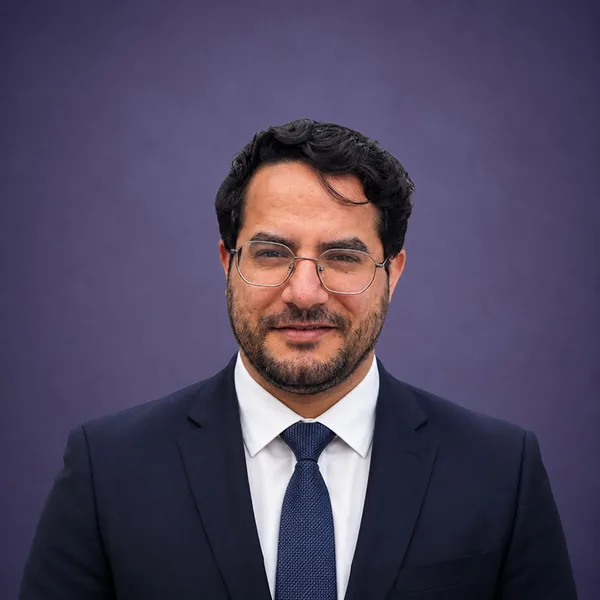
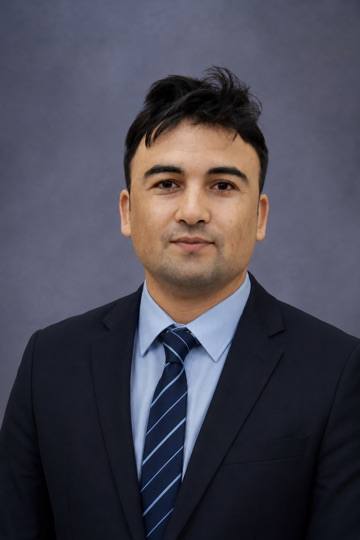
Hassan Ukasha, Managing Partner, Ariana Nexus
Program oversight

Hassan Ukasha

Managing Partner, Ariana Nexus · From Herat
  • B.S.
    Cornell University
  • M.P.H.
    Cornell University
Accountable for the firm’s operations and for this program end to end: the education interpreter standard, district relationships and the term-by-term quality review. He also leads LAAR, Ariana Nexus Academy’s university-application mentorship program.
Languages: Pashto · Dari · English · Urdu · Hindi
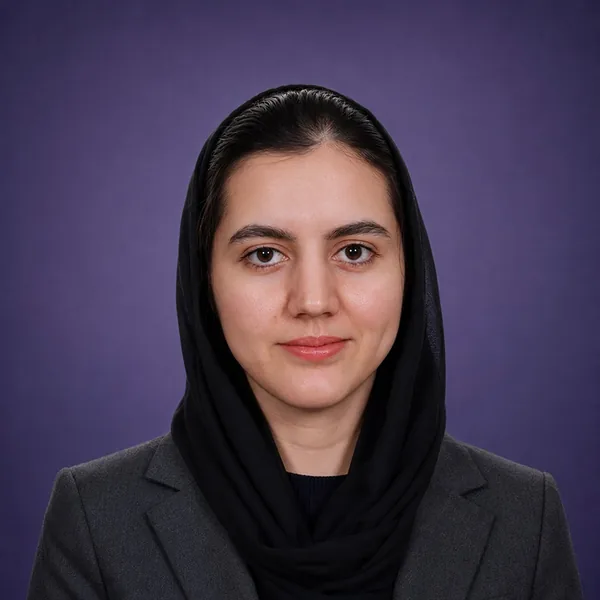
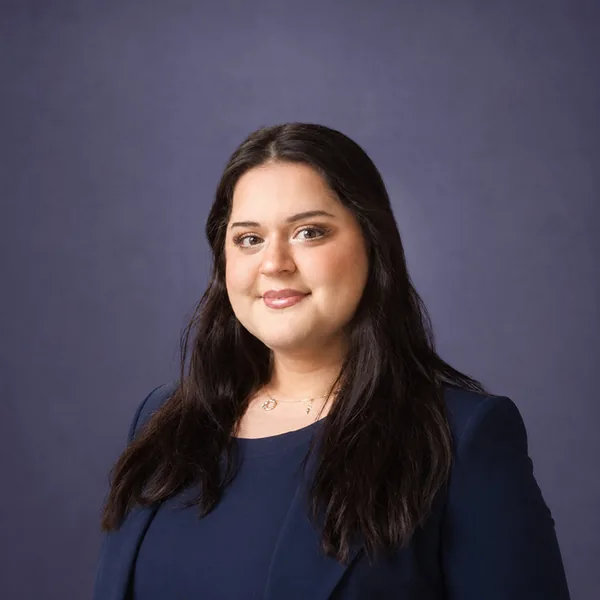
Zeba Haqbani, Senior Partner, Ariana Nexus

Zeba Haqbani

Senior Partner
  • B.Sc.
    University of British Columbia
Builds the systems behind the service: booking, matching, meeting records and the privacy controls on student data. Lived in Kabul.
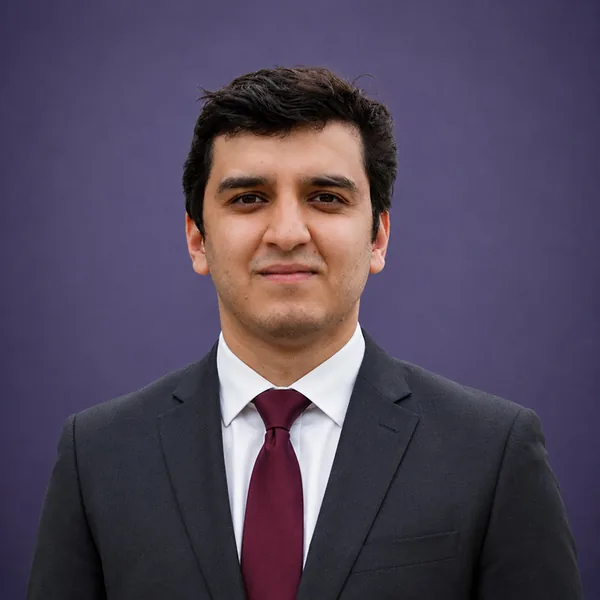
Wasil Peroz, Principal, Ariana Nexus

Wasil Peroz

Principal
  • B.A.
    Milli University
  • M.Sc.
    Otto-von-Guericke University Magdeburg
Leads the legal register: IDEA, ESEA, FERPA and state interpreter rules, and the meeting-record standard.
Maryam Safi, Principal, Ariana Nexus

Maryam Safi

Principal
  • B.A.
    Cornell University
Leads interpreter training and district onboarding, including orientation for case managers and front-office staff.
Diana Ayubi, Engagement Manager, Ariana Nexus

Diana Ayubi

Engagement Manager
  • B.A.
    Cornell University
  • Psy.D.
    West Chester University
Leads the special education module: evaluation reports, eligibility categories and trauma-informed practice. Lived in Kabul.
Hussain Ahmad, Analyst, Ariana Nexus

Hussain Ahmad

Analyst
  • M.Eng.
    Cornell University
  • Ph.D.
    University of Chicago
Leads terminology and measurement: the Pashto and Dari special education glossary, quality sampling and district reports.

Human Intelligence Collective

Our education interpreters: Pashto and Dari, women and men, by variety, and interpreters in 22 more Afghan languages.

Cultural Compliance Bureau

Reviews the glossary, every notice we translate and the cultural guidance interpreters work from.

AI Data Factory

Runs booking, matching and records, and keeps terminology consistent. It never interprets a meeting.
Three colleagues discuss printed charts and notes around a meeting table.
Interpreting for Afghan families, on site or by video.
Service levels by language

Pashto, Dari and 22 more Afghan languages

We match the language, then the variety. Pashto has southern (Kandahari), eastern (Nangarhari), central and northern varieties. Afghan Dari has Kabuli, Herati, Hazaragi and northern varieties, and differs from Iranian Farsi in the words schools use every day.

A

On demand

  • Pashto
    پښتو
  • Dari
    دری
Video and phone on demand. On site with 24 hours’ notice, sooner by arrangement. Pashto in southern (Kandahari), eastern (Nangarhari), central and northern varieties; Dari in Kabuli, Herati, Hazaragi and northern varieties.
B

Scheduled

  • Uzbeki
    اوزبیکی
  • Turkmeni
    ترکمنی
  • Balochi
    بلوچی
  • Pashayi
    پشه‌یی
  • Aimaq
Video and phone the same or next business day. On site with 48 hours’ notice.
C

By arrangement

  • Kyrgyz
  • Brahui
  • Ormuri
  • Parachi
  • Wakhi
  • Shughni
  • Sanglechi
  • Ishkashimi
  • Munji
  • Yidgha
  • Gawarbati
  • Tirahi
  • Nuristani (Ashkun group)
  • Kati
  • Prasun
  • Waigali
  • Tregami
We confirm availability, variety and timing before you book, usually within two business days.

Iranian

12 languages
  • Pashto
  • Dari
  • Aimaq
  • Balochi
  • Ormuri
  • Parachi
  • Wakhi
  • Shughni
  • Sanglechi
  • Ishkashimi
  • Munji
  • Yidgha

Turkic

3 languages
  • Uzbeki
  • Turkmeni
  • Kyrgyz

Indo-Aryan

3 languages
  • Pashayi
  • Gawarbati
  • Tirahi

Nuristani

5 languages
  • Nuristani (Ashkun group)
  • Kati
  • Prasun
  • Waigali
  • Tregami

Dravidian

1 language
  • Brahui
Our interpreters work between Pashto or Dari and English, and, for schools outside the United States, French, German, Spanish, Italian, Portuguese, Turkish, Russian, Arabic, Urdu, Hindi, Hebrew or Chinese. Families who lived for years in Pakistan often read Urdu; we ask.

د ښوونځي د غونډو، نوم لیکنې او د والدینو او ښوونکو د کتنو لپاره پښتو او دري ترجمانان

ترجمان‌های پشتو و دری برای جلسات مکتب، ثبت‌نام و ملاقات والدین با معلمان

For families: for any meeting about your child, you can ask the school for an interpreter.

د خپل ماشوم په اړه د هرې غونډې لپاره، تاسو کولی شئ له ښوونځي څخه ترجمان وغواړئ.

برای هر جلسه‌ای که درباره فرزندتان است، می‌توانید از مکتب ترجمان بخواهید.

International

For schools outside the United States

We work with schools and education authorities in Canada, Europe and Australia when the type and scale of the project fit. The meetings have different names. The need is the same.

  • Canada, Ontario

    IPRC meetings and IEPs; parent-teacher interviews
  • Canada, Quebec

    Plan d’intervention; rencontres de parents
    Interprètes en pachto et en dari pour les rencontres du plan d’intervention et les rencontres de parents.
  • England

    EHCP annual reviews; parents’ evenings; school admissions
  • Germany and Austria

    Förderplangespräche; Elternsprechtage; Schulanmeldung
    Dolmetscher für Paschtu und Dari bei Förderplangesprächen, Elterngesprächen und der Schulanmeldung.
  • France

    PPS and ESS meetings; réunions parents-professeurs
    Interprètes en pachto et en dari pour les réunions de l’équipe de suivi de la scolarisation et les rencontres parents-professeurs.
  • Italy

    PEI and GLO meetings; colloqui scuola-famiglia
    Interpreti di pashto e dari per le riunioni del GLO, il PEI e i colloqui scuola-famiglia.
  • Spain

    Adaptación curricular; reuniones de tutoría; matrícula
    Intérpretes de pastún y dari para reuniones de tutoría, matrícula y adaptaciones curriculares.
  • Portugal

    Programa Educativo Individual; reuniões de pais
    Intérpretes de pashto e dari para reuniões de pais, matrículas e o Programa Educativo Individual.
  • Australia

    Student Support Group meetings and IEPs; parent-teacher interviews
  • Turkish
    Veli toplantıları, okul kaydı ve BEP toplantıları için Peştuca ve Darice tercümanlar.
  • Russian
    Устные переводчики с пушту и дари для родительских собраний, встреч по индивидуальной образовательной программе и зачисления в школу.
  • Arabic
    مترجمون فوريون بالبشتو والدرية لاجتماعات أولياء الأمور وخطط التعليم الفردية والتسجيل المدرسي.
  • Urdu
    والدین اور اساتذہ کی ملاقاتوں، آئی ای پی اجلاسوں اور اسکول داخلوں کے لیے پشتو اور دری ترجمان۔
  • Hindi
    अभिभावक-शिक्षक बैठकों, आईईपी बैठकों और स्कूल प्रवेश के लिए पश्तो और दरी दुभाषिए।
  • Hebrew
    מתורגמנים לפשטו ולדרי לאסיפות הורים, לישיבות תוכנית חינוכית יחידנית ולרישום לבית הספר.
  • Chinese
    为家长会、个别化教育计划(IEP)会议和入学登记提供普什图语和达里语口译。
Engagement

How districts work with us

Four ways to engage, from a single meeting to a standing agreement across a network of schools.

  • Meeting by meeting

    Book interpreters as meetings arise, on a purchase order. Suited to occasional Pashto and Dari needs.
  • District agreement

    An annual agreement with a named coordinator, a standing bench for your schools, priority during conference weeks and a monthly language access report.
  • Conference and enrollment surges

    Staffing plans for conference weeks, back-to-school registration and newcomer intake.
  • Cooperatives and networks

    One agreement shared by a special education cooperative, an education service agency or a charter network.
  • Invoices against your purchase order, with the meeting, language, variety and interpreter on every line.
  • W-9, certificates of insurance and our data privacy terms in one vendor packet.
  • Registered on SAM.gov and as a vendor in 37 states.

Name Pashto and Dari in your solicitation

Many district solicitations list Pashto and Dari under “other languages.” These lines make the requirement explicit. Copy them freely.
  1. 1
    Interpreters in Pashto (Afghan varieties, including southern and eastern) and Dari (Afghan Dari, not Iranian Farsi), with the variety and interpreter gender specified per request.
  2. 2
    Interpreters trained in special education procedures and terminology for IEP, 504 and evaluation meetings.
  3. 3
    A meeting record for each session: language, variety, interpreter identifier, mode, start and end times, and documents read aloud.
  4. 4
    FERPA school-official terms and the state student data privacy agreement.
  5. 5
    Interpreters located in the United States for U.S. meetings; no machine interpreting in IEP, 504 or disciplinary meetings.
FAQ

Questions districts ask about school interpreters

Does a school have to provide an interpreter for an IEP meeting?

Yes. Under IDEA, 34 CFR 300.322(e), the school must take whatever action is necessary for the parent to understand the IEP meeting, including arranging an interpreter for a parent whose native language is not English. Prior written notice and the procedural safeguards notice must be in the parent’s native language unless it is clearly not feasible, under 34 CFR 300.503(c) and 300.504(d). Pashto and Dari are written languages, so this normally means a written translation, also read aloud for parents who do not read. Consent requires that the parent be fully informed in their native language, under 34 CFR 300.9. These rules are unchanged in 2026.

Did Executive Order 14224 or the 2025–2026 federal changes end that requirement?

No. Executive Order 14224 revoked Executive Order 13166, the Attorney General ordered the Justice Department’s language access guidance for recipients of federal funds rescinded, the 2015 federal letter on English learners was rescinded, and in July 2026 the Department of Education removed the disparate-impact provisions of its Title VI regulations. None of these amended IDEA’s regulations, and state laws still apply. This is a summary, not legal advice.

Can a parent’s child or relative interpret at school meetings?

Not in place of a qualified interpreter. A child cannot interpret neutrally in a meeting about their own education, and relatives rarely know special education terms. Some states set a standard for IEP interpreters: Illinois requires trained, qualified interpreters, and parents there can ask that the interpreter serve no other role in the meeting.

Is Dari the same as Farsi? Can a Farsi interpreter work with an Afghan family?

Dari and Iranian Farsi are both forms of Persian, but they differ in vocabulary, pronunciation and the words used for schools and services. Many Afghan families write “Farsi” or “Persian” on school forms: 27% of Afghan immigrants report “Persian (Farsi)” as their home language. For an Afghan family, book Dari. We send Afghan Dari interpreters, matched by variety.

What is the difference between Pashto and Dari?

They are Afghanistan’s two official languages, and they are not mutually intelligible. Pashto is an Eastern Iranian language; Dari is the Afghan form of Persian. Many Afghan parents understand both, but a parent should hear an IEP meeting in the language they think in. Ask which one the family speaks at home, and the variety if you can.

Which Afghan languages do you cover besides Pashto and Dari?

All 24 Afghan languages, in three service levels. Uzbeki, Turkmeni, Balochi, Pashayi and Aimaq are scheduled the same or next business day. The other 17, from Brahui to the Pamir and Nuristani languages, are by arrangement: we confirm availability and variety before you book.

Can you provide a female interpreter?

Yes. Tell us when you book. Many Afghan mothers prefer a woman interpreter, especially for evaluation, health and family meetings. We match gender on request for Pashto and Dari, and confirm it for other languages when we confirm the booking.

Do you interpret on site, by video or by phone?

All three. On site we interpret at the table, and for long reports we can whisper simultaneously. By video, the interpreter joins your Zoom, Microsoft Teams, Google Meet or Webex link. By phone, we join a three-way call. Pashto and Dari are available on demand by video and phone.

How far ahead should we book a school interpreter?

For Pashto and Dari on site, give 24 hours’ notice, sooner by arrangement; by video and phone they are on demand. For Uzbeki, Turkmeni, Balochi, Pashayi and Aimaq, allow the same or next business day by video and phone and 48 hours on site. For conference weeks, book two to three weeks ahead so we can staff by room and time slot.

Are your interpreters trained in special education?

Yes. Every interpreter is qualified to our education standard: special education law and terms, IEP meeting protocol, evaluation reports, FERPA and trauma-informed practice, with our Pashto and Dari special education glossary. Where your state sets its own standard, such as Illinois or Washington, we meet it before the first meeting, or tell you plainly where the state offers no test in Pashto or Dari.

Can you translate the IEP into Pashto or Dari?

Yes, as a separate written translation service, or as an audio recording for parents who do not read. State rules differ: Texas requires a good-faith effort to provide the IEP in the parent’s language, in writing or on audio, and Maryland requires a translated IEP within 30 days of a parent’s request when the language is spoken by more than 1% of the local school system’s students.

How do you protect student privacy under FERPA?

We serve as a school official under your direct control over the use and maintenance of education records, as 34 CFR 99.31(a)(1)(i)(B) allows when your annual FERPA notice covers contractors. Every interpreter signs a confidentiality agreement, and nothing is recorded by default. We sign your state’s student data privacy agreement before the first meeting, and we never route information through channels controlled by the de facto authorities in Afghanistan.

Do you use AI or machine translation in school meetings?

No. We do not use machine interpreting in IEP, 504, discipline or enrollment meetings. AI helps us book, match and keep terminology consistent; a qualified person interprets every word. If your district uses AI translation for newsletters or texts, we can test its Pashto and Dari output.

Can you help at enrollment with Afghan documents and birth dates?

Yes. We interpret the registration appointment and read the family’s documents aloud for your staff. Afghan records raise specific questions: a tazkira may state the child’s age when it was issued rather than a full birth date, dates follow the Solar Hijri calendar, and U.S. processing assigned many evacuees a January 1 birthday. Certified translation of records is a separate service.

Do you work with schools outside the United States?

Yes, in Canada, Europe and Australia, depending on the type and scale of the project: for example IPRC and IEP meetings in Ontario, EHCP annual reviews in England and Förderplan meetings in Germany. Our interpreters work between Pashto or Dari and English, French, German and other languages.

Book interpreters for your next IEP meeting

Tell us the meeting, the date and the family’s language. We confirm the interpreter, the variety and the gender, and send the vendor packet your district needs.

Book a school interpreter