
Title VI Language Access Plan Consulting for State and Local Agencies After Executive Order 14224
Executive Order 14224 revoked Executive Order 13166. It did not repeal Title VI, the program rules attached to your federal funds, or your state’s language access law. We rebuild language access plans for state agencies, counties and cities on the obligations in force today, and we find the Pashto- and Dari-speaking residents that standard Census tables hide.
Your language access plan, as the eight documents a reviewer is likely to ask for
Common gaps in plans written before 2025, and what the re-based plan holds instead.
Policy statement
Common gapCites EO 13166Re-based planRe-based on the obligations in force, with dates.Legal basis
Common gapRests on rescinded guidanceRe-based planAn obligations register, citation by citation.Language data
Common gapCensus summary tables onlyRe-based planACS microdata plus your records, with Pashto and Dari counted.Contact points
Common gapNot inventoriedRe-based planEvery counter, line, field visit and transfer, with its language route.Vital documents
Common gapOut-of-date listRe-based planA register with languages, dates and owners.Interpreting standards
Common gapBilingual staff untestedRe-based planA tested definition of “qualified,” including for Pashto and Dari.Machine translation
Common gapNo policyRe-based planA written line between machine and human.Training and monitoring
Common gapNo measuresRe-based planModules, targets and an annual report.
What is Title VI language access plan consulting?
It is help for a state or local agency to decide what it still owes residents with limited English proficiency now that the Justice Department and several other agencies have withdrawn their LEP guidance, and to write that into a language access plan it can defend: the legal basis, the language data, vital documents, interpreter and translation standards, a machine translation policy, staff training and monitoring.
The order changed federal policy, not your obligations.
The legal basis moved.
Your data probably hides Afghan residents.
Check which rules bind your agency
Answer five questions. The list on the right is what your language access plan should cite.
Do you still need a language access plan?
Almost certainly, if you receive federal funds or work in a state or city with a language access law. For most agencies no federal rule requires the plan document itself, though FTA’s transit circular, the Section 1557 rule for health programs (45 CFR 92.8(d)) and several state laws do. The plan is how you show that you meet obligations that still exist: Title VI, the Justice Department’s coordination rule at 28 CFR 42.405(d)(1), the program rules for SNAP, WIOA, Medicaid, health programs, transit and disaster aid, and state and local law. Dropping the plan removes your evidence, not your obligations.
Our plan still cites EO 13166
Our FTA Title VI Program is due
We run SNAP, WIOA or Medicaid
Our state has a language access law
We have no plan at all
We serve Afghan residents
What Executive Order 14224 changed, and what it did not
The status of each instrument a state or local language access plan is likely to cite, as of September 26, 2026. Each citation links to its primary source.
Pending and dated
- Justice Department guidance promised in the July 14, 2025 memorandum: not issued as of September 26, 2026.
- HUD’s proposed change to its Title VI rule: comments close October 9, 2026.
- State deadlines: Illinois compliance reports and Colorado’s assessment, December 31, 2026; Maryland enforcement, July 1, 2027, and full compliance, July 1, 2028; Washington guidelines, December 1, 2027, and agency plans, June 30, 2028.
We re-check this register every month and date each change. It is a reference, not legal advice; your counsel’s reading governs.
State and local language access laws still apply
Executive Order 14224 does not reach state or local law. Since the order, Maryland and Colorado have added to theirs, Washington has passed a new law, and New York’s Office of Language Access has said the order and the federal guidance “neither affect nor revoke” New York’s Language Access Law.
City ordinances
- New York CityLocal Law 30 · Ten designated languages
- San FranciscoLanguage Access Ordinance · 6,000 residents citywide, from January 1, 2026
- OaklandEqual Access to Services Ordinance · 10,000 residents
- BostonCity Code § 6-10.1 · 5% or 1,000
Fixed language lists that leave out Pashto and Dari
- New York State12 languages, no Pashto or Dari
- New Jersey7 languages, no Pashto or Dari
- New York City10 languages, no Pashto or Dari
- District of Columbia6 languages, no Pashto or Dari
- San Francisco4 languages, no Pashto or Dari
- Seattle15 languages, no Pashto or Dari
Why standard Census tables hide Pashto and Dari speakers
Census table B16001 places Pashto in “Other Indo-European languages” and counts Dari inside “Persian (incl. Farsi, Dari).” The shorter table C16001 hides both. The American Community Survey microdata codes them separately, Pashto 1327, Dari 1292 and Farsi 1290, and that is where we start, before adding your own intake fields, interpreter logs, school home-language surveys and resettlement data.
Sources: Census Bureau language-use documentation and ACS variable lists, 2022 and 2024.
Where Afghan-born residents live
Afghan-born residents, American Community Survey 2024 1-year estimates, table B05006, with 90% margins of error. These six states hold 72.8% of the national total.
The largest metro populations are the Washington, D.C. area and Sacramento, about 19,000 each, and the San Francisco–Oakland area, about 13,000 (Migration Policy Institute, 2018–22 ACS).
Home languages of Afghan immigrants
Languages spoken at home by Afghan immigrants (Migration Policy Institute, 2022 ACS). Many Afghans call Dari “Farsi,” so part of the Farsi share is Afghan Dari.
Pashto is not a dialect of Dari or Farsi, and Dari is not Farsi
Pashto is a separate language. Dari, the Persian of Afghanistan, and Farsi, the Persian of Iran, differ in everyday words, official terms and pronunciation. A notice written in Iranian Persian reads as foreign to many Afghan residents, and many Pashto speakers cannot use it at all. Your plan should list Pashto, Dari and Farsi separately, and let residents ask for their own variety of Pashto or dialect of Dari, and for a same-gender interpreter.
Most Afghan residents arrived after 2010, during and after the Afghan war, as Special Immigrant Visa holders, refugees or 2021 evacuees, many of them families of people who worked alongside U.S. forces. The Afghan-born population grew 89% between 2021 and 2024, so the need is ongoing, not a surge. Your plan should serve the Afghan diaspora in your jurisdiction the way it serves every other language community.
Many Afghan people in your jurisdiction lived through the war and the 2021 evacuation, and some carry moral injury, sometimes called moral trauma. A plan that serves them names trauma-informed interpreting for public safety, social services and immigration-related interviews, offers a same-gender interpreter on request, and never uses children as interpreters. Diana Ayubi, Psy.D., reviews our protocol for these interviews.
How we build your language access plan
Review, rebuild, run. Three steps, with the detail below.
- 1Weeks 1–4
Review
Obligations register, citation redline, language-need profile. - 2Weeks 5–12
Rebuild
The plan, its standards and policies, community review and adoption. - 3Quarterly
Run
Measures, test contacts and a register kept current.
- Weeks 1–3
Obligations
We read your current plan, grants, program rules, state law and local ordinances, and build the obligations register.You receive: Obligations register and a redline of your current plan
- Weeks 2–6
Evidence
We build the language-need profile from ACS microdata and your records, inventory every contact point, and run test calls and visits in Pashto, Dari and your top languages.You receive: Language-need profile, contact-point inventory and test findings
- Weeks 5–10
Design
We draft the plan: vital documents, interpreter and translation standards, the machine translation policy, notices and training.You receive: Draft plan for staff and counsel review
- Weeks 9–12
Review and adoption
Community reviewers and our Cultural Compliance Bureau read every line residents will see. We brief leadership and prepare the adoption materials.You receive: Final plan and adoption brief
- Quarterly, then yearly
Monitoring
We report against the plan’s measures and update the register when the law moves.You receive: Quarterly note and annual report
A review of an existing plan takes three to four weeks. A full plan for a county, city or state agency typically takes ten to fourteen weeks.
What you get: a language access plan you can defend
Obligations register
Every law, rule, grant condition and ordinance that binds you, with its status, citation and date, re-checked when the law moves.Language-need profile
Who you serve and in which languages, from ACS microdata and your own records: Pashto, Dari and every language over your threshold, not only the top ten.Contact-point inventory
Every place the public meets you, from the front counter and phone lines to field visits, hearings and 911 transfers, and the language route at each.Vital-document register
Which documents are vital, from benefit notices to public safety orders, in which languages, by what date, with a named owner for each.Interpreter and translation standards
What “qualified” means in your agency, including for Pashto and Dari, where no U.S. interpreter certification exam tests either language; dialect and gender matching; no children or relatives as interpreters.Machine translation and AI policy
What may be machine-translated with a notice, what needs review by a qualified human translator, and what must be human from the start.Notices, taglines and “I speak” cards
A notice of free language help, taglines for vital documents, and language identification cards that include Pashto and Dari.Staff training
Front-line, supervisor and leadership modules: identifying a language, booking an interpreter, working with one, and what never to do.Complaint procedure
How a resident complains in their own language, who answers, and the record it leaves.Monitoring framework
Measures, targets and an annual report template, so your next review starts from evidence.Adoption brief
A staff report, resolution language and a one-page summary for your council or board and the public.Implementation roadmap
First-year steps in order, with owners and the drivers of cost.
Delivered as editable Word and Excel files and as accessible PDFs that meet WCAG 2.1 AA, ready to enter your public records.

Why Ariana Nexus for language access planning
No U.S. interpreter certification exam tests Pashto or Dari, so your plan has to define “qualified” itself. We assess and train Pashto and Dari interpreters, our own and others across the Afghan diaspora, so we know what that definition must test, and we write it as requirements any provider can meet.
Plans built on law in force
Every citation is dated and linked to its primary source. Nothing in your plan rests on a revoked order or rescinded guidance.The residents your data misses
We measure Pashto, Dari and the other Afghan languages with microdata and your own records, and use the same method for every small language group you serve.A definition where no exam exists
Your plan gets a definition of a qualified Pashto or Dari interpreter that it can defend in a review or a complaint, written as testable requirements, not as a brand.Standards, never vendors
We also provide interpreting and translation, so we say so on every deliverable. Your plan names requirements, not suppliers, and where your procurement rules require it, we step aside from the work the plan describes.Scholars, not bilinguals
Your plan is written by people educated at Cornell, the University of Chicago, the University of British Columbia and Otto von Guericke University Magdeburg, who come from the Afghan communities your plan must reach.One firm, one point of accountability
Every part of the plan, from the legal register to the Pashto “I speak” card, is produced by our own people.
Security, privacy and compliance
Registered for public work
Resident data by agreement only
Confidential before transfer
Accessible by default
Ready for public records
Interests declared
No channels into Afghanistan
Counsel stays in charge
The team behind your language access plan
Your plan is written by a consulting team, not a vendor’s bilingual staff: alumni and scholars of leading universities who have studied the law, the data and the languages, and who know the communities the plan must reach.
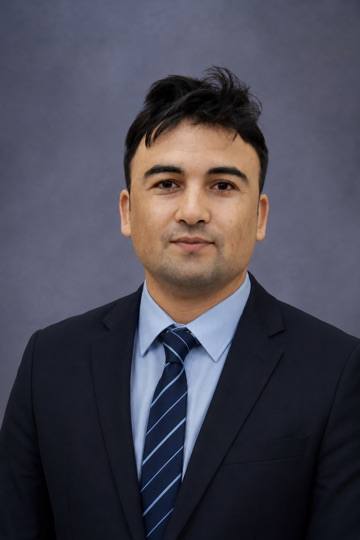
Hassan Ukasha
- B.S., Global and Public Health Sciences, Cornell University
- M.P.H., Infectious Diseases, Cornell University
Grew up in Herat. Languages: Pashto, Dari, English, Urdu and Hindi; working Arabic.
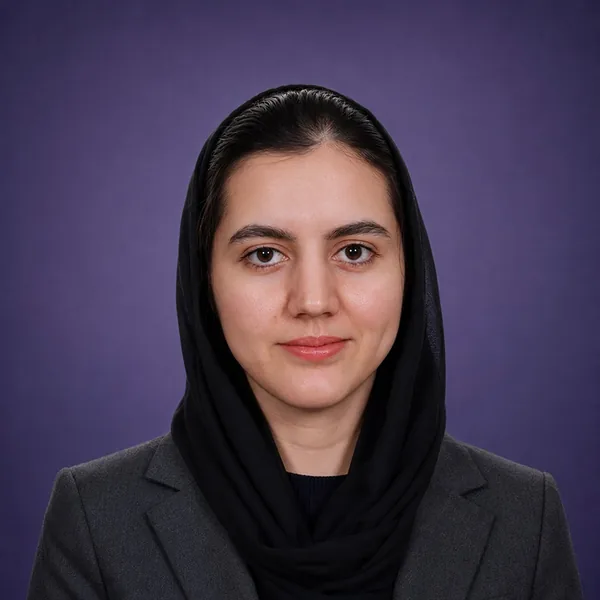
Zeba Haqbani
Senior Partner- B.Sc., University of British Columbia
Builds the plan’s systems: the contact-point inventory, language records, monitoring measures and annual reporting.Lived in Kabul.

Hussain Ahmad
Analyst- M.Eng., Cornell University
- Ph.D., University of Chicago
Leads the language-need profile and the machine translation policy: ACS microdata, agency records and the line between machine and human.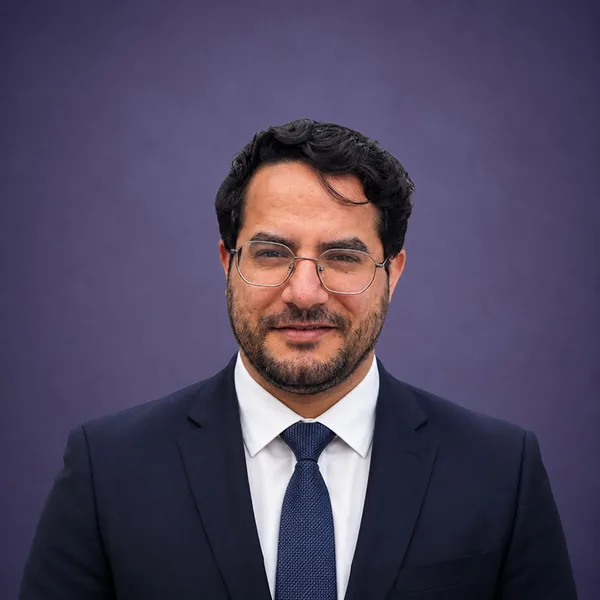
Wasil Peroz
Principal- B.A., Milli University
- M.Sc., Otto-von-Guericke University Magdeburg
Leads the obligations register: federal, state and local law, grant conditions, and European public-law parallels for clients abroad.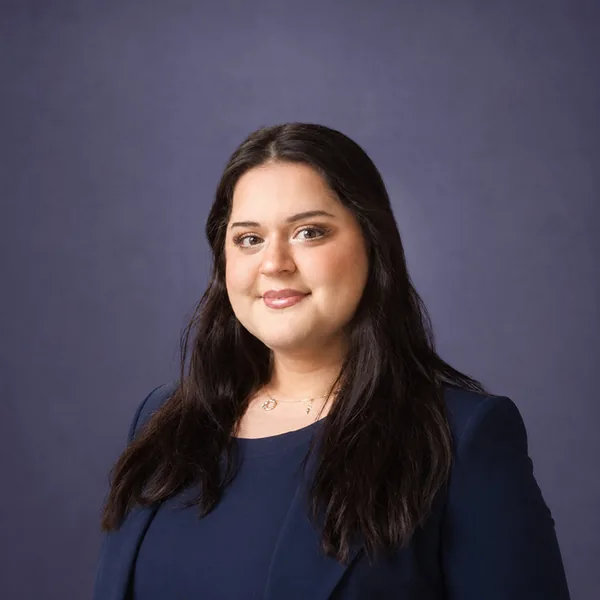
Maryam Safi
Principal- B.A., Cornell University
Leads language quality: interpreter and translation standards, vital-document review and the Pashto and Dari materials.
Cultural Compliance Bureau
Language specialists
Languages we plan for and work in
A language access plan must cover every language your residents speak, and we write plans for all of them. We work directly in Pashto, Dari and 22 more Afghan languages, in English, and in twelve more languages.
- Pashto
- Dari
- Aimaq
- Balochi
- Ormuri
- Parachi
- Wakhi
- Shughni
- Sanglechi
- Ishkashimi
- Munji
- Yidgha
- Uzbeki
- Turkmeni
- Kyrgyz
- Pashayi
- Gawarbati
- Tirahi
- Nuristani (Ashkun group)
- Kati
- Prasun
- Waigali
- Tregami
- Brahui
We match Pashto’s regional varieties, such as Kandahari and Nangarhari, and Dari’s dialects, such as Kabuli, Herati, Badakhshi and Hazaragi.
English and twelve more languages
- English
- French
- German
- Spanish
- Italian
- Hebrew
- Urdu
- Arabic
- Hindi
- Portuguese
- Chinese
- Russian
- Turkish
Language access planning for public bodies outside the United States
Public bodies in Germany, the United Kingdom, Canada, Australia and the Netherlands serve large Afghan populations and face the same questions: which languages, which documents, which standard. We work with them in English, German or French, and in Pashto, Dari and the other Afghan languages.
- 449,780GermanyAfghan nationals, December 31, 2025. Destatis.
- 59,797Australiaborn in Afghanistan, 2021 Census. Australian Bureau of Statistics.
- 55,195CanadaAfghans arrived from August 2021 to November 1, 2024. IRCC.
- 43,402Netherlandsborn in Afghanistan, January 1, 2025. Eurostat.
- 39,058United Kingdomresettled under Afghan schemes, to June 30, 2026. Home Office.
How public bodies ask for this work in their language
- FrenchPlans d’accès linguistique pour les services publics, en pachto et en dari
- GermanSprachmittlung und Sprachzugangskonzepte für Behörden – Paschtu und Dari
- SpanishPlanes de acceso lingüístico para organismos públicos, en pastún y darí
- ItalianPiani di accesso linguistico per enti pubblici, in pashto e dari
- Hebrewתוכניות נגישות לשונית לרשויות ציבוריות בפשטו ובדרי
- Urduسرکاری اداروں کے لیے پشتو اور دری میں لسانی رسائی کے منصوبے
- Arabicخطط الوصول اللغوي للجهات الحكومية باللغتين البشتوية والدرية
- Hindiसरकारी विभागों के लिए पश्तो और दारी में भाषाई पहुँच योजनाएँ
- PortuguesePlanos de acesso linguístico para órgãos públicos, em pastó e dari
- Chinese为政府机构制定普什图语和达利语语言服务计划
- RussianПланы языкового доступа для государственных учреждений: пушту и дари
- TurkishKamu kurumları için Peştuca ve Darice dil erişimi planları
How agencies engage us
What changes the scope
- The number of departments and programs
- The languages over your threshold
- The volume of vital documents
- The community engagement you want
- The number of staff to train
- Access to your records and data
- Your state’s reporting deadlines
How agencies buy
SAM.gov active · UEI M2UDMUDFXGL9 · CAGE 1Z3A3 · Capability Statement
Questions agencies ask about language access plans after Executive Order 14224
Does Title VI still require language access after Executive Order 14224?
Yes, in a narrower form. Title VI still bars national-origin discrimination by any agency that receives federal funds, and the Justice Department’s April 2025 rescission notice says denial of language assistance services “can be evidence of discrimination on the basis of national origin or disability under certain circumstances.” What changed is enforcement: federal agencies now pursue intentional discrimination, not disparate impact. Program rules and state and local law still apply in full.
Do we still need a language access plan?
Almost certainly, if you receive federal funds or work in a state or city with a language access law. For most agencies no federal rule requires the plan document itself, though FTA’s transit circular, the Section 1557 rule for health programs (45 CFR 92.8(d)) and several state laws do. The plan is how you show you meet obligations that still exist. Dropping it removes your evidence, not your obligations.
Does the English official language executive order apply to state and local governments?
Not directly. Executive Order 14224 directs federal agencies. It revoked EO 13166 and told the Attorney General to replace federal language access guidance, and it states that “nothing in this order, however, requires or directs any change in the services provided by any agency.” State and local agencies feel it through federal funding, reviews and enforcement, not as a rule of their own.
Is Executive Order 13166 still in effect?
No. Executive Order 13166 of August 11, 2000 was revoked by Executive Order 14224 on March 1, 2025. A plan that cites EO 13166 as its authority should be re-based on the obligations in force today.
Was the DOJ LEP guidance rescinded, and what replaces it?
Yes. The Justice Department rescinded its 2002 guidance to funding recipients on March 21, 2025, and the Attorney General’s July 14, 2025 memorandum rescinded its remaining language access guidance, told other agencies to review theirs and suspended LEP.gov. The memorandum promised new guidance for public comment; none had appeared as of September 26, 2026. HUD, Treasury and DHS have also withdrawn their guidance to recipients.
Do transit agencies still need a Language Assistance Plan for FTA Title VI?
As of September 26, 2026, FTA still lists Circular 4702.1B, which asks recipients for a Title VI Program that includes a Language Assistance Plan based on a four-factor analysis, and it has published no change. The Department of Transportation removed its disparate-impact provision on June 11, 2026, so we write your plan to hold whether or not FTA revises the circular.
What is a four-factor analysis, and should we still use it?
It weighs four things: the number or proportion of people with limited English proficiency you serve or are likely to meet, how often they contact you, how important the program is to their lives, and your resources and costs. It came from the rescinded federal guidance, but it remains the clearest way to show your choices were reasonable, and FTA’s circular still uses it.
What is the safe harbor provision, and does it still apply?
The former Justice Department guidance treated translating vital documents for each language group of 5 percent or 1,000 people, whichever is less, as strong evidence of compliance. That federal guidance was rescinded in 2025. The same test survives in state and local law: Hawaii uses 5 percent or 1,000, Illinois more than 5 percent or 1,000, and Boston 5 percent or 1,000.
What counts as a vital document?
Any document critical to getting or keeping a service or benefit, or required by law: applications, consent and complaint forms, notices of rights, eligibility and denial letters, notices of hearings and deadlines, and emergency and public-safety information. Your plan should list them by name and program, with the languages each must be in.
Can we use Google Translate or AI to translate government documents?
For low-risk, informal content with a notice, sometimes. For vital documents, not without review by a qualified human translator. Health programs are already bound by that rule under 45 CFR 92.201(c)(3). Machine output in Pashto and Dari is less reliable than in major languages, so your plan should say which content may be machine-translated and who checks it.
Can bilingual staff or family members interpret for the public?
Bilingual staff can, if your plan requires them to pass a language and interpreting assessment first; speaking a language is not the same as interpreting. Family members and friends should interpret only in an emergency, and children never. Michigan’s 2023 law says interpreting by a relative, friend or bystander does not meet its requirements for state agencies.
Is Dari the same as Farsi when we book an interpreter?
No. Pashto is a separate language, not a dialect of either. Dari is the Persian of Afghanistan and Farsi the Persian of Iran; they differ in everyday words, official terms and pronunciation, and a Farsi interpreter can miss meaning with an Afghan resident. List Pashto, Dari and Farsi separately. Pashto is the single most reported home language among Afghan immigrants, at 32%.
How do we find how many Pashto and Dari speakers live in our county?
Not from the standard Census tables. Table B16001 puts Pashto in “Other Indo-European languages” and counts Dari inside “Persian (incl. Farsi, Dari).” Use the ACS microdata, where Pashto (1327), Dari (1292) and Farsi (1290) have their own codes. Its smallest areas hold about 100,000 people, so combine it with your intake language fields, interpreter logs, school home-language surveys and resettlement data.
Which states have language access laws?
State laws cover state agencies in California, Hawaii, Illinois, Maryland, Michigan, New Jersey, New York, Delaware, Minnesota and Nevada, and in the District of Columbia; Massachusetts acts by executive order, and Washington’s 2026 law phases in through 2028. Cities including New York, San Francisco, Oakland and Boston have ordinances. Their tests differ, so your plan must meet the one that applies to you.
How long does a language access plan take, and what does it cost?
A review of an existing plan against current law takes three to four weeks. A full plan for a county, city or state agency typically takes ten to fourteen weeks. Cost depends on the departments and programs covered, the languages over your threshold, the volume of vital documents, community engagement and training, and we scope it after one call with your coordinator.
Will you recommend your own interpreting services in our plan?
No. Our plans set standards, not vendors: they say what a qualified interpreter or translation must meet, never who supplies it. We declare our interest in interpreting and translation work on every deliverable, and where your procurement rules bar the author of a specification from bidding on the work it describes, we step aside from that work.
Start with the plan you have
Send us your current language access plan, or tell us you do not have one. A partner in our Washington, D.C. office replies within one business day with the questions that decide scope.