- B.S. Cornell University
- M.P.H. Cornell University
Ariana Nexus designs and teaches Pashto and Dari courses for universities, government language programs and research institutes, from credit-bearing courses and heritage tracks to sustainment and DLPT5 preparation, with outcomes set on the scale you report against: ILR, ACTFL, CEFR or STANAG 6001.
University students
Students who speak at home
Government learners from zero
Working linguists
Iranian Persian speakers
Frontline and deploying staff
Entry level Exit target, on the ILR scale. Hours are design ranges set after placement. Reviewed by the Cultural Compliance Bureau · October 5, 2026AN·SVC·2026·EDU·12
The service
Pashto and Dari language instruction and curriculum is the design and teaching of courses that move learners (beginners, heritage speakers or working linguists) to a stated level of proficiency in Afghanistan’s two official languages, with the syllabi, materials, tests and progress reports a university or government program needs. Ariana Nexus delivers it as one program: we place each learner, set exit targets on your scale, teach to them, test independently and report against them.
Pashto (پښتو; also spelled Pashtu, Pushto or Pakhto) and Dari (دری; Afghan Persian) are the official languages of Afghanistan and the home languages of most Afghan people in the diaspora. We teach Afghan Pashto and Afghan Dari, never Iranian Persian materials relabeled as Dari, and we name the variety on every syllabus. People come to us to learn Pashto or learn Dari for study, research, public service or a mission.
Outcomes
Every program states an entry and exit level on ILR, ACTFL, CEFR or STANAG 6001, and every report uses it. Raters never score learners they teach.
Afghan Pashto. Afghan Dari.
The Pashto variety is named on every syllabus. Dari is taught as Afghan Dari, with the everyday words Iranian materials miss.
Reporting
Contact hours, attendance and skill-by-skill progress for every learner, in your program office’s format.
Progress report · Dari sustainment · weeks 1–8
Illustrative sample. Not client data.
Compare programs
Six programs side by side. Every one is placed, taught, rated and reported the same way.
Included Optional — Not part of this program. Also available: intensive summer programs, enhancement to ILR 3, research reading and one-to-one tutorials.
Included
Full specifications
How we deliver

The team
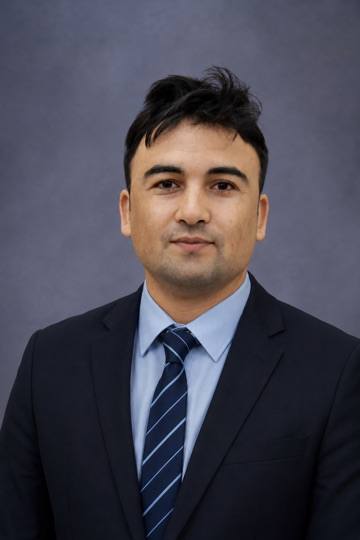
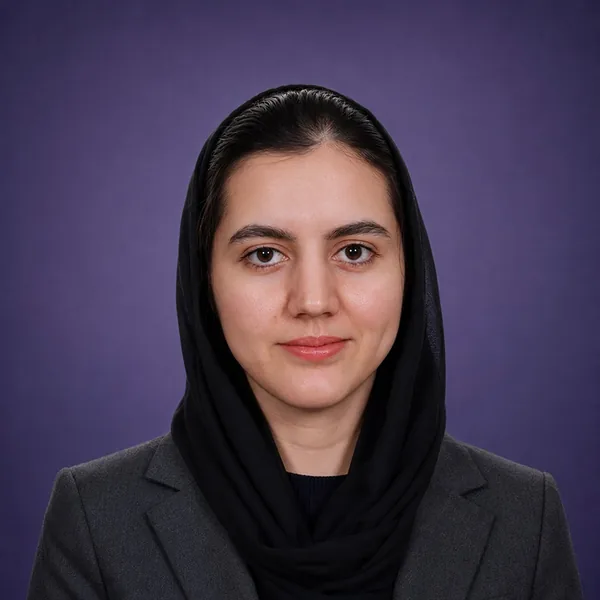
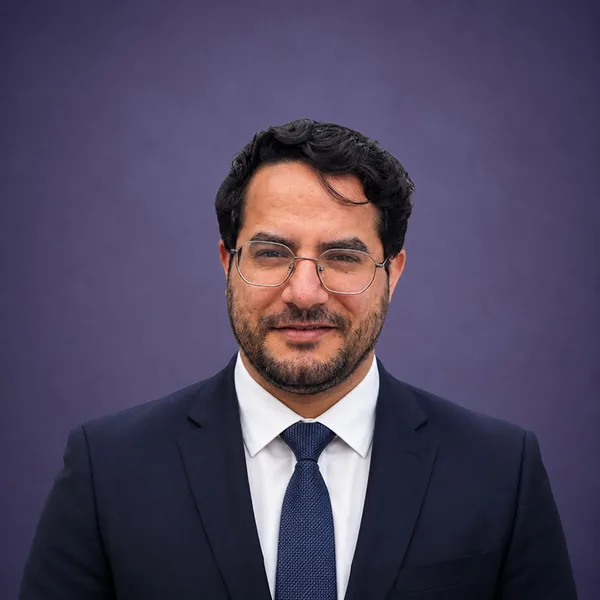
Ariana Nexus is led by Afghan alumni and scholars of Cornell, Brown, Columbia, Harvard, NYU, the University of Chicago and the University of British Columbia. We grew up speaking the languages we teach, and we learned to teach them to university standards. That is the difference between a native speaker and an instructor.


Why Ariana Nexus
Pashto and Dari proficiency can be tested: the DLPT5 for government learners and ACTFL’s OPI for everyone else. But no U.S. credential tests a teacher’s or an interpreter’s Pashto or Dari. There is no Praxis test in either language, federal court interpreter certification is offered in Spanish only, and the language-specific medical interpreter credentials do not include them. So we set the standard: we train and qualify our own instructors and interpreters, and we offer the same training to universities and government programs.
We bring all of them to every program: our own compliance bureau, all 24 Afghan languages, a community network across the Afghan diaspora, and scholars who have lived the languages they teach.
Security, privacy and compliance
AI and the classroom
AI tutors and machine translation now reach every learner’s phone, but Pashto and Dari remain lower-resource languages for AI: output can be fluent and wrong, and many tools return Iranian Persian when asked for Dari. We use AI where it helps and keep people in charge of what it produces.
Languages
Pashto and Dari are taught at every level. Uzbeki, Turkmeni, Balochi, Pashayi and Aimaq are taught by arrangement from elementary to intermediate, and research tutorials are available in the other 17 Afghan languages with named specialists.
Varieties we name on every syllabus. Pashto: Kandahari (southern), Nangarhari (eastern), central and northern. Dari: Kabuli, Herati, Hazaragi and northern.
Where we teach
We teach in all 50 states and Washington, D.C., on site and online, and in Canada, Europe and Australia, depending on the type and scale of the program. Our office is in Washington, D.C.
By the numbers
class hours
basic courses
Source: Defense Language Institute Foreign Language Center; Task & Purpose, June 22, 2023
U.S. credentials
Source: ETS, Praxis test availability; United States Courts, interpreter certification; CCHI; NBCMI
federal pipelines
Source: Defense Language Institute Foreign Language Center; Critical Language Scholarship, languages; University of Maryland Persian Flagship
The U.S. Foreign Service Institute estimates about 44 weeks, or 1,100 class hours, for an English speaker to reach professional working proficiency in Dari, the same category as Farsi and half the time it gives Arabic. FSI does not list Pashto; we plan Pashto programs on the same scale. We design four-semester university sequences to reach ACTFL Intermediate Mid to High. Heritage speakers move faster in speaking and need focused literacy work.
Dari and Farsi are both Persian, and educated speakers understand each other, but they differ in pronunciation, everyday vocabulary and some grammar. A university in Afghan Dari is پوهنتون (pohantun); in Iranian Persian it is دانشگاه (daneshgah). We teach Afghan Dari, never Iranian materials relabeled as Dari, and we run Farsi-to-Dari conversion courses for learners who already speak Iranian Persian.
It depends on the work. Pashto is the first language of most Afghans in the south and east and of Pashtun communities across the border; Dari is the most widely shared language in Afghanistan and in much of its government and academic life. Many programs teach both, in the order the mission requires. We recommend an order after a needs analysis of your learners, their missions and the communities they will serve.
Whichever your program uses: the ILR scale for U.S. government programs, including Department of Defense (Department of War) language programs, the ACTFL Proficiency Guidelines for universities, the CEFR for European programs and STANAG 6001 for NATO and allied defense schools. We set entry and exit levels on that scale and report against it. Our crosswalk shows how the four relate.
For government learners, the DLPT5 tests listening and reading in Pashto-Afghan and Dari-Afghan, in a lower range from ILR 0+ to 3. ACTFL, through Language Testing International, offers the OPI in both languages and the OPIc in Pashto. It lists no Writing Proficiency Test (WPT) and no reading or listening test in either language, so we use our own ILR- and ACTFL-referenced assessments for those skills.
Yes. We build proficiency first, then teach test formats, timing and strategy, with diagnostic practice before each test window. Ariana Nexus does not give official tests: the DLPT5 is scheduled through your test control officer, and ACTFL tests through Language Testing International.
Yes. We teach under your course number and syllabus template, inside your LMS, with a faculty sponsor or as instructor of record where your rules allow. Credit, grades and the transcript stay with your university; we supply the syllabus, materials, assessments and grade recommendations.
Yes. A shared course lets each campus enroll its own students in one live section on a common calendar, with credit granted by each home institution. It is the most efficient way to keep a less commonly taught language on the timetable.
Yes, in a separate track. Heritage learners often speak well but read and write little, or speak a family dialect. We place them by skill, build literacy and formal registers, and respect the variety they bring, whether Kandahari or Nangarhari Pashto, or Kabuli, Herati, Hazaragi or another Dari dialect.
Pashto courses name their variety: Kandahari (southern), Nangarhari (eastern), central or northern, with listening work across the others. Dari courses teach Kabuli Dari, the standard in Afghan media and government, with listening work in Herati, Hazaragi and northern dialects. Every syllabus states its variety and spelling standard.
University-educated Afghan instructors who are native or near-native in the variety they teach, trained in proficiency-based teaching, observed before they teach alone and calibrated to ILR and ACTFL descriptors every year. No U.S. credential tests a teacher’s Pashto or Dari, so we set and audit our own standard, and we train instructors for other programs.
Both. We teach live online, on campus, on site through mobile training teams, in blended formats and through self-paced modules with a tutor. We work in all 50 states and Washington, D.C., and in Canada, Europe and Australia, depending on the type and scale of the program.
You choose. Materials written for you can be owned by your institution, licensed to you in perpetuity or released under an open license such as CC BY. Files are delivered in editable formats and standard LMS packages, so you are never locked into a platform.
Yes. Everything we deliver meets WCAG 2.1 AA and Section 508: Pashto and Dari as real right-to-left text, not images; captions and transcripts for audio and video; alt text and tagged documents. Under the Justice Department’s ADA Title II rule, public entities must meet WCAG 2.1 AA for web and course content by April 26, 2027 or April 26, 2028, depending on their size.
We work under FERPA as a school official under your direct control, keep data in the United States with encryption and multi-factor access, record speaking assessments only with consent and delete them on your schedule. Learner data never trains AI models. We complete HECVAT 4 and security questionnaires on request, and apply NIST SP 800-171 controls when a government program involves Controlled Unclassified Information.
Yes. Uzbeki, Turkmeni, Balochi, Pashayi and Aimaq are taught by arrangement, and research tutorials are available in the other 17 Afghan languages. Programs outside the United States can be taught through French, German, Spanish, Italian, Hebrew, Urdu, Arabic, Hindi, Portuguese, Chinese, Russian, Turkish or Swedish.
Carefully. Classes often bring together veterans of the war in Afghanistan and students from families shaped by it. Material on conflict, displacement and moral injury is introduced with notice, no one is asked to share family history or politics, and sources are named and balanced. The protocol is set by Diana Ayubi, Psy.D.
Universities usually use a services agreement or a purchase order, including under Title VI and other grants. Government programs can contract with us directly, through a purchase order, or with Ariana Nexus as a subcontractor or teaming partner to a prime. Ariana Nexus LLC is registered in SAM.gov (UEI M2UDMUDFXGL9, CAGE 1Z3A3).
Reviewed by the Cultural Compliance Bureau · October 5, 2026AN·SVC·2026·EDU·12
Related services
This page covers learning the languages. These services cover culture, communication and research.
Tell us who is learning, which language and variety, where your learners start and where they need to finish. We reply within two business days to set up a scoping call, then send a program outline, a staffing plan and a schedule.
Washington, D.C. · All 50 states · Canada · Europe · Australia