Screening and Identity Verification Support for Afghan Nationals

Document analysis, name transliteration and interview interpreting in Pashto, Dari and 22 more Afghan languages.

Ariana Nexus gives government agencies, resettlement programs and their contractors the Afghan expertise identity screening depends on: analysis of tazkiras, passports and civil records; documented reconciliation of names and dates across Pashto, Dari and English records; and neutral, dialect-matched interpreters for screening interviews and re-interviews. We inform the agency's decision. We never make it.

Pashto

د افغان اتباعو د امنیتي ارزونې او هویت د تثبیت ملاتړ

Dari

پشتیبانی از بررسی امنیتی و تثبیت هویت اتباع افغان

Register extract

Document
Reference
Paper tazkira
Reference by type
e-Tazkira
PRADO AFG-BO-02001
Afghan passport
PRADO AFG-AO-01001, 01002, 04001

Afghan document types we read, with their EU PRADO references where one exists.

The register

Afghan documents we read, and what each can establish

Afghan document verification starts with reading every entry. We read tazkiras, e-Tazkiras, Afghan passports, marriage certificates, education records and service records in the original Pashto or Dari, and report what each document records, which era and channel issued it, and whether it agrees with the rest of the file.

Schematic of a paper tazkira. Not a reproduction.

Paper tazkira

تذکره

The Afghan national identity document most files begin with.

  1. 1

    Name

    Given name only; no surname field
  2. 2

    Father's and grandfather's names

    The patronymic chain that separates people who share a name
  3. 3

    Place of origin

    Province, district and village of the family, not always the birthplace
  4. 4

    Age in the year of issue

    An estimate, often by appearance; the source of most January 1 dates
  5. 5

    Register references

    Volume, page and registration number at the issuing office
  6. 6

    Photograph and office seal

    Physical features; examined in a laboratory when warranted

e-Tazkira

تذکره الکترونیکی

Records
Identity data held centrally by the National Statistics and Information Authority
Does not establish
A guarantee that the underlying facts were checked
Note
Issued since 2018; 16.5 million by 2025, 7 million under the de facto authorities.

PRADO AFG-BO-02001

Afghan passport

پاسپورت

Records
A Latin-script transcription of the name, issue and expiry data
Does not establish
A fixed spelling that other records must follow
Note
Post-2021 issues still name the Islamic Republic; some states do not recognize them.

PRADO AFG-AO-01001, 01002, 04001

Marriage certificate

نکاح خط

Records
Spouses, fathers' names, witnesses, date and issuing court or office
Does not establish
Proof of identity on its own
Note
Read with the tazkira entries it cites.

Reference by type

Education records

شهادتنامه

Records
School or university, years attended, name as held by the institution
Does not establish
A birth date or legal name
Note
Useful for place and timeline corroboration.

Reference by type

Service and employment records

مکتوب

Records
Employer, unit or contractor, role, dates of service during the Afghan war
Does not establish
Confirmation by the issuer; we flag what the program should verify
Note
Contractor letters, unit letters and badge records for SIV and parole files.

Reference by type

Supporting documents

اسناد

Records
Court records, property deeds, letters and hospital records carrying names, dates and places
Does not establish
Identity on its own
Note
Read for consistency with the identity record, never for credibility.

Reference by type

Issuing eras

When and by whom a document was issued changes what it proves

Genuine Afghan documents with inaccurate content have been easy to obtain, and since August 2021 documents also come from offices under the de facto authorities or from missions still operating in the Republic's name.

  1. 2017
    Current passport series first issued
    EU PRADO, AFG-AO-04001
  2. 2018
    e-Tazkira introduced alongside the paper tazkira
    Landinfo, 2025
  3. Aug 2021
    Issuing offices come under the de facto authorities
    U.S. Department of State
  4. 2024
    De facto foreign ministry stops accepting documents from missions it does not control
    ACCORD, 2025
  5. 2026
    Some EU member states list Afghan passports issued after August 15, 2021 as not recognized
    EU list of travel documents, August 2026

A mismatch is not a finding.

Afghan records often disagree for reasons that have nothing to do with deception: no fixed surnames, estimated ages, a different calendar and many legitimate spellings. The work is separating that variation from a discrepancy that needs an officer's attention, and writing down why.

Accurate identity data serves two interests at once: the agency's national security and public safety duty to know who it is admitting, and the applicant's right not to be flagged over a spelling.

e-Tazkiras issued under the de facto authorities

7 million
16.5 million issued since 2018

NSIA figures reported by Landinfo, November 2025. About four in ten e-Tazkiras issued since 2018.

Records of Afghan evacuees with January 1 as the birth date

11,110
88,977 records reviewed

DHS Office of Inspector General, OIG-22-64. FNU, first name unknown, appears in 417 of the same records.

Three desks

Afghan identity verification: documents, names and interviews

Most Afghan people have no fixed family name. A record may carry a given name alone, add a father's name, a tribe or an honorific, or leave a field blank, which U.S. systems record as FNU, first name unknown.

Desk 10.1

Afghan document analysis

Afghan document verification starts with reading every entry. We read tazkiras, e-Tazkiras, Afghan passports, marriage certificates, education records and service records in the original Pashto or Dari, and report what each document records, which era and channel issued it, and whether it agrees with the rest of the file.
  • Full translation of every entry, including handwritten notes and stamps
  • Issuance era and channel: Republic-era, post-August 2021, mission-issued or extended
  • Format read against published references such as the EU PRADO register
  • Internal and cross-document consistency, with every discrepancy classified
  • Stated limits: we flag when a forensic laboratory examination is warranted
A signed Document Analysis Report for each document, with confidence and limits stated.
Desk 10.2

Name transliteration and date reconciliation

Afghan names are written in Arabic script and spelled many ways in Latin letters. We establish how a person's name is written in Pashto or Dari, how it has been rendered across every record, and which spellings belong to the same identity. Solar Hijri dates are converted with the arithmetic shown.
  • Name Variant Register: original script, name components and every observed spelling
  • Search variants for database and watchlist queries
  • Father's and grandfather's names used to separate people who share a name
  • Solar Hijri to Gregorian conversion, and tazkira ages converted to birth-year ranges
  • Place names reconciled across districts and villages spelled many ways
A Name Variant Register and a Date Reconciliation Table your officers can search against.
Desk 10.3

Interview interpreting for screening and re-interviews

Neutral, dialect-matched Pashto and Dari interpreters, and interpreters in the smaller Afghan languages, for screening and security interviews, re-interviews, credible fear screenings, benefit and consular interviews and law enforcement interviews, on site, by video or by telephone.
  • Language and variety confirmed with the applicant before the first question
  • Complete, consecutive renditions, including hesitation and self-correction
  • Sight translation of documents presented during the interview
  • Interpreter monitoring when an applicant brings their own interpreter
  • Gender-matched interpreters on request
A signed interview record: interpreter, language, variety, modality and times.

What your team receives

Document Analysis Report

Per document: translation, issuance era and channel, format observations, consistency findings, confidence and limits.

Name Variant Register

Original script, name components, the spelling agreed for the file, every observed spelling and search variants.

Date Reconciliation Table

Every date converted with the arithmetic shown, tazkira ages as birth-year ranges, assigned dates flagged.

Discrepancy Log

Each discrepancy classified as explained, needing corroboration or unexplained, with the source that would settle it.

Interview Record

Interpreter, language and variety confirmed, modality, times and declarations; a language note on request.

Officer Briefing

A short call or written summary that walks the officer through the findings for the file.

Delivered as a signed PDF, with a structured data file for your case system on request.

Reference upkeep

How our reference knowledge stays current

Afghan documents change with the offices that issue them. Our references are reviewed every month and every change is signed off by the Cultural Compliance Bureau.

Register last reviewed
  • EU PRADO register

    Document types, series and security descriptions published by the Council of the EU.
  • Country information services

    Landinfo (Norway), EUAA country reports and ACCORD (Austria) on Afghan civil documentation.
  • U.S. Department of State

    Reciprocity and civil-document guidance for Afghanistan.
  • Receiving-state notices

    Recognition notes on Afghan passports issued or extended after August 2021.
  • Our own case record

    Issuing patterns seen across engagements, kept without personal data.
Delivery

How an Afghan screening engagement runs

A single-case review is typically returned within five business days. Priority, program-scale and surge timelines are set with the agency at intake.

  1. 01

    Secure intake and conflict check

    Files arrive through a controlled channel. Before anyone reads them, every assigned analyst and interpreter is checked for family, tribal, regional and political ties to the person.
  2. 02

    Reading in the original script

    Documents are read in Pashto or Dari as written. Language, dialect and issuing era are recorded.
  3. 03

    Names, dates and places

    The Name Variant Register, the Date Reconciliation Table and place-name reconciliation are built from every record in the file.
  4. 04

    Consistency analysis

    Records are compared field by field. Every discrepancy is classified and explained.
  5. 05

    Independent second review

    A second analyst reviews every finding blind. The Cultural Compliance Bureau signs off transliteration keys and terminology.
  6. 06

    Findings and interview support

    Signed findings go to the officer. Interpreters support interviews and re-interviews, and analysts explain findings at appeals or hearings when asked.
Why Ariana Nexus

Why Ariana Nexus for Afghan identity work

Screening Afghan nationals well takes three things rarely found together: native command of Pashto and Dari, working knowledge of how Afghan records were actually issued, and a method that holds up under review.

01

Afghanistan is the whole practice

Afghan context is not one language among a hundred for us. Every analyst reads Pashto and Dari in the original script and knows how Afghan offices issued records in each era.
02

Scholars, not bilinguals

Engagements are led by alumni and scholars of Cornell, the University of Chicago, the University of British Columbia and Otto von Guericke University Magdeburg: trained in method, not only fluent.
03

A standard where none exists

No U.S. certification exists for Pashto or Dari interview interpreters, or for Afghan document analysis. We set the standard our people are assessed against, and we train Afghan diaspora interpreters beyond our own bench.
04

Neutral by design

Conflict checks on every assignment, no advocacy for any side, one method for every agency and never both sides of the same matter. We work for an accurate record, not for an outcome.
05

Findings that hold up

Every conclusion shows its source, its reasoning and its confidence, and passes a blind second review. Built for audit, appeal and court.
06

One firm, one point of accountability

Every part is produced by our own people. No third-party subcontractors and no brokered experts.
Trust

Security, privacy and compliance

Screening files hold some of the most sensitive personal data an agency manages. We handle them that way.

Control
What it means for your files
Control
Personnel
What it means for your files
Identity-verified, background-checked and bound by confidentiality and neutrality undertakings. U.S. case files are handled by U.S.-based personnel, who can be put forward for suitability, public trust or security clearance investigations when a contract requires.
Control
Data handling
What it means for your files
An access-controlled case environment with audit logging, encryption in transit and at rest, no personal devices and minimum-necessary access. Files are returned or destroyed as the contract directs, with a written record.
Control
Controls
What it means for your files
Controls aligned to NIST SP 800-171 for Controlled Unclassified Information, with incident notice on the contract's timeline: one hour for personal-data incidents under DHS terms. Privacy Act obligations the agency flows down are met in full.
Control
Confidentiality law
What it means for your files
Asylum confidentiality under 8 CFR 208.6 is respected. GDPR and UK GDPR apply to European engagements, and Canada's Privacy Act to Canadian federal work.
Control
AI and machine translation
What it means for your files
No machine translation of case content without qualified human review, and no client material used to train any AI model.
Control
Standards we align to
What it means for your files
ICAO Doc 9303 Part 3, the ICAO Guide on Evidence of Identity, NIST SP 800-63A-4, ISO 20228 and ISO 18841. We cite standards we align to and claim no certification we do not hold.

What this service does not do

We do not decide

Admissibility, eligibility, credibility and risk decisions stay with the agency.

We do not contact the de facto authorities

No documents, data or inquiries are routed through channels they control, and we use no registry lookups in Afghanistan.

We do not surveil communities

No social media monitoring, informant work, bulk name lists or collection on Afghan communities. We work only on the named people in a referred file.

We do not advocate or work both sides

We do not argue for an outcome, and never act for an applicant and an agency in the same matter. Applicant-side and agency-side work run in separate teams, disclosed at intake.

We do not produce documents

No issuance, alteration or forgery know-how, ever.

We do not go beyond the evidence

Findings stop where the evidence stops.
Team

The people behind the work

Alumni and scholars of Cornell, the University of Chicago, the University of British Columbia and Otto von Guericke University Magdeburg lead every engagement: a firm of trained analysts, not a roster of bilinguals.

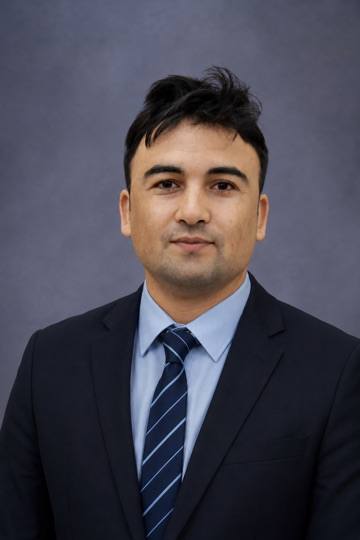
Portrait of Hassan Ukasha

Hassan Ukasha

Managing Partner · Program oversight
  • B.S.
    Cornell University
  • M.P.H.
    Cornell University
Oversees the firm's operations and the screening and identity verification program: engagement standards, security posture and the final quality gate on every deliverable.
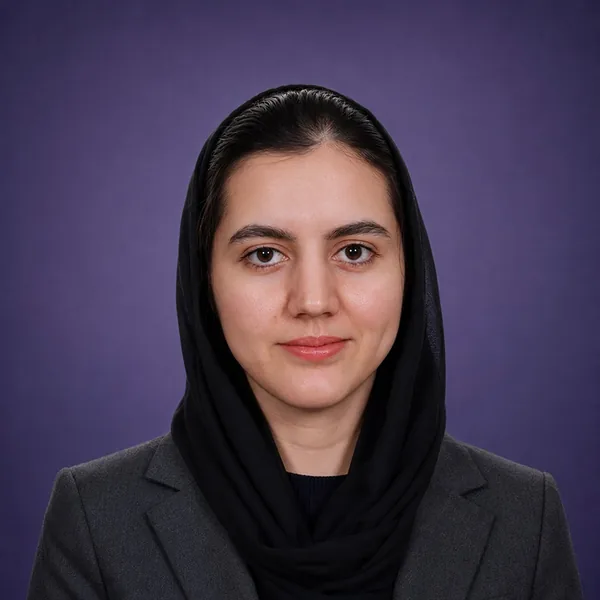
Portrait of Zeba Haqbani

Zeba Haqbani

Senior Partner
  • B.Sc.
    University of British Columbia
Designs the secure case environment and the firm's AI platforms: access control, audit logs and the name-variant tooling analysts work in.
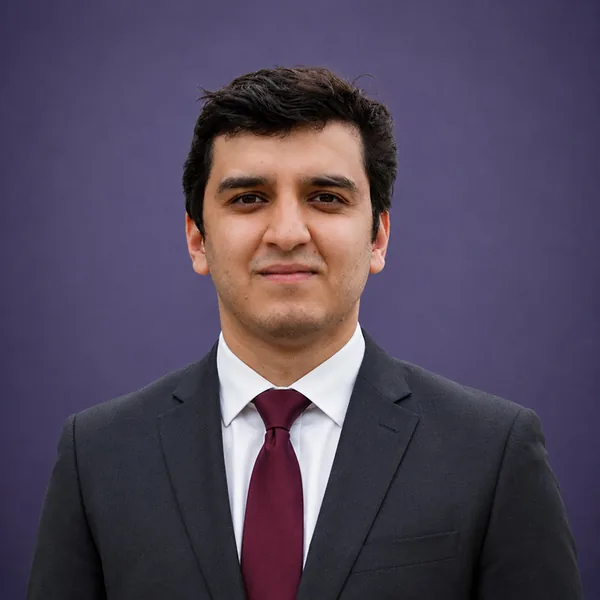
Portrait of Hussain Ahmad

Hussain Ahmad

Analyst
  • M.Eng.
    Cornell University
  • Ph.D.
    University of Chicago
Leads data engineering for identity work: transliteration models, record linkage across Latin-script spellings and the Solar Hijri conversion logic analysts check against.
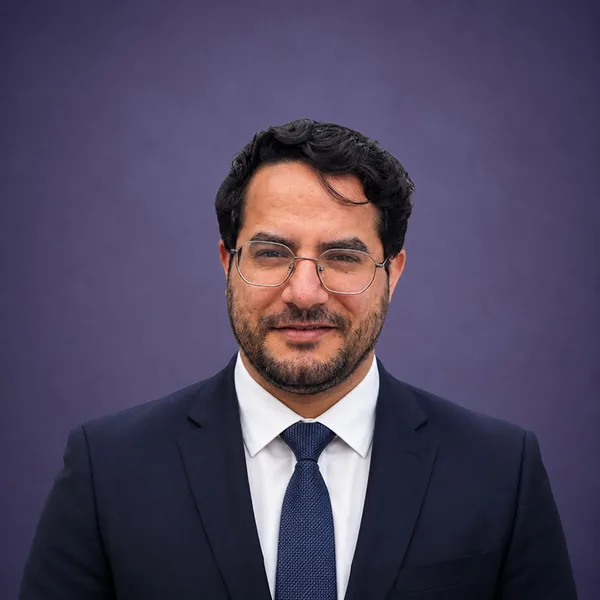
Portrait of Wasil Peroz

Wasil Peroz

Principal
  • B.A.
    Milli University
  • M.Sc.
    Otto-von-Guericke University Magdeburg
Leads legal standards: maps the rules each screening program works under in the U.S., Canada, the UK and the EU, and sets the evidentiary language our reports use.
Portrait of Maryam Safi

Maryam Safi

Principal
  • B.A.
    Cornell University
Runs delivery for government programs: intake, conflict checks, interpreter assessment and scheduling, and the second-review chain.

Diana Ayubi, Psy.D.

Engagement Manager
Sets the trauma-informed interpreting protocol and the well-being practice for interpreters who hear difficult testimony. B.A., Cornell University; Psy.D., West Chester University.

Cultural Compliance Bureau

Terminology review
Reviews every transliteration key, glossary term and place-name rendering before release, and signs off the Pashto and Dari lines.

Language specialist bench

Document analysts and interpreters
Analysts and interpreters in Pashto, Dari and the smaller Afghan languages. Not named on this page, for their safety and their families'; each is named to the contracting agency and vetted to the contract.

Hassan Ukasha: Based in Washington, D.C. Works in Pashto, Dari, English, Urdu, Hindi and Arabic.

Language register

Afghan languages and dialects we work in

Pashto, Dari and 22 more Afghan languages, each matched to the applicant's own variety. Findings and interpreting are also delivered in 13 working languages, so agencies in Canada and Europe work in their own.

Language
Family
Interpreting
Pashto
پښتو
Iranian
On demand
Dari
دری
Iranian
On demand
Aimaq
Iranian
Scheduled
Balochi
Iranian
Scheduled
Ormuri
Iranian
Scheduled
Parachi
Iranian
Scheduled
Wakhi
Iranian
Scheduled
Shughni
Iranian
Scheduled
Sanglechi
Iranian
Scheduled
Ishkashimi
Iranian
Scheduled
Munji
Iranian
Scheduled
Yidgha
Iranian
Scheduled
Uzbeki
Turkic
Scheduled
Turkmeni
Turkic
Scheduled
Kyrgyz
Turkic
Scheduled
Pashayi
Indo-Aryan
Scheduled
Gawarbati
Indo-Aryan
Scheduled
Tirahi
Indo-Aryan
Scheduled
Nuristani (Ashkun group)
Nuristani
Scheduled
Kati
Nuristani
Scheduled
Prasun
Nuristani
Scheduled
Waigali
Nuristani
Scheduled
Brahui
Dravidian
Scheduled

Dialect matching

Pashto is matched by region, southern (Kandahari) or northern (Yusufzai) among them. Dari is matched as Afghan Dari in the applicant's own dialect, Kabuli, Herati or Hazaragi among them, and never substituted with Iranian Farsi.

Interpreting trauma faithfully

Trauma can affect memory for dates, sequence and names, and so can moral injury, sometimes called moral trauma, among Afghans who served during the Afghan war. Our interpreters render hesitation, self-correction and emotion exactly as spoken, and never smooth an answer into something it was not.

Working languages

Pashto and Dari are available on demand. The smaller Afghan languages are scheduled, and we confirm the interpreter, the variety and the time at booking.
  • English
  • French
  • German
  • Spanish
  • Italian
  • Hebrew
  • Arabic
  • Hindi
  • Urdu
  • Portuguese
  • Chinese
  • Russian
  • Turkish
Who it serves

Built for agencies screening and vetting Afghan nationals

Agencies abroad call this work security screening (Canada), identity and security checks (UK), Identitätsklärung (Germany) and établissement de l'identité (France).

Program
Screening moment
What we provide
Program
Immigration and citizenship benefits
Screening moment
Adjustment of status, naturalization, re-review and re-interview
What we provide
Name and date reconciliation; interview interpreters
Program
Humanitarian admission and resettlement
Screening moment
Afghan refugees, SIV holders and parolees: case processing and family reunification
What we provide
Document analysis; service and employment record reading
Program
Borders and consular posts
Screening moment
Secondary inspection, visa interviews and identity questions at ports of entry
What we provide
Remote interpreters; document reading
Program
Law enforcement and public safety
Screening moment
Interviews, identity questions in investigations and name searches
What we provide
Interpreters; Name Variant Register
Program
State and local agencies
Screening moment
Driver licensing, benefits and age questions where the documents are Afghan
What we provide
Document reading; date conversion
Program
Foreign governments and international organizations
Screening moment
Screening and asylum registration in Canada, the UK and the EU; international organizations and their implementing partners
What we provide
Findings and interpreting in English, French or German
Program
Prime contractors and integrators
Screening moment
Afghan expertise inside vetting, adjudication-support and case-processing contracts
What we provide
Teaming and subcontract support

Ways to engage

  1. Single case

    One file, scoped and quoted at intake, with findings in days.
  2. Program support

    A defined caseload under a task order or BPA, with named analysts, service levels and weekly reporting.
  3. Interview program

    Scheduled or on-demand interpreters for interview programs, on site or remote.
  4. Surge programs

    A time-bound backlog or review program, mobilized inside the agency's own procedures.
  5. Through a prime

    As a teaming partner or subcontractor on an existing contract vehicle.

Priced by scope and service level.

Procurement facts

Legal name
Ariana Nexus LLC
SAM.gov
Active
UEI
M2UDMUDFXGL9
CAGE
1Z3A3
NAICS
541611 (primary), 541930
Headquarters
1717 Pennsylvania Avenue NW, 10th Floor, Washington, D.C. 20006
Coverage
All 50 states; registered as a vendor in 37; Canada and Europe

Registered as a vendor in 37 of 50 states; active in all 50.

Questions

Questions about screening Afghan nationals

What is screening and identity verification support for Afghan nationals?

It is expert Afghan identity verification support for agencies that must establish who an Afghan national is: Afghan document verification and analysis of civil records, reconciliation of names and dates across records in Pashto, Dari and English, and neutral interpreting for screening interviews. Ariana Nexus provides the analysis and interpretation; the agency makes every decision.

Who uses this service?

Immigration and citizenship agencies, border and consular programs, refugee and resettlement programs, law enforcement, state and local agencies, the prime contractors that support them, and foreign governments and international organizations screening Afghan nationals in Canada, the UK and Europe.

Can you tell us whether a tazkira or Afghan passport is genuine?

Not on our own, and never on appearance. We report what a document records, which era and channel issued it, how its format compares with published references such as the EU PRADO register, and whether its content agrees with the rest of the file, each with a stated confidence, and we flag when a forensic laboratory examination of physical security features is warranted. The determination stays with the agency.

Do you verify documents with Afghan registries or the authorities in Kabul?

No. We never route documents, personal data or inquiries through channels controlled by the de facto authorities, and we use no registry lookups in Afghanistan. Doing so could expose applicants and their families. Our findings rest on the documents, published references and the file itself.

Why does one Afghan person appear under several spellings?

Pashto and Dari are written in Arabic script, and no official standard fixes how Afghan personal names are spelled in Latin letters. Passports carry a phonetic transcription, and most Afghans have no fixed surname, so one person can appear as Mohammad, Muhammad or Mohammed, with or without a father's name, tribe or honorific. Our Name Variant Register documents which spellings belong to one identity.

Why do so many Afghan records show January 1 as the date of birth?

Because many Afghans were never issued a birth date. The paper tazkira records an estimated age in the year of issue, and Western forms often convert that estimate to January 1. The DHS Inspector General found January 1 in 11,110 of 88,977 evacuee records. On its own it is a recording practice, not an indicator of fraud.

How do you convert Solar Hijri dates on Afghan documents?

A Solar Hijri year begins at Nowruz, around March 21. Add 621 years for dates from Nowruz to December 31 and 622 for dates from January 1 to Nowruz, then place the day within the month. Afghan months carry zodiac names: Pashto names such as Wray and Arabic-derived Dari names such as Hamal, unlike Iran's Farvardin. We show the arithmetic for every date.

Do you provide Pashto and Dari interpreters for screening interviews and re-interviews?

Yes: on site, by video or by telephone, for screening and security interviews, re-interviews, credible fear screenings, benefit and consular interviews, and law enforcement interviews. Interpreters confirm the applicant's language and variety before the first question, interpret completely and consecutively, and sign the declarations the agency requires.

Is an Iranian Farsi interpreter acceptable for a Dari speaker?

Not for screening. Afghan Dari differs from Iranian Farsi in vocabulary, official terms, month names and place names, and a mismatch produces answers that read as inconsistencies. We assign Pashto interpreters in the applicant's regional variety, and Afghan Dari interpreters in the applicant's own dialect, Kabuli, Herati or Hazaragi among them.

Which other Afghan languages can you cover?

Uzbeki, Turkmeni, Kyrgyz, Balochi, Brahui, Pashayi, Aimaq, the Nuristani languages, the Pamir languages and the smaller languages of the east and south. Pashto and Dari are available on demand; other languages are scheduled, and we confirm the interpreter, the variety and the time at booking.

How do you keep interpreters and analysts neutral?

Every assignment starts with a conflict check for family, tribal, regional and political ties. Interpreters take a neutrality undertaking, never advise or converse off the record, and never comment on credibility. Analysts separate findings from judgment, a second analyst reviews every conclusion blind, and we never act for an applicant and an agency in the same matter.

Do you make recommendations on eligibility, admissibility or risk?

No. We report linguistic, documentary and cultural findings with stated confidence and limits. Eligibility, admissibility, credibility and risk decisions remain with the agency, which is also what keeps our findings useful at appeal.

How do you protect personal data and Controlled Unclassified Information?

Case files are handled in an access-controlled environment with audit logging, encryption in transit and at rest, no personal devices and minimum-necessary access, under controls aligned to NIST SP 800-171. We respect asylum confidentiality under 8 CFR 208.6, apply GDPR and UK GDPR in Europe, and return or destroy files at the end of the contract as it directs, with a written record.

How fast can you deliver?

A single-case document and name review is typically returned within five business days, with priority turnaround by arrangement. Remote Pashto and Dari interpreters are available on demand, and program-scale and surge timelines are set with the agency at intake.

How is this different from automated ID verification or name-matching software?

Software returns scores; we return reasons. Automated tools struggle with Pashto and Dari names, Solar Hijri dates and Afghan issuing eras; the German government told the Bundestag in 2023 that its federal asylum office's name-transcription software handled Arabic names only. We work alongside your tools, explaining the matches they flag and the ones they miss.

Do you work outside the United States?

Yes. We support agencies and programs in Canada and Europe according to the type and scale of the project, with findings and interpreting in English, French, German and our other working languages, and with GDPR and UK GDPR obligations built in.

How do agencies engage and procure the service?

Directly, for a single case, a defined caseload or an interview program, or through a prime contractor as a teaming partner. Ariana Nexus is registered in SAM.gov (UEI M2UDMUDFXGL9, CAGE 1Z3A3), works in all 50 states and is registered as a vendor in 37.

How do you treat Afghan passports and tazkiras issued after August 2021?

We record the issuing era and channel of every document: offices under the Taliban's de facto authorities, missions still operating in the Republic's name, or an extension. Passports issued since August 2021 continue to name the Islamic Republic of Afghanistan as issuer, and some EU member states do not recognize passports issued after August 15, 2021. We report these facts; recognition decisions stay with the receiving state.

Can your analysts explain findings at an appeal, tribunal or hearing?

Yes. Findings are written to be explained, and our analysts can walk officers, counsel or tribunals through them. When sworn evidence is needed, our expert witness practice prepares declarations and testimony.

Related services

Sources

  1. DHS Office of Inspector General, DHS Encountered Obstacles to Screen, Vet, and Inspect All Evacuees during the Recent Afghanistan Crisis (OIG-22-64), September 2022
  2. Landinfo, Afghanistan: Tazkera, pass og andre ID-dokumenter, November 2025
  3. U.S. Department of State, Afghanistan reciprocity and civil documents
  4. ICAO, Doc 9303 Machine Readable Travel Documents, Part 3, 8th edition, 2021
  5. NIST, SP 800-63A-4 Digital Identity Guidelines: Identity Proofing and Enrollment, July 2025
  6. Council of the EU, PRADO: Afghanistan documents
  7. European Union Agency for Asylum, Latest Asylum Trends: annual analysis 2025
  8. Deutscher Bundestag, Drucksache 20/9419, November 2023
  9. BGN/PCGN, Romanization system for Afghanistan (Pashto and Dari), 2007
  10. European Union Agency for Asylum, Practical Guide on Interpretation in the Asylum Procedure, 2024

Talk to the team that reads Afghan records for a living

Tell us about the file, the program or the interview schedule. A partner responds within one business day, under NDA if you need it.

Last reviewed September 27, 2026 by Wasil Peroz, Principal.