Research Fieldwork and Qualitative Data Collection in Afghan Communities

Bilingual interviewers, focus groups and transcription in Pashto and Dari, with interviews in 22 more Afghan languages

We recruit Afghan participants, conduct interviews and focus groups in their own language and dialect, and deliver verbatim Pashto and Dari transcripts with English translations your analysis can rest on. Interviewers are matched to each participant by language, dialect and gender, and every step runs under your ethics approval.

For universities, research institutes, public health agencies, foundations, NGOs and evaluators in all 50 states, Canada, Europe and Australia.

  • 24
    Afghan languages, matched to the participant’s dialect and region
  • Women
    interview women: gender-matched interviewers and moderators
  • 2
    linguists on every transcript: a transcriber and an independent reviewer
  • 50
    U.S. states, plus Canada, Europe and Australia
  • 0
    data paths through channels controlled by Afghanistan’s de facto authorities
Session
IDI-07
Language
Pashto, southern
Interviewer
Woman, native speaker
Format
Verbatim, then English

00:14:32 · INT

کله چې دلته راغلئ، تر ټولو سخته ورځ کومه وه؟

When you arrived here, which day was the hardest?

00:14:41 · P07

هغه ورځ چې له کوره هېڅ خبر نه و راغلی. زړه مې ډېر تنګ و.

The day no news came from home. My heart was very tight.

Translator’s note: “zṛə me tang wo,” literally “my heart was tight,” is a common Pashto expression of sadness and longing.

00:14:58 · P07

[چوپتیا، ۴ ثانیې] خو ماشومانو ته مې څه ونه ویل.

[silence, 4 seconds] But I did not tell the children anything.
Illustrative transcript excerptWritten for this page. Not from a real participant.
جگرم خون شد

Dari · jigaram khun shud

Literally “my liver became blood.”
Meaning: I was devastated with grief.23
An empty office meeting room with a long wooden table, pink chairs and floor-to-ceiling windows

What is research fieldwork and qualitative data collection in Afghan communities?

It is the field side of a qualitative study: recruiting Afghan participants, obtaining informed consent, conducting interviews and focus groups in Pashto, Dari or another Afghan language, and turning the recordings into verbatim transcripts and English translations ready for analysis. Ariana Nexus, a consulting and professional services firm in Washington, D.C., runs each of these steps with its own researchers, interviewers and linguists.

What you receive

What your team receives

1

00:14:41

2

P07

3

هغه ورځ چې له کوره هېڅ خبر نه و راغلی. زړه مې ډېر تنګ و.

4
The day no news came from home. My heart was very tight.
5

Translator’s note: “zṛə me tang wo,” literally “my heart was tight,” is a common Pashto expression of sadness and longing.

6
Family in Afghanistan
7
Second linguist
  1. 1

    Time stamp

    Side-by-side bilingual transcripts with time stamps and speaker labels
  2. 2

    Speaker label

    Names and identifying details are removed or coded before files leave our secure environment.
  3. 3

    Verbatim source

    Verbatim and intelligent verbatim transcription
  4. 4

    English translation

    English translations, side by side with the source
  5. 5

    Translator’s note

    Translator’s notes for idioms and culturally specific terms
  6. 6

    Code, optional analysis support

    Codebook development and coding
  7. 7

    Second-linguist review

    Independent second-linguist review and audio audits

The files you receive

/your-study/

  1. 01
    Field plan and dated schedule
  2. 02
    Translated consent and recruitment materials, with certificates of translation
  3. 03
    Interviewer training and calibration record
  4. 04
    De-identified recruitment and screening log
  5. 05
    Encrypted audio recordings, if your protocol allows
  6. 06
    Verbatim transcripts in Pashto and Dari script
  7. 07
    English translations, side by side with the source
  8. 08
    Field notes and debrief memos
  9. 09
    Glossary of idioms and culturally specific terms
  10. 10
    Quality record: second-linguist review and audio audits
  11. 11
    Files ready for NVivo, ATLAS.ti, MAXQDA or Dedoose
  12. 12
    Methods appendix with COREQ items
  13. 13
    Certificate of destruction at close-out

Why studies stall

Where qualitative research with Afghan communities loses data

Most studies with Afghan people do not fail at analysis. They fail earlier, in the field, in ways a reviewer cannot see until the transcripts arrive.

  1. L01

    The wrong language, or the wrong Dari

    27% Farsi · 26% Dari
    A Kandahari Pashto speaker and a Kabuli Dari speaker do not share a first language. Screeners that offer only “Dari” also miss people who call their language “Farsi”: in U.S. census data, 27% of Afghan immigrants answer Farsi and 26% answer Dari.2
  2. L02

    Women who are never reached

    6 of 32
    Many Afghan women will not speak openly with a male interviewer, or in front of a male note-taker, so samples skew male. One 2025 study of Afghan evacuees interviewed 6 women and 26 men.11
  3. L03

    Fear of being identified

    Participants with family in Afghanistan, or with immigration cases pending, weigh every question against the risk of being recognized. Without visible protections, they decline or give safe answers.
  4. L04

    Answers filtered through an ad hoc interpreter

    Three-way interviews through a relative or a community volunteer compress answers, soften what is painful and break confidentiality. The researcher hears a summary, not the participant.
  5. L05

    Machine transcription that is not Pashto

    Under 1%
    In a 2026 benchmark on read Pashto speech, Whisper models produced Pashto script in under 1% of utterances, with word error rates of 90% to 297%. Interviews are harder than read speech.1
  6. L06

    Transcripts no one can analyze

    Summary translations, missing speaker labels, no time stamps and idioms translated word for word leave coders guessing. In Dari, “jigaram khun shud” (جگرم خون شد) is not “my liver became blood.” It is grief.23

Evidence

What the data says about fieldwork with Afghan communities

Margin figure 1

Machine transcription is not ready for Pashto

No Whisper speech model produced Pashto script in more than 0.8% of utterances, and the best model tested still had a word error rate near 40%, on read speech.1

Pashto-script output from any Whisper model: at most 0.8% of utterances; MMS-1B, SeamlessM4T and OmniASR each above 93%.

  • Whisper models, zero-shot (lowest)90% WER
  • Whisper models, zero-shot (highest)297% WER
  • Best zero-shot model, SeamlessM4T39.7% WER
  • Fine-tuned models on new data32.5–59% WER

Word error rate above 100% means the system inserted more wrong words than the audio contained. All tests used read speech; interviews are harder.

Margin figure 2

Afghan immigrants name their language in more than one way

Screeners that list only “Dari” miss the 27% who answer “Farsi.”2
  • Pashto32%
  • Farsi27%
  • Dari26%
  • All other answers15%

Language spoken at home by Afghan immigrants in the United States, 2022 American Community Survey. Many Afghans call Dari “Farsi,” so screeners should offer both names. 56% of Afghan immigrants in the United States speak English less than very well.

Margin figure 3

Women who are never reached

One 2025 study of Afghan evacuees interviewed 6 women and 26 men.11
Women, 6 ·
Men, 26

What we deliver

Fieldwork services, from recruitment to analysis-ready data

Commission the full study or only the parts you need. Every part is produced by our own people, under one engagement and one point of accountability.

Study design and ethics readiness

Field plans and ethics materials your IRB, REB or ethics committee can approve.
  • Fieldwork plan, sampling frame and quotas
  • Screeners that offer Pashto, Dari and “Farsi”
  • Interview and focus group guide adaptation
  • Consent, assent and short-form consent translation
  • IRB, REB, REC and HREC submission support
  • Certificate of Confidentiality and data management plans
  • Letters of support and budget justifications for grant proposals
  • Paperwork Reduction Act planning for federally sponsored studies

Participant recruitment and community access

Afghan participants reached through trusted community networks, never paid panels.
  • Purposive, snowball and respondent-driven sampling
  • Afghan refugees, evacuees, SIV holders, asylum seekers and long-settled families
  • Women, elders, youth and recent arrivals
  • Incentive management under your protocol
  • Scheduling, reminders, transport and childcare arrangements
  • Community advisory boards for participatory research
  • Private, accessible interview venues

Bilingual interviewers

Native-speaker interviewers, matched by language, dialect and gender.
  • In-depth interviews (IDIs)
  • Key informant interviews (KIIs)
  • Semi-structured and narrative interviews
  • Life-history and oral history interviews
  • Cognitive interviews
  • Dyadic and family interviews
  • Ethnographic observation and field notes
  • In person, or by phone, WhatsApp, Zoom or Microsoft Teams

Focus groups

Focus group discussions moderated in the participants’ own language.
  • Single-gender focus groups in Pashto, Dari and other Afghan languages
  • Moderator and note-taker pairs
  • In-person and online focus groups
  • Live English interpretation for observing researchers
  • Participatory methods: photovoice, community mapping, free-listing and ranking
  • Deliberative and co-design workshops

Transcription and translation

Verbatim transcripts in the original language, then English, reviewed by a second linguist.
  • Verbatim and intelligent verbatim transcription
  • Transcripts in Pashto and Dari script, or direct English translation
  • Side-by-side bilingual transcripts with time stamps and speaker labels
  • Translator’s notes for idioms and culturally specific terms
  • Independent second-linguist review and audio audits
  • Transcription of recordings you have already collected
  • Translation into French, German, Spanish, Swedish and other languages
  • Files ready for NVivo, ATLAS.ti, MAXQDA and Dedoose

Analysis support

Coding and interpretation with the cultural context your team may not have.
  • Codebook development and coding
  • Thematic, framework and rapid qualitative analysis
  • Inter-coder reliability
  • Saturation tracking
  • Cultural interpretation sessions with your team
  • Methods appendix with COREQ items
  • Findings returned to participants in Pashto and Dari

Data protection and close-out

Protection designed for participants whose families may be at risk.
  • Encrypted recording, transfer and storage
  • De-identification and redaction
  • Data use and confidentiality agreements
  • Retention under your protocol
  • Certificate of destruction at close-out

Mixed-methods studies can add phone surveys in Pashto and Dari, and survey instruments translated and tested through our survey translation service.

Three adults reviewing charts and documents together at an office meeting table
Transcription and second-linguist review
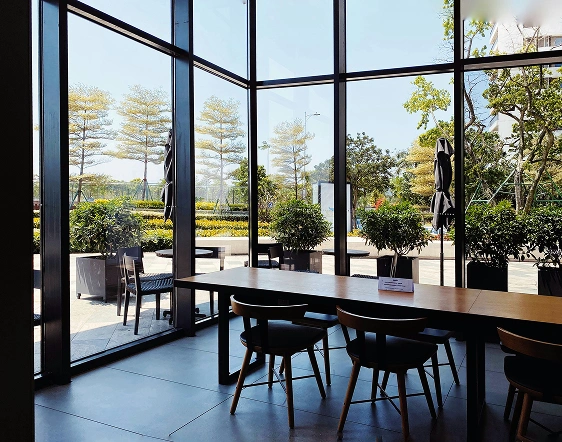
A quiet room with a long wooden table and chairs beside tall windows
Focus group preparation

Why Ariana Nexus

Fieldwork run by scholars from the communities we interview

There is no U.S. certification for research interviewers in Pashto, Dari or any Afghan language. We own that part: we train, test and calibrate our own interviewers, moderators and transcriptionists to a written standard, and we train interpreters and students in Afghan languages beyond our own team.

  1. 01

    Scholars, not bilinguals

    Interviewers and moderators hold degrees, complete human subjects research training and pass our interview calibration. The work is led by public health researchers and scholars from Cornell, Brown, the University of Chicago and the University of British Columbia.
  2. 02

    Matched to every participant

    Language, dialect, region and gender. Women interview women. A Kandahari elder meets an interviewer who speaks his Pashto, not a Kabuli Dari speaker reading a translation.
  3. 03

    Access that rests on trust

    We recruit through community relationships our team has built over years across all 50 states, Canada, Europe and Australia, not through paid panels.
  4. 04

    Verbatim first, then English

    Every interview is transcribed in its original language before translation, and a second linguist reviews transcript and translation against the audio. Nothing is summarized unless you ask for it.
  5. 05

    Protection built for Afghan participants

    Many participants have family under Taliban rule. We de-identify early, keep identities apart from transcripts, and never route data through channels controlled by the de facto authorities.
  6. 06

    Ready for analysis on day one

    Transcripts arrive with speaker labels, time stamps, translator’s notes and metadata, formatted for NVivo, ATLAS.ti, MAXQDA or Dedoose, with a methods appendix your manuscript can cite.
  7. 07

    One team, one point of accountability

    Our own researchers, never another firm’s. The people who scope your study run it, and the Cultural Compliance Bureau reviews every guide, consent form and a sample of translated transcripts.
  8. 08

    Human-led, with AI kept in its place

    Interviews, transcription and translation are done by people. Any software that assists runs inside our secure environment, and your data never trains an AI model.

How we deliver

How a fieldwork engagement runs

Seven stages, each with a named owner and a deliverable you can check. Timings are typical for a 30-interview study and are set with you at scoping.

  1. Weeks 1–2

    Stage 01

    Scope and ethics

    A scoping call with a senior researcher; field plan, quotas and timeline; inputs for your IRB, REB or ethics committee; translated consent materials.

    Deliverable: Field plan and ethics pack · Owner: Engagement manager

  2. Weeks 2–3

    Stage 02

    Guides and team

    Interview and focus group guides adapted and reviewed by the Cultural Compliance Bureau; interviewers selected by language, dialect and gender; protocol training and mock interviews.

    Deliverable: Final guides and training record · Owner: Senior researcher and Cultural Compliance Bureau

  3. Weeks 3–6

    Stage 03

    Recruitment and consent

    Community outreach, screening against your criteria, scheduling, and informed consent in the participant’s language.

    Deliverable: De-identified recruitment log · Owner: Field coordinator

  4. Weeks 4–8

    Stage 04

    Interviews and focus groups

    Sessions in person or remote, field notes after every session, daily debriefs, and a distress protocol with referral options.

    Deliverable: Audio and field notes · Owner: Interviewers and moderators

  5. Rolling, from week 5

    Stage 05

    Transcription and translation

    Verbatim source-language transcripts, English translations with translator’s notes, second-linguist review and audio audits, delivered in batches.

    Deliverable: Transcripts and translations · Owner: Linguists and reviewer

  6. Optional

    Stage 06

    Analysis support

    Codebook, coding, inter-coder reliability, a saturation memo and a cultural interpretation session with your team.

    Deliverable: Coded data and memos · Owner: Analysts

  7. Final week

    Stage 07

    Handover and close-out

    Data package, methods appendix with COREQ items, a findings summary for participants in Pashto and Dari, and secure destruction under your protocol.

    Deliverable: Data package and destruction certificate · Owner: Engagement manager

A typical 30-interview study runs 8 to 10 weeks from ethics approval to final transcripts.

Our standard

The fieldwork standard every study receives

  1. S01
    Every interviewer is a native speaker of the language they interview in.
  2. S02
    Every interviewer holds a degree and has completed human subjects research training.
  3. S03
    Women participants are interviewed by women; groups are single-gender unless your protocol says otherwise.
  4. S04
    Consent is explained in the participant’s language, and no one is recorded without agreement.
  5. S05
    Every session has a distress protocol and referral options in the participant’s language.
  6. S06
    Transcripts are verbatim in the source language before translation, unless you choose direct translation.
  7. S07
    A second linguist reviews every transcript and translation, and a sample is audited against the audio.
  8. S08
    Idioms and culturally specific terms keep the original word, with a translator’s note.
  9. S09
    Names and identifying details are removed or coded before files leave our secure environment.
  10. S10
    Recordings are kept only as long as your protocol allows, and destruction is certified.

Security and compliance

Built around the rules your ethics board applies

We work inside your approval and your jurisdiction’s rules. These are the instruments this service is built around; no certification is implied where none exists.

AreaInstrumentsWhat it means for your fieldwork
Area

U.S. human subjects

Instruments
Common Rule (45 CFR 46), IRB review, short-form consent (45 CFR 46.117)
What it means
Consent in the participant’s language, documented the way your IRB approved.
Area

U.S. health and education data

Instruments
HIPAA Privacy Rule; FERPA and PPRA
What it means
Health and student information handled only as your agreements allow.
Area

U.S. confidentiality

Instruments
NIH Certificates of Confidentiality; NIH Data Management and Sharing Policy
What it means
Identifiable data protected against compelled disclosure; data plans written to NIH expectations.
Area

U.S. federal studies

Instruments
Paperwork Reduction Act
What it means
Federally sponsored information collections planned with OMB clearance in mind.
Area

Canada

Instruments
TCPS 2 (2022), Research Ethics Boards, PIPEDA and provincial privacy law
What it means
Consent, privacy and community engagement under Canada’s Tri-Council Policy.
Area

United Kingdom

Instruments
UK GDPR and Data Protection Act 2018; ESRC Framework for Research Ethics
What it means
Lawful basis, participant information sheets and data minimization.
Area

European Union

Instruments
GDPR Articles 9 and 89; ethics committees
What it means
Special-category data, such as health, ethnicity and religion, processed with research safeguards.
Area

Australia

Instruments
National Statement on Ethical Conduct in Human Research (2025); HRECs; Privacy Act 1988
What it means
Ethics review and privacy under Australia’s updated National Statement.
Area

Professional codes

Instruments
AAPOR Code; ICC/ESOMAR International Code; ISO 20252; ISO 17100
What it means
Research practice and translation process aligned with recognized standards.
Area

Reporting

Instruments
COREQ and SRQR
What it means
Methods documented so your manuscript can report them.
Area

Safety

Instruments
WHO ethical and safety recommendations on sexual violence research; SAMHSA trauma-informed principles
What it means
Interviews on violence and trauma conducted safely, with referral options ready.
Area

Information security

Instruments
Encryption in transit and at rest; multi-factor authentication; role-based access
What it means
Only named team members can open your data.
Area

Afghanistan

Instruments
No channel through the de facto authorities
What it means
No data, documents or inquiries routed through systems they control.
We do not route data, documents or inquiries through channels controlled by the de facto authorities in Afghanistan.

Registered in SAM.gov · UEI M2UDMUDFXGL9 · CAGE 1Z3A3

The team behind the work

Who runs your fieldwork

Fieldwork is led by public health researchers and scholars from Cornell, Brown, the University of Chicago and the University of British Columbia, and carried out by interviewers from the communities they interview. Every member comes from the Afghan community and brings lived experience of the places and events participants describe.

PersonOversightMethodologyFieldworkData protectionAnalysisQuality reviewStudy management
Hassan UkashaManaging Partner
Oversight
—
—
—
—
—
—
Tamana GhaznawiSenior Partner
—
Methodology
Fieldwork
—
—
—
—
Zeba HaqbaniSenior Partner
—
—
—
Data protection
—
—
—
Shukria SakhiEngagement Manager
—
—
Fieldwork
—
—
—
Study management
Diana AyubiEngagement Manager
—
Methodology
Fieldwork
—
—
—
—
Hussain AhmadAnalyst
—
—
—
—
Analysis
—
—
Wasil PerozPrincipal · Germany and the EU
—
—
—
Data protection
—
—
—
Maryam SafiPrincipal
—
—
—
—
—
Quality review
—
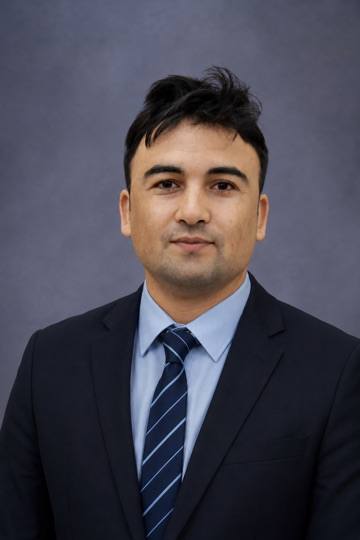
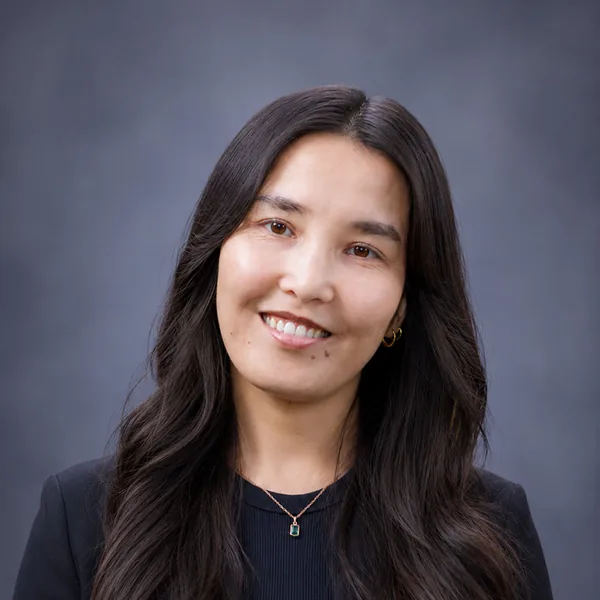
Headshot of Hassan Ukasha

Program oversight

Hassan Ukasha

Managing Partner

Oversees the firm’s operations and this program. Sets the fieldwork standard and is the final point of escalation on every engagement.
  • B.S., Global and Public Health Sciences, Cornell University
  • M.P.H., Infectious Diseases, Cornell University

Grew up in Herat. Languages: Pashto, Dari, English, Urdu and Hindi; working Arabic.

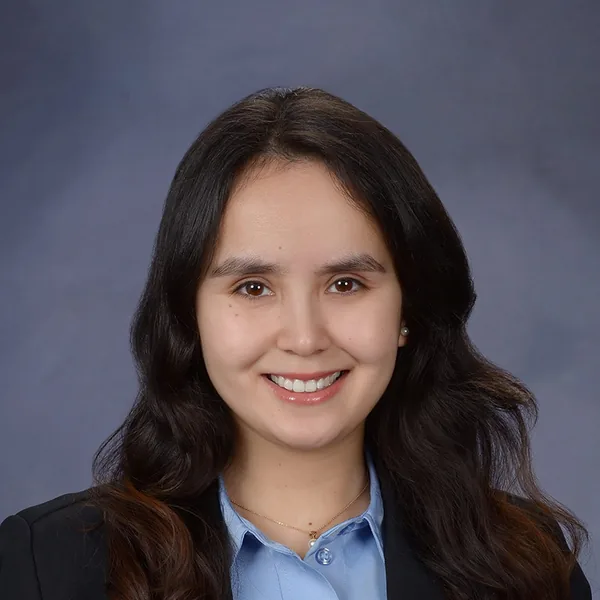
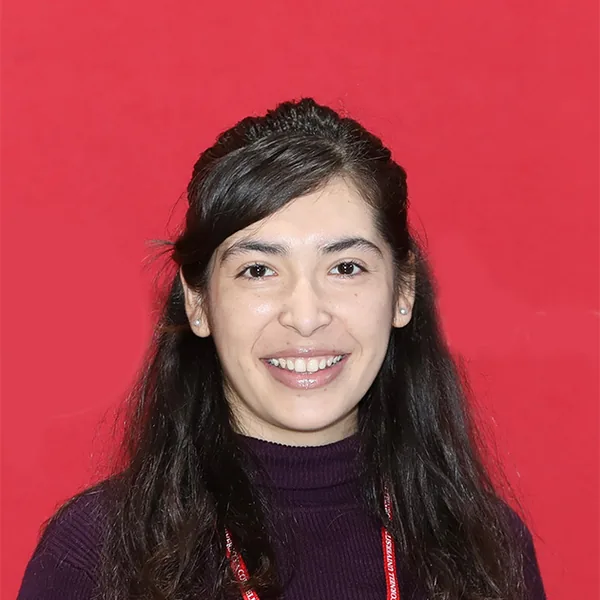
Headshot of Tamana Ghaznawi

Tamana Ghaznawi

Senior Partner

  • B.S., Cornell University
  • M.P.H., Cornell University
Leads health research engagements: study design, consent and distress protocols, and fieldwork with patients and families.

Lived in Kabul.

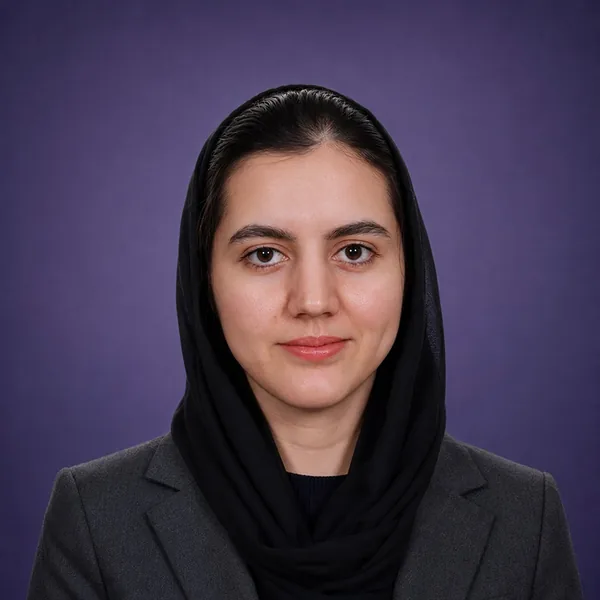
Headshot of Zeba Haqbani

Zeba Haqbani

Senior Partner

  • B.Sc., University of British Columbia
Builds and runs the secure systems behind fieldwork: encrypted capture, transcript pipelines and de-identification.

Lived in Kabul.

Headshot of Shukria Sakhi

Shukria Sakhi

Engagement Manager

  • B.S., Brown University
  • M.P.H., Brown University
Manages studies day to day: recruitment, quotas, scheduling and field logistics.
Headshot of Diana Ayubi

Diana Ayubi

Engagement Manager

  • B.A., Cornell University
  • Psy.D., West Chester University
Sets trauma-informed interviewing and distress protocols, and leads interviewer debriefing and well-being.

Lived in Kabul.

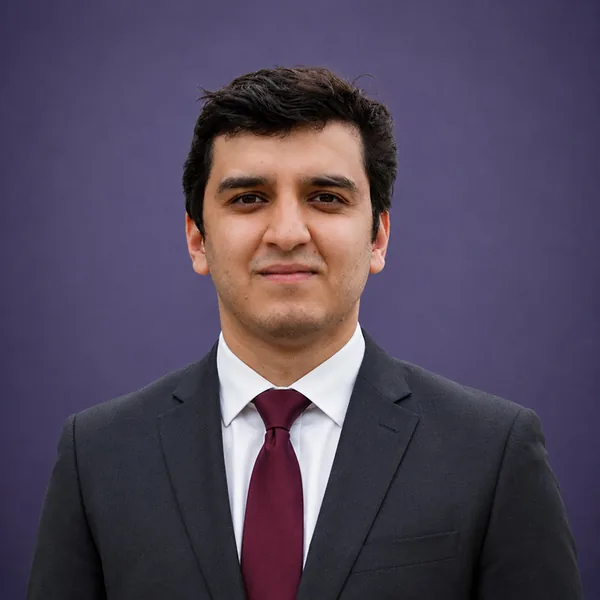
Headshot of Hussain Ahmad

Hussain Ahmad

Analyst

  • M.Eng., Cornell University
  • Ph.D., University of Chicago
Leads qualitative data management and analysis: codebooks, coding frameworks and inter-coder reliability.
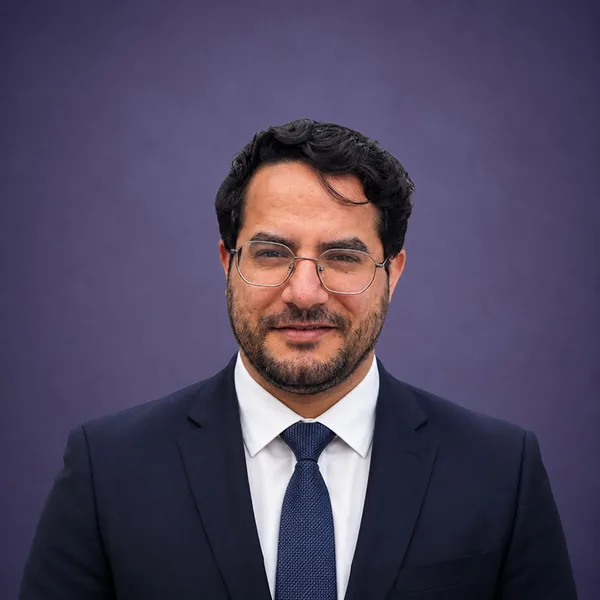
Headshot of Wasil Peroz

Wasil Peroz

Principal

  • B.A., Milli University
  • M.Sc., Otto von Guericke University Magdeburg
Leads data protection and ethics requirements for studies in Germany and the European Union.
Headshot of Maryam Safi

Maryam Safi

Principal

  • B.A., Cornell University
Leads fieldwork quality: interviewer calibration, audio audits and transcript review.
  • Field interviewers and focus group moderators

    Native speakers of Pashto, Dari, Uzbeki, Turkmeni, Balochi, Pashayi and Aimaq, women and men, trained in your protocol.
  • Transcription and translation linguists

    Degree-holding linguists who transcribe in the original script and translate into English and 13 other languages.
  • Cultural Compliance Bureau

    Reviews every guide, consent form and a sample of translated transcripts for cultural, religious and safety risks.
  • Human Intelligence Collective

    The community network through which we reach participants across all 50 states and abroad.
  • AI Data Factory

    The secure environment where recordings, transcripts and analysis files are kept, de-identified and destroyed.
Three adults reviewing charts and documents together at an office meeting table

Languages

Pashto, Dari and 22 more Afghan languages

Every interview is conducted by a native speaker of the participant’s language. We publish what each language supports, because a flat promise across all 24 Afghan languages is not one a careful researcher should accept.

Pashtoپښتو
Dariدری

Full fieldwork

Interviews, focus groups, transcription and translation

  • Pashto پښتو
  • Dari دری

Interviews and transcription

In-depth and key informant interviews, transcription and translation

  • Uzbeki
  • Turkmeni
  • Balochi
  • Pashayi
  • Aimaq

By arrangement

Specialist interviews with advance notice

  • Ormuri
  • Parachi
  • Wakhi
  • Shughni
  • Sanglechi
  • Ishkashimi
  • Munji
  • Yidgha
  • Kyrgyz
  • Gawarbati
  • Tirahi
  • Nuristani (Ashkun group)
  • Kati
  • Prasun
  • Waigali
  • Tregami
  • Brahui
Pashto dialects we match
Southern (Kandahari), central (Paktia and Wardak), and northern and eastern varieties, including Yusufzai.
Dari dialects we match
Kabuli, Herati, Hazaragi and Badakhshi.
Also English, plus French, German, Spanish, Italian, Hebrew, Urdu, Arabic, Hindi, Portuguese, Chinese, Russian, Turkish and Swedish, for studies in host countries and for the translations your team needs.

Where we work

Fieldwork in all 50 states, Canada, Europe and Australia

In person wherever Afghan people live, and remotely where they cannot be reached in person. Studies outside the United States follow the host country’s ethics and privacy rules.

United States
  • Alabama
  • Alaska
  • Arizona
  • Arkansas
  • California
  • Colorado
  • Connecticut
  • Delaware
  • Florida
  • Georgia
  • Hawaii
  • Idaho
  • Illinois
  • Indiana
  • Iowa
  • Kansas
  • Kentucky
  • Louisiana
  • Maine
  • Maryland
  • Massachusetts
  • Michigan
  • Minnesota
  • Mississippi
  • Missouri
  • Montana
  • Nebraska
  • Nevada
  • New Hampshire
  • New Jersey
  • New Mexico
  • New York
  • North Carolina
  • North Dakota
  • Ohio
  • Oklahoma
  • Oregon
  • Pennsylvania
  • Rhode Island
  • South Carolina
  • South Dakota
  • Tennessee
  • Texas
  • Utah
  • Vermont
  • Virginia
  • Washington
  • West Virginia
  • Wisconsin
  • Wyoming
And Washington, D.C., where we are headquartered.
Canada, Europe and Australia

Canada

Ontario, Quebec, British Columbia, Alberta, Manitoba, Nova Scotia

Europe

Germany, United Kingdom, France, the Netherlands, Sweden, Austria, Denmark, Norway, Belgium, Switzerland, Italy, Spain, Ireland, Finland

Australia

New South Wales, Victoria, Queensland, South Australia, Western Australia
Remote interviews with participants in Pakistan, Türkiye, the Gulf, Central Asia and inside Afghanistan are run from outside the country, after a safety assessment, with no data path through systems controlled by the de facto authorities.

Who we work with

Built for research teams, funders and programs

  • Universities and academic medical centers

    Principal investigators and research teams in public health, medicine, nursing, social work, psychology, education, anthropology, sociology and migration studies.
  • Research institutes and survey organizations

    An Afghan-language field team for studies you lead, as a subcontractor or teaming partner.
  • Public health agencies and health systems

    Community research, needs assessments and program evaluation with Afghan patients and families.
  • Foundations and philanthropy

    Evidence for grantmaking, and evaluations of Afghan-focused programs.
  • UN agencies, NGOs and resettlement agencies

    Needs assessments, accountability to affected people and program evaluation in diaspora and regional settings.
  • Government research and evaluation offices

    Federal, state, provincial and European studies of resettlement, integration and public services.
  • Think tanks, archives and oral history programs

    Policy research, and oral histories of the Afghan war, displacement and resettlement.
  • Market, UX and AI product research

    Consumer, user and product research with Pashto and Dari speakers.

Topics we field

  • Refugee resettlement and integration
  • Afghan evacuees and SIV holders
  • Mental health, trauma and PTSD
  • Moral injury (sometimes called moral trauma)
  • Afghan war veterans, interpreters and allies
  • Maternal, reproductive and child health
  • Health care access and patient experience
  • Women’s rights and gender
  • Gender-based and intimate partner violence
  • Newcomer students and schooling
  • Afghan girls’ education
  • Higher education pathways
  • Employment, livelihoods and remittances
  • Housing, food security and public benefits
  • Returns from Iran and Pakistan
  • Migration, displacement and family separation
  • Climate change and drought
  • Digital inclusion and misinformation
  • AI and language technology
  • Civic participation and citizenship
  • Oral histories of the Afghan war

Ways to work with us

Engagement models

  1. E01

    Full study

    We design and run fieldwork from ethics to analysis-ready data.

    Fixed fee by phase

  2. E02

    Field team for your protocol

    Our interviewers and moderators run the study your team designed and your IRB approved.

    Per completed interview or focus group

  3. E03

    Transcription and translation

    Verbatim transcripts and English translations of recordings you already have.

    Per audio hour

  4. E04

    Grant partner

    Written into your proposal as a consultant or subrecipient, with a letter of support and a budget justification.

    Budgeted with you before submission

  5. E05

    Longitudinal and multi-site

    Repeat interviews over months or years, across cities and countries, with the same interviewers where possible.

    Annual plan by wave

  • Fixed quotes, in writing, before work starts.
  • Recruitment billed only for interviews that take place.
  • Participant incentives paid under your protocol.
  • Registered in SAM.gov for federal awards and subawards: UEI M2UDMUDFXGL9, CAGE 1Z3A3.

Terms

Fieldwork terms we use

T01

In-depth interview (IDI)

A one-to-one interview, usually 45 to 90 minutes, that explores a person’s experience in their own words.
T02

Key informant interview (KII)

An interview with someone whose role gives them knowledge of a community or system, such as a community leader, teacher, caseworker or clinician.
T03

Focus group discussion (FGD)

A moderated discussion with six to eight participants who share a key characteristic, such as language and gender.
T04

Verbatim transcription

A word-for-word record of everything said, including hesitations, repetitions and non-verbal events.
T05

Intelligent verbatim

A faithful transcript with fillers and false starts removed, used when content matters more than speech patterns.
T06

Code saturation

The point at which new interviews stop producing new themes; in published tests, about nine interviews in a homogeneous group.
T07

Meaning saturation

The point at which each theme is fully understood; published tests put it at 16 to 24 interviews.
T08

Inter-coder reliability

Agreement between two coders applying the same codebook, often reported as Cohen’s kappa.
T09

Certificate of Confidentiality

A U.S. protection against compelled disclosure of identifiable, sensitive research information, issued automatically for NIH-funded studies.
T10

Short-form consent

A U.S. consent method in which the elements of consent are presented orally in the participant’s language, with a witness, and documented on a short written form.
T11

Moral injury

Lasting distress after acting, failing to act or witnessing acts that violate one’s moral beliefs; sometimes called moral trauma.
T12

Idiom of distress

A culturally specific way of expressing suffering, such as the Dari “jigar khun” (جگر خون), that a literal translation misses.

Questions

Questions research teams ask

What does qualitative research fieldwork with Afghan participants include?

It covers everything between an approved protocol and analysis-ready data: recruitment and screening, informed consent in the participant’s language, in-depth and key informant interviews, focus groups, field notes, and verbatim transcription and translation. You can commission the full study or only the parts you need, such as interviewers for your protocol or transcription of recordings you already have.

Can you provide female interviewers and moderators for Afghan women?

Yes. Women participants are interviewed by women, and focus groups are single-gender unless your protocol calls for something else. Where a woman prefers it, we also keep male team members out of the room and off the call, including note-takers and observers.

Which Afghan languages and dialects do your interviewers speak?

We run full fieldwork in Pashto and Dari, interviews and transcription in Uzbeki, Turkmeni, Balochi, Pashayi and Aimaq, and specialist interviews in the other 17 Afghan languages by arrangement. Within Pashto we match southern, central, northern and eastern varieties; within Dari we match Kabuli, Herati, Hazaragi and Badakhshi speakers.

Do you transcribe Pashto and Dari interviews verbatim and translate them into English?

Yes. We transcribe in the original script first, then translate into English, and a second linguist reviews both against the audio. Transcripts carry time stamps, speaker labels and translator’s notes for idioms. We can also translate directly into English, or into French, German, Swedish and other languages, and we transcribe recordings you have already collected.

Can AI or automatic transcription handle Pashto and Dari research interviews?

Not reliably. In a 2026 benchmark on read Pashto speech, Whisper models produced Pashto script in under 1% of utterances, with word error rates from 90% to 297%, and the best model tested still had a word error rate near 40%. Interviews are harder than read speech. Our transcripts are made by people, and your audio never trains an AI model.

How many interviews or focus groups does a study with Afghan participants need?

Published tests find saturation within 9 to 17 interviews or 4 to 8 focus groups for one homogeneous group, and 16 to 24 interviews to understand each theme fully. Afghan samples are rarely one group: separating Pashto and Dari speakers, women and men, or recent and earlier arrivals multiplies the groups to fill. We size the sample with you at scoping.

How do you recruit Afghan refugees, evacuees and diaspora participants?

Through relationships across Afghan communities rather than paid panels, using purposive, snowball or respondent-driven sampling as your design requires. We screen against your criteria in the participant’s language, offer both “Dari” and “Farsi” as answers, manage incentives under your protocol, and arrange transport or childcare when that is what makes participation possible.

How do you protect participants who have family in Afghanistan?

Consent explains the risks plainly, identities are kept apart from transcripts, and names and identifying details are removed before files leave our secure environment. Participants choose how and where they are interviewed. We never route data, documents or inquiries through channels controlled by the de facto authorities, and we support Certificates of Confidentiality where they apply.

Can your team work under our IRB, REB or ethics committee approval?

Yes. Our team completes human subjects research training and works under your approved protocol, as study personnel, through an individual investigator agreement, or under a reliance arrangement your institution chooses. We supply the training records, team descriptions and translated materials your submission or amendment needs.

Can Ariana Nexus be written into our grant proposal?

Yes. We join proposals as a consultant or subrecipient, provide a letter of support, a scope and a budget justification, and are registered in SAM.gov (UEI M2UDMUDFXGL9, CAGE 1Z3A3). Contact us as early as you can before the deadline, so the fieldwork plan in your proposal is one we have agreed to deliver.

Do you run online focus groups and remote interviews?

Yes. We run interviews and focus groups by phone, WhatsApp, Zoom or Microsoft Teams when your protocol allows it and the participant prefers it, and in person where communities live. Online groups stay single-gender, and observing researchers can follow in English through live interpretation on a separate channel.

Do you conduct research inside Afghanistan?

We have no offices or staff operating inside Afghanistan. Remote interviews with participants inside the country, and in Pakistan, Türkiye, the Gulf and Central Asia, are run from outside, only after a safety assessment, and with no data path through systems the de facto authorities control. Monitoring and surveys inside Afghanistan are a separate service.

Can you support studies in Canada, Europe and Australia?

Yes. We work under Canada’s TCPS 2, the GDPR and UK GDPR, and Australia’s National Statement, alongside your Research Ethics Board, ethics committee or HREC. Interviews can be transcribed and translated into the host country’s language, such as French, German or Swedish, as well as English.

Do you interview veterans, interpreters and Afghan allies about the war and moral injury?

Yes. We conduct trauma-informed interviews and oral histories on the Afghan war, displacement and moral injury, sometimes called moral trauma, with Afghan interpreters, allies, families and veterans. Interviewers follow a distress protocol, participants can pause or stop at any time, and referral options are ready in the participant’s language.

How is fieldwork priced?

Each study receives a fixed written quote before work begins. Full studies are priced by phase, field teams per completed interview or focus group, and transcription and translation per audio hour. Recruitment is billed only for interviews that take place, and participant incentives follow your protocol. We reply within two business days.

Is Dari the same as Farsi for research purposes?

Dari and Iranian Persian (Farsi) are closely related but differ in vocabulary, pronunciation and everyday expressions, and many Afghans call their language Farsi. Screeners should offer both names. Our interviewers and transcripts use Afghan Dari, and translator’s notes flag terms an Iranian Persian reader would take differently.

Start a study

Plan your fieldwork with a senior researcher

Tell us about your research question, population, languages and timeline on a short scoping call, or send your protocol ahead. We reply within two business days with a field plan, a dated schedule and a fixed quote.

Conversations are confidential. We sign your NDA or data use agreement before any material is shared.

Request a fieldwork proposal

Reviewed October 4, 2026 by Hassan Ukasha, Managing Partner. Figures on this page are sourced and dated.

Sources

23 sources, dated and linked
  1. 1.Benchmarking Multilingual Speech Models on Pashto: Zero-Shot ASR, Script Failure, and Cross-Domain Evaluation. arXiv:2604.04598 (2026). arxiv.org
  2. 2.Migration Policy Institute. Afghan Immigrants in the United States (2022 American Community Survey). migrationpolicy.org
  3. 3.U.S. Census Bureau. 2024 American Community Survey 1-year, tables B05006 and B04006. data.census.gov
  4. 4.U.S. Department of Homeland Security. Operation Allies Welcome announcement, February 19, 2022. dhs.gov
  5. 5.UNHCR. Global Trends: Forced Displacement in 2025 (June 2026). unhcr.org
  6. 6.Immigration, Refugees and Citizenship Canada. Afghanistan: key figures. canada.ca
  7. 7.UK Home Office. Afghan Resettlement Programme operational data, to June 30, 2026. gov.uk
  8. 8.Destatis. Foreign population by citizenship (2026). destatis.de
  9. 9.Australian Department of Home Affairs. Offshore Humanitarian Program 2024–25. homeaffairs.gov.au
  10. 10.UNESCO. Five years on, UNESCO calls for full restoration of the right to education for Afghan girls and women (2026). unesco.org
  11. 11.“Then, We Lost Everything”: Afghan Refugee Mental Health Challenges Post-2021 Evacuation. Journal of Immigrant and Minority Health 27(2):251–257 (2025). pmc.ncbi.nlm.nih.gov
  12. 12.Hennink M, Kaiser BN. Sample sizes for saturation in qualitative research: A systematic review of empirical tests. Social Science & Medicine 292:114523 (2022). pubmed.ncbi.nlm.nih.gov
  13. 13.Hennink MM, Kaiser BN, Marconi VC. Code saturation versus meaning saturation: How many interviews are enough? Qualitative Health Research (2017). pmc.ncbi.nlm.nih.gov
  14. 14.Tong A, Sainsbury P, Craig J. Consolidated criteria for reporting qualitative research (COREQ). International Journal for Quality in Health Care 19(6):349–357 (2007). doi.org
  15. 15.National Institutes of Health. Certificates of Confidentiality, NOT-OD-17-109. grants.nih.gov
  16. 16.Electronic Code of Federal Regulations. 45 CFR Part 46, Protection of Human Subjects. ecfr.gov
  17. 17.Government of Canada. Tri-Council Policy Statement: Ethical Conduct for Research Involving Humans (TCPS 2, 2022). ethics.gc.ca
  18. 18.NHMRC. National Statement on Ethical Conduct in Human Research (2025). nhmrc.gov.au
  19. 19.Regulation (EU) 2016/679, General Data Protection Regulation. eur-lex.europa.eu
  20. 20.World Health Organization. Ethical and safety recommendations for researching, documenting and monitoring sexual violence in emergencies (2007). who.int
  21. 21.Litz BT, Stein N, Delaney E, et al. Moral injury and moral repair in war veterans. Clinical Psychology Review 29(8):695–706 (2009). doi.org
  22. 22.SAMHSA. Concept of Trauma and Guidance for a Trauma-Informed Approach, HHS Publication (SMA) 14-4884 (2014). library.samhsa.gov
  23. 23.Miller KE, Omidian P, Quraishy AS, et al. The Afghan Symptom Checklist: a culturally grounded approach to mental health assessment in a conflict zone. American Journal of Orthopsychiatry 76(4):423–433 (2006). doi.org